When ironing different fabrics, always check the care label first for temperature guidelines. Use low heat for delicate materials like silk or nylon, and higher heat for cotton or linen. Keep the iron clean and avoid overheating to prevent damage. Use pressing cloths for fragile fabrics, and never leave the iron unattended. Proper technique and tools help protect your clothes and extend their life—continue exploring for more expert tips.

Get your wardrobe favorites delivered free with Prime
- Fast, free delivery on millions of items
- Prime Video, Amazon Music and more included
- Member-only deals all year
Key Takeaways
- Always check the care label to determine the appropriate ironing temperature for each fabric.
- Use low heat for delicate materials like silk, nylon, and lace; higher heat for cotton and linen.
- Protect delicate fabrics with a pressing cloth or thin towel to prevent shiny patches and scorching.
- Use a steam function and proper techniques to smooth heavier fabrics without damaging fibers.
- Allow fabrics to cool before handling to set the ironed finish and prevent new wrinkles.

Ever wondered how to get perfectly smooth fabrics without causing damage? The key lies in understanding fabric care and practicing proper ironing safety. Different fabrics respond uniquely to heat, so knowing how to handle each type will help you achieve crisp, professional-looking results without risking tears, burns, or shiny spots. First, always check the care label on your clothing or textiles. It offers essential information about the recommended temperature and whether you should avoid steam or use a pressing cloth. Ignoring these instructions can lead to irreversible damage, so taking a moment to review them is a critical step in safe ironing.
Understanding fabric care and safety ensures flawless ironing without damage.
When it comes to fabric care, setting your iron to the correct temperature is fundamental. Use low heat for delicate fabrics like silk, nylon, or lace, and higher settings for cotton or linen. If you’re unsure, start with the lowest temperature and gradually increase as needed. To guarantee ironing safety, never leave the iron unattended while hot, and always set it down on a heat-resistant surface. Using a spray bottle with water can help remove stubborn wrinkles on certain fabrics, but avoid oversaturating delicate materials, which can weaken fibers or cause water spots.
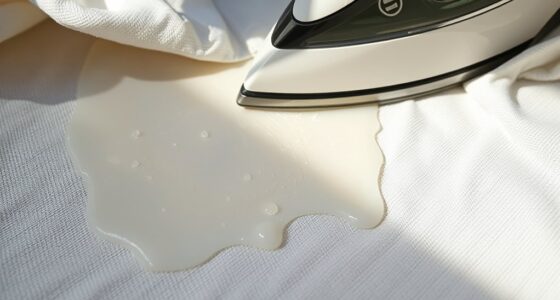
Another important tip for fabric care is to use the right tools. A pressing cloth or a clean, thin towel can shield delicate fabrics from direct contact with the hot plate, preventing shine and scorching. For heavier fabrics, a sturdy ironing board and a steam function can make the task easier and more effective. Always keep the soleplate clean; residue or buildup can transfer onto fabrics, ruining their appearance. Regularly wiping it with a damp cloth ensures smooth gliding and prevents unwanted stains.
Furthermore, pay attention to the direction in which you iron. Moving the iron in one consistent direction helps set the fabric’s fibers and produces a more polished finish. For tricky areas like collars or pleats, take your time and use short, controlled strokes. When handling sensitive materials, consider using a pressing cloth, which acts as a barrier, reducing the risk of shiny patches or scorching. After ironing, allow fabrics to cool before handling or folding, so the smoothness sets properly.
Frequently Asked Questions
How Often Should I Iron Each Type of Fabric?
You should iron fabrics based on their fabric care needs and ironing frequency. For delicate fabrics like silk or linen, iron only when necessary to avoid damage, maybe after a few wears. Cotton and polyester may need regular light ironing after each wash or wear. Always check care labels for specific instructions, and remember, over-ironing can weaken fibers, so iron only when needed.
Can I Use Regular Water in My Iron for All Fabrics?
Wondering if you can use regular water in your iron? While it’s tempting, don’t! Using water quality that’s too hard or mineral-rich can clog your iron and damage fabrics. Always check fabric compatibility and opt for distilled or filtered water to prevent mineral buildup. This helps your iron work efficiently and keeps your clothes pristine. Protect your fabrics and prolong your iron’s life by using the right water every time.
What Is the Best Way to Store an Iron?
To store your iron properly, make sure it’s completely cool and empty of water to prevent mineral buildup. Use iron storage methods like hanging it or placing it upright in a dry, clutter-free area. Regular iron maintenance, like cleaning the soleplate and checking for leaks, keeps it in top shape. Avoid stacking heavy objects on it, and keep the cord untangled. Proper storage prolongs your iron’s lifespan and keeps it ready for use.
Are There Eco-Friendly Alternatives to Traditional Ironing?
Yes, you can go eco-friendly with your ironing routine. Use biodegradable starch instead of chemical sprays to keep fabrics crisp. Reusable ironing pads help reduce waste, making your setup more sustainable. These alternatives lower your environmental impact while still giving you great results. By choosing biodegradable starch and reusable pads, you make a conscious choice that benefits the planet without sacrificing the quality of your ironing.
How Can I Remove Stubborn Wrinkles From Delicate Fabrics?
To remove stubborn wrinkles from delicate fabrics, try fabric softening sprays before ironing, which relaxes fibers and makes wrinkles easier to smooth out. Use the lowest heat setting suitable for the fabric, and avoid pressing too hard to prevent damage. To prevent future wrinkles, fold or hang delicate items properly and incorporate wrinkle prevention techniques like steaming regularly. This approach keeps your fabrics smooth and well-maintained without compromising their delicate nature.
Conclusion
Now that you know the secrets to smooth, stunning fabrics, you’re ready to tackle any textile with confidence. Remember, patience and practice perfect your pressing prowess. Keep your iron moving, and don’t forget to check the care labels before you start. With a little know-how, you’ll turn wrinkles into wow-worthy results. So go grab your gear, get gentle, and enjoy the journey to flawlessly finished fabrics—fabulous, friction-free, and fuss-free!
Fall Picks
fall essentials
As an affiliate, we earn on qualifying purchases.