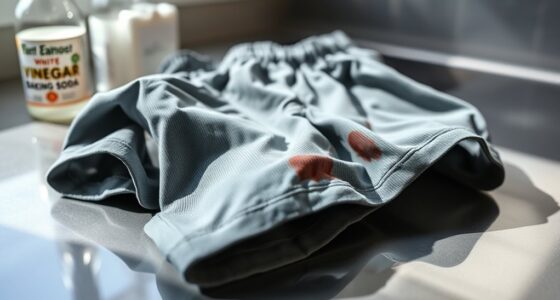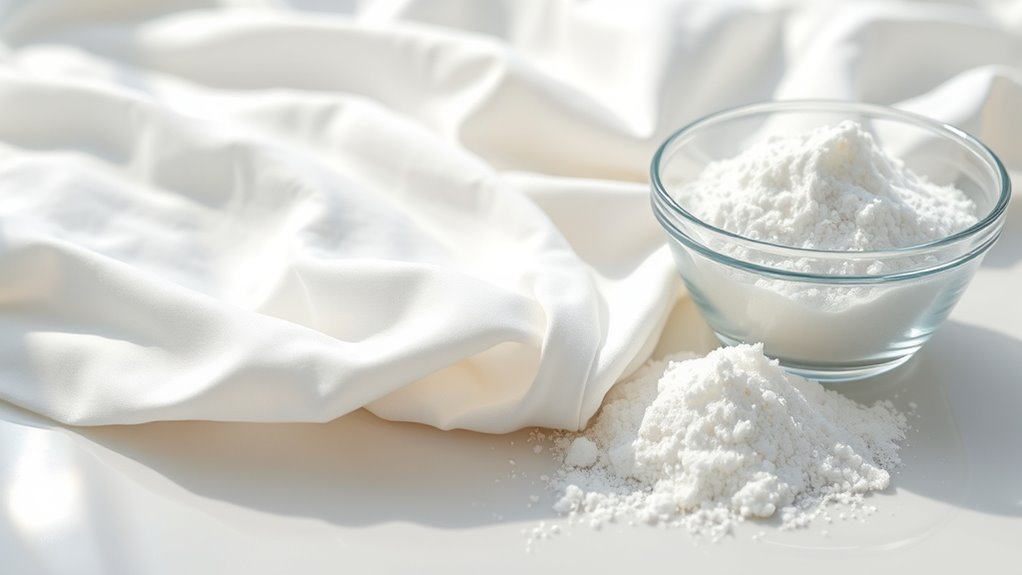

To whiten yellowed clothes and linens naturally, try using hydrogen peroxide and baking soda. Add about half a cup of hydrogen peroxide to your wash, next to your regular detergent, and mix half a cup of baking soda with your wash cycle or dissolve it in warm water first. Using white vinegar in the rinse cycle also helps brighten fabrics. For stubborn stains, create a paste of baking soda and hydrogen peroxide. Keep exploring for more tips to get your whites looking their best.
Listen free for 30 days with Audible
Thousands of audiobooks and originals — cancel anytime.
As an affiliate, we earn on qualifying purchases.
Key Takeaways
- Use hydrogen peroxide in the wash cycle to naturally whiten and brighten yellowed clothes without damaging fabrics.
- Create a paste of baking soda and hydrogen peroxide; apply to stains and let sit before washing for enhanced whitening.
- Add one cup of white vinegar during the rinse cycle to remove residues and restore fabric brightness.
- Sun-dry clothes to utilize UV rays for natural bleaching and improved whiteness.
- Regularly clean your washing machine and avoid overloading to ensure effective cleaning and prevent yellowing.
Have your clothes and linens lost their brightness over time? It can be frustrating to see your favorite white items turn dull and yellowed, but don’t worry—you can bring back their original radiance without relying solely on harsh chemicals. Instead of traditional bleach, consider exploring bleach alternatives and natural whitening methods that are gentler on fabrics and safer for the environment. These options can be just as effective and often leave your whites smelling fresh and clean.
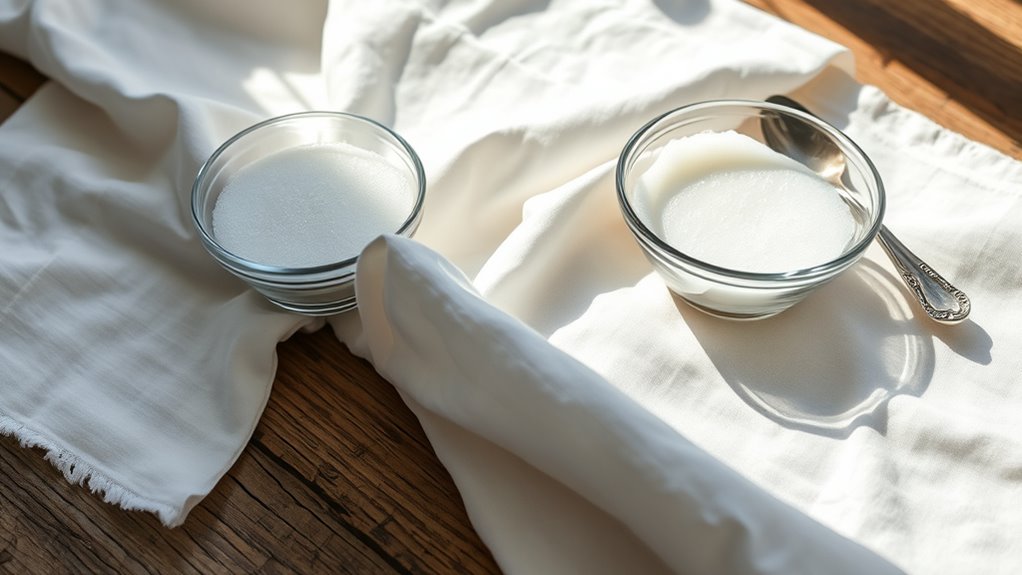
One of the most popular bleach alternatives is hydrogen peroxide. This powerful, eco-friendly compound acts as a natural whitener and disinfectant. To use it, add about half a cup of hydrogen peroxide to your laundry during the wash cycle. It works well on yellowed whites, helping to lift stains and restore brightness without damaging the fabric fibers. Another effective natural whitening method involves baking soda. This versatile ingredient not only deodorizes your laundry but also enhances the whiteness of your clothes. Mix half a cup of baking soda with your regular detergent or dissolve it in warm water before washing. The alkalinity of baking soda helps break down grime and yellowing stains, leaving your clothes looking fresher.
Hydrogen peroxide and baking soda are natural, eco-friendly solutions to whiten and brighten your clothes effectively.
White vinegar is another excellent natural whitener. It’s known for balancing pH levels and dissolving residues that cause yellowing. Add one cup of white vinegar to the rinse cycle to boost whiteness and soften fabrics. Vinegar also helps remove soap scum and mineral deposits that can dull your laundry over time. For stubborn yellow stains, you can create a paste using baking soda and hydrogen peroxide. Apply this mixture directly to the stained areas, let it sit for about 30 minutes, then wash as usual. This natural treatment can considerably brighten whites without harsh chemicals.
Additionally, using a home theatre projector with high color accuracy and contrast ratio can help you enjoy your favorite movies and shows in the best quality, making your home entertainment more vibrant and immersive. In addition to these methods, sun-drying your whites can naturally whiten your clothes. Sunlight contains UV rays that help bleach fabrics naturally, so hanging your laundry outdoors on a sunny day can give your whites a fresh boost of brightness. Remember to avoid overloading your washing machine, as proper circulation ensures better cleaning and whitening results. Regularly cleaning your washer also prevents detergent buildup, which can contribute to dinginess.
Incorporating these natural whitening methods into your laundry routine not only saves you money but also reduces your exposure to potentially harmful chemicals. With a little effort and some simple ingredients, you can keep your clothes looking bright and fresh, prolonging their lifespan while making your laundry routine more eco-friendly.
hydrogen peroxide laundry additive
As an affiliate, we earn on qualifying purchases.
As an affiliate, we earn on qualifying purchases.
Frequently Asked Questions
Can Natural Remedies Effectively Whiten Yellowed Clothes?
Natural remedies can effectively whiten yellowed clothes if you’re patient and consistent. Ingredients like baking soda, lemon juice, and white vinegar work as gentle home treatments that help break down stains and restore brightness. While they might not work as quickly as commercial products, many find these natural remedies effective over time. You just need to follow proper methods and give your clothes some time to see noticeable results.
How Long Should I Soak Clothes for Optimal Whitening Results?
Think of soaking as giving your clothes a spa day. For ideal whitening, soak your clothes for about 1 to 4 hours, depending on how yellowed they are. Keep an eye on the clock; too long can damage fabrics. The key is to find the right soaking duration that lifts stains without weakening the material, ensuring your linens stay bright and fresh.
Are There Specific Detergents Best for Maintaining Whiteness?
You should choose detergents that contain effective whitening agents and ingredients designed to brighten whites. Look for products with optical brighteners and enzymes that break down stains and yellowing. These detergents actively lift dirt and yellowing, helping maintain your clothes’ whiteness. Avoid those with unnecessary dyes or fragrances that may cause discoloration. Regular use of a detergent formulated for whites keeps your linens and clothes looking fresh and bright over time.
How Can I Prevent Future Yellowing of Clothes and Linens?
To prevent future yellowing, you should avoid overusing fabric softeners, as they can build up and cause discoloration. Always treat stains promptly with stain removers to prevent them from setting, and wash clothes in the recommended water temperature. Additionally, avoid leaving wet clothes in the washer too long and consider using a whitening booster occasionally. Proper care keeps your linens bright and fresh longer.
Is It Safe to Use Bleach on All Fabric Types?
Using bleach isn’t a one-size-fits-all solution; it can be a double-edged sword. You should check fabric safety first, as some materials like wool, silk, and spandex react badly to harsh chemicals. Bleach can cause unwanted chemical reactions, weakening fibers or causing discoloration. Always read labels and test a small area first. When used correctly, bleach can brighten whites, but misuse risks damage and ruined clothes.
Conclusion
Now that you know how to tackle yellowed clothes and linens, you’re armed with the secret weapons to restore their brightness. Think of your laundry as a garden—you just need the right care and attention to make it bloom again. With a little effort, your whites will shine like stars in the night sky, turning back time on stained, dull fabrics. So go ahead, give your clothes the glow-up they deserve!
Fall Picks
fall essentials
As an affiliate, we earn on qualifying purchases.