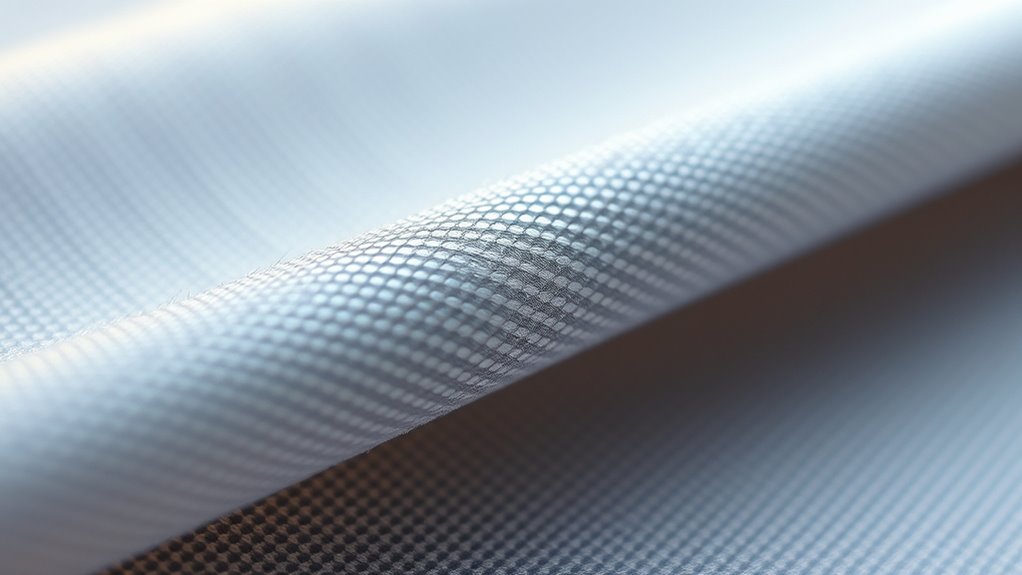

Graphene-enhanced textiles are set to revolutionize the way you think about fabrics by integrating nanotechnology to make them stronger, lighter, and smarter. These fabrics are embedded with graphene particles, which boost durability, antimicrobial properties, and even allow clothing to monitor your health or charge devices. They’re more sustainable, requiring less maintenance and last longer. If you keep exploring, you’ll uncover how these innovations are shaping the future of high-performance, eco-friendly textiles.
Key Takeaways
- Graphene integration enhances textile strength, durability, and resistance to wear while maintaining flexibility and lightweight properties.
- Embedded sensors and conductive features enable smart textiles that monitor health and control temperature.
- Nanotechnology-driven manufacturing reduces resource use, lowers environmental impact, and extends fabric lifespan.
- Graphene’s antimicrobial properties decrease chemical treatments and improve fabric hygiene and sustainability.
- Ongoing research and precise nanomanipulation expand innovative, multifunctional, and eco-friendly textile applications.

Graphene-enhanced textiles are revolutionizing the fabric industry by integrating one of the strongest and most conductive materials known. This innovation stems from advancements in nanotechnology applications, which allow manufacturers to embed graphene’s extraordinary properties directly into fabrics. As you explore these textiles, you’ll notice how they combine durability with a new level of functionality, opening doors to numerous uses across industries. The key advantage lies in graphene’s incredible strength—making your clothing or gear more resistant to wear and tear—while its exceptional conductivity enables innovative features like built-in sensors or energy storage. Because of these qualities, graphene-enhanced textiles are not just stronger; they’re smarter.
By leveraging nanotechnology applications, manufacturers can disperse graphene particles evenly throughout fibers, creating textiles that retain flexibility, lightweight qualities, and high performance. This precise manipulation at the nanoscale ensures that the fabric’s structure remains comfortable while gaining enhanced attributes. You might find yourself wearing clothing that can monitor your health metrics, adjust temperature, or even charge your devices—thanks to the integration of graphene’s conductive properties. These functionalities might sound futuristic, but they’re becoming more accessible, thanks to ongoing research and development. Additionally, the ability to precisely manipulate nanomaterials allows for even more innovative textile designs and functionalities.
Environmental sustainability is another vital aspect of graphene-enhanced textiles. Traditional manufacturing processes can be resource-intensive and generate significant waste, but nanotechnology allows for more efficient production methods. Using less material and energy, manufacturers can create stronger, longer-lasting fabrics that reduce the need for frequent replacements. Additionally, graphene’s antimicrobial properties can lower the reliance on chemical treatments, making the textiles more eco-friendly and healthier for you. As you choose these fabrics, you’re supporting a shift toward sustainable fashion that minimizes environmental impact while delivering top-tier performance.
Furthermore, the durability of graphene-infused textiles means they often require less maintenance and have a longer lifespan, reducing textile waste over time. Their potential for energy storage also means fewer bulky batteries or external devices, decreasing electronic waste. With ongoing innovations, you could soon see everyday clothing that not only lasts longer but also contributes to a more sustainable environment. The integration of nanotechnology applications into textiles signifies a move toward a future where fabrics are more than just coverings—they become active, intelligent components of your daily life. As you embrace these advancements, you’re participating in a shift that prioritizes environmental sustainability without compromising on strength, versatility, or innovation.
Top picks for "graphene enhanc textil"
Open Amazon search results for this keyword.
As an affiliate, we earn on qualifying purchases.
Frequently Asked Questions
How Does Graphene Improve Textile Durability?
Graphene improves textile durability by acting as a fiber reinforcement, making fabrics stronger and more resilient. Its exceptional strength and flexibility enhance wear resistance, so your garments last longer even with daily use. When incorporated into textiles, graphene helps prevent tearing and fraying, ensuring the fabric maintains its integrity over time. This advanced material also adds lightweight toughness, giving you durable, high-performance clothing that withstands the test of time.
Are Graphene-Enhanced Textiles Environmentally Sustainable?
You might find that graphene-enhanced textiles are quite environmentally sustainable. While they offer durability and strength, their environmental impact depends on how responsibly the graphene is produced and how resources are managed. When manufacturers prioritize eco-friendly processes, these textiles can reduce waste and conserve resources. So, yes, with proper resource management, you can consider them a greener choice, helping to balance innovation with environmental stewardship.
What Are the Cost Implications of Graphene Integration?
You’ll find that integrating graphene increases manufacturing costs due to its high material price and complex production processes. These added expenses typically lead to higher market pricing for the textiles. While the initial investment is substantial, the enhanced durability and performance of these fabrics can justify the cost, attracting premium buyers. Ultimately, as technology advances and production scales up, expect costs to decrease, making graphene-enhanced textiles more affordable.
Can These Textiles Be Recycled Efficiently?
Ever wondered if these advanced textiles can be recycled efficiently? Recycling challenges exist because integrating graphene alters traditional fabric structures, complicating disposal. You need to take into account lifecycle analysis to understand environmental impacts fully. While some methods aim to recycle graphene-enhanced materials, current processes are still developing. So, yes, recycling these textiles is possible, but it requires innovative approaches and improved technology to ensure they’re eco-friendly throughout their lifecycle.
How Do Graphene Textiles Compare to Traditional Fabrics?
You’ll find that graphene textiles outperform traditional fabrics in many ways. They offer greater fabric flexibility, allowing for comfortable, form-fitting designs, and they often have enhanced aesthetic appeal with sleek, modern looks. While conventional fabrics may lack durability and conductivity, graphene-enhanced textiles combine strength with flexibility and style, making them ideal for innovative clothing and high-performance gear. Overall, they provide a smarter, more versatile alternative to standard fabrics.
Conclusion
By now, you can see that graphene-enhanced textiles are truly a game-changer, offering strength, durability, and versatility like never before. As these fabrics become more mainstream, you’ll find yourself at the forefront of innovation, where the sky’s the limit. Don’t blink, or you might miss the biggest leap forward in textile technology—it’s a golden opportunity you won’t want to pass up. Embrace the future, because these fabrics are here to stay.