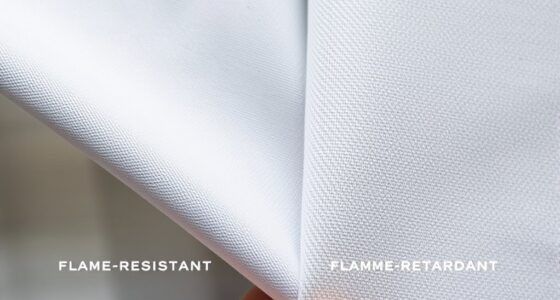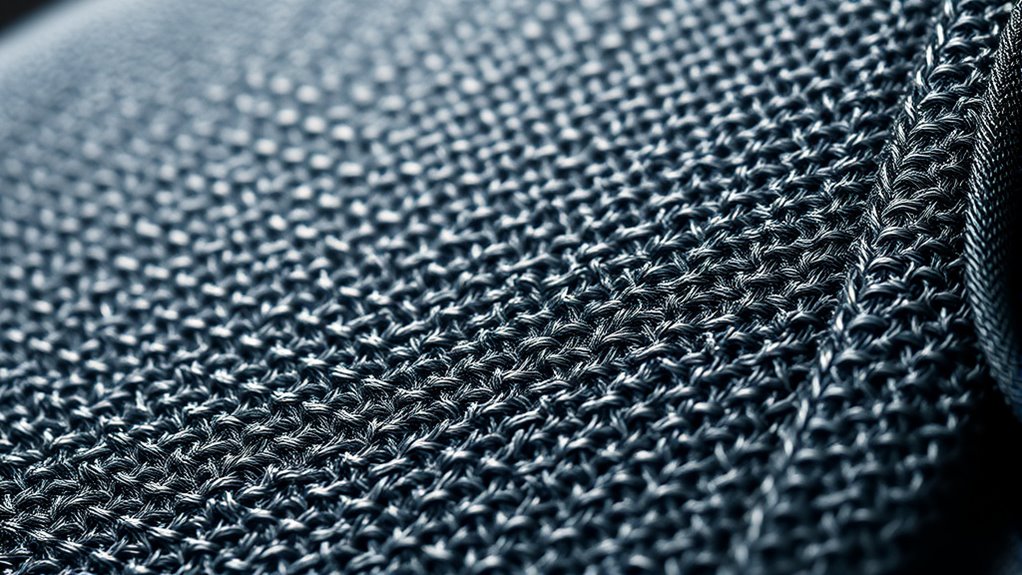

High-strength fibers like Kevlar are key in making bulletproof fabrics, thanks to their incredible tensile strength and lightweight nature. The manufacturing process involves controlling materials and conditions to guarantee uniformity and molecular alignment, which boosts strength and durability. These fibers absorb and disperse impact energy effectively, making them essential for protective gear in military and civilian uses. If you want to discover more about how these fibers work and their applications, keep exploring the science behind their exceptional properties.

Get your wardrobe favorites delivered free with Prime
- Fast, free delivery on millions of items
- Prime Video, Amazon Music and more included
- Member-only deals all year
Key Takeaways
- Kevlar is a high-strength aramid fiber known for its exceptional tensile strength and impact resistance.
- Manufacturing processes control fiber molecular alignment to optimize tensile properties and uniformity.
- Bulletproof fabrics combine multiple Kevlar layers to absorb and disperse energy from impacts effectively.
- High-strength fibers enable lightweight, durable protective gear for military, law enforcement, and aerospace applications.
- Advances in fiber spinning and chemical treatments enhance the performance and safety features of bulletproof fabrics.
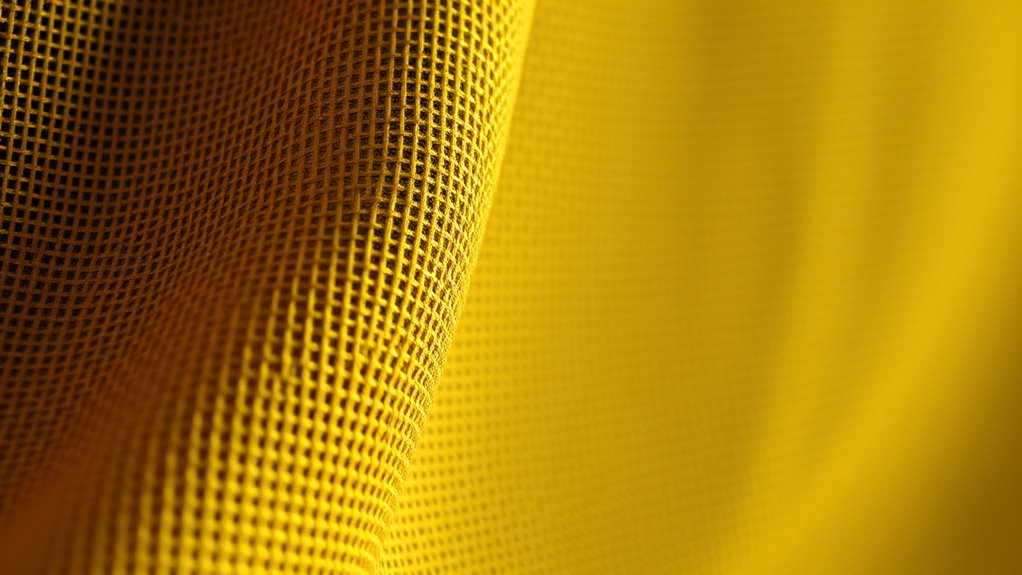
High-strength fibers are essential materials known for their remarkable strength-to-weight ratio, making them fundamental in industries like aerospace, sports, and defense. When you look into how these fibers are created, fiber manufacturing plays a central role. This process involves carefully selecting raw materials, such as aramids or ultra-high-molecular-weight polyethylene, and transforming them into fibers with specific properties. During fiber manufacturing, controlling factors like temperature, tension, and chemical environments guarantees the fibers achieve peak performance. The goal is to produce fibers with exceptional tensile properties—meaning they can withstand high loads without breaking—while remaining lightweight. This delicate balance is what makes high-strength fibers so effective in demanding applications.
Understanding the tensile properties of these fibers helps you appreciate their unique capabilities. Tensile strength measures how much pulling force a fiber can endure before snapping, and high-performance fibers excel here. For instance, Kevlar, a well-known aramid fiber, boasts tensile strengths several times greater than steel on a per-weight basis. This means you can use much less material to achieve the same strength, which is essential in aerospace where weight savings directly translate to fuel efficiency. Likewise, bulletproof fabrics made from these fibers leverage their tensile properties to absorb and disperse energy upon impact, preventing penetration and saving lives.
The manufacturing process influences these tensile properties profoundly. High-quality fiber manufacturing guarantees uniformity in fiber diameter and consistency in molecular alignment, which directly impacts tensile strength and elongation. When fibers are manufactured with precise control, they exhibit predictable, reliable tensile behavior—an essential feature for safety-critical applications. Advances in fiber manufacturing, such as spinning techniques and chemical treatments, have led to fibers with enhanced tensile properties, making them even more suitable for demanding uses.
As you explore high-strength fibers, it’s clear that fiber manufacturing and tensile properties are intertwined. Superior manufacturing techniques produce fibers with high tensile strength, flexibility, and durability. These qualities enable fibers like Kevlar to be woven into fabrics that resist tearing, absorb impacts, and maintain integrity under stress. Whether in protective gear, aerospace components, or sporting equipment, the combination of advanced fiber manufacturing and exceptional tensile properties equips you with materials that are not only strong but also lightweight and reliable. This synergy is what truly sets high-strength fibers apart and drives their critical role across multiple industries.
As an affiliate, we earn on qualifying purchases.
Frequently Asked Questions
How Are Kevlar Fibers Manufactured at the Molecular Level?
You begin by polymerizing aromatic polyamide monomers through a controlled process, creating long chains with strong molecular bonds. During manufacturing, you guarantee proper molecular alignment, which is vital for high strength. The polymerization process forms fibers with tightly packed molecules, giving Kevlar its exceptional durability. As you spin these fibers, you maintain this alignment, resulting in a material that’s lightweight yet incredibly resistant to impacts and tearing.
What Are the Environmental Impacts of Producing Bulletproof Fabrics?
Ever wonder what the environmental toll is when producing bulletproof fabrics? You face recycling challenges because these materials are tough to break down, making disposal difficult. Additionally, the manufacturing process can lead to chemical pollution, harming ecosystems and human health. While these fabrics offer protection, their production impacts the environment profoundly, prompting you to think about sustainable alternatives or improved recycling methods to reduce these harmful effects.
How Do Different Weaving Techniques Affect Fabric Strength?
You’ll find that weaving patterns considerably influence fabric strength and durability. Using tight, interlocking techniques like plain or twill weaves enhances fabric durability, making it more resistant to tearing and punctures. Conversely, looser weaves may reduce strength but improve flexibility. By choosing the right weaving pattern, you guarantee the high-strength fibers in bulletproof fabrics perform at their best, providing reliable protection and longevity in demanding conditions.
Can Kevlar Fibers Be Recycled or Reused Effectively?
You might wonder if Kevlar fibers can be recycled or reused effectively. While recycling challenges exist, like maintaining fiber strength, some companies successfully reuse Kevlar in composite materials, reducing waste. For example, a case study shows that shredded Kevlar from old body armor can be reprocessed into new protective gear. Although recycling isn’t widespread yet, the reuse potential remains promising, helping reduce environmental impact and extend the fibers’ lifespan.
What Are the Limitations of Current High-Strength Fiber Technologies?
You should know that current high-strength fiber technologies face limitations like environmental concerns and manufacturing challenges. These fibers often require energy-intensive production processes, which can harm the environment. Additionally, recycling and reusing them effectively remains difficult due to their complex materials. These issues hinder sustainability efforts and increase costs, making it hard to fully leverage their potential while addressing environmental impacts and improving manufacturing efficiency.
Conclusion
Think of high-strength fibers like your shield in a storm—Kevlar and bulletproof fabric symbolize resilience, protecting you from life’s unexpected blows. Just as these fibers weave strength into fabric, your inner resilience keeps you standing tall amidst challenges. Remember, behind every sturdy barrier is a story of innovation and hope. Embrace your inner armor, knowing that like these fibers, your strength can withstand anything thrown your way.
Halloween Picks
halloween
As an affiliate, we earn on qualifying purchases.