
Modern macramé has become a popular mindfulness trend because knotting is calming, accessible, and allows you to express your style sustainably. By creating wall hangings or plant hangers, you focus on each knot, bringing a meditative experience into your daily life. Plus, choosing eco-friendly materials helps you align your decor with your values. If you’re curious about how this craft can enhance your well-being and environment, you’ll find plenty more to explore.

Get your wardrobe favorites delivered free with Prime
- Fast, free delivery on millions of items
- Prime Video, Amazon Music and more included
- Member-only deals all year
Key Takeaways
- Modern macramé combines aesthetic appeal with sustainability, making it a popular choice for eco-conscious home decor.
- Knotting fosters mindfulness by encouraging focus, patience, and active meditation, promoting mental well-being.
- The craft offers customizable, unique designs that reflect personal style, enhancing the value of handmade wall art.
- Its accessibility allows beginners to easily start, supporting a growing DIY and craft community.
- Emphasizing eco-friendly materials and slow, intentional creation aligns macramé with broader lifestyle trends focused on sustainability and mindfulness.

Have you ever wondered how traditional knotting techniques have evolved into contemporary home decor? Today, macramé is making a major comeback, transforming from a craft once associated with boho chic into a versatile art form that brings both style and mindfulness into your space. Modern macramé isn’t just about creating decorative pieces; it’s about engaging in a process that’s calming, rewarding, and sustainable. When you pick up your cords and start knotting, you’re not only making beautiful DIY wall art but also embracing a lifestyle that values eco-friendly choices. This resurgence is driven by a desire for sustainable decor that minimizes environmental impact while adding texture and warmth to your home.
Modern macramé transforms traditional knotting into a calming, sustainable art form that adds style and mindfulness to your home.
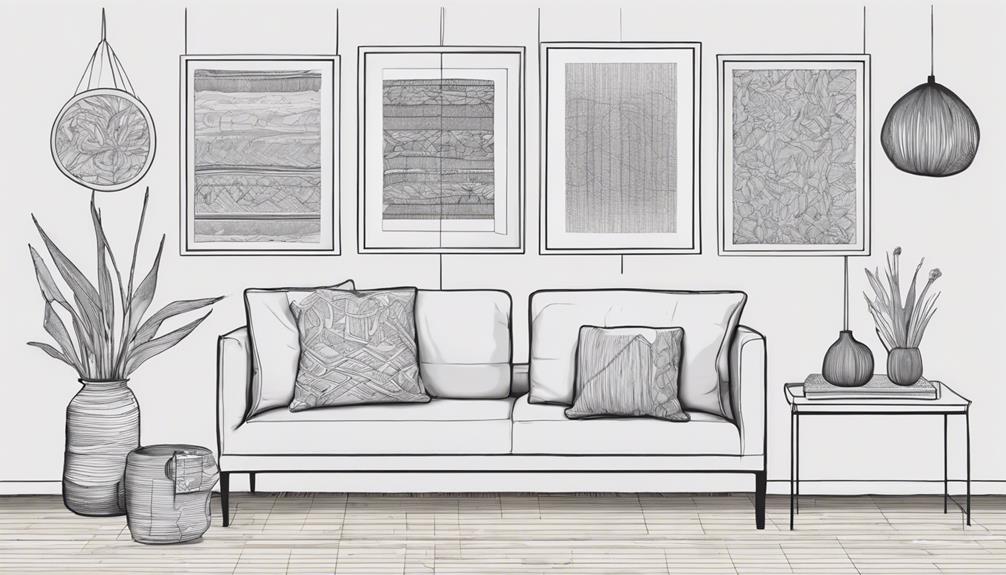
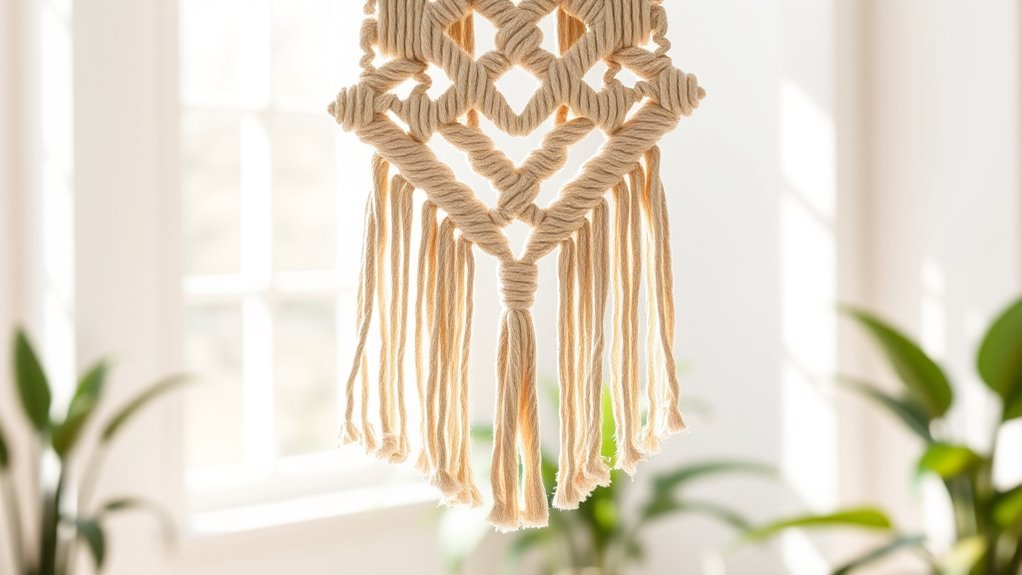
As you explore modern macramé, you’ll find that the craft offers endless possibilities for DIY wall art. You can craft intricate plant hangers, elegant wall hangings, or unique room dividers—all customized to fit your style and space. The beauty of DIY wall art is that it’s highly personal; you select the cords, colors, and patterns that resonate with your aesthetic. It’s a satisfying process that allows you to create one-of-a-kind pieces that reflect your personality. Plus, because you’re making it yourself, you can choose eco-friendly materials like organic cotton or recycled jute, reinforcing your commitment to sustainable decor. This hands-on approach not only results in stunning decor but also reduces waste, making your home more environmentally conscious.
Modern macramé also taps into the broader trend of mindfulness. Knotting requires focus and patience, offering a meditative experience that helps you unwind from daily stress. As you work on each knot, you become more present, transforming a simple craft into a form of active meditation. Recent innovations in sustainable materials have made it easier than ever to craft eco-friendly projects that align with your values. This mindful process can improve your mental clarity and foster a sense of accomplishment when you see your finished piece hanging proudly on your wall. Incorporating macramé into your living space creates a harmonious environment that nurtures both your well-being and your home’s aesthetic.
Many people are drawn to the craft because it’s accessible and adaptable. You don’t need special skills to get started—just some cords, a few basic knots, and a desire to create. The trend’s popularity is rooted in its ability to blend style, sustainability, and mindfulness seamlessly. Whether you’re making a small wall hanging or a large statement piece, macramé offers a rewarding way to express your creativity while supporting eco-friendly practices. In the end, knotting becomes more than a craft; it’s a mindful, sustainable way to decorate your home and reconnect with a slower, more intentional way of living.
As an affiliate, we earn on qualifying purchases.
Frequently Asked Questions
What Are the Best Materials for Beginner Macramé Projects?
For beginner macramé projects, you’ll want to choose the best materials like natural fibers such as cotton or jute, which are easy to work with and feel soft. Synthetic options like nylon or polyester can also be great—they’re durable and come in vibrant colors. Starting with these materials makes knotting simpler and more enjoyable, helping you build confidence while creating beautiful, mindful pieces.
How Long Does It Typically Take to Complete a Macramé Piece?
Ever wonder how long it takes to create a stunning macramé piece? The time investment depends on your skill level and project complexity. Beginners might spend several hours on small projects, while more intricate designs can take days. As you gain experience, you’ll craft faster and more efficiently. Keep knotting and practicing—soon, you’ll finish beautiful pieces quicker, turning patience into a rewarding art form.
Can Macramé Be Used for Outdoor Decorations?
Yes, you can definitely use macramé for outdoor decorations. To guarantee outdoor durability, choose weather-resistant materials like polyester or acrylic cords. These materials offer better weather resistance and can withstand exposure to sun, rain, and wind. Properly sealing or treating your macramé pieces also helps prolong their lifespan. With the right materials and care, your outdoor macramé can add a charming, natural touch to your garden or patio year-round.
Are There Any Health Benefits Associated With Macramé?
Imagine you’re back in the Renaissance, but today, macramé offers real health benefits. When you knot, you reduce stress and improve focus, acting as a calming activity. The repetitive movements help lower cortisol levels, easing anxiety, and promoting relaxation. Plus, mastering intricate patterns can sharpen your concentration. So, by engaging in macramé, you’re not just creating art—you’re nurturing your mental well-being with every knot.
How Do I Troubleshoot Common Knotting Mistakes?
When troubleshooting common knotting mistakes, first check your knot tension; uneven tension can cause loose or tight knots. If your project looks uneven, review your looping errors—ensure each loop is consistent and secure. Take your time to rework problematic areas, tightening or loosening as needed. Practice patience, and you’ll develop a better eye for maintaining proper tension and avoiding looping errors, leading to more polished and satisfying macramé pieces.
Conclusion
As you weave your knots and create your masterpieces, you’ll find that modern macramé becomes more than just a craft—it’s like a comforting hug in fabric form. It offers a calming escape from daily chaos, allowing you to slow down and focus on each intricate detail. So, pick up those cords and embrace knotting as your new mindfulness ritual. Before you know it, you’ll feel more centered, like a peaceful lake after a gentle rain.
Halloween Picks
halloween
As an affiliate, we earn on qualifying purchases.