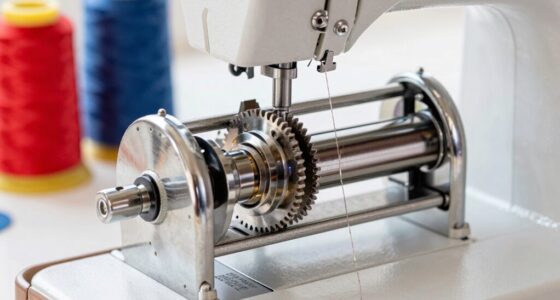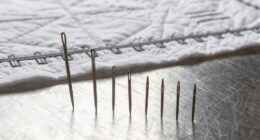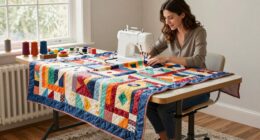

Bobbin tension on a longarm is crucial for achieving smooth, even stitches and eliminating annoying loops in your quilting. If you’re facing uneven stitches or thread bunching, check your bobbin thread quality and machine setup. Small adjustments to the bobbin case can often make a major difference. Regular maintenance and testing on scrap fabric will help you find the right balance. With the right techniques, you’ll see your quilting skills improve considerably—take the next steps to master this essential aspect!
Key Takeaways
- Uneven stitches or loops often indicate improper bobbin tension; assess and adjust for balance to enhance stitch quality.
- Regularly check and clean the bobbin area to prevent lint buildup, which can affect tension.
- Use a tension gauge to make precise adjustments to the bobbin tension for optimal results.
- Test stitch settings on scrap fabric to ensure proper tension before starting your quilting project.
- Seek professional help if tension issues persist, as expert guidance can significantly improve your quilting experience.

Superior Threads L-Style Towa Bobbin Tension Gauge – Measuring Tool for Quilting and Sewing Machine
TENSION GAUGE: The Towa Bobbin Tension Gauge is a must-have tool that helps measure thread bobbin tension
As an affiliate, we earn on qualifying purchases.
As an affiliate, we earn on qualifying purchases.
Identify and Resolve Common Bobbin Tension Issues
When you notice uneven stitches or thread bunching, how do you pinpoint the bobbin tension issue? Start by evaluating the bobbin thread quality and confirming it matches your fabric type and needle choice. Check your machine setup, focusing on the tension balance between the top and bobbin threads. Adjust the bobbin tension as needed, keeping in mind that a too-tight or too-loose bobbin can lead to loop prevention problems. Experiment with stitch length to enhance quilting consistency. If you’re still facing issues, revisit your thread quality and verify it’s suitable for your project. These small but essential adjustments can greatly improve your quilting experience and help you achieve that perfect finish.
Superior Threads L-Style Towa Bobbin Tension Gauge – Measuring Tool for Quilting and Sewing Machine
TENSION GAUGE: The Towa Bobbin Tension Gauge is a must-have tool that helps measure thread bobbin tension
As an affiliate, we earn on qualifying purchases.
As an affiliate, we earn on qualifying purchases.
How to Check Your Bobbin Tension
To check your bobbin tension effectively, you’ll need a few essential tools at hand. You’ll also want to familiarize yourself with testing techniques to guarantee your adjustments are spot on. Let’s explore how to adjust the tension properly for ideal stitching results.
Tools You Need
Checking your bobbin tension requires just a few essential tools to get the job done right. First, you’ll need a reliable bobbin winder for proper bobbin winder maintenance; this guarantees your thread winds evenly without tangles. Next, grab a pair of scissors for trimming any excess thread that might interfere with tension adjustments. A small scale or a tension gauge can help measure your bobbin tension accurately. Finally, don’t forget to assess your thread quality; using high-quality thread minimizes issues. With these tools in hand, you’ll be well-prepared to tackle any bobbin tension problems and keep your longarm machine running smoothly. Remember, the right tools make all the difference in achieving perfect stitches!
Testing Techniques Explained
With the right tools at your side, you can start testing your bobbin tension effectively. It’s essential to debunk tension myths and apply troubleshooting tips to improve your quilting precision. Here are some techniques to guide you:
- Check thread compatibility for your fabric
- Test with different machine settings
- Observe fabric impact on tension
- Perform regular bobbin maintenance
- Adjust tension gradually for best results
Adjusting Tension Properly
Adjusting your bobbin tension can seem intimidating, but it’s essential for achieving a flawless stitch. Many quilters fall for tension myths, believing that tight bobbin tension is always the answer. Instead, focus on finding the right balance. Start by using a simple adjustment technique: hold the thread and let the bobbin dangle. If it drops slowly, you’re on the right track; if it falls too quickly, it’s too loose. Conversely, if it doesn’t drop at all, it’s too tight. Make small adjustments to the bobbin case screw and test again. Remember, a well-tuned bobbin tension allows for smoother stitching and prevents frustrating loops. Regular checks will help you maintain ideal tension for your projects.

15pcs Sewing Machine Cleaning Kit, Sewing Machine Cleaning Tools Including Tweezers, Rippers, Screwdriver, Double Headed Brush, Needle Board Screwdriver, Silicone Brush and Storage Bag
Product Includes: The sewing machine tool kit includes 1 black curved nose tweezers, 1 double headed lint brush,…
As an affiliate, we earn on qualifying purchases.
As an affiliate, we earn on qualifying purchases.
Adjusting Bobbin Tension: A Quick Guide
Getting the bobbin tension just right is essential for achieving beautiful, even stitches on your longarm machine. A few simple adjustments can make all the difference. Here’s a quick guide to help you fine-tune that tension:
- Check thread types: Different threads require different tensions.
- Select the right needle sizes: Verify your needle matches your thread.
- Test on scrap fabric: Always try your settings before quilting.
- Adjust the bobbin screw: Turning it clockwise increases tension; counterclockwise decreases it.
- Observe stitch quality: Look for loops or puckering to guide your adjustments.

Eoehro 72pcs Sewing Thread Kit, 36 Colors, 400 Yards per Spool Polyester Thread, Prewound Bobbins, Sewing Machine Threads
1. Eoehro Sewing Thread Set : 36 Colors 400 Yards Spools and Bobbins Assortment with Clear Bobbin Case….
As an affiliate, we earn on qualifying purchases.
As an affiliate, we earn on qualifying purchases.
Essential Tools for Adjusting Bobbin Tension

To achieve ideal bobbin tension, having the right tools on hand makes all the difference. Start with a tension gauge to measure your bobbin tension accurately. A good adjuster screwdriver is essential for making precise adjustments. If you’re using a bobbin winder, verify it’s functioning properly to avoid tension issues. Familiarize yourself with various thread types, as they can affect tension considerably. Keep your sewing machine well-maintained with regular cleaning and lubrication, following maintenance tips specific to your model. Having a set of quality quilting supplies handy can also help you troubleshoot any tension problems quickly. Additionally, understanding filtration basics can ensure that dust and debris don’t interfere with your machine’s performance. Regularly checking and cleaning filters can further enhance your machine’s ability to maintain efficiency and prevent tension issues. With these tools, you’ll be well-equipped to adjust bobbin tension effectively and enhance your quilting experience.
Troubleshooting Loops: Fine-Tuning Your Tension

When you notice loops in your quilting, it’s essential to identify their causes quickly. Often, adjusting your bobbin tension can make all the difference. Let’s explore how to troubleshoot these pesky loops effectively.
Identifying Loop Causes
While fine-tuning your longarm’s tension, identifying loop causes is vital for achieving flawless stitching. Pay attention to various factors that affect loop formation to improve your stitch quality. Here are some key elements to take into account:
- Thread behavior: Different weights can affect how loops form.
- Needle selection: The right needle size is essential for proper tension balance.
- Fabric types: Different materials react uniquely to tension settings.
- Quilting techniques: Your method can impact the overall loop formation.
- Machine setup: Confirm everything’s correctly configured for peak performance.
Adjusting Bobbin Tension
Adjusting bobbin tension is essential for eliminating loops and achieving smooth, even stitches. When you tweak the tension mechanics, you’re directly influencing how the bobbin thread interacts with the top thread. Different thread types can require unique settings, so always consider your materials. Start with basic machine calibration to guarantee proper functionality. If loops appear, fine-tune the bobbin tension by making small adjustments, checking your stitching consistency after each change. Understanding fabric interaction is also important; heavier fabrics may need tighter tension to prevent loops. Remember, mastering these quilting basics leads to better outcomes in your projects. Stay patient and persistent, and soon, your longarm will be sewing flawlessly.
Best Practices for Maintaining Bobbin Tension
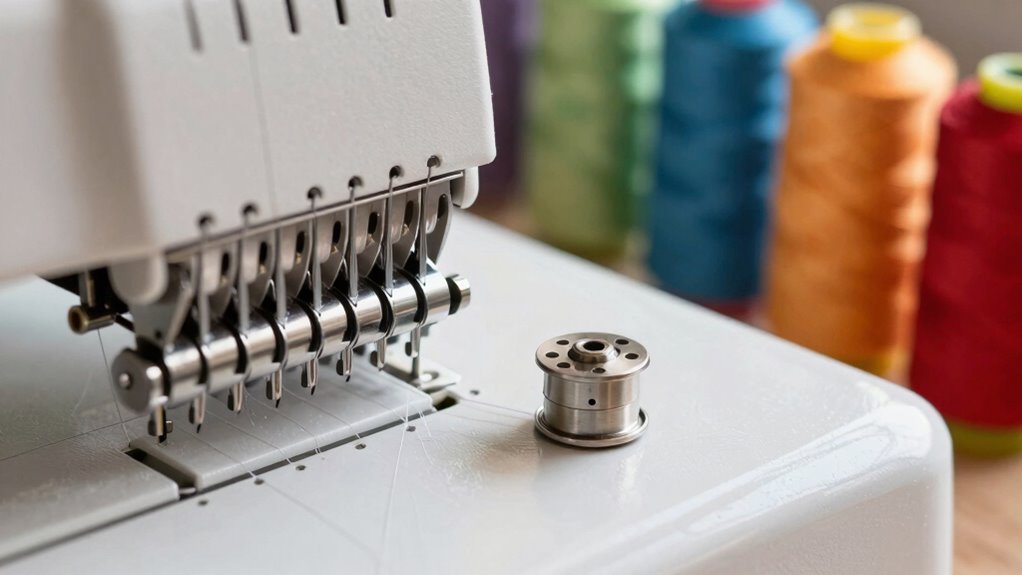
Maintaining proper bobbin tension is crucial for achieving flawless quilting results, so it’s important to establish a routine for regular checks and adjustments. Follow these bobbin maintenance tips to keep your machine running smoothly:
- Check tension before starting a new project.
- Use the right bobbin case for your machine.
- Clean the bobbin area regularly to prevent lint buildup.
- Test stitch on scrap fabric to verify correct tension.
- Make small adjustments gradually, using tension adjustment techniques as needed.
When to Call in the Pros for Tension Troubles?
Even with diligent maintenance, you might still encounter bobbin tension issues that feel beyond your control. If you’ve tried adjusting the tension and the problem persists—like consistent looping or uneven stitches—it’s time to contemplate professional assistance. Experts can provide a thorough tension evaluation, identifying underlying issues you might not see. They’ll check for mechanical problems or misalignments that can affect your longarm’s performance. Don’t hesitate to reach out if you’re feeling frustrated; sometimes a fresh set of eyes can make all the difference. Investing in professional help not only saves you time but also enhances your quilting experience by ensuring your machine runs smoothly. Remember, it’s okay to seek help when you need it!
Enhancing Your Quilting Skills Through Tension Mastery
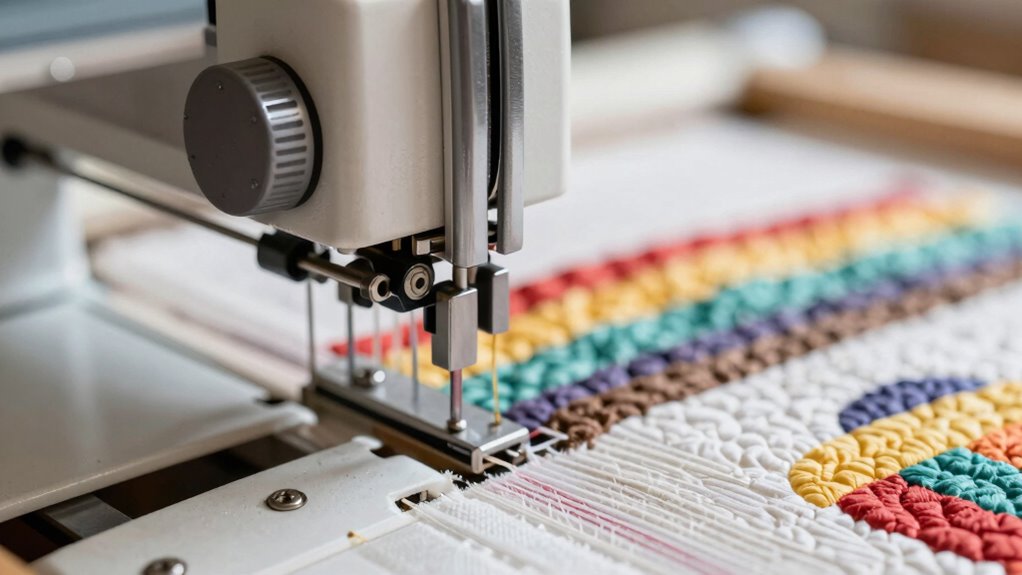
Mastering bobbin tension isn’t just about troubleshooting; it’s a fundamental skill that can elevate your quilting projects to new heights. By understanding and applying effective tension techniques, you’ll achieve greater quilting precision and confidence in your work.
Mastering bobbin tension is key to elevating your quilting projects, enhancing precision and boosting your confidence in every stitch.
Here are some ways to enhance your skills:
- Experiment with different thread types.
- Adjust bobbin tension based on fabric weight.
- Practice consistent feeding of fabric through the machine.
- Regularly check and clean your machine.
- Keep a tension diary to track adjustments and results.
With these strategies, you’ll not only fix issues but also create stunning quilts that showcase your craftsmanship. Embrace the journey of mastering tension, and watch your quilting transform!
Understanding the Importance of Bobbin Tension in Quilting
While you may focus on the top thread tension, understanding bobbin tension is equally important for achieving a flawless quilt. Bobbin mechanics play a vital role in determining how your stitches form and hold together. If your bobbin tension is too loose or too tight, you’ll likely encounter issues like loops or skipped stitches. Maintaining a proper tension balance between the top and bobbin threads guarantees that your quilt layers stay secure without puckering or distortion. Regularly check and adjust your bobbin tension to suit different fabrics and thread types. Remember, a small tweak can make a significant difference in your quilting results, allowing your creativity to shine through in every stitch.
Frequently Asked Questions
Can Bobbin Tension Affect Stitch Quality on Different Fabrics?
Yes, bobbin tension does affect stitch quality across different fabric types. If you’re working with varying fabric thicknesses or thread types, adjusting the tension balance is essential for achieving stitch consistency. For instance, lighter fabrics may require a looser tension, while heavier ones need more tightness. By fine-tuning your bobbin tension according to your sewing techniques and materials, you can enhance your overall stitching results, ensuring professional-looking seams every time.
How Often Should I Check My Bobbin Tension?
You should check your bobbin tension every 3 to 5 hours of sewing. Did you know that nearly 70% of stitch issues can be traced back to bobbin tension? For effective bobbin maintenance, regularly clean your bobbin area and use proper tension adjustment techniques. This’ll not only improve your stitch quality but also extend your machine’s life. Keeping an eye on these factors guarantees smooth sewing and fewer frustrating interruptions.
What Happens if I Ignore Bobbin Tension Issues?
If you ignore bobbin tension issues, you’ll likely face frustrating sewing problems. Your thread tension may become inconsistent, causing loops or uneven stitches. This not only affects your project’s appearance but can also damage your sewing machine over time. You’ll end up spending more time fixing mistakes instead of enjoying your work. Regularly checking and adjusting bobbin tension is essential to keep your sewing machine running smoothly and your projects looking great.
Are There Specific Threads That Require Different Bobbin Tensions?
If you think of threads as unique dancers, each one requires its own rhythm. Different thread types, like cotton or polyester, need specific tension settings to guarantee fabric compatibility. Heavier thread weight might demand tighter tension, while lighter threads could need a looser grip. Regular machine calibration helps maintain stitch consistency, so adjust your bobbin tension accordingly. This way, your quilting projects will glide smoothly, creating beautiful, even stitches every time.
Will Changing Needles Impact Bobbin Tension Settings?
Yes, changing needles can impact your bobbin tension settings. Different needle types, like quilting or embroidery needles, have varying sizes and shapes, which can affect how the thread interacts with the fabric. If you switch needles, you might notice tension adjustments are necessary to achieve a balanced stitch. Always test your settings after changing needles to guarantee your stitches look perfect and your fabric flows smoothly through the longarm.
Conclusion
In quilting, you’ve probably heard the saying, “A stitch in time saves nine.” Mastering your bobbin tension is essential for achieving those flawless stitches you crave. By following the tips and techniques outlined, you can quickly resolve tension issues and enhance your quilting experience. Don’t hesitate to make those tiny adjustments—it’s often the little things that make a big difference. Keep practicing, and you’ll see your skills soar as your tension troubles fade away!