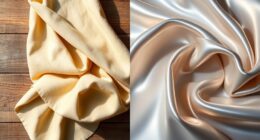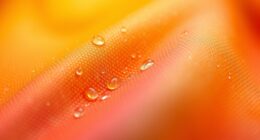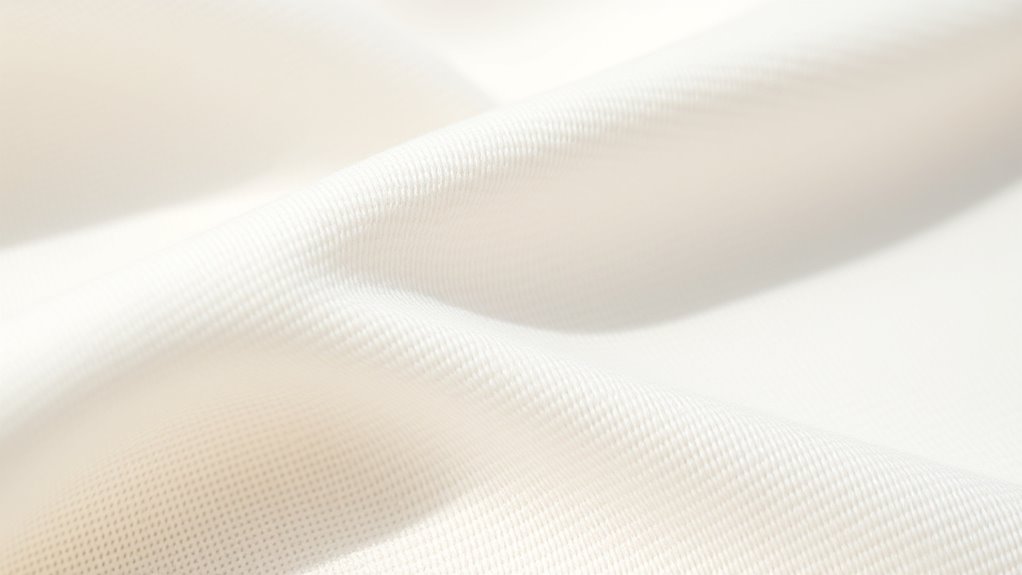
Choosing anti-allergy fabrics made from tightly woven natural fibers like cotton or bamboo, treated to resist mold and dust mites, can help you avoid itchy, allergy-triggering materials. These fabrics reduce allergen buildup, making your environment safer and more comfortable. Plus, hypoallergenic treatments and easy-to-maintain options keep allergens at bay for healthier living. To discover the best fabrics for your needs, explore more about how these materials work together.
Key Takeaways
- Tightly woven natural fibers like cotton and bamboo reduce allergen trapping and skin irritation.
- Hypoallergenic treatments applied to fabrics prevent mold, bacteria, and dust mite growth.
- Mold-resistant textiles with antimicrobial properties inhibit mold development and allergen buildup.
- Synthetic fibers, such as polyester, are less likely to harbor allergens and are easy to clean.
- Choosing fabrics with clear hypoallergenic or mold-resistant labels ensures safer, itch-free comfort.

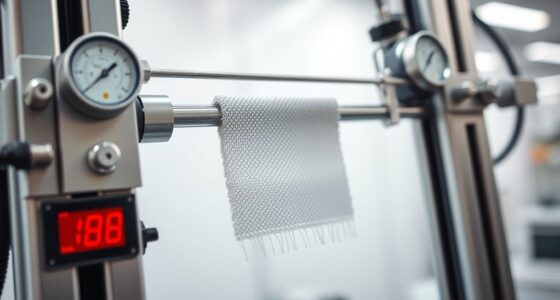
If you suffer from allergies, choosing the right fabrics can make a significant difference in your daily comfort. Many common textiles trap dust, mold, and other allergens that can trigger sneezing, itchy eyes, or respiratory issues. That’s why exploring anti-allergy fabrics is so important. These textiles are specially designed or treated to minimize allergen buildup, helping you breathe easier and sleep better. One of the key approaches is the use of hypoallergenic treatments. These treatments are applied to fabrics to prevent the growth of mold, bacteria, and dust mites—all common triggers for allergy sufferers. When fabrics undergo hypoallergenic treatments, they become less hospitable to these allergens, reducing your exposure and alleviating allergy symptoms. This is especially beneficial in bedding and upholstery, where allergens tend to accumulate most.
Beyond treatments, mold resistant textiles are another game-changer. These fabrics are designed or woven with antimicrobial properties that inhibit mold growth. Mold thrives in damp, warm environments, and fabrics that resist mold growth stay cleaner longer, lowering the risk of mold spores affecting your health. Mold resistant textiles are particularly useful in humid climates or rooms with poor ventilation, where moisture can linger. They help create a healthier living environment by preventing mold from settling into your sheets, curtains, or furniture. When you choose fabrics made with mold resistant textiles, you’re actively reducing the potential for mold-related allergic reactions, making your home safer and more comfortable. Additionally, AI Trend on Instagram insights can help brands identify popular anti-allergy fabrics and promote them effectively to target audiences.
It’s also worth noting that many anti-allergy fabrics are made from natural or synthetic fibers that are less likely to harbor allergens. For example, tightly woven cotton or bamboo fabrics can serve as a barrier against dust mites and pollen. Pairing these natural fibers with hypoallergenic treatments enhances their protective qualities without sacrificing comfort. When shopping for bedding, pillows, or curtains, look for labels that specify hypoallergenic or mold resistant properties. These fabrics are often designed to be easy to wash and maintain, further reducing allergen buildup over time. Regular cleaning, combined with the right fabric choices, can dramatically improve your living environment.
Frequently Asked Questions
Are Anti-Allergy Fabrics Suitable for Sensitive Skin?
Yes, anti-allergy fabrics are suitable for sensitive skin. They have hypoallergenic properties that reduce the risk of irritation and allergic reactions. If you have skin sensitivity, these fabrics can help you stay comfortable without causing itching or discomfort. You’ll appreciate their gentle nature, making them an excellent choice for bedding, clothing, or accessories. Just check the specific material details to verify it meets your skin’s needs.
How Do Anti-Allergy Fabrics Compare to Regular Fabrics?
Think of anti-allergy fabrics as a gentle shield in a bustling crowd. They typically offer better fabric breathability, keeping you cooler and more comfortable, and maintain color retention longer than regular fabrics. While regular fabrics might trap allergens and irritate sensitive skin, anti-allergy options actively resist dust mites and mold, making them a smarter choice for comfort and longevity. You’ll notice the difference in everyday wear and feel more at ease.
Can Anti-Allergy Fabrics Be Washed Frequently Without Damage?
Yes, you can wash anti-allergy fabrics frequently without damage. These fabrics are designed with good washing durability, so they hold up well over time. Just use gentle cycles and mild detergents to prevent color fading and preserve their anti-allergy properties. Avoid harsh bleach or high heat, which can degrade the material. With proper care, your anti-allergy fabrics will stay fresh, effective, and looking good even after many washes.
Are Anti-Allergy Fabrics Environmentally Friendly?
Anti-allergy fabrics can be environmentally friendly, especially when made with eco-friendly manufacturing practices. Look for materials that prioritize sustainability, such as organic cotton or bamboo, which often have better biodegradability considerations. By choosing these eco-conscious options, you help reduce environmental impact, as they break down more easily and avoid harmful chemicals. Supporting brands with eco-friendly production guarantees your comfort doesn’t come at the planet’s expense.
Do Anti-Allergy Fabrics Prevent Dust Mite Allergies Effectively?
Anti-allergy fabrics are effective at preventing dust mite allergies because they promote dust mite reduction by creating a less hospitable environment. Their fabric treatment effectiveness helps block allergens from settling and reduces mite growth. When you choose these fabrics, you’re actively reducing allergen exposure, which can alleviate allergy symptoms. Regular cleaning combined with anti-allergy fabrics enhances dust mite prevention, making your space healthier and more comfortable.
Conclusion
Imagine a world where allergy sufferers no longer have to fear itchy, uncomfortable fabrics. With anti-allergy materials, you can enjoy clothing that’s gentle on your skin and reduces allergic reactions. Did you know that up to 20% of people worldwide experience fabric allergies? That’s a staggering number, highlighting the importance of choosing the right textiles. Embrace these innovative fabrics and take a step toward comfort and health every day.