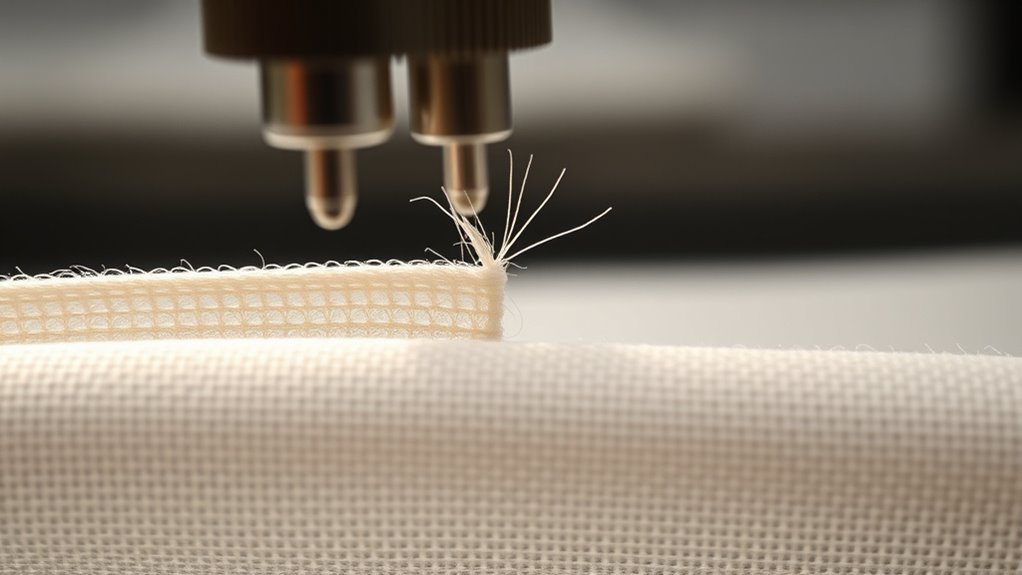

Tensile testing helps you predict fabric failures before they happen by analyzing how materials respond to stretching forces. It reveals weaknesses, such as limited stretch capacity and elastic limits, which could lead to tearing or breaking during use. By evaluating stress-strain behavior and fatigue, you can identify potential failure points early. Understanding these insights allows you to improve fabric durability and safety, and if you keep exploring, you’ll uncover even more ways to prevent unexpected failures.

Get your wardrobe favorites delivered free — and shop member deals
- Fast, free delivery on millions of items
- Access to Prime Big Deal Days deals on October 6–7
- Prime Video, Amazon Music and more included
Key Takeaways
- Tensile testing identifies elastic limits and stress thresholds, indicating when fabrics are prone to failure under load.
- It detects early signs of material fatigue by analyzing stress-strain behavior over repeated cycles.
- The test reveals weaknesses or defects in fabrics before they reach critical stress points.
- Consistent tensile testing ensures quality control, preventing batch failures and enhancing durability.
- By understanding material performance, manufacturers can design fabrics that resist failure in real-world applications.
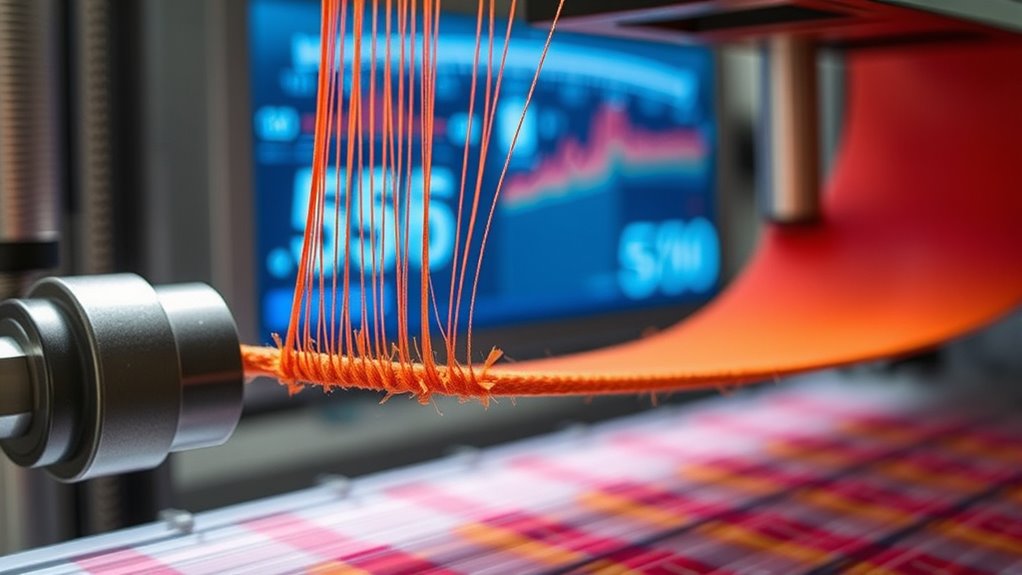
Tensile testing is a crucial method for evaluating the strength and durability of fabrics, especially when evaluating their performance under tension. When you subject a fabric sample to tensile testing, you’re fundamentally pulling on it until it either breaks or reaches a specified elongation. This process provides critical insights into the material’s elasticity, which tells you how much it can stretch and recover without permanent deformation. By analyzing how a fabric responds during this test, you gain a clearer understanding of its stress-strain behavior—that is, how it reacts to applied forces and how much strain it can endure before failure occurs. This information is indispensable in predicting how fabrics will perform in real-world applications, where they are subjected to various forces and stresses.
Material elasticity plays a key role in this predictive process. If a fabric exhibits high elasticity, it can stretch considerably without losing its shape or strength, reducing the likelihood of sudden failure. Conversely, fabrics with low elasticity are more prone to snapping or tearing under stress. During stress-strain analysis, you observe the relationship between the applied force and resulting elongation, which helps identify the elastic limit—the point beyond which permanent deformation begins. Recognizing this threshold allows you to determine safe working loads and design fabrics that can withstand expected stresses without failing prematurely.
High elasticity indicates greater stretchability and resilience before permanent deformation occurs.
Tensile testing also reveals potential weaknesses before they manifest in actual use. For example, if a fabric shows a gradual decline in its stress-strain curve after repeated cycles, it suggests fatigue that could lead to failure over time. By detecting these signs early, you can predict failure points and adjust manufacturing processes or material choices accordingly. This proactive approach minimizes the risk of fabric failure in the field, saving costs and safeguarding end-users. Additionally, understanding the dynamic performance of fabrics under various stress conditions helps in developing more resilient textiles.
Moreover, tensile testing helps you establish quality standards and consistency across production batches. If a fabric consistently demonstrates desirable stress-strain characteristics, you can confidently rely on its performance. Conversely, identifying deviations allows you to address issues before products reach consumers. Overall, tensile testing offers a scientific basis for predicting fabric failures, enabling you to design more reliable, durable textiles. By understanding the material’s elasticity and conducting thorough stress-strain analysis, you can anticipate how fabrics will behave under tension, preventing failures before they happen and ensuring your products meet safety and performance standards.
As an affiliate, we earn on qualifying purchases.
Frequently Asked Questions
How Accurate Is Tensile Testing in Predicting Long-Term Fabric Durability?
Tensile testing offers a good forecast of fabric durability by providing data that, when combined with statistical analysis and material modeling, helps predict long-term performance. You can rely on it to identify potential failure points early. While it may not capture all environmental impacts, its accuracy improves when integrated with other testing methods. Overall, tensile testing is a valuable tool for evaluating fabric longevity with reasonable precision.
Can Tensile Testing Be Adapted for All Fabric Types?
You might wonder if tensile testing can be adapted for all fabric types, considering fabric variability and testing adaptability. The truth is, while tensile testing is versatile, it requires adjustments for different fabrics—such as weave, fiber content, and thickness. By customizing test parameters, you can effectively evaluate diverse fabrics. This flexibility guarantees tensile testing remains a valuable tool across various textiles, helping predict fabric performance reliably before issues arise.
What Are the Limitations of Tensile Testing in Fabric Failure Prediction?
You should know that tensile testing has limitations in fabric failure prediction. Sample limitations mean results can vary if the tested fabric isn’t representative of the entire batch. Testing variability also affects accuracy, as differences in equipment or technique can lead to inconsistent data. These factors make it challenging to rely solely on tensile testing for predicting fabric failures, so combining it with other methods is often necessary for better reliability.
How Cost-Effective Is Implementing Tensile Testing in Manufacturing?
You might think tensile testing costs are high, but the investment benefits outweigh initial expenses. Conducting a thorough cost analysis reveals how it reduces waste, prevents costly fabric failures, and enhances product quality. Implementing tensile testing can save money long-term by catching issues early, minimizing returns, and boosting customer satisfaction. So, while there’s an upfront cost, the overall savings and value make it a smart, cost-effective choice for manufacturing.
Are There Alternative Methods to Tensile Testing for Fabric Failure Prediction?
You might consider non-destructive methods like visual inspections or ultrasonic testing to predict fabric failures without damaging the material. Chemical analysis can also identify fiber composition and potential weaknesses early. These approaches offer alternatives to tensile testing, allowing you to assess fabric quality efficiently. By combining these methods, you can detect issues proactively, reducing the risk of failure and ensuring better product durability without compromising your manufacturing process.
Conclusion
So, next time you see a tear in your favorite t-shirt, thank tensile testing for playing fabric fortune-telling. It’s like having a crystal ball that warns you about wardrobe disasters before they happen. Without it, fabrics would be like ticking time bombs, waiting to explode at the worst moment—say, during a big meeting or date. Thanks to tensile testing, your wardrobe stays intact, and your fashion karma remains blissfully undisturbed.
Fall Picks
fall essentials
As an affiliate, we earn on qualifying purchases.