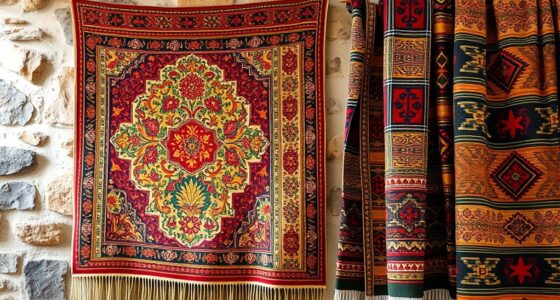
Basket weaving goes far beyond just creating functional objects; it becomes a powerful form of artistic expression rooted in cultural stories and symbolism. When you explore fiber techniques, you learn how artisans use patterns, motifs, and colors to communicate values like protection, fertility, or spirituality. These woven pieces serve as visual language, connecting past traditions with contemporary creativity. If you keep exploring, you’ll discover how basketry transforms from craft into meaningful art that preserves and shares community stories.
Key Takeaways
- Basket weaving transforms functional objects into expressive art, conveying cultural stories, symbolism, and community identity.
- Patterns and motifs in baskets serve as visual language, communicating values like fertility, protection, and spiritual beliefs.
- Mastery of fiber techniques allows artisans to innovate while preserving tradition, blending symbolism with contemporary aesthetics.
- Basketry functions as a cultural narrative, connecting past, present, and future through intricate designs and craftsmanship.
- Beyond utility, woven baskets act as mediums for artistic expression, honoring heritage and storytelling within communities.
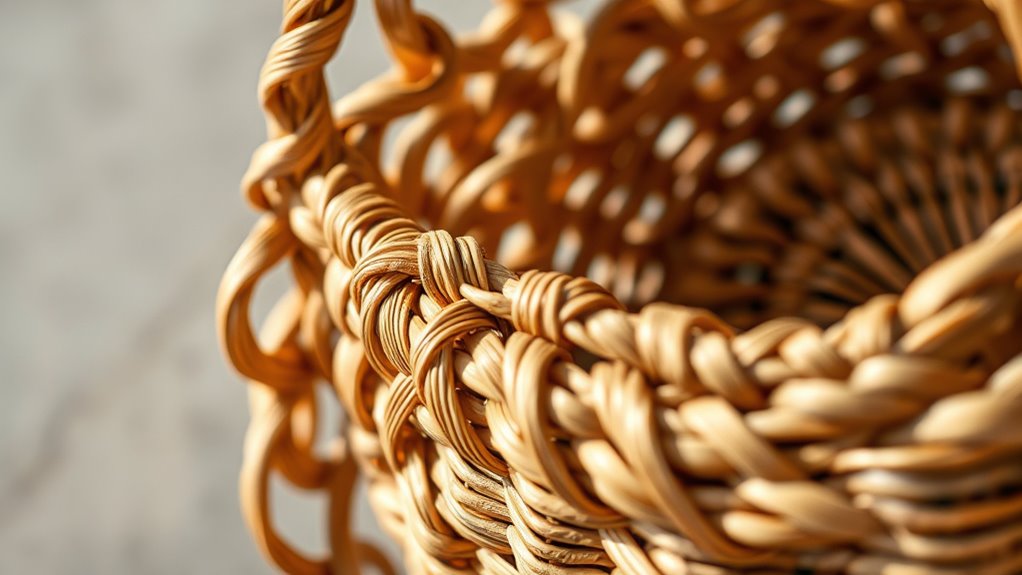
Have you ever considered basket weaving as more than just a craft? It’s a timeless art form that goes far beyond simple utility. When you explore into basket weaving, you discover a universe of fiber techniques that showcase skill, patience, and creativity. Each weave and twist of natural fibers—like reeds, willow, or rattan—tells a story and reflects a cultural symbolism rooted in tradition. These fiber techniques aren’t just about creating sturdy containers; they’re about expressing identity, history, and community values. As you explore different weaving methods, you realize that each pattern and style carries meaning, often passed down through generations. These techniques connect you to ancestors who used weaving as a means of storytelling and cultural preservation.
Basket weaving connects us to tradition, storytelling, and cultural identity through fiber techniques passed down generations.
Basket weaving as an art form invites you to see beyond the functional. It’s a visual language that communicates cultural symbolism. For example, certain patterns in African baskets symbolize fertility or protection, while Native American designs often depict spiritual beliefs or natural elements. When you incorporate these motifs into your work, you’re not just creating a beautiful object—you’re honoring traditions and conveying messages that resonate deeply within communities. The colors, shapes, and structures used in basketry serve as symbols that carry specific cultural significance, transforming a simple container into a meaningful artifact. This layer of symbolism elevates basket weaving from a craft to an expressive art form capable of conveying complex stories and shared histories. Additionally, understanding the fiber techniques involved enhances your ability to innovate and personalize your creations.
By engaging with fiber techniques and cultural symbolism, you develop a greater appreciation for the artistry involved. You realize that each basket is a product of deliberate choices—what materials to use, how tightly to weave, which patterns to follow—all of which reflect cultural values and personal expression. This understanding enhances your connection to the craft and encourages you to think of basket weaving as an ongoing dialogue between tradition and innovation. As you master the techniques, you might also experiment with new materials or contemporary designs, blending old symbolism with modern aesthetics. This evolution keeps the art form vibrant and relevant, allowing you to contribute your voice to a centuries-old tradition.
Ultimately, basket weaving is more than a hobby or a craft; it’s a powerful form of artistic communication. It’s a way to keep cultural symbolism alive and to honor fiber techniques that have shaped communities for generations. When you approach basket weaving with this perspective, you transform simple materials into meaningful works of art, connecting past, present, and future through every woven strand.

Traditional Craft Kits Twined Basket Weaving Kit (Gathering Style) – Weave Kit for Kids and Adults Complete with Basket Weaving Supplies and Instructional Booklets
Learn to Make Baskets: Create your own gallery of traditional arts & crafts! Learn the technique of plain…
As an affiliate, we earn on qualifying purchases.
As an affiliate, we earn on qualifying purchases.
Frequently Asked Questions
What Are the Most Popular Modern Basket Weaving Styles?
You’ll find that modern basket weaving styles often feature sleek, minimalist designs and innovative fiber textures. Popular techniques include coiling, twining, and plaiting, which allow for creative expression. These styles emphasize the beauty of weaving techniques and the unique fibers used, like jute, rattan, or recycled materials. As a result, contemporary weavers turn traditional methods into artistic statements, blending functionality with aesthetic appeal in fresh, exciting ways.
How Do Artists Choose Materials for Artistic Baskets?
You choose materials for artistic baskets by considering their visual appeal and symbolic meaning, as well as practicality. Notably, over 60% of artists source their materials locally to support sustainability and authenticity. You rely on sourcing techniques that include scavenging, repurposing, or working with specialized suppliers. This careful material selection enhances your basket’s aesthetic and emotional impact, allowing you to express creativity while respecting environmental and cultural contexts.
Can Basket Weaving Be Incorporated Into Contemporary Interior Design?
You can definitely incorporate basket weaving into contemporary interior design as unique interior accents. By choosing modern materials and sleek patterns, you enhance decor integration, making handcrafted baskets both functional and artistic. Use woven baskets to organize space or add texture to shelves and tables. Their versatility allows you to blend traditional craftsmanship with modern aesthetics, creating warm, personalized touches that elevate your interior environment effortlessly.
What Are the Challenges Faced by Artists in Basket Weaving?
You face challenges like sourcing quality materials due to supply chain disruptions, which can limit your creative options. Balancing cultural preservation with modern techniques also proves difficult, as you endeavor to honor traditional methods while innovating. Additionally, maintaining economic sustainability can be tough, especially when competing with mass-produced items. These obstacles require resilience and adaptability, but overcoming them allows you to keep the artistry and cultural significance of basket weaving alive.
How Has Basket Weaving Evolved as an Art Form Over Time?
You see how basket weaving has evolved from purely functional objects to a rich art form rooted in cultural symbolism. Artists now combine traditional techniques with innovative designs, pushing boundaries beyond practicality. This evolution allows you to explore cultural stories and histories through your work, transforming simple materials into expressive art pieces. As a result, basket weaving gains recognition not just as craft, but as a meaningful, artistic expression.
The Pattern Making Primer: All You Need to Know About Designing, Adapting, and Customizing Sewing Patterns
Used Book in Good Condition
As an affiliate, we earn on qualifying purchases.
As an affiliate, we earn on qualifying purchases.
Conclusion
As you step back, you realize basket weaving isn’t just a functional craft but a vibrant art form. Unlike mass-produced objects, each woven piece tells a story, blending tradition with creativity. The simplicity of twigs contrasts with the complexity of design, reminding you that beauty often lies in the unexpected. So, next time you see a basket, appreciate its artistry—where practicality meets passion, and everyday materials become extraordinary works of art.

AOUXSEEM 8 Sets Basket Weaving Craft Kit for Beginners,DIY Burlap Style Desk Storage Small Parts Candy Cookies Bowls,8 inches Plastic Base and 109yd Jute Twine and Cork Linings & Lace
【Package Contents】❖ 8 pcs plastic base❖ 8 pcs cork lining❖ 109yd jute twine❖ 6.5yd lace❖ 4 hot glue…
As an affiliate, we earn on qualifying purchases.
As an affiliate, we earn on qualifying purchases.

C.S. Osborne Basket Weaving Tool #424-B Bent Blade, Made in USA
C.S. Osborne Basket Weaving Tool.
As an affiliate, we earn on qualifying purchases.
As an affiliate, we earn on qualifying purchases.