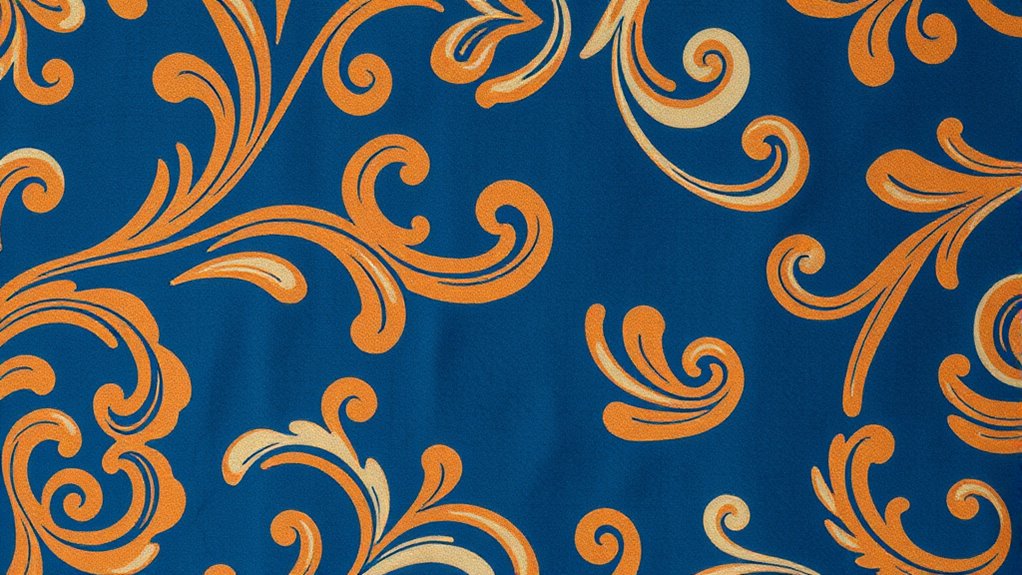

The art of batik uses wax-resist dye techniques to create detailed, colorful patterns on fabric. You start with a clean, tightly stretched cloth, applying wax with tools like canting or brushes to outline your design. Then, you dip the fabric into dye baths, where waxed areas resist the color. Repeating waxing and dyeing builds layered, intricate motifs that tell stories or symbolize cultural values. If you keep exploring, you’ll discover how this beautiful craft combines skill and tradition.
Key Takeaways
- Batik employs wax as a resist material to create intricate patterns on fabric.
- Traditional wax sources include beeswax and paraffin, applied with canting or brushes.
- Multiple dyeing and waxing cycles build layered, vibrant, and detailed designs.
- Wax is removed after dyeing to reveal the contrasting patterns and colors.
- The technique combines craftsmanship with cultural storytelling, reflecting heritage and symbolism.
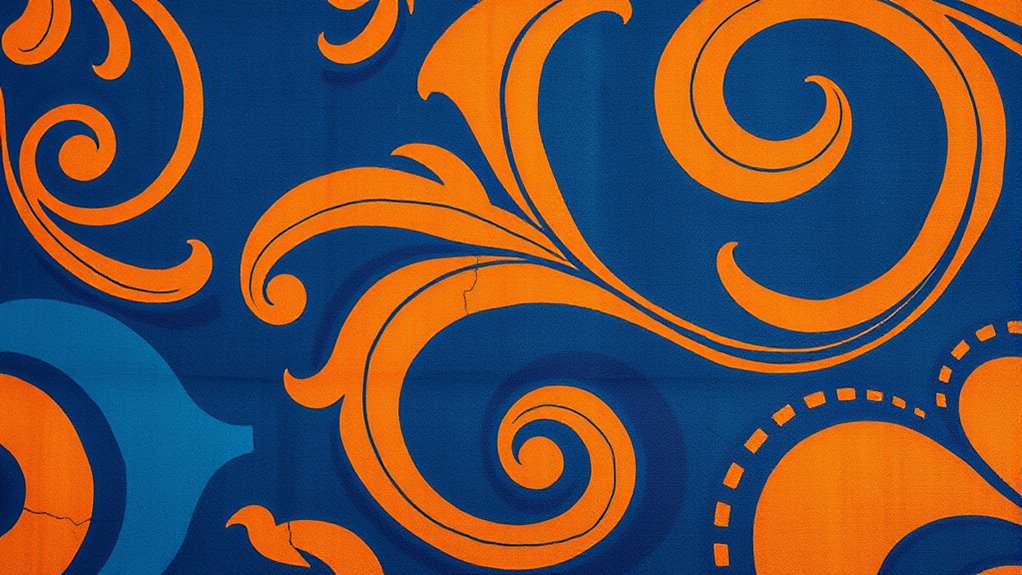
Have you ever wondered how intricate batik designs are created? The process begins with fabric dyeing, where the fabric is prepared to accept colors in a controlled way. You start with a piece of cloth—usually cotton or silk—that’s thoroughly washed to remove any impurities or sizing. Once clean, it’s stretched tightly on a frame to prevent wrinkles, ensuring smooth application of wax and dye. The fabric dyeing process is fundamental because it sets the stage for the resist technique that makes batik so unique. Artists or artisans apply wax to specific areas of the fabric to create intricate patterns and motifs. This wax acts as a barrier, resisting the dye and preserving the original fabric color beneath. As you work through this stage, you’re effectively shaping the visual story that will emerge from the fabric. The wax is traditionally melted from beeswax or paraffin and carefully applied with a canting (a small spouted tool) or a brush, allowing precise control over the design.
The cultural significance of batik extends beyond its decorative aspect. It’s a symbol of identity and heritage, especially in countries like Indonesia, Malaysia, and parts of Africa. The patterns and motifs often carry meanings rooted in history, social status, or local beliefs. When you craft batik, you’re participating in a tradition that has been passed down through generations. Each pattern can tell a story or represent a community’s values, making the creation process deeply meaningful. The wax-resist technique, central to batik art, is what allows these cultural stories to be visually encoded into fabric. After applying the wax, you dip the fabric into dye baths. The areas covered with wax resist the dye, leaving those parts of the fabric in their original color. You can repeat this process multiple times with different colors, applying wax in new patterns each time to build complex, layered designs.
Once the dyeing is complete, you remove the wax by boiling or scraping it off, revealing the vibrant, intricate pattern beneath. This combination of fabric dyeing and wax-resist technique results in a piece that is not only visually stunning but also rich in cultural significance. The entire process demands patience, skill, and an understanding of both the technical and cultural aspects of batik. When you see a finished piece, you’re witnessing the culmination of these efforts—a beautiful textile that embodies tradition, artistry, and stories woven into every pattern.

BestPysanky Set of 3 Tjanting Tool Hot Wax Pens for Batik Method Fabrics Decoration
6.9 Inches long
As an affiliate, we earn on qualifying purchases.
As an affiliate, we earn on qualifying purchases.
Frequently Asked Questions
What Are the Origins of Traditional Batik Patterns?
You might find that traditional batik patterns originate from Indonesia, where they hold deep cultural symbolism. These designs often reflect regional variations, showcasing unique motifs and meanings tied to local beliefs and traditions. As you explore different areas, you’ll notice how patterns adapt, incorporating symbols that represent nature, spirituality, or social status. This rich history makes each batik piece a meaningful expression of cultural identity and regional artistry.
How Long Does It Take to Complete a Batik Piece?
It typically takes between 40 to 80 craftsmanship hours to complete a batik piece, depending on complexity. You’ll need to invest significant time in carefully applying wax, dyeing, and detailing each design. Remember, patience and precision are key; rushing can ruin your work. As you progress, you’ll see how each step builds toward a stunning, intricate final piece, reflecting your dedication and skill.
What Types of Fabrics Are Best for Batik?
You should choose fabrics like cotton, silk, or linen for batik, as they offer excellent dye absorption properties, ensuring vibrant and detailed designs. Cotton and linen are durable, making them ideal for long-lasting artworks, while silk provides a smooth surface for intricate patterns. Avoid synthetic fabrics, as they don’t absorb dye well and may not withstand the wax-resist process. Your choice of fabric impacts both the durability and visual quality of your batik.
Can Batik Be Preserved for Long-Term Display?
Think of your batik as a vintage vinyl record needing special care. To preserve it long-term, you should use proper preservation methods like acid-free framing, controlled climate, and minimal light exposure. For display considerations, keep it away from direct sunlight and high humidity. Regularly inspect for damage, and consider professional conservation if needed. Proper care guarantees your batik stays vibrant and beautiful for generations.
Are There Modern Innovations in Wax-Resist Dyeing Techniques?
Yes, modern innovations in wax-resist dyeing include digital printing and eco-friendly dyes. You can now incorporate digital techniques to create intricate patterns more efficiently and precisely. Eco-friendly dyes reduce environmental impact, making the process sustainable. These advancements allow you to experiment with new designs while maintaining traditional resist techniques, blending innovation with heritage. Embrace these modern methods to expand your creative possibilities and produce environmentally conscious, detailed batik artwork.

Gift Set of Handwoven Pouch and Canting Wax and Dye Tool, Handwoven Natural Bag, Gift for Her
Handcrafted Natural Pouch: Woven from Grey Sedge 'Purun'
As an affiliate, we earn on qualifying purchases.
As an affiliate, we earn on qualifying purchases.
Conclusion
So, next time you admire a stunning batik piece, remember all the meticulous wax-resist work behind it. It’s funny how something so delicate and intricate can hide such a painstaking process. You might think it’s just pretty fabric, but beneath the surface, it’s a clever dance of patience and skill. Truly, the art of batik proves that beauty often requires a bit of stubborn resistance—literally. Who knew wax could be so crafty?

Batik, Tie Dyeing, Stenciling, Silk Screen, Block Printing: The Hand Decoration of Fabrics
As an affiliate, we earn on qualifying purchases.
As an affiliate, we earn on qualifying purchases.

Tjanting Tool for Making Batik from Java Indonesia (Set of 4)
Authentic pure copper tjanting (wax applicator) for making batik
As an affiliate, we earn on qualifying purchases.
As an affiliate, we earn on qualifying purchases.