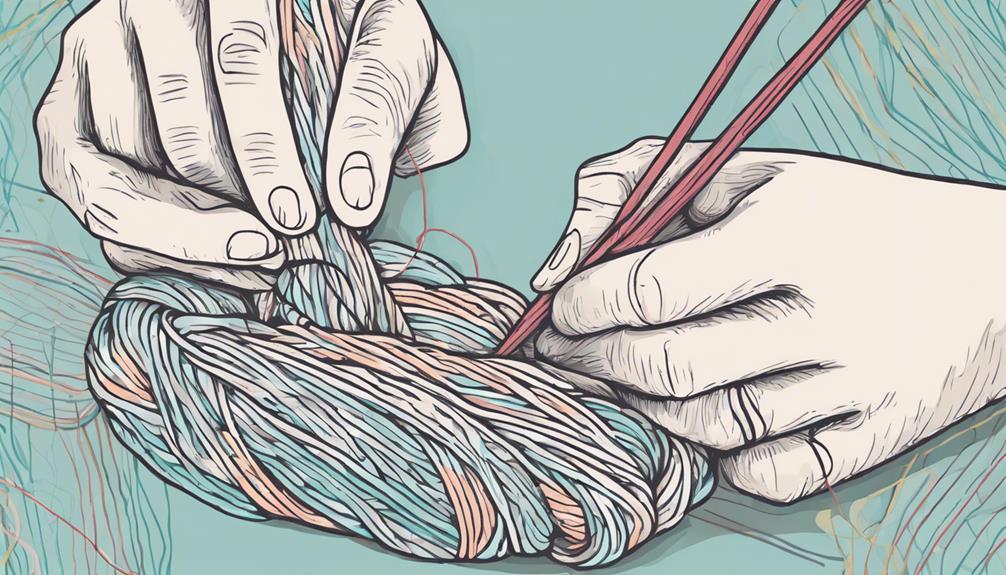

Lace making is a delicate textile art that combines centuries-old craftsmanship with rich cultural traditions. You’ll find it involves intricate techniques like needle and bobbin lace, often crafted by skilled artisans. Although modern innovations, such as machine-made lace, have made it more accessible, traditional handmade lace remains valued for its artistry and personal touch. If you want to discover how these timeless methods continue to influence today’s designs and craftsmanship, keep exploring further.
Key Takeaways
- Lace making is a centuries-old textile art involving intricate hand or machine techniques.
- Traditional methods include bobbin lace and needle lace, requiring high skill and precision.
- Modern innovations like machine-made lace, laser cutting, and 3D embroidery expand creative possibilities.
- Preserving traditional craftsmanship is vital for maintaining cultural heritage and artisanal artistry.
- Lace symbolizes elegance and craftsmanship, influencing fashion, décor, and textile arts today.
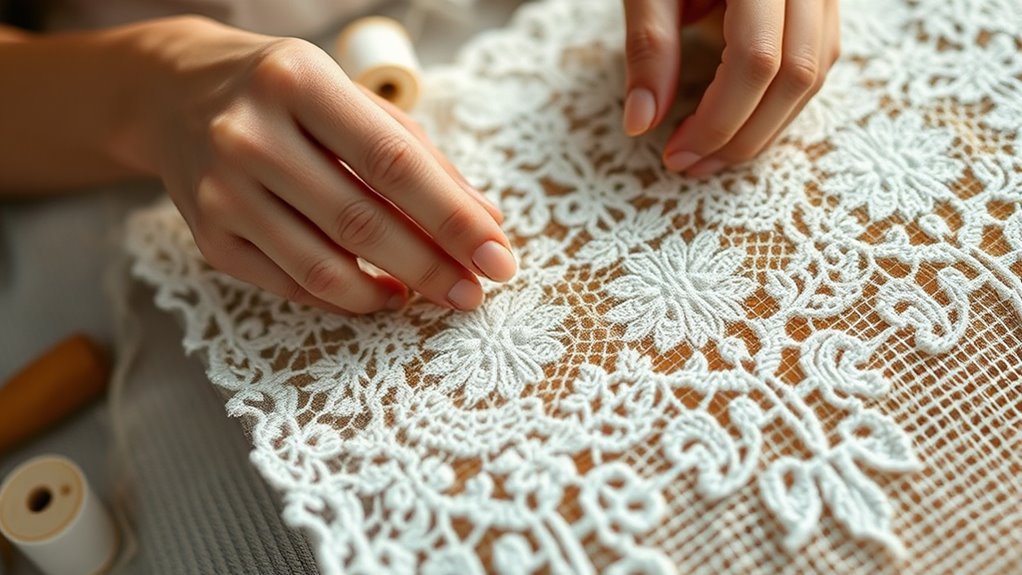
Have you ever wondered how delicate, intricate lace is created? The history origins of lace trace back several centuries, with its roots stretching across Europe, particularly in countries like Italy, France, and Belgium. During the Renaissance period, lace became a symbol of wealth and status, crafted by skilled artisans who devoted hours to perfecting each piece. Originally, lace was handmade using fine threads of linen, silk, or cotton, and artisans employed various techniques such as bobbin lace and needle lace to produce its complex patterns. These methods required patience, precision, and a keen eye for detail, making lace a luxury item reserved for the wealthy and noble classes. Over time, the craft evolved, with regional styles developing unique characteristics that reflected local traditions and resources. Despite technological advances, the core of lace making remained rooted in manual techniques, preserving its artistry and cultural significance.
Today, modern techniques have transformed how lace is created, blending traditional craftsmanship with contemporary innovations. Machine-made lace, for example, allows for faster production and broader accessibility, making lace more affordable and widely available. These machines imitate the intricate patterns traditionally woven by hand, using computer-controlled processes to replicate the delicate motifs and textures. However, even with automation, many designers and artisans continue to value handmade lace, recognizing its artistry and the personal touch it conveys. Modern techniques also include laser cutting and 3D embroidery, which expand creative possibilities beyond conventional methods. These innovations enable the creation of complex patterns with precision that would be difficult to achieve manually, while still honoring the intricate beauty that lace embodies. Additionally, the preservation of traditional techniques** remains vital to maintaining the cultural heritage of lace making**.
Despite these advancements, the appreciation for the craft’s history remains essential. Many artisans still study traditional techniques to guarantee that the rich cultural heritage of lace making endures. Whether handmade or machine-produced, lace continues to symbolize elegance, femininity, and craftsmanship. You can see its influence in contemporary fashion, home décor, and textile art, where designers draw inspiration from centuries-old patterns and techniques. In essence, lace making is a harmonious blend of history and innovation. Its origins rooted in centuries of dedicated craftsmanship, and its future shaped by modern techniques, ensure that this delicate textile art remains timeless. As you explore lace, you’re not just admiring a beautiful fabric—you’re experiencing a centuries-old tradition that continues to evolve, adapt, and inspire.
Top picks for "lace delicate textile"
Open Amazon search results for this keyword.
As an affiliate, we earn on qualifying purchases.
Frequently Asked Questions
What Are the Different Types of Lace?
You can explore various types of lace, including needle lace, bobbin lace, and crochet lace, each created with unique embroidery techniques. Needle lace involves intricate stitches, while bobbin lace uses twisting threads on bobbins. Crochet lace is made with a hooked needle. These styles have rich historical origins, dating back centuries, and each offers distinct textures and patterns, allowing you to choose the perfect lace for your project or design.
How Long Does It Take to Make a Piece of Lace?
It can take anywhere from several hours to several weeks to make a piece of lace, depending on its lace pattern complexity. If you’re working on intricate designs, your lace production speed slows down because each detail requires careful attention. Simpler patterns come together more quickly, letting you finish faster. Your skill level also influences the time, so practice helps improve your lace-making efficiency.
What Tools Are Essential for Lace Making?
You’ll need just a few essential tools, but they’re the magic wands of lace making! Start with lace bobbins—these tiny tools hold and manipulate your threads with superhero precision. Pattern charts are your secret maps, guiding every delicate stitch. A sharp needle, pins, and a sturdy pillow or cushion are also crucial. With these tools, you can transform simple threads into intricate, breathtaking lace masterpieces that seem to defy reality!
Can Lace Be Made at Home Without Professional Training?
Yes, you can definitely make lace at home without professional training. With some home crafting supplies and patience, you can learn beginner techniques like bobbin lace or needle lace. Start with simple patterns, watch tutorials, and practice regularly. This hands-on approach helps you grasp the basics, develop your skills, and enjoy creating delicate lace pieces that reflect your personal style. Don’t be afraid to experiment and have fun!
How Has Modern Technology Influenced Traditional Lace Making?
Modern technology has substantially influenced traditional lace making by introducing digital embroidery and 3D printing. You can now create intricate lace designs more quickly and precisely with digital embroidery machines, reducing the need for manual skill. 3D printing allows you to experiment with new textures and complex patterns that were once difficult to produce. These innovations make lace making more accessible, enabling you to craft beautiful, detailed pieces with greater ease and creativity.
Conclusion
You’ve seen how lace making transforms tiny threads into intricate masterpieces. Did you know that some antique lace pieces can take hundreds of hours to craft? That’s a demonstration of the skill and patience involved. So next time you admire a delicate lace item, remember the artistry behind it. It’s a timeless craft that combines creativity with dedication, ensuring this beautiful textile art continues to fascinate and inspire for generations to come.