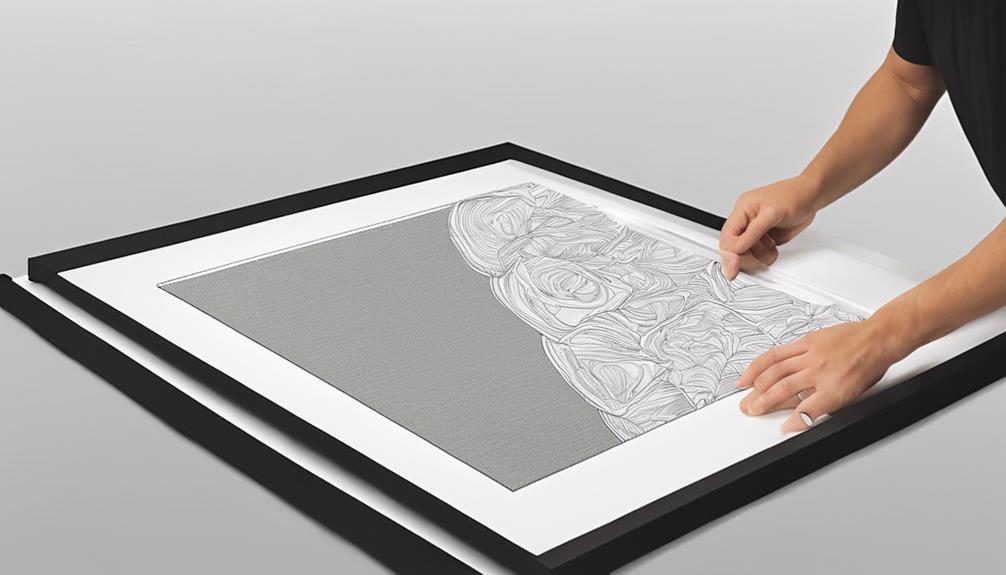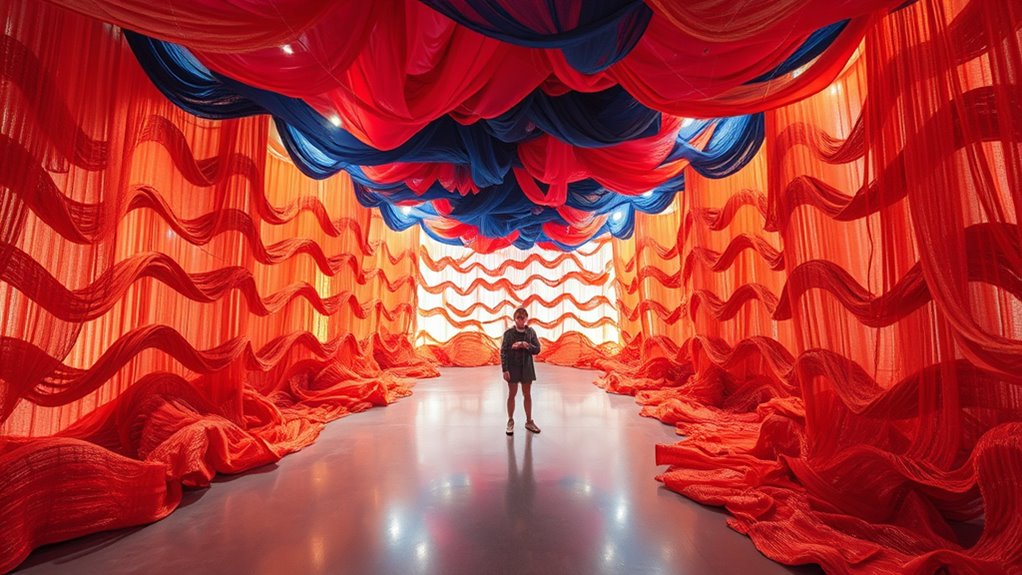
Large-scale textile installations use fabric and fiber techniques to craft immersive environments that transform spaces and engage your senses. By manipulating materials through sewing, knotting, draping, or wrapping, artists create layered textures, dynamic forms, and interactive surfaces. These installations influence light and movement, inviting you to experience art in a multi-sensory way. If you want to explore how textiles can redefine spatial storytelling, keep exploring these innovative projects.
Key Takeaways
- Large-scale textile installations transform spaces into immersive environments using techniques like draping, wrapping, and fabric manipulation.
- Artists incorporate diverse fibers and unconventional materials to create textured, multisensory experiences.
- Manipulating textiles influences light and movement, enhancing spatial perception and viewer engagement.
- These installations blend traditional craft with contemporary design to tell stories related to culture, identity, or sustainability.
- The immersive nature of textile art invites tactile exploration, blurring boundaries between artwork and viewer.

Have you ever wondered how textiles can transform a space into a work of art? Large-scale textile installations do just that, turning ordinary environments into immersive experiences that captivate and inspire. When you step into these expansive works, you’re not just observing; you’re entering a domain shaped by fiber art and innovative textile techniques. These installations leverage the tactile and visual qualities of fabric, creating environments that engage your senses and challenge your perceptions of space.
Fiber art plays a essential role in these large-scale projects. It’s more than just weaving or sewing—fiber artists push boundaries by combining traditional techniques with contemporary approaches. You might see intricate embroidery, knotting, or felting integrated into massive structures, transforming soft materials into robust, architectural forms. Textile techniques such as quilting, tufting, or even fabric manipulation are employed on a grand scale, allowing artists to craft textures and patterns that resonate deeply with viewers. These methods give the installation a layered richness, inviting you to explore every inch and discover new details up close.
Fiber art transforms soft materials into architectural forms through embroidery, knotting, felting, quilting, and fabric manipulation on a grand scale.
As you move through these installations, you notice how the textiles interact with light and space. The manipulation of fabric—whether hanging, draping, or wrapping—creates a dynamic environment that feels alive. The textiles might sway gently with air currents or reflect light differently depending on your angle, making the experience unique from every perspective. The scale amplifies this effect; large textiles can stretch across entire walls or ceilings, transforming the space into a tactile landscape. This immersive quality invites you to become part of the artwork, blurring the lines between viewer and environment.
Creating such large-scale textile works requires a mastery of textile techniques and an understanding of spatial design. Artists often combine various fibers and techniques to achieve desired effects, balancing durability with beauty. They may employ industrial sewing machines for precise construction or experiment with unconventional materials like recycled fabrics or synthetic fibers. These choices not only enhance the visual impact but also embed meaningful narratives into the installation, whether about sustainability, identity, or cultural heritage. Additionally, understanding the visual impact of textiles enhances the overall experience for viewers.
Ultimately, large-scale textile installations demonstrate how fiber art and textile techniques can redefine spaces and elevate art to a sensory experience. When you encounter these works, you’re reminded that textiles are not just functional or decorative—they’re powerful tools for storytelling and spatial transformation. They turn simple fabrics into immersive environments, inviting you to see and feel art in a new, multidimensional way.
Frequently Asked Questions
How Do Artists Choose Materials for Large-Scale Textile Installations?
You choose materials based on your aesthetic considerations and how well they fit your vision. Material sourcing plays a key role; you look for fabrics, fibers, and textiles that align with your color scheme, texture, and durability needs. You might explore local suppliers or repurpose found materials to add unique elements. Ultimately, your selections reflect the story or emotion you want your immersive installation to convey.
What Safety Considerations Are Involved in Constructing Immersive Textile Art?
Did you know that over 40% of art-related fires are caused by textile materials? When constructing immersive textile art, you must prioritize safety by addressing fire hazards and ensuring structural stability. Use fire-resistant fabrics, install proper ventilation, and reinforce supports to prevent collapse. Regular inspections and adhering to safety codes protect both creators and viewers, making your installation a mesmerizing yet safe experience for everyone.
How Long Does It Typically Take to Complete Such Installations?
You can expect the timing estimates for completing immersive textile installations to vary widely, typically taking anywhere from a few weeks to several months. Effective project planning helps you set realistic timelines by considering design complexity, material sourcing, and construction phases. Staying organized and flexible guarantees you meet your goals without unnecessary delays, allowing you to deliver a stunning, immersive art piece that captures your vision perfectly.
Are There Environmental Impacts Associated With These Textile Artworks?
These textile artworks can cast a shadow on the environment, but you can minimize impacts by prioritizing sustainable sourcing and effective waste management. Think of it as planting seeds for a greener future, where eco-conscious choices reduce pollution and resource depletion. By carefully selecting materials and recycling leftover textiles, you help protect ecosystems, ensuring your art enriches rather than harms the planet.
How Do Audiences Typically Interact With Immersive Textile Installations?
You typically engage with immersive textile installations through active audience participation and sensory engagement. As you move through the space, you might touch, feel, or even manipulate the textiles, becoming part of the artwork. This interaction heightens your sensory experience, immersing you in the art. The installation encourages you to explore and connect physically and emotionally, making the art dynamic and personal rather than static.
Conclusion
As you step back and take in these massive textile installations, you’ll realize they’re nothing short of breathtaking. They transform blank spaces into vibrant worlds that seem to breathe and pulse with life, making you feel like you’ve entered a different universe. These immersive artworks don’t just hang on walls—they sweep you off your feet and into a domain where fabric becomes magic. Prepare to be overwhelmed, because these installations are truly the most mesmerizing sights you’ll ever encounter.