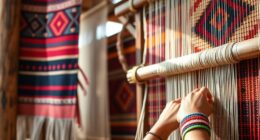
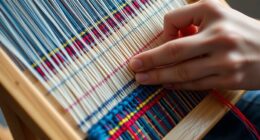
Textile art around the world showcases vibrant tapestries, intricate rugs, and diverse cultural crafts that reflect history, identity, and tradition. You’ll see how fiber techniques like weaving, embroidery, and dyeing carry deep cultural symbolism and stories. Patterns and motifs represent concepts like protection, fertility, and spiritual beliefs unique to each culture. Exploring these textiles reveals resilience and craftsmanship, offering a glimpse into how communities preserve their heritage—if you continue exploring, you’ll uncover even more fascinating stories woven into each piece.
Key Takeaways
- Textile art worldwide includes diverse forms like tapestries, rugs, embroidery, and cultural crafts, reflecting unique histories and identities.
- Techniques such as weaving, dyeing, and knotting are culturally significant, often passed down through generations.
- Patterns and symbols in textiles convey deep meanings related to spirituality, social status, and cultural stories.
- Specialized techniques are used for ceremonial textiles, highlighting their cultural and spiritual importance.
- Textile arts demonstrate cultural resilience, preserving traditions and serving as enduring symbols of community identity.

Textile art is a vibrant and diverse expression found in cultures worldwide, reflecting history, identity, and tradition. When you explore different textile forms like tapestries, rugs, and other cultural crafts, you begin to see how fiber techniques and cultural symbolism intertwine to tell stories unique to each community. Fiber techniques refer to the methods used to transform raw materials such as wool, cotton, silk, or jute into intricate textiles. These techniques—ranging from weaving and embroidery to knotting and dyeing—are passed down through generations, shaping the distinctive styles and motifs that define each culture’s textile art. As you study these methods, you’ll notice that they’re often more than just craft; they’re a language of their own, conveying social status, spiritual beliefs, or historical events.
Textile techniques and symbols tell stories of culture, identity, and tradition through woven, dyed, and embroidered art forms.
In many cultures, textiles serve as a form of visual communication, with patterns and symbols carrying deep cultural symbolism. For instance, a certain color or motif might represent fertility, protection, or ancestral lineage. You’ll find that in Persian rugs, floral patterns symbolize paradise, while in Native American weaving, geometric shapes often stand for natural elements or spiritual beliefs. These symbols aren’t chosen randomly—they’re embedded with meaning, making each piece a narrative of cultural identity. When you examine textiles from different regions, it’s like reading a storybook written in thread and dye, revealing the values and worldview of the people who created them. Additionally, the specific fiber techniques used often reflect the environment and resources available to each culture, adding another layer of meaning and adaptation.
The craftsmanship behind these textiles is often rooted in specific fiber techniques that require skill and patience. For example, the intricate embroidery found in Mexican Otomi textiles or the complex knotting of Moroccan Berber rugs showcases the mastery of artisans who dedicate their lives to preserving these traditions. You’ll also notice that some techniques are highly specialized, with certain patterns or stitches reserved for ceremonial or sacred textiles, further emphasizing their cultural importance. This careful craftsmanship isn’t just about aesthetics; it’s about preserving a way of life, a collective memory, and a sense of community.
As you explore textile art across the world, you realize that each piece is a testimony to human ingenuity and cultural resilience. The fiber techniques used and the symbols woven into the fabric serve as enduring links to the past, connecting you to the stories, beliefs, and histories of diverse cultures. These textiles aren’t just decorative objects—they are carriers of cultural symbolism, embodying the spirit and identity of their creators. Through understanding these elements, you gain a deeper appreciation for the artistry and cultural significance woven into every textile around the world.
Frequently Asked Questions
How Do Different Climates Influence Textile Dyeing Techniques Worldwide?
You’ll notice that different climates shape textile dyeing techniques through climate adaptation, especially in using natural dyes. In hot, dry regions, artisans often rely on quick-drying, sun-fasted dyes, while in humid areas, they develop methods to prevent mold and fading. The availability of plant-based natural dyes varies with climate, influencing color choices and techniques. So, climate directly impacts how you approach natural dyeing to guarantee vibrant, long-lasting textiles.
What Are the Economic Impacts of Textile Crafts on Local Communities?
You see how a local community’s textile craft, like Guatemalan woven rugs, boosts economic development by creating jobs and attracting tourists. These crafts also foster community empowerment, giving artisans pride and independence. When you support such initiatives, you help sustain cultural traditions while improving livelihoods, ensuring long-term economic benefits. Your engagement can make a real difference in empowering communities and preserving unique textile arts worldwide.
How Are Modern Technology and Traditional Methods Integrated in Textile Making?
You can see modern technology and traditional methods intertwine through digital craftsmanship, which uses digital tools for design and pattern creation, complementing hand-weaving techniques. By incorporating sustainable fibers, artisans guarantee eco-friendliness while preserving cultural practices. This blend allows for innovative designs and greater efficiency, making textile making more accessible and sustainable. You’ll find that this integration respects tradition while embracing progress, creating unique, environmentally conscious pieces that honor both heritage and innovation.
What Are the Conservation Challenges for Ancient Textile Artifacts?
You face conservation challenges with ancient textile artifacts because environmental factors like humidity, light, and temperature can cause deterioration. To preserve these textiles, you implement preservation techniques such as controlled climate conditions, proper storage, and minimal handling. Regular monitoring is essential to prevent mold, fading, and fiber damage. By managing these environmental factors, you help guarantee the longevity of these invaluable cultural artifacts for future generations.
How Do Textile Patterns Reflect Cultural Identity and History?
Ever wonder how textile patterns tell stories? You see, they reflect cultural identity and history through symbolic motifs and intricate designs. These patterns serve as visual language, conveying cultural symbolism and historical narratives that define a community’s traditions and values. When you observe a textile, you’re not just appreciating craftsmanship; you’re connecting with a story of origins, beliefs, and shared heritage that has been passed down through generations.
Conclusion
As you explore textile art worldwide, you uncover a vibrant tapestry woven with history, culture, and creativity. These crafts are more than just decorations—they’re living stories that breathe life into traditions across generations. Like threads in a grand fabric, each piece connects you to distant lands and shared human expression. Embrace these masterpieces, and you’ll see that textile art isn’t just a craft; it’s a soul stitched into the fabric of our global heritage.