
Textile sculptures are stunning 3D artworks made from fabric and fiber, where you shape, twist, and assemble materials to create natural or abstract forms. By mastering techniques like felting, weaving, and wrapping, you can evoke textures, movement, and narratives that challenge traditional views of textiles. Incorporating mixed media such as wire or wood adds structure and depth, pushing creative boundaries. Keep exploring these techniques to reveal the full potential of textile art and its expressive power.

Get your wardrobe favorites delivered free with Prime
- Fast, free delivery on millions of items
- Prime Video, Amazon Music and more included
- Member-only deals all year
Key Takeaways
- Textile sculptures combine fabric and fiber manipulation techniques like felting, weaving, and wrapping to create dynamic 3D forms.
- Incorporating mixed media such as wire, wood, or metal enhances structural stability and visual complexity.
- Artists use fiber shaping and assembly to evoke natural elements or abstract narratives, engaging viewers tactilely and visually.
- These artworks challenge traditional textile boundaries, transforming fabrics into bold, expressive three-dimensional statements.
- Understanding fiber properties and precise handling are essential for achieving desired textures, shapes, and artistic effects.
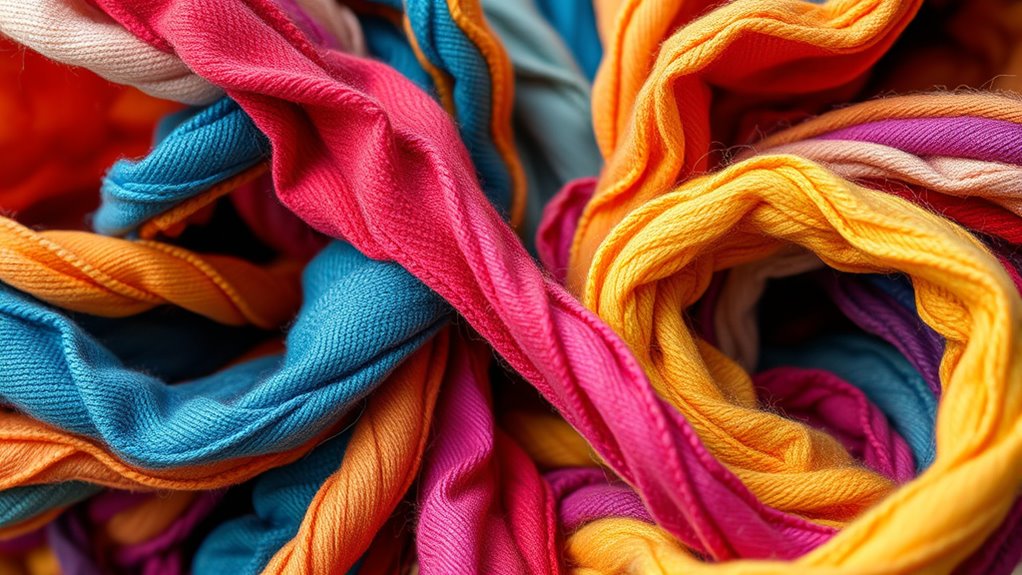
Have you ever wondered how artists transform simple fabrics into striking three-dimensional artworks? The secret lies in their mastery of fiber manipulation, a skill that allows them to breathe life into ordinary textiles and turn them into vibrant sculptures. By carefully shaping, twisting, and assembling fibers, artists create dynamic forms that challenge traditional perceptions of fabric as merely a decorative or functional material. Instead, textile sculptures become bold statements in mixed media art, combining fabrics with other materials like wire, wood, or metal to enhance their structure and visual impact. This fusion of different media allows for a richer, more complex expression, pushing the boundaries of what textile art can achieve.
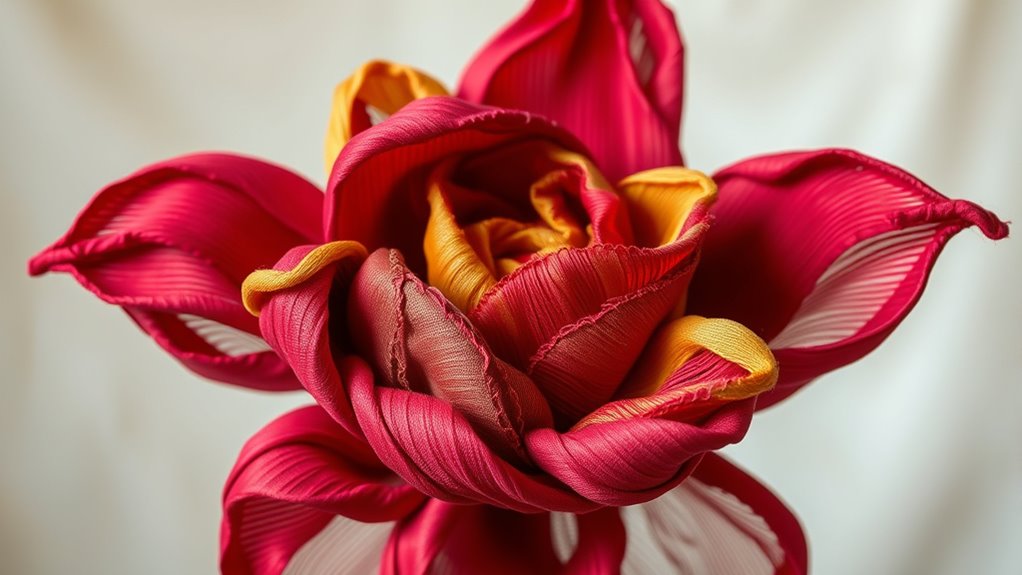
In fiber manipulation, every fold, knot, and stitch is deliberate. Artists employ techniques such as felting, weaving, and wrapping to craft textures and forms that resemble natural elements or abstract concepts. For instance, a sculpture might mimic the fluidity of water or the roughness of bark, achieved through precise fiber handling. These methods enable sculptors to create intricate, tactile surfaces that invite viewers to explore the piece through touch and sight. The process demands patience and skill, as manipulating fibers demands an understanding of their properties—how they bend, hold shape, and interact with other materials. When combined with mixed media elements, fibers become even more versatile. Incorporating wire frames provides stability, while attaching fabric pieces in layers creates depth and movement. This approach allows artists to experiment with scale and complexity, resulting in sculptures that seem to defy gravity or appear to be in motion.
What makes textile sculptures particularly enthralling is their ability to evoke emotion and storytelling through tactile and visual means. Fiber manipulation techniques give artists the tools to craft expressive forms that communicate abstract ideas or depict recognizable figures. The integration of mixed media enhances this storytelling by adding contrasting textures, colors, and materials, making each piece a multisensory experience. As a viewer, you’re drawn into a world where fabric isn’t just a surface but a dynamic component of a larger narrative. The interplay of fibers and other materials invites curiosity and exploration, encouraging you to see textiles in a new light—not just as decorative, but as powerful tools for artistic expression that challenge and expand the possibilities of three-dimensional art. Additionally, understanding fiber properties helps artists select the right materials and techniques to achieve their desired effects with greater precision.
fiber felting kit for textile sculpture
As an affiliate, we earn on qualifying purchases.
As an affiliate, we earn on qualifying purchases.
Frequently Asked Questions
What Are the Most Sustainable Fibers for Textile Sculptures?
You should choose sustainable fibers like plant-based options, such as hemp, organic cotton, or linen, for your textile sculptures. Recycled materials, including reclaimed fabrics or repurposed textiles, also make eco-friendly choices. These fibers reduce environmental impact, promote recycling, and support sustainable practices. By using plant-based fibers and recycled materials, you can create stunning, eco-conscious sculptures that align with sustainability goals and minimize your ecological footprint.
How Long Does It Typically Take to Complete a Textile Sculpture?
You typically spend several weeks to months completing a textile sculpture, depending on its size and complexity. Fabric durability influences your choice of materials, affecting how long your sculpture lasts and how easily it can be handled during installation. You should plan for ample time to carefully assemble and secure your work, especially during sculpture installation, to make sure your fabric sculpture maintains its form and integrity over time.
Are There Specific Tools Recommended for Fiber Manipulation?
You should use needle tools and fiber scissors for fiber manipulation in textile sculptures. Needle tools help you create precise stitches and detailed textures, while fiber scissors make cutting fibers clean and effortless. These tools give you better control and accuracy when shaping fabric and fiber. Investing in quality needle tools and fiber scissors guarantees your work is neat and professional, making the sculpture process more enjoyable and efficient.
How Do Textile Sculptures Withstand Outdoor Environmental Conditions?
A stitch in time saves nine, so you can weatherproof textile sculptures by applying weatherproofing techniques like sealants, UV protectants, and water-resistant coatings. These methods shield your art from rain, sun, and wind, reducing environmental impact by using eco-friendly, breathable materials. Regular maintenance helps preserve the sculpture’s integrity, ensuring it withstands outdoor conditions while maintaining its beauty and durability over time.
Can Textile Sculptures Incorporate Digital or Interactive Elements?
Yes, you can incorporate digital integration and interactive design into textile sculptures. By embedding sensors, LED lights, or sound modules, you make your artwork respond to viewers’ movements or environmental stimuli. This enhances engagement and creates a dynamic experience. You might also use augmented reality or touchscreen elements to deepen interactivity. Combining traditional textile techniques with digital technology allows you to push the boundaries of 3D fabric art creatively.
Conclusion
As you step back from these textile sculptures, you’re greeted with a world where fabric breathes life and fibers weave stories. These 3D art pieces are like vibrant dreams suspended in space, inviting you to lose yourself in their tactile magic. With every stitch and fold, you unseal a universe of texture and emotion. So, let your imagination unravel and embrace the endless possibilities woven into each masterpiece—because in textile art, the fabric of creativity knows no bounds.
Fall Picks
fall essentials
As an affiliate, we earn on qualifying purchases.