In fashion design, textiles transform clothing into art by combining innovative materials, sustainable practices, and intricate craftsmanship. You can explore textures, structure, and form to create visually mesmerizing pieces that also reflect ethical values. By choosing eco-friendly fabrics and employing advanced weaving techniques, you make your designs both beautiful and responsible. Continuing to explore this creative process reveals how textiles elevate clothing beyond mere fabric into true wearable art.
Key Takeaways
- Innovative textiles and weaving techniques transform garments into wearable art with rich textures and intricate patterns.
- Sustainable fabrics elevate fashion design by combining environmental responsibility with artistic expression.
- Material choices influence the narrative and emotional impact of clothing, turning everyday garments into artistic statements.
- Creative experimentation with textiles enables boundary-pushing designs that challenge traditional notions of fashion.
- Ethical textile practices reflect a commitment to responsible artistry, elevating clothing from mere apparel to conceptual art.
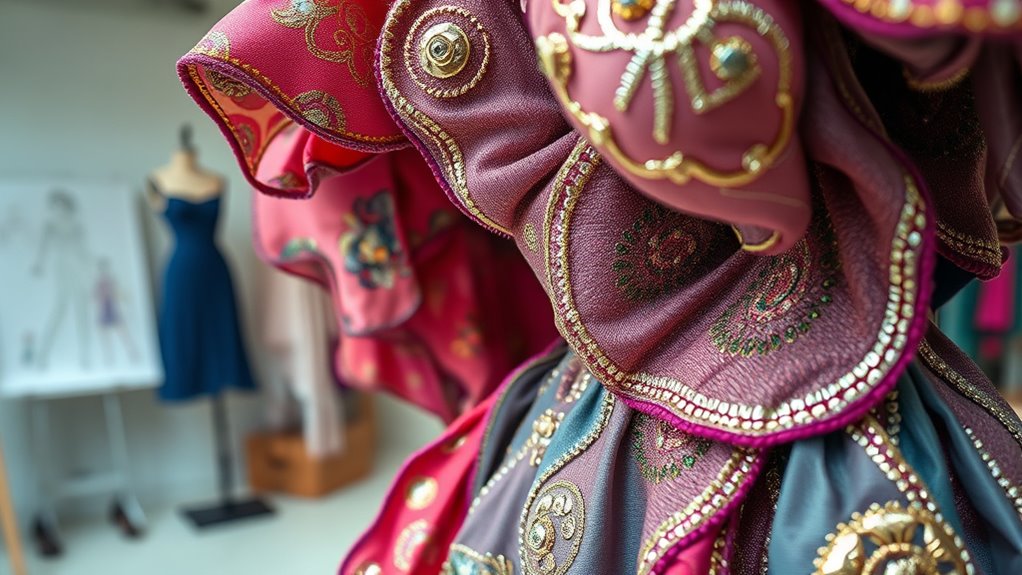
Textiles form the foundation of fashion design, influencing both the aesthetic and functional qualities of garments. When you select textiles, you’re not just choosing fabric—you’re shaping the story, durability, comfort, and environmental impact of your creations. In today’s world, sustainable fabrics have gained prominence, encouraging you to prioritize eco-friendly materials like organic cotton, hemp, or recycled fibers. These fabrics reduce environmental harm and appeal to conscious consumers. Incorporating sustainable fabrics into your designs not only aligns with ethical standards but also pushes you to explore new possibilities in textile innovation. One such innovation is innovative weaving techniques, which allow you to manipulate textiles in ways that enhance their texture, strength, and visual appeal. With innovative weaving methods, you can create intricate patterns, add dimension, or introduce unexpected textures that elevate your designs from simple garments to wearable art.
As you experiment with sustainable fabrics, you’ll find that their natural qualities often require a different approach to weaving and construction. For example, some eco-friendly fibers might be more delicate or less uniform than traditional textiles, prompting you to adopt innovative weaving techniques to maximize their potential. These techniques can involve combining fibers in novel ways or using specialized looms that produce complex weaves. This combination of sustainable fabrics and innovative weaving opens up a world of creative expression, allowing you to craft textiles that are not only environmentally responsible but also visually compelling and unique.
Choosing the right textiles is a vital step in turning your artistic vision into reality. When you understand the properties of sustainable fabrics and how innovative weaving can enhance them, you gain the tools to push boundaries. Whether you’re designing a high-fashion runway piece or a casual everyday outfit, these textiles give you the flexibility to experiment with form, texture, and structure. Furthermore, the narrative behind sustainable fabrics adds an extra layer of meaning to your work, resonating with audiences who value authenticity and environmental consciousness. Embracing these materials and techniques means you’re not just creating clothing—you’re making a statement about your values and your commitment to innovative, responsible fashion.
Ultimately, the choice of textiles shapes the entire design process. By integrating sustainable fabrics and adopting innovative weaving techniques, you can produce garments that are as environmentally conscious as they are visually striking. This approach not only elevates your craftsmanship but also positions you as a forward-thinking designer who respects both artistry and the planet. In essence, textiles serve as the canvas of your creativity, and mastering their selection and manipulation allows you to transform clothing into true art.
Frequently Asked Questions
How Do Textile Choices Influence a Designer’s Signature Style?
Your textile choices directly shape your signature style by showcasing your unique approach to fabric manipulation and pattern development. When you select specific materials, you influence the textures, drape, and overall aesthetic of your designs. Experimenting with different fabrics and innovative pattern techniques helps you create recognizable pieces. This deliberate use of textiles becomes a visual signature, allowing you to stand out and communicate your artistic vision through every garment you craft.
What Are Emerging Textile Technologies Impacting Fashion Design?
Smart fabrics and 3D printing are transforming fashion design with tech-driven trends. You can harness smart fabrics that respond to your body’s movements or environmental changes, creating customized comfort. 3D printing allows you to craft intricate, innovative designs quickly and precisely, reducing waste. These emerging textile technologies empower you to push boundaries, produce sustainable styles, and personalize pieces, making your creations cutting-edge and enthralling in today’s fashion landscape.
How Do Cultural Textiles Inspire Contemporary Fashion Collections?
You can see how cultural textiles inspire contemporary fashion collections by incorporating historical patterns and cultural symbolism. Designers often draw from traditional motifs, reinterpreting them with modern techniques to create unique, meaningful pieces. This blending of past and present allows you to celebrate diverse heritages while making bold style statements. By doing so, you transform textiles into wearable art that resonates deeply with cultural identity and personal expression.
What Sustainable Textile Options Are Most Popular in Fashion?
You’ll find recycled fibers and organic fabrics are the most popular sustainable textile options in fashion today. Recycled fibers, like polyester made from plastic bottles, help reduce waste and pollution, while organic fabrics such as cotton and hemp are grown without harmful chemicals, making them eco-friendly choices. By choosing these materials, you can create stylish, environmentally conscious designs that appeal to eco-aware consumers and promote sustainability in the industry.
How Can Textiles Be Manipulated to Create Wearable Art?
Think outside the box to turn textiles into wearable art. You can manipulate fibers through techniques like pleating, fringing, or layering to add texture and depth. Experiment with textile dyeing methods such as tie-dye, batik, or shibori to create vibrant patterns. By blending these fiber manipulation methods with innovative dyeing, you transform ordinary fabrics into stunning, artistic pieces that truly stand out as wearable masterpieces.
Conclusion
As you explore the world of textiles in fashion, imagine yourself walking through a vibrant atelier, where fabrics swirl like painters’ palettes and textures whisper stories. Every stitch and pattern transforms mere cloth into wearable art, turning your wardrobe into a gallery of creativity. Embrace the tactile dance of fibers and colors, knowing that in fashion, textiles are more than material—they’re the canvas where your imagination comes alive, making clothing an extraordinary form of artistic expression.