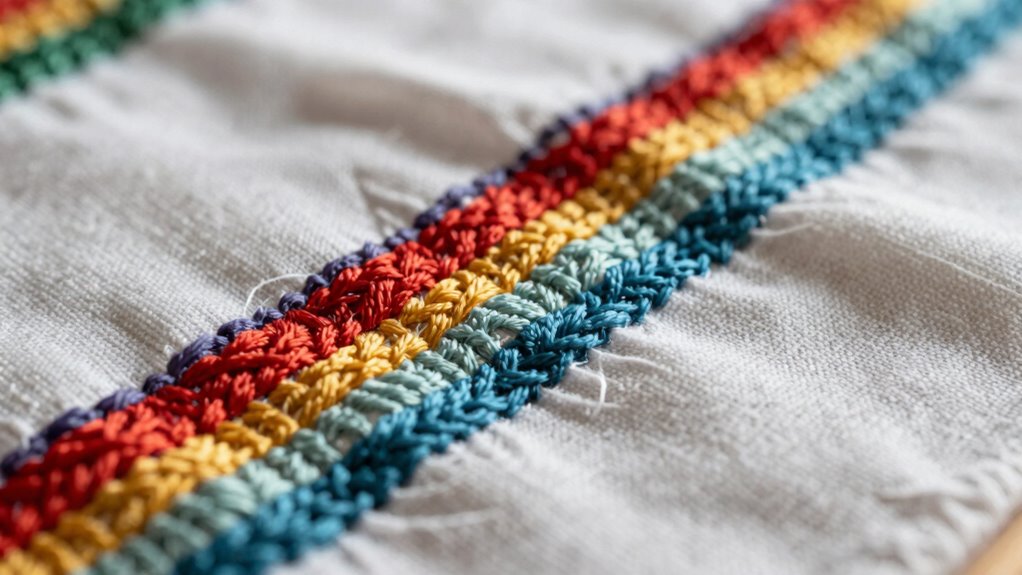

Using the wrong stabilizer can make your embroidery look cheap. If you choose a stabilizer that’s too heavy for delicate fabrics, it risks stretching and ruining the design. On the flip side, a lightweight stabilizer on thicker materials can lead to poor stitch quality. Puckering and distortion can also occur from mismatched stabilizers. To achieve a polished look, knowing how to apply and select the right stabilizer is vital, and there’s more to explore about this essential process.

Get your wardrobe favorites delivered free with Prime
- Fast, free delivery on millions of items
- Prime Video, Amazon Music and more included
- Member-only deals all year
Key Takeaways
- Using the wrong stabilizer thickness can lead to puckering and warping, detracting from the design’s quality.
- Heavy stabilizers on delicate fabrics can stretch and ruin the overall appearance of the embroidery.
- Lightweight stabilizers on thicker materials result in poor stitch quality and an unprofessional look.
- Mismatched stabilizers make designs appear cheap, failing to support the fabric properly during stitching.
- Not testing stabilizers on scrap fabric can lead to unforeseen compatibility issues with the final project.
embroidery stabilizer for delicate fabrics
As an affiliate, we earn on qualifying purchases.
As an affiliate, we earn on qualifying purchases.
Why Stabilizers Matter in Embroidery

When you plunge into embroidery, understanding why stabilizers matter can make all the difference in your projects. Choosing the right stabilizer guarantees fabric compatibility, preventing puckering and distortion. If you’re working with delicate fabrics, a lighter stabilizer can help maintain their integrity. On the other hand, heavier fabrics often need a sturdier option to support the stitch density of your design.
Without the proper stabilizer, your stitches may sink into the fabric, resulting in a lackluster finish. Remember, the right stabilizer keeps your fabric smooth and allows your embroidery to shine. So, take time to match your stabilizer to your fabric type and design complexity; it’s a vital step that greatly impacts the overall look of your work.
Essential Types of Embroidery Stabilizers

Choosing the right stabilizer is just the beginning; knowing the different types can greatly enhance your embroidery experience. Cutaway stabilizer offers excellent support, especially for stretchy fabrics, ensuring your design maintains its shape. Tearaway stabilizer is perfect for lightweight fabrics, allowing for quick and easy removal once your project is complete. If you’re working with delicate materials, water soluble stabilizer is your best bet; it dissolves in water, leaving no residue. For projects that need a bit more grip, adhesive stabilizer provides a sticky backing to hold your fabric in place while you stitch. By selecting the appropriate stabilizer, you’ll set the foundation for a polished and professional-looking embroidery project.
How the Wrong Stabilizer Ruins Your Design
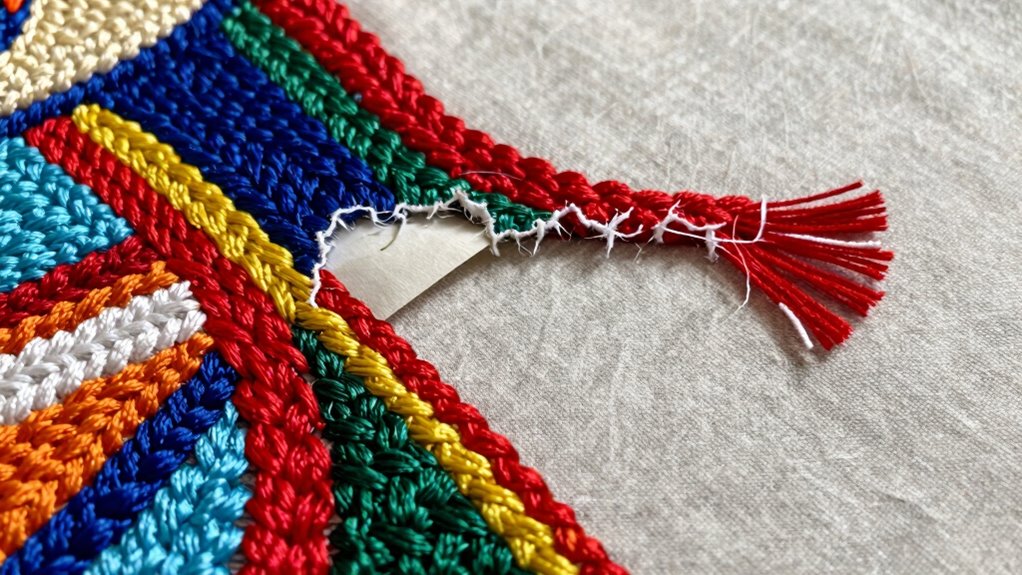
Using the wrong stabilizer can quickly derail your embroidery project, leaving you frustrated and disappointed. If the stabilizer thickness doesn’t match your fabric compatibility, your design might pucker, warp, or even lose detail. For instance, using a heavy stabilizer on delicate fabrics can cause them to stretch, ruining the overall look. Conversely, a lightweight stabilizer on thicker materials won’t provide the support you need, leading to poor stitch quality. This mismatch can make your beautiful design appear cheap and unprofessional. Always choose a stabilizer that complements your fabric and design intricacies. Investing time in selecting the right stabilizer guarantees your embroidery looks polished and stands the test of time. Additionally, incorporating smart furniture solutions can help organize your workspace, making your embroidery projects more efficient. Don’t let the wrong choice undermine your hard work!
How to Apply Stabilizers for Optimal Results
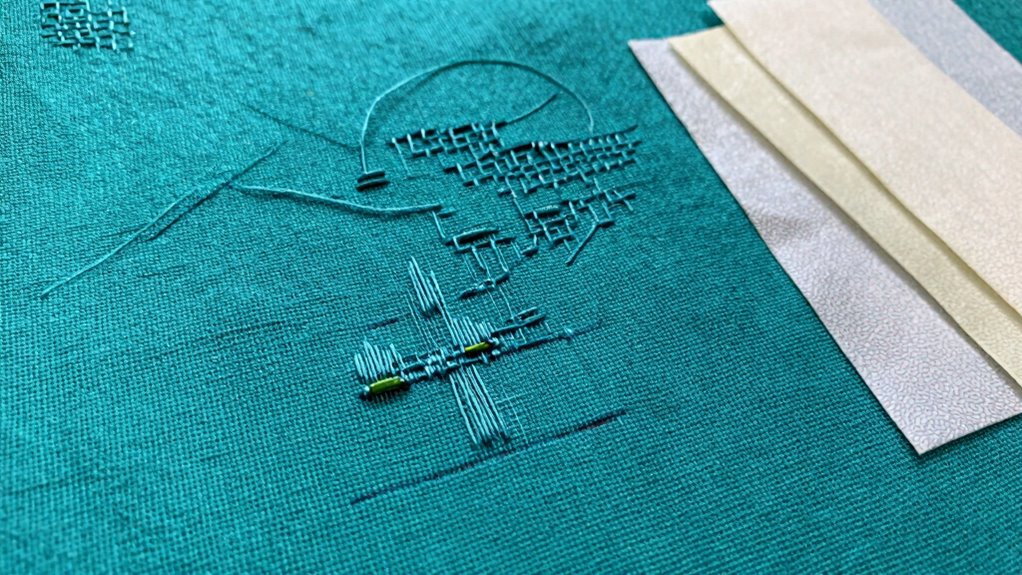
Although applying stabilizers might seem straightforward, achieving ideal results requires attention to detail and technique. To start, make sure you’re using the right stabilizer for your fabric type. For best stabilizer application techniques, always hoop the fabric and stabilizer together tightly to prevent shifting. Avoid common stabilizer errors, like using too much or too little pressure while stitching, which can lead to puckering. Remember to trim excess stabilizer after stitching, but don’t cut too close to the design; that can weaken it. If you’re working with intricate designs, consider layering stabilizers for added support. By following these tips, you’ll enhance your embroidery’s quality and avoid mistakes that could compromise your final product.
Tips for Choosing the Right Stabilizer for Your Project
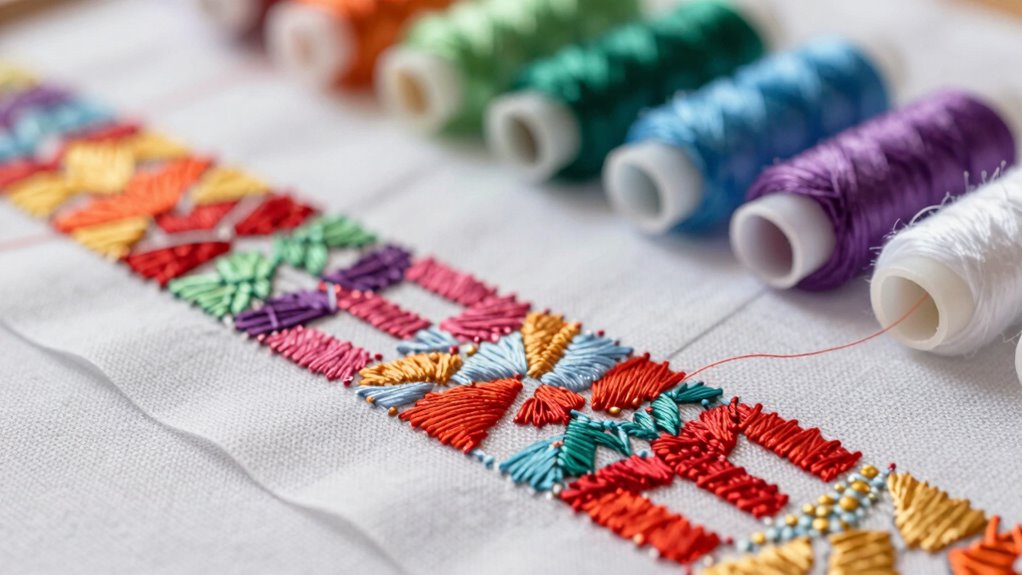
Selecting the right stabilizer can make all the difference in your embroidery project. Start by considering fabric compatibility; different fabrics require different stabilizers to achieve the best results. For lightweight fabrics, a tear-away or wash-away stabilizer might work best, while heavier fabrics often benefit from cut-away stabilizers.
Next, pay attention to thread tension. If your thread is too tight, it can cause puckering, so choose a stabilizer that supports your design without restricting the thread’s movement. Always test on a scrap piece to guarantee the stabilizer complements your fabric and design. By making these careful selections, you’ll elevate your embroidery from ordinary to exceptional, ensuring a polished finish that stands out.
Frequently Asked Questions
Can I Reuse Stabilizers After Washing Them?
Yes, you can reuse some stabilizer types after washing, but it depends on the method you use. Water-soluble stabilizers often lose their effectiveness after washing, while tear-away and cut-away options might hold up better. When washing, use a gentle cycle and mild detergent to preserve their integrity. Always check the manufacturer’s guidelines to guarantee you’re properly caring for your stabilizers. Reusing them can save you money while still giving great results!
How Do I Store Unused Stabilizers Properly?
To store unused stabilizers properly, keep them in a cool, dry place away from direct sunlight. Different stabilizer types, like tear-away and cut-away, should be rolled or laid flat to prevent creasing. Use storage solutions like clear bins or shelves to keep them organized and accessible. Be certain to label each type for easy identification. By taking these steps, you’ll prolong their life and guarantee they’re ready for your next project.
Are There Eco-Friendly Stabilizer Options Available?
Absolutely, there are eco-friendly stabilizer options available! Think of them as a refreshing change for your projects. You can find biodegradable options made from organic materials like cotton or starch. These stabilizers break down naturally, reducing your environmental footprint while still providing excellent support for your embroidery. So, when you choose these sustainable choices, you’re not just creating beautiful designs, you’re also caring for our planet.
Can I Use Fabric Scraps as Stabilizers?
Yes, you can use fabric scraps as stabilizers! Just make sure the fabric types you choose complement your project. Thicker fabrics can provide more support, while lighter ones might be better for delicate designs. Cut your scraps to the appropriate size and layer them, adjusting the stabilizer thickness as needed. This way, you’ll enhance your embroidery without spending extra, and you’ll be recycling at the same time! It’s a win-win!
What Is the Shelf Life of Stabilizers?
The shelf life of stabilizers varies by type. Generally, most stabilizers last about 1-3 years when stored properly. Check usage guidelines for specific stabilizer types, as factors like humidity and temperature can affect performance. If you notice changes in texture or adhesion, it’s time to replace them. To guarantee the best results, always keep your stabilizers in a cool, dry place, away from direct sunlight.
Conclusion
In embroidery, choosing the right stabilizer is like finding the perfect frame for a masterpiece. By avoiding common mistakes and understanding how stabilizers enhance your designs, you can elevate your work from ordinary to extraordinary. Whether you’re tackling a delicate fabric or a complex pattern, the right stabilizer guarantees your embroidery shines with professionalism. Remember, it’s not just about creating; it’s about creating with intention and care. Happy stitching!
Halloween Picks
halloween
As an affiliate, we earn on qualifying purchases.