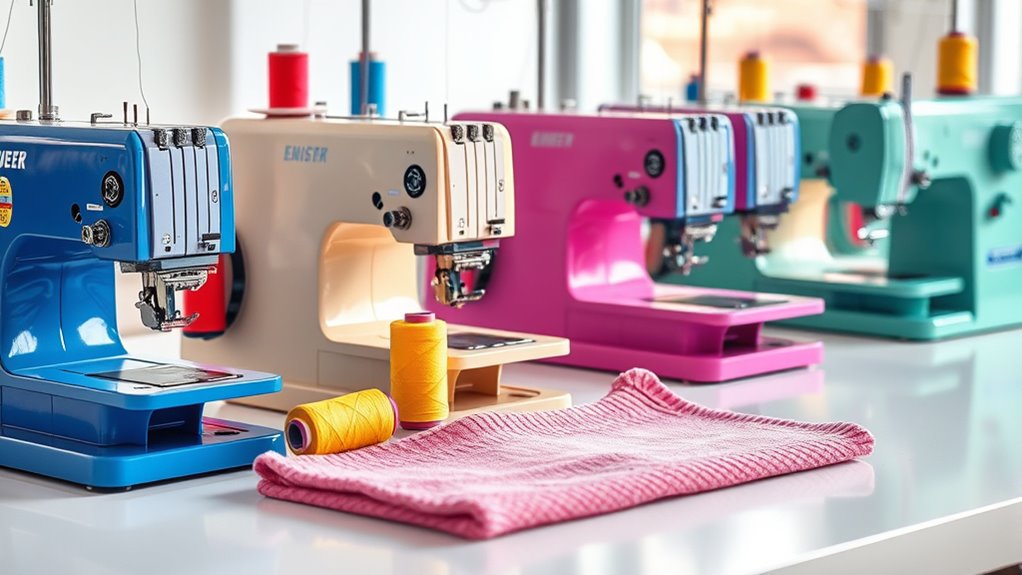
Finding the right coverstitch machine for knitwear can be challenging, as these machines vary widely in features, ease of use, and price. The Janome CoverPro 1000CPX stands out as the best overall for its versatility and stitch quality, making it suitable for both hobbyists and small business owners. The Brother 2340CV offers excellent value for those on a budget, while the Janome Cover Pro 2000CPX appeals to serious sewists seeking premium features. Buyers often face tradeoffs between ease of threading, stitch quality, and price—continue reading for a detailed breakdown that helps clarify these choices.

Get your wardrobe favorites delivered free with Prime
- Fast, free delivery on millions of items
- Prime Video, Amazon Music and more included
- Member-only deals all year
Key Takeaways
- Top picks like the Janome CoverPro 1000CPX excel in stitch quality and ease of use, setting a high standard for knitwear finishing.
- Budget-friendly options such as the Brother 2340CV provide solid performance but may lack advanced features found in premium models.
- Models with automatic threading and adjustable stitch width are more beginner-friendly, reducing setup time and frustration.
- The ability to handle multiple stitch types and heavier knit fabrics depends heavily on motor power and machine build quality.
- Tradeoffs often involve balancing price against features like free arm capability, thread tension adjustment, and ease of maintenance.
| Janome CoverPro 1000CPX Coverstitch Machine with Free Arm |  | Best Overall for Professional-Grade Knitwear Finishing | Stitch Types: 2-thread chain, 3-thread cover, 4-thread triple cover | Bed Size: 4″ x 5.5″ | Speed: 1,000 stitches per minute | VIEW ON AMAZON | See Our Full Breakdown |
| Brother 2340CV Coverstitch Serger Sewing Machine |  | Best for Durable, Versatile Hem and Decorative Stitching | Type: Coverstitch Serger | Stitch Speed: 1,100 stitches per minute | Stitch Types: Tri-cover, wide/narrow cover, chain | VIEW ON AMAZON | See Our Full Breakdown |
| Juki MCS-1500 Cover Stitch and Chain Stitch Machine |  | Best Versatile Machine with Fast Stitching and Easy Threading | Needles: 3 | Threads: 3 cover stitch, 4 chain stitch | Speed: 1,350 stitches per minute | VIEW ON AMAZON | See Our Full Breakdown |
| Janome Cover Pro 1000CPX Coverstitch Machine with Bonus Bundle | 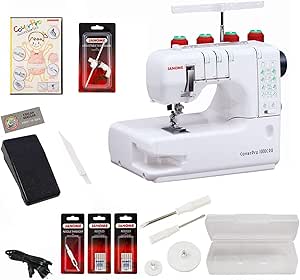 | Best for Budget-Conscious Professionals and Hobbyists | Brand: Janome | Model Number: 1000CPX | Number of Packs: 2 | VIEW ON AMAZON | See Our Full Breakdown |
| Janome CoverPro 2000CPX Coverstitch Machine |  | Best Premium for Advanced Knitwear Sewing | Needle options: 1, 2 or 3 needles | Stitch types: 2 thread chain, 2/3 needle cover, 4 thread triple cover | Tension release device: Yes | VIEW ON AMAZON | See Our Full Breakdown |
| Juki MCS-1600 Cover Stitch and Chain Stitch Sewing Machine with Easy Looper Threading |  | Best for Versatile Stitching and Speed | Needles: 3 | Threads: 3 cover stitch, 4 chain stitch | Speed: 1,350 stitches per minute | VIEW ON AMAZON | See Our Full Breakdown |
| coverstitch machines for knitwear | Stitch Types | Speed | Needles |
|---|---|---|---|
| Janome CoverPro 1000CPX Covers | 2-thread chain, 3-thread cover, 4-thread triple cover | 1,000 stitches per minute | — |
| Brother 2340CV Coverstitch Ser | Tri-cover, wide/narrow cover, chain | — | 3 |
| Juki MCS-1500 Cover Stitch and | — | 1,350 stitches per minute | 3 |
| Janome Cover Pro 1000CPX Cover | — | — | — |
| Janome CoverPro 2000CPX Covers | 2 thread chain, 2/3 needle cover, 4 thread triple cover | — | — |
| Juki MCS-1600 Cover Stitch and | — | 1,350 stitches per minute | 3 |
More Details on Our Top Picks
Janome CoverPro 1000CPX Coverstitch Machine with Free Arm
The Janome CoverPro 1000CPX stands out for its comprehensive stitch options, large working bed, and free arm for sewing cuffs and narrow hems, making it ideal for serious knitwear production. Compared with the Janome Cover Pro 2000CPX, it offers a slightly less versatile stitch menu but provides excellent speed and ease of use for complex projects. Its high stitching speed of 1,000 spm ensures efficiency, while the large bed accommodates bigger projects. However, the machine’s advanced features and multiple settings can overwhelm beginners, and its price may be prohibitive for casual users. This pick makes the most sense for professional sewists or dedicated hobbyists seeking durability and versatility in knitwear finishing.
Pros:- Versatile stitch options for complex knitwear projects
- Large bed size handles bigger fabrics easily
- Free arm simplifies sewing cuffs and narrow areas
- High stitching speed increases productivity
Cons:- Complex controls may intimidate beginners
- Premium price may be a barrier for casual users
Best for: Professional sewists and advanced hobbyists focused on high-quality knitwear finishing
Not ideal for: Beginners or casual users who prefer simple, straightforward machines
- Stitch Types:2-thread chain, 3-thread cover, 4-thread triple cover
- Bed Size:4″ x 5.5″
- Speed:1,000 stitches per minute
- Tension System:Seam Tightening System (STS)
- Differential Feed:0.5 to 2.25
Our verdict“This machine is ideal for experienced sewists demanding professional-quality finishes on knitwear and larger projects.”
Brother 2340CV Coverstitch Serger Sewing Machine
The Brother 2340CV excels in creating durable hems and decorative stitches with its sturdy metal frame and multiple stitch options, making it a reliable choice for varied knitwear finishes. Unlike the Juki MCS-1500, which offers more threading ease, the Brother’s color-coded threading system simplifies setup for those with some serger experience. Its 1,100 spm speed balances efficiency with control, but the machine’s US-only voltage limits international buyers. Its durability and versatile stitch selection make it ideal for those who sew frequently and need a dependable, long-lasting machine. Still, complete beginners might find the threading system slightly challenging without prior serger experience.
Pros:- Sturdy metal frame for longevity
- Color-coded threading system simplifies setup
- Multiple stitch options for utility and decorative use
- Fast sewing speed of 1,100 spm
Cons:- Limited to US electrical system
- Steeper learning curve for complete beginners
Best for: Seamstresses needing durable, high-quality hems and decorative stitches in knitwear
Not ideal for: Absolute beginners or users outside the US due to voltage restrictions
- Type:Coverstitch Serger
- Stitch Speed:1,100 stitches per minute
- Stitch Types:Tri-cover, wide/narrow cover, chain
- Needles:3
- Looper Thread:1
- Differential Feed:0.7 – 2.0 mm
Our verdict“Ideal for users who want a durable, versatile serger for frequent knitwear hemming and decorative stitches, with some prior sewing experience.”
Juki MCS-1500 Cover Stitch and Chain Stitch Machine
The Juki MCS-1500 combines multiple stitch options, including 3-needle cover and 4-thread chain stitches, with a high speed of 1,350 spm, making it a versatile choice for professional knitwear finishing. Its color-coded threading guides make setup easier than some competitors like the Brother 2340CV, but the setup can still be daunting for complete beginners. The generous warranty coverage adds peace of mind for serious users, though it excludes consumable parts, which may require additional investment over time. This machine strikes a balance between speed, versatility, and ease of setup, ideal for those with some sewing experience who want to handle a variety of knitwear projects efficiently.
Pros:- Versatile with multiple stitch options
- Fast stitching speed for productivity
- Color-coded threading guides ease setup
- Long warranty coverage
Cons:- Warranty excludes consumable parts
- Setup complexity may challenge absolute beginners
Best for: Experienced sewists needing versatile stitch options and fast production for knitwear
Not ideal for: Beginners or those seeking a machine with simple, minimal setup
- Needles:3
- Threads:3 cover stitch, 4 chain stitch
- Speed:1,350 stitches per minute
- Warranty:5 years mechanical, 2 years electrical
- Adjustments:Color-coded guides, 90 days adjustments
Our verdict“This machine suits experienced sewists who prioritize speed and versatility in knitwear projects without extensive setup time.”
Janome Cover Pro 1000CPX Coverstitch Machine with Bonus Bundle
The Janome Cover Pro 1000CPX with Bonus Bundle offers a comprehensive package for those seeking professional-quality coverstitch capabilities at a more accessible price point. Including extra needles, an adjustable seam guide, and a threader, it provides essential tools for precise and consistent stitching, comparable to the more feature-rich models like the 2000CPX but at a lower cost. Its straightforward operation makes it suitable for users with some sewing experience, though absolute beginners may need extra guidance. The bonus bundle adds value, but the machine itself may lack some advanced features found in higher-end models. It’s perfect for hobbyists upgrading to a more professional machine without breaking the bank.
Pros:- Includes a generous bundle of needles and tools
- Suitable for professional-quality coverstitch sewing
- Adjustable seam guide for accurate stitching
- Cost-effective compared to premium models
Cons:- May be too complex for absolute beginners
- Limited detailed info on machine features and warranty
Best for: Hobbyists and semi-professionals seeking good quality with added value in accessories
Not ideal for: Complete beginners or those requiring extensive features and warranty details
- Brand:Janome
- Model Number:1000CPX
- Number of Packs:2
- Category:Arts, Crafts & Sewing
Our verdict“This machine is well-suited for hobbyists or semi-professionals upgrading to a higher-quality coverstitch machine with useful extras.”
Janome CoverPro 2000CPX Coverstitch Machine
The Janome CoverPro 2000CPX offers extensive stitch options, including multiple needle configurations, adjustable tension, stitch length, and an extra-large bed for handling larger projects. Its bright LED lighting and adjustable foot pressure make it a favorite among advanced users who need precise control. Compared with the 1000CPX, it provides greater versatility and customization, but this comes with a steeper learning curve and higher price. Its advanced features are best utilized by experienced sewists or professional studios that demand high-quality finishes on knitwear. Novices may find the multitude of settings overwhelming.
Pros:- Multiple needle and stitch options for complex projects
- Adjustable tension, stitch length, and foot pressure
- Bright LED lighting enhances visibility
- Large bed space for big projects
Cons:- Steep learning curve for new users
- No specified warranty or included accessories
Best for: Advanced sewists and professionals seeking maximum control and customization in knitwear finishing
Not ideal for: Beginners or users seeking a simple, plug-and-play machine
- Needle options:1, 2 or 3 needles
- Stitch types:2 thread chain, 2/3 needle cover, 4 thread triple cover
- Tension release device:Yes
- Stitch length:1 to 4 mm
- Lighting:LED
Our verdict“This machine best serves experienced sewists who need extensive stitch variety and fine control for high-end knitwear finishing.”
Juki MCS-1600 Cover Stitch and Chain Stitch Sewing Machine with Easy Looper Threading
The Juki MCS-1600 stands out for its combination of speed and versatility, offering both 3-needle, 3-thread cover stitches and a 4-thread chain stitch—making it suitable for professional-quality knitwear finishes. Compared with the Janome CoverPro 1000CPX, which excels in precision but has a slower maximum speed, the MCS-1600 accelerates up to 1,350 stitches per minute, significantly boosting efficiency. Its color-coded threading guides make setup straightforward, especially for users familiar with standard sewing machines, but it still requires some attention to detail during threading. The machine’s ability to handle complex stitch options makes it ideal for those working on varied projects, though it is limited to specific stitch types and excludes some consumables from warranty coverage. This pick makes the most sense for busy knitwear producers or advanced home sewists seeking a balance of speed, versatility, and ease of use.
Pros:- High stitching speed of 1,350 stitches per minute for efficient workflow
- Color-coded threading guides simplify setup and reduce frustration
- Offers both cover and chain stitch options for versatile finishes
- Robust build quality with a 5-year mechanical warranty
Cons:- Limited to specific stitch types, which might restrict some creative or technical projects
- Warranty excludes consumables like loopers and needles, leading to potential extra costs
Best for: Sewers who need a fast, versatile coverstitch machine for professional or high-volume knitwear production
Not ideal for: Beginners or hobbyists who prefer a wider range of stitch options or a more comprehensive warranty coverage
- Needles:3
- Threads:3 cover stitch, 4 chain stitch
- Speed:1,350 stitches per minute
- Threading:Color-coded guides for easy threading
- Warranty:5 years mechanical, 2 years electrical, 90 days adjustments
Our verdict“This machine is best suited for experienced sewers or small businesses prioritizing speed and versatility in knitwear finishing.”

How We Picked
To determine the best coverstitch machines for knitwear, I evaluated each model based on key factors such as stitch quality, ease of threading, build quality, versatility, and value for money. I prioritized machines that offered reliable performance with a focus on knitwear finishing, considering both beginner and experienced sewist needs. The ranking reflects a combination of user-friendly features, durability, and the ability to handle various knit fabrics without frustration. By comparing these aspects across multiple brands and price points, I aimed to identify options that serve different types of buyers while maintaining high standards of quality and functionality.Factors to Consider When Choosing Coverstitch Machines For Knitwear
Choosing the right coverstitch machine for knitwear involves understanding several critical factors. While features like stitch width and tension are important, broader considerations such as ease of threading, machine durability, and versatility can significantly influence your sewing experience. A machine that’s too complex may discourage beginners, while one lacking essential features could limit creative options for experienced sewers. The following sections highlight key considerations to help you find the best fit for your needs, avoid common pitfalls, and make a confident purchase.Ease of Threading and Maintenance
Many coverstitch machines can be complicated to thread, especially for beginners. Look for models with automatic or color-coded threading paths to save time and frustration. Additionally, machines with accessible looper threads and straightforward tension adjustments tend to be more reliable and easier to maintain over time. Avoid overly complex threading systems if you value quick setup and minimal downtime, especially when working on multiple projects or small batches of knitwear.
Stitch Quality and Versatility
The primary goal of a coverstitch machine is to produce clean, professional-looking hems and seams on knit fabrics. Pay attention to the machine’s ability to produce consistent stitches across different knit weights and textures. Some models also offer chain stitch options or the ability to switch between coverstitch and chain stitch modes, which adds flexibility for different finishing techniques. A machine that can handle both light and heavy knits without puckering or skipped stitches offers better long-term value.
Build Quality and Durability
Since knitwear projects can be demanding, choosing a machine with a sturdy build ensures longevity and consistent performance. Metal components and robust frames typically withstand frequent use better than plastic parts. Consider the motor power too—more powerful motors handle thicker fabrics and multiple layers with less strain. Investing in a durable machine reduces the need for repairs and replacements, especially if you sew frequently or run a small business.
Price and Value for Money
While higher-priced models generally offer more features and better durability, they aren’t always necessary for every user. Balance your budget with your needs; for hobbyists, a reliable budget model might suffice, but serious sewists may find paying more worthwhile for additional features like adjustable stitch length, differential feed, or automatic threading. Comparing long-term costs, such as maintenance and replacement parts, also helps in assessing true value.
Additional Features to Consider
Features like a free arm facilitate sewing around cuffs and hems, which is common in knitwear. Differential feed helps prevent puckering when working with stretchy fabrics, making it a valuable addition for knit projects. Some machines include built-in stitch patterns or adjustable stitch width, offering more creative options. Weigh these extras against your sewing frequency and project types to determine which features will genuinely enhance your experience.
Frequently Asked Questions
Can a coverstitch machine handle all types of knit fabrics?
Most coverstitch machines are designed to handle a wide range of knit fabrics, from lightweight jersey to heavier wool blends. However, the ability to sew thick or multilayered knits smoothly depends on the machine’s motor power and build quality. Higher-end models typically feature stronger motors and more adjustable settings, making them better suited for diverse fabrics without puckering or skipped stitches. For frequent use on heavy knits, investing in a more robust machine is advisable.
Is automatic threading necessary for a beginner?
Automatic threading can significantly reduce setup time and frustration, which is especially beneficial for beginners. Machines with this feature simplify the process of threading the loopers and needles, helping new users achieve consistent tension and stitch quality more quickly. While not strictly necessary, automatic threading is a valuable convenience that can encourage confidence and reduce errors, making it a worthwhile consideration for those new to coverstitch machines.
How important is stitch width adjustment on a coverstitch machine?
Stitch width adjustment is quite important because it directly influences how finished hems and seams look, especially on knitwear with varying stretch and weight. A wider stitch can provide more durability and a professional appearance, but it also requires precise tension control. Machines without adjustable stitch width may limit creative freedom and the ability to fine-tune the appearance of your finished projects. For those who want more control over their sewing results, a model with adjustable width is preferable.
Are combo machines that do both coverstitch and chain stitch a good investment?
Combo machines that offer both coverstitch and chain stitch functions provide extra versatility, allowing you to finish knit edges and create decorative seams. These models are often more expensive and slightly more complex to operate, but they can save space and money in the long run. If you frequently work with different finishes or want to expand your sewing capabilities, a combo machine can be a valuable addition. However, for purely basic knit finishing, a dedicated coverstitch machine might be simpler to use.
What maintenance is required to keep my coverstitch machine in good condition?
Regular maintenance includes cleaning lint and dust from the feed dogs, tension discs, and looper areas. Oiling moving parts as recommended in the user manual helps preserve smooth operation, especially if you sew often. Checking and replacing needles periodically prevents skipped stitches and fabric damage. Proper storage and avoiding thread tangles also extend the machine’s lifespan. Consistent upkeep ensures reliable performance and preserves stitch quality over time.
Conclusion
For most sewists, the Janome CoverPro 1000CPX offers a balanced mix of features, durability, and ease of use, making it the best overall choice. Those on a tight budget may prefer the Brother 2340CV for its reliable performance at a lower cost. Serious hobbyists or small business owners should consider the Janome Cover Pro 2000CPX for its advanced capabilities. Beginners will benefit from models with automatic threading and straightforward controls, while experienced sewists should prioritize machines with adjustable features and higher build quality. Your choice depends on your specific needs, budget, and how often you plan to sew knitwear.
Halloween Picks
halloween
As an affiliate, we earn on qualifying purchases.