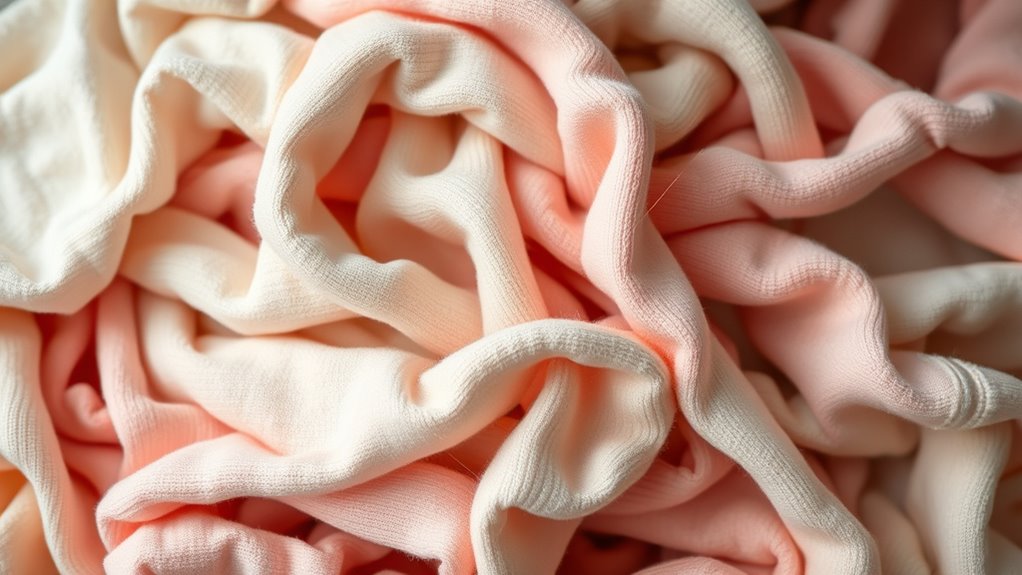

Static cling happens when clothes build up electrical charges during washing and drying, making them stick together. Friction between fabrics causes electrons to jump, especially when over-drying or using synthetic materials. To reduce this, you can use fabric softeners or dryer sheets that coat fibers and minimize static buildup. Avoid over-drying and opt for lower heat settings. Keep exploring to discover more simple ways to banish static and keep your clothes separate.
Listen free for 30 days with Audible
Thousands of audiobooks and originals — cancel anytime.
As an affiliate, we earn on qualifying purchases.
Key Takeaways
- Static cling occurs due to electrons transferring between fabrics during tumbling, creating a charge imbalance.
- Fabric softeners and dryer sheets coat clothes with chemicals that reduce friction and static buildup.
- Over-drying increases static because it makes fabrics brittle and more prone to static electricity.
- Using lower heat, removing clothes slightly damp, or adding moisture helps prevent static cling.
- Combining fabric softeners with proper drying practices significantly minimizes static cling in clothes.

Have you ever pulled a sweater out of the dryer only to be greeted by static cling that makes your clothes stick together? That pesky electric charge is more than just annoying; it’s a result of electrons jumping from one fabric to another. When clothes tumble in the dryer, they generate friction, which causes electrons to transfer and build up. The buildup leaves your clothes with an imbalance of charges, attracting each other and creating that clingy sensation. To combat this, many turn to fabric softeners and dryer sheets, which are designed specifically to reduce static electricity.
Static cling results from electrons jumping between fabrics during tumbling.
Fabric softeners work by coating your clothes with a thin layer of chemicals that make fibers smoother and less prone to friction. This smoother surface means fewer electrons are transferred during the tumbling process, decreasing static buildup. When you use liquid fabric softeners in the wash, they not only soften clothes but also help reduce static from the start. Dryer sheets, on the other hand, are added directly to the dryer and contain softening agents embedded in a waxy or plastic sheet. As the sheet heats up, these agents are released onto your clothes, creating a similar effect to liquid softeners but in a different form.
Using dryer sheets is particularly convenient because they serve a dual purpose: softening your clothes and preventing static cling. Simply toss a sheet into the dryer with your wet laundry, and as it tumbles, the sheet releases conditioning agents that coat each fabric. This coating reduces the friction that causes static and also imparts a fresh scent to your clothes. Both fabric softeners and dryer sheets are effective, but your choice may depend on personal preference or fabric type. For delicate fabrics, some people prefer liquid softeners, as they can be used more sparingly and with less residue.
To further minimize static, avoid over-drying your clothes. Over-drying not only wastes energy but also increases static because fabrics become more brittle and prone to generating static electricity. Using a lower heat setting or removing clothes while they’re slightly damp can help. Additionally, adding a damp cloth or a few dryer balls can help distribute moisture evenly, reducing static buildup. Combining these practices with fabric softeners or dryer sheets can make your laundry experience far less static-prone. So next time you reach for your laundry, consider how these simple tools can make your clothes softer, fresher, and free of that clingy static.
A common cause of static cling is over-drying, which increases the likelihood of static buildup by making fabrics more brittle.
fabric softener for static reduction
As an affiliate, we earn on qualifying purchases.
As an affiliate, we earn on qualifying purchases.
Frequently Asked Questions
Can Static Cling Cause Fabric Damage Over Time?
Yes, static cling can cause fabric weakening and color fading over time. When static builds up, it creates friction that damages fibers, making them more prone to tears and stretching. This can lead to your clothes wearing out faster and colors fading prematurely. To prevent this, use fabric softeners or dryer sheets, and avoid over-drying, which can intensify static and harm your garments.
Does Dryer Sheet Scent Affect Static Reduction?
Yes, the scent of dryer sheets can affect static reduction, as stronger scents may sometimes interfere with their anti-static properties. If you’re concerned about scent, you might opt for dryer sheet alternatives or scent-free options, which often use natural ingredients or simply reduce static without added fragrances. These options can be just as effective in minimizing static cling while catering to your scent preferences or sensitivities.
Are There Natural Remedies for Static Cling?
Think of natural remedies as gentle whispers that can calm static cling. You can use alternative solutions like rubbing a metal hanger over your clothes, tossing in a damp cloth, or applying a small amount of coconut oil on your hands before handling laundry. These natural remedies work by neutralizing static electricity without harsh chemicals, providing an eco-friendly and effective way to reduce static cling in your clothes.
How Does Humidity Influence Static Buildup?
Humidity effects profoundly influence static buildup. When the air is dry, static formation increases because there’s less moisture to dissipate electrical charges. Higher humidity levels reduce static cling by allowing electrons to flow away more easily, preventing static from accumulating on your clothes. So, on humid days, you’re less likely to experience static cling, making laundry less frustrating. Keep your environment more humid with a humidifier if static buildup becomes a persistent problem.
Can Certain Clothing Materials Prevent Static Cling?
Yes, certain clothing materials can prevent static cling. Opt for fabrics with low static buildup, like cotton or silk, which naturally resist static due to their composition. You can also choose materials treated with anti-static finishes, designed to reduce static electricity. While some believe only specialized fabrics work, combining fabric choice with proper treatments makes a noticeable difference, so don’t overlook the simple options available to keep your clothes static-free.
Conclusion
So next time your shirt decides to hug your face or your pants cling like a desperate lover, remember it’s just static cling’s way of saying hello. With a little anti-static spray or a fabric softener, you can tame this rebellious spark. Otherwise, you might find yourself in a wardrobe wrestling match, battling the relentless cling monster every morning. Embrace the static-free life — or risk forever being a walking electric shock. Your clothes will thank you.
Flea & tick season Picks
flea and tick prevention
As an affiliate, we earn on qualifying purchases.