
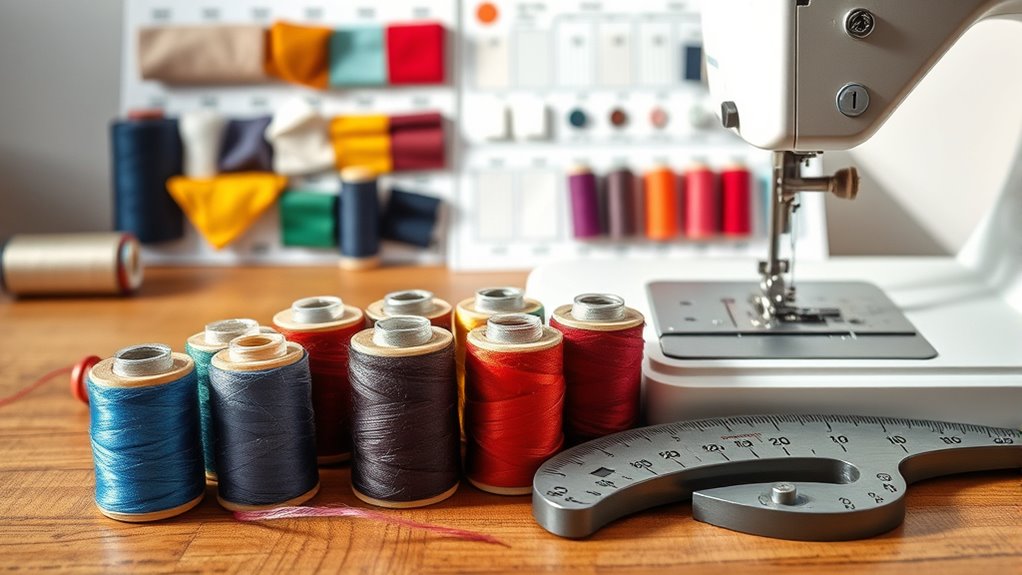
To choose the right thread and stitch length, consider your fabric type and project needs. Use a strong, compatible thread for heavy fabrics and lighter thread for delicate ones. Adjust the stitch length based on the fabric; shorter stitches for sturdy seams and longer for gathering or decorative work. Test on scrap fabric to find the best settings. If you want to learn more about perfecting your stitching, keep exploring these essential tips.

Get your wardrobe favorites delivered free with Prime
- Fast, free delivery on millions of items
- Prime Video, Amazon Music and more included
- Member-only deals all year
Key Takeaways
- Match thread type and thickness to fabric weight for optimal tension and stitch quality.
- Adjust stitch length: shorter for strength and durability, longer for decorative or lightweight fabrics.
- Test settings on scrap fabric to ensure proper tension, stitch density, and appearance before sewing the main project.
- Use higher stitch density for sturdy seams; lower density for delicate or decorative stitches.
- Fine-tune tension and stitch length based on fabric and thread to achieve smooth, even stitches and professional results.
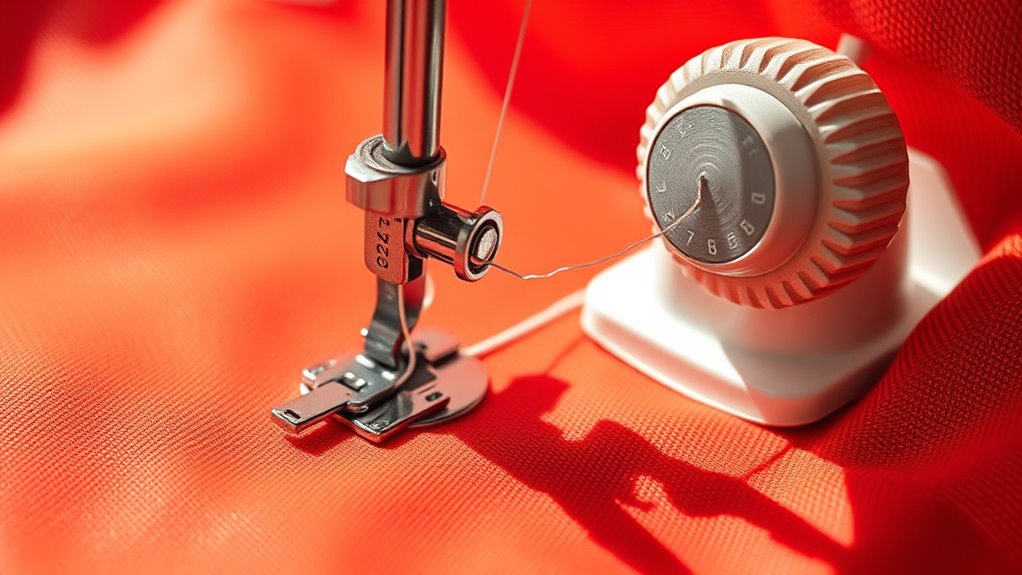
Have you ever wondered how the right thread and stitch length can improve the quality of your sewing projects? It’s not just about choosing pretty colors or the right fabric—it’s about fine-tuning your machine to produce strong, even stitches that last. One key aspect to focus on is thread tension. When the tension is too tight, your stitches might pucker or cause the thread to break; if it’s too loose, your seams could look sloppy, and stitches might come undone. The goal is to find a balance where the thread flows smoothly through the fabric, creating a consistent stitch without puckering or gaps. Adjusting your tension settings according to the fabric type and thread thickness is essential. For lightweight fabrics, slightly loosen the tension; for thicker materials, tighten it a bit. Test on scrap fabric first to dial in the perfect tension. Once you’ve got the tension right, you’ll notice the stitch density—how close or far apart your stitches are—becomes more uniform. Stitch density influences the durability and appearance of your project. For seams that need to withstand stress, like in denim or upholstery, a higher stitch density (more stitches per inch) provides extra strength. Conversely, for decorative stitches or lightweight fabrics, a lower stitch density creates a more delicate finish. Knowing when to increase or decrease stitch density can make a significant difference in the final look and longevity of your work.
Choosing the appropriate stitch length is equally critical. Shorter stitch lengths, around 1.5 to 2 mm, tend to produce stronger seams, especially for heavy fabrics or garments that require durability. Longer stitches, around 3 to 4 mm, are better suited for basting, gathering, or decorative purposes, where flexibility and ease of removal are desired. Adjusting the stitch length in tandem with your fabric type and project requirements ensures a professional finish. Remember, the right combination of thread tension and stitch length isn’t a one-size-fits-all solution; it’s a matter of experimenting with your machine and materials. Always test on scrap fabric before starting your actual project. This way, you can see how different settings impact the stitch quality and make necessary adjustments early on. When you get comfortable with these settings, your sewing becomes more precise, your seams stronger, and your finished projects look better. Perfecting your understanding of thread tension and stitch density ultimately empowers you to create more polished, durable, and professional-looking items.
best sewing thread for heavy fabrics
As an affiliate, we earn on qualifying purchases.
As an affiliate, we earn on qualifying purchases.
Frequently Asked Questions
How Do Different Fabrics Affect Thread and Stitch Choices?
Different fabrics influence your thread and stitch choices considerably. For stretch fabrics, you need a flexible thread and a stitch length that accommodates stretch without breaking. For woven fabrics, a standard thread and tighter stitches work well. Always consider fabric stretch to prevent puckering and choose thread color coordination for a seamless look. Matching thread to fabric helps your project look professional and durable.
What Are Common Mistakes When Selecting Stitch Length?
Ever wonder if you’re making mistakes with stitch length? Common errors include setting it too long or too short, which can cause puckering or weak seams. You might neglect adjusting thread tension or machine settings, leading to uneven stitches. Always test your stitch length on scrap fabric first, and fine-tune your tension and machine settings accordingly. Proper adjustments guarantee your project turns out professional and durable.
Can I Mix Different Thread Types in One Project?
You can mix different thread types in one project, but you need to ensure thread compatibility to avoid issues like uneven stitching or puckering. Mixing threads with varying qualities or fiber contents can cause stitch variation and weaken your seams. To keep your project looking professional, use compatible threads and test them on scrap fabric first. This way, you guarantee consistent stitch quality and durability throughout your project.
How Does Thread Quality Impact Seam Durability?
Higher-quality thread markedly boosts seam durability because it has better thread strength, which resists breaking under stress. Poor-quality thread can weaken your stitches and cause seams to come apart. It also helps maintain proper stitch tension, preventing puckering or loose stitches. When you use good thread, your project becomes more reliable, longer-lasting, and looks professional. Always choose quality thread to guarantee your seams stay strong and durable over time.
Are There Specific Stitches Best for Stretch Fabrics?
If you want your stretch fabrics to move with you like a second skin, you need the right stitches! The stretch stitch is perfect because it stretches without breaking, while the zigzag stitch gives extra flexibility and durability. These stitches prevent popping seams and tearing. So, don’t settle for ordinary stitches—use a stretch stitch or zigzag stitch to keep your stretchy projects looking flawless and functioning perfectly, no matter how much you move!
Conclusion
Just like a master painter chooses the perfect brush and colors to bring their vision to life, selecting the right thread and stitch length transforms your sewing project from good to great. Trust your instincts, experiment, and remember that every stitch you make adds to your unique masterpiece. When you pay attention to these details, you’re weaving a story as timeless as a tapestry—crafted with care, precision, and a touch of your own artistry.
Evergreen bestsellers Picks
bestsellers
As an affiliate, we earn on qualifying purchases.