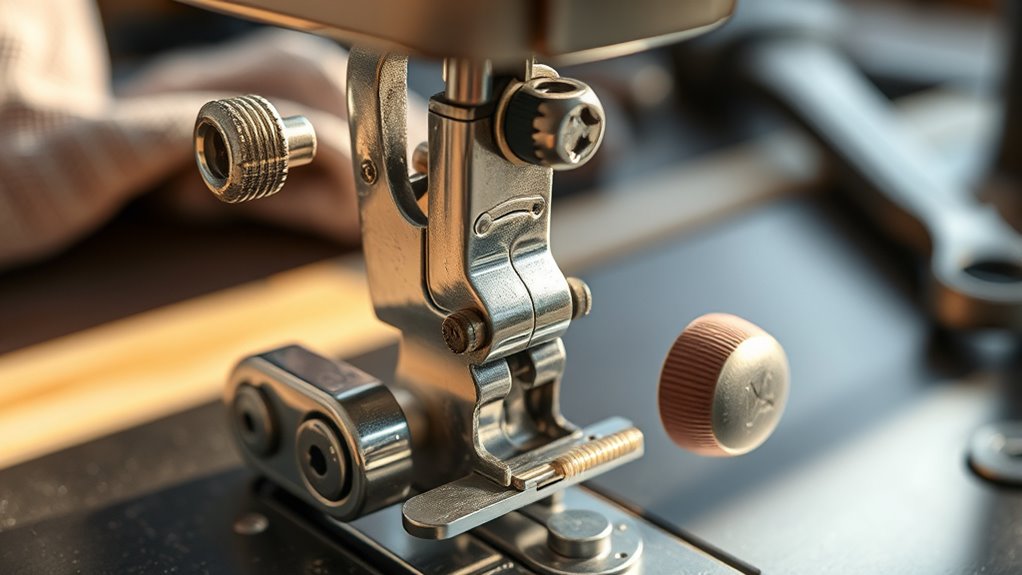

To keep your sewing machine running smoothly, regularly clean lint and dust from the bobbin area and tension disks, and rethread the machine properly after each bobbin change. Adjust the thread tension gradually and test on scraps for perfect stitches. Lubricate moving parts with recommended oil, and make certain your bobbin is wound evenly and inserted correctly. Proper maintenance prevents issues like thread jams and tension problems—keep going to discover more tips for smooth sewing!

Get your wardrobe favorites delivered free — and shop member deals
- Fast, free delivery on millions of items
- Access to Prime Big Deal Days deals on October 6–7
- Prime Video, Amazon Music and more included
Key Takeaways
- Regularly clean lint and dust from around the bobbin case and tension disks to prevent thread jams.
- Check and adjust thread tension gradually, testing on scrap fabric for optimal stitch quality.
- Re-thread the machine and ensure the bobbin is wound evenly and inserted correctly.
- Lubricate moving parts with manufacturer-recommended oil to ensure smooth operation.
- Perform routine maintenance, including cleaning and inspecting parts, to extend your machine’s lifespan and improve performance.

Regular sewing machine maintenance is essential to keep your machine running smoothly and extend its lifespan. One of the most important aspects of maintenance is ensuring the thread tension is correctly set. Proper thread tension guarantees even stitches and prevents issues like puckering or loose seams. If your stitches look uneven, it’s a sign to check the tension dial. Adjust it gradually, testing on scrap fabric until you find the right balance. Don’t forget, too tight tension can cause thread breakage, while too loose tension results in skipped stitches. Regularly inspecting and adjusting thread tension keeps your sewing aligned and prevents frustration during projects.
Another key component of maintenance is bobbin care, which often gets overlooked but is crucial for smooth sewing. Start by removing the bobbin case and cleaning out any lint or dust that accumulates inside. Lint buildup can hinder bobbin movement, leading to uneven stitches or thread jams. Make sure your bobbin is wound evenly and not overfilled, as an overstuffed bobbin can cause tangles and misfeeds. When inserting the bobbin into the case, ensure it turns clockwise (or as your machine specifies) and that the thread unwinds smoothly. Proper bobbin care also means changing it regularly, especially if you notice inconsistent stitching or thread bunching underneath your fabric.
Consistent cleaning of your sewing machine includes checking the bobbin area and threading path. Use a small brush or compressed air to remove lint from around the bobbin case and tension disks. Keeping these areas clean reduces the chance of thread jams and maintains ideal tension. When rethreading your machine, make sure the thread passes through all guides and tension disks correctly. Improper threading can cause tension issues and affect stitch quality. It’s a good habit to periodically rethread your machine, especially after changing bobbins or noticing stitch irregularities.
Additionally, applying a small amount of sewing machine oil to moving parts, according to your manufacturer’s instructions, can prevent wear and ensure smooth operation. Always use the recommended oil and avoid over-lubricating. Regularly inspecting and maintaining these key elements—thread tension, bobbin care, and cleaning—ensures your sewing machine stays in top shape. This routine will not only improve stitch quality but also reduce the likelihood of costly repairs down the line. When you take the time to care for your machine, sewing becomes more enjoyable and less frustrating, allowing you to focus on creating beautiful projects with confidence. Proper machine maintenance is essential for preserving your investment over time.
As an affiliate, we earn on qualifying purchases.
Frequently Asked Questions
How Often Should I Replace My Sewing Machine Needle?
You should replace your sewing machine needle after every 8 hours of sewing or with each new project to guarantee ideal needle replacement. Regular needle replacement helps maintain the sewing machine lifespan by preventing skipped stitches and fabric damage. If you notice bending, dullness, or thread breakage, change the needle immediately. Consistent needle replacement keeps your machine running smoothly, extending its lifespan and ensuring professional-quality results every time you sew.
Can I Oil My Sewing Machine Myself?
Oiling your sewing machine is like giving it a daily vitamin; yes, you can do it yourself. Just follow the manufacturer’s instructions for DIY cleaning and oiling, ensuring you use the right lubricant. Regular oiling keeps parts moving smoothly and helps with machine calibration. Avoid over-oiling, which can cause buildup. Proper maintenance extends your machine’s life and keeps your sewing projects flawless.
What Type of Sewing Machine Lubricant Is Best?
You should use a high-quality machine oil specifically designed for sewing machines. Look for light, non-gumming lubricants like synthetic or mineral-based machine oil, as they work best for reducing friction and preventing rust. Avoid thick or household oils, which can clog the machine. Always follow your sewing machine’s manual recommendations for lubricant types, ensuring smooth operation and longevity of your machine.
How Do I Troubleshoot Thread Jams?
To troubleshoot thread jams, start by checking your thread tension and adjusting it if needed. Make sure your bobbin is correctly placed and spinning in the right direction. Clear any tangled threads from the bobbin case and needle area. Also, verify that your thread is properly threaded through all guides and tension disks. Regularly cleaning the bobbin area helps prevent future jams and keeps your machine running smoothly.
Is It Necessary to Service My Machine Professionally?
Of course, you should get professional servicing—because who wants their beloved machine to turn into a ticking sewing time bomb? Regular maintenance checklist guarantees it runs smoothly, and a pro can spot issues you’d miss. Skipping this step is like ignoring your car’s oil change; eventually, your machine will rebel. Trust a sewing expert to keep your machine humming, so you can focus on your fabulous projects.
Conclusion
By staying consistent with your sewing machine maintenance, you’re not just ensuring it runs smoothly—you’re also creating space for unexpected creative moments. Sometimes, a simple cleaning or oiling can lead to a breakthrough design or a new project idea. When you care for your machine, it rewards you with reliable performance, reminding you that the smallest efforts often lead to the most beautiful results. After all, the magic happens when you least expect it.
Fall Picks
fall essentials
As an affiliate, we earn on qualifying purchases.