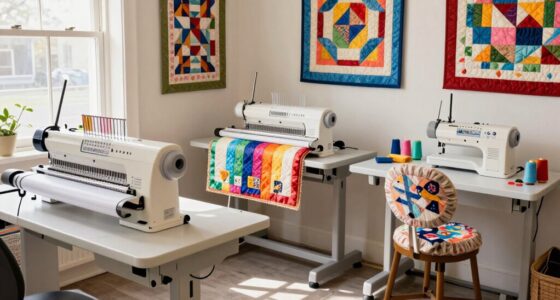
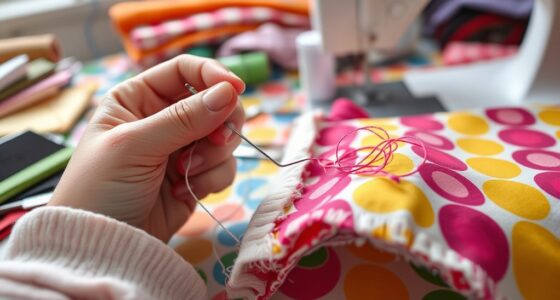
To add fabric shapes to your projects, start by choosing suitable fabrics like cotton or felt, and carefully cut out your designs with sharp scissors or a rotary cutter. Use fusible webbing or stabilizers to keep shapes in place, then select stitches such as zigzag or decorative stitches to secure and embellish the appliqué. Paying attention to fabric contrast and stitch choice enhances the look and durability. Keep experimenting; there’s much more to discover about perfecting your appliqué skills.

Get your wardrobe favorites delivered free with Prime
- Fast, free delivery on millions of items
- Prime Video, Amazon Music and more included
- Member-only deals all year
Key Takeaways
- Select appropriate fabrics and colors to enhance your design and achieve desired visual effects.
- Carefully cut fabric shapes with sharp tools for clean edges and easier stitching.
- Use fusible webbing or stabilizers to secure shapes before sewing for added stability.
- Choose suitable stitches like zigzag or decorative stitches to enclose raw edges and prevent fraying.
- Experiment with stitch widths and lengths to add texture and detail to your appliqué project.

Have you ever wondered how to add decorative shapes and designs to your fabric projects? Appliqué is a fantastic way to do that, and mastering the basics can elevate your sewing projects dramatically. To start, understanding stitch techniques is essential because they determine how securely your fabric shapes will be attached and how neat the final appearance looks. You can choose from a variety of stitch styles, such as straight stitches, zigzag stitches, or decorative machine stitches, depending on the look you want and the fabric you’re working with. For beginners, a tight zigzag stitch often works best because it encloses the raw edges of your appliqué pieces, preventing fraying and ensuring durability. As you gain confidence, experimenting with different stitch widths and lengths can add unique textures and details to your designs.
Another indispensable aspect to consider is fabric selection. Not all fabrics behave the same when it comes to appliqué. Lightweight cottons, felt, and quilting fabrics are popular choices because they are easy to work with and hold their shape well. Heavier fabrics, like denim or canvas, can also be used but require stronger stitches and sometimes additional stabilizers to prevent puckering or shifting during sewing. When selecting fabric for appliqué, think about the contrast or harmony you want to achieve with your background fabric. Bright, bold colors make your shapes pop, while more subdued tones create a subtle, integrated look. Also, consider the texture and finish of your fabric, as these will influence how the appliqué piece sits on your project.
Before you cut your shapes, it’s indispensable to carefully choose your fabric based on the intended design and overall project. Use sharp scissors or rotary cutters for precise edges, ensuring your appliqué shapes are smooth and clean. Cutting accurately makes the stitching process easier. When applying the appliqué, some sewists prefer to use fusible webbing or bonding agents for added stability before stitching. This helps keep the shapes in place and reduces shifting as you sew. Whichever method you choose, making sure your fabric selection aligns with your stitch techniques is key to achieving professional-looking results.
Ultimately, the combination of thoughtful fabric selection and appropriate stitch techniques forms the foundation of successful appliqué. Take your time selecting your fabrics, experiment with different stitches, and pay attention to detail. With practice, you’ll create intricate, beautiful fabric shapes that add personality and dimension to your projects. Whether you’re embellishing a quilt, a pillow, or a wall hanging, mastering these basics will give your appliqué a polished and stylish finish.
As an affiliate, we earn on qualifying purchases.
Frequently Asked Questions
What Types of Fabrics Are Best for Appliqué?
For appliqué, you should choose fabrics that are stable and easy to work with. Cotton is ideal because it’s durable, comes in many colors, and holds shapes well, making it perfect for appliqué patterns. Light to medium weight fabrics work best, as they’re easy to cut and sew. Avoid stretchy or flimsy fabrics, as they can be tricky to manipulate and may not hold the appliqué shapes securely.
How Do I Choose the Right Appliqué Adhesive?
Imagine you’re crafting a masterpiece where every detail counts. To choose the right appliqué adhesive, consider the adhesive types like fusible web or spray adhesives, and how they suit your project’s needs. Apply them with precision using proper techniques—whether pressing or spritzing. Your choice depends on fabric weight and the finish you want, ensuring your shapes stay secure without damaging your fabric’s beauty.
Can Appliqué Be Done on Stretchy or Delicate Fabrics?
Yes, you can appliqué on stretchy fabrics and delicate textiles, but you need to be careful. Use a lightweight, fusible web or a stretchable appliqué adhesive to avoid puckering or damage. Test on a scrap first to verify it adheres well without harming the fabric’s stretch or texture. Sew with a zigzag or stretch stitch to maintain flexibility, and handle delicate textiles gently to prevent tearing.
What Stitches Are Most Durable for Appliqué?
You’ll want to use a strong, durable stitch for appliqué, like a tight zigzag or satin stitch, which withstand wear over time. Adjust your stitch tension to guarantee even stitching without puckering, especially on delicate fabrics. Decorative stitches can add flair but may not be as durable. For longevity, stick with secure, dense stitches, and test on scraps to find the perfect tension and stitch choice for your project.
How Do I Remove Appliqué if I Make a Mistake?
To remove appliqué if you make a mistake, start by gently peeling back the edges using tweezers or your fingers. If it’s firmly adhered, use a seam ripper carefully to cut along the stitches, taking care not to damage the fabric underneath. Correcting appliqué mistakes involves patience; take your time to peel off the incorrect shape and reapply it properly. Always work slowly to avoid ripping or distorting your fabric.
Conclusion
Now that you’ve revealed the secrets of appliqué, your projects are ready to bloom with vibrant fabric shapes. Think of each piece as a brushstroke on your creative canvas, transforming simple fabrics into a tapestry of personal expression. With a little practice, you’ll weave stories and dreams into every stitch, turning ordinary materials into extraordinary works of art. So go ahead—let your imagination take flight and watch your fabric garden flourish with color and life.
Fall Picks
fall essentials
As an affiliate, we earn on qualifying purchases.