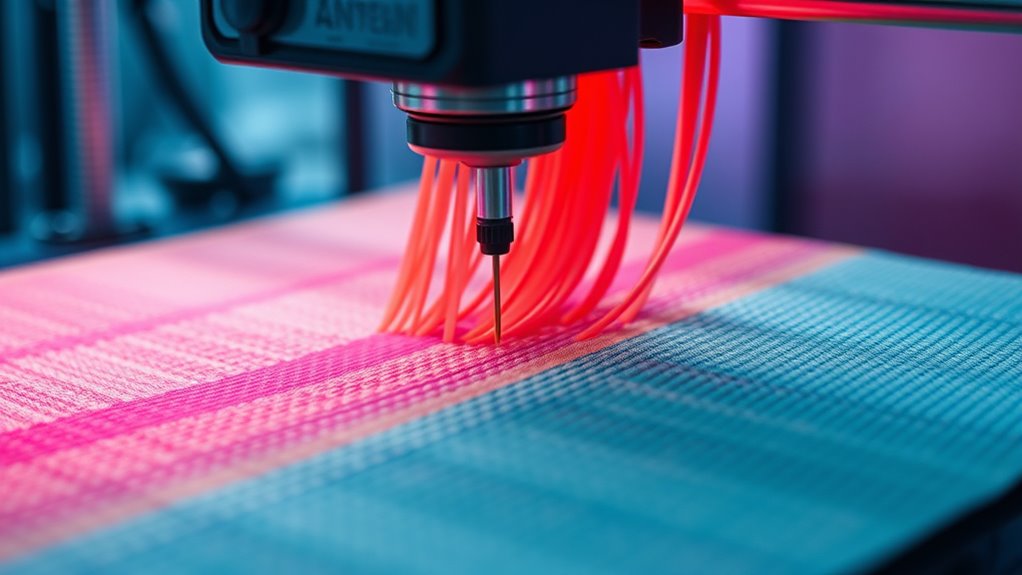

3D printing in textiles lets you create customized clothes and fabrics with amazing precision. You can experiment with sustainable materials, reduce waste, and produce on demand, cutting excess inventory. This technology offers great design flexibility, allowing you to craft intricate patterns and integrate functionalities like sensors or supportive zones. As you explore, you’ll discover how this innovation is transforming fashion and textile manufacturing—keep going to uncover all the exciting possibilities.

Get your wardrobe favorites delivered free — and shop member deals
- Fast, free delivery on millions of items
- Access to Prime Big Deal Days deals on October 6–7
- Prime Video, Amazon Music and more included
Key Takeaways
- 3D printing enables the creation of complex, customized fabrics and garments with high precision and design flexibility.
- It supports sustainable materials like biodegradable plastics and recycled fibers, reducing environmental impact.
- 3D printing allows on-demand production, minimizing waste and inventory, and facilitating rapid prototyping of textile designs.
- It enables multi-material textiles with integrated functionalities, such as sensors and flexible zones for wearable technology.
- 3D printing accelerates innovation in textiles by offering new textures, patterns, and the ability to customize garments to individual preferences.
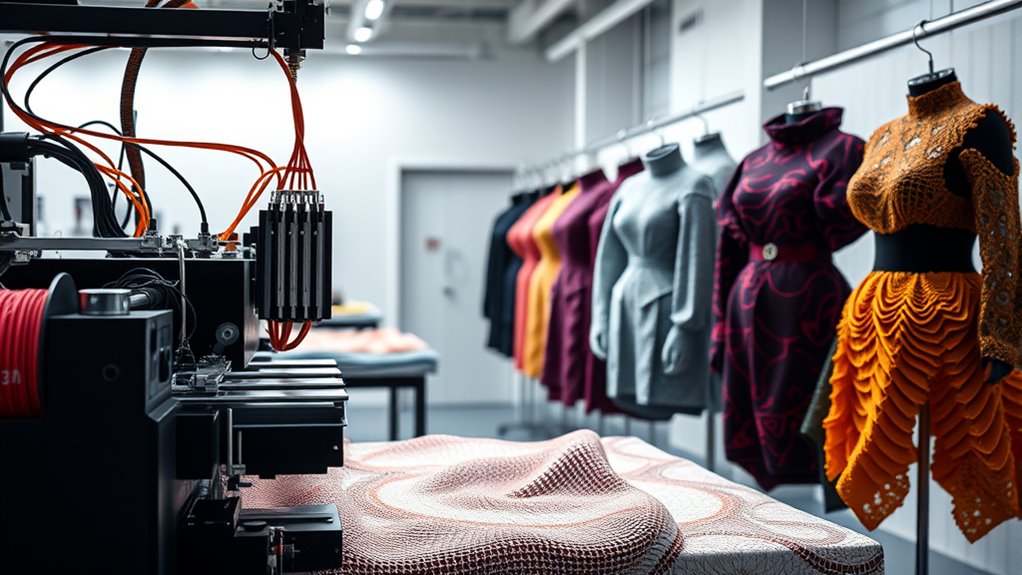
3D printing has revolutionized the textile industry by enabling the creation of complex, customized fabrics and garments with unprecedented precision. This technology allows you to experiment with sustainable materials, making it easier to reduce waste and lessen environmental impact. Instead of relying on traditional manufacturing processes that often produce excess fabric and use harmful chemicals, 3D printing gives you the power to design and produce textiles on demand. You can select eco-friendly filaments, such as biodegradable plastics or recycled fibers, which align with sustainable practices and help conserve resources.
When it comes to design customization, 3D printing offers unmatched flexibility. You’re no longer limited by the constraints of traditional weaving or sewing techniques. Instead, you can craft intricate, one-of-a-kind patterns and textures that would be impossible or too costly with conventional methods. This means you can tailor garments to fit your exact measurements or create unique, personalized accessories that truly reflect your style. The technology enables rapid prototyping, so you can see your designs come to life quickly, test different variations, and refine them without wasting materials.
With 3D printing, you also gain the ability to produce multi-material textiles, blending different textures and functionalities into a single piece. For example, you could incorporate flexible, breathable zones alongside more rigid, supportive sections—all within one print. This customization enhances both comfort and performance, especially in sportswear or functional fashion. You can integrate features like embedded sensors or conductive elements directly into the fabric, opening up innovative possibilities for wearable technology.
Another significant advantage is the potential for on-demand manufacturing. Rather than stockpiling large inventories, you can produce garments as needed, reducing waste and excess. This approach not only benefits the environment but also offers greater responsiveness to market trends and individual customer preferences. You might print a custom-designed jacket or accessory tailored precisely to a client’s specifications, reducing excess inventory and shipping costs.
Furthermore, understanding regional resources, such as local legal regulations and available materials, can help optimize your 3D printing processes for textiles in different areas.
3D printing filament for textiles
As an affiliate, we earn on qualifying purchases.
As an affiliate, we earn on qualifying purchases.
Frequently Asked Questions
What Are the Environmental Impacts of 3D Printing Textiles?
You might worry about the environmental impacts of 3D printing textiles. It often uses sustainable materials, reducing waste compared to traditional methods. However, energy consumption can be high, especially with advanced printers, which may increase your carbon footprint. To minimize impacts, choose eco-friendly materials and optimize energy use. Overall, 3D printing in textiles has potential for sustainability, but you should stay mindful of its energy demands and material choices.
How Durable Are 3D Printed Fabrics Compared to Traditional Textiles?
You’ll find that 3D printed fabrics vary in durability, but generally, their fiber strength can be comparable to traditional textiles. Fabric longevity depends on the materials used and printing techniques, making some 3D printed textiles quite resilient, while others may wear faster. Advances are improving durability, but for now, you might notice that traditional fabrics often outperform 3D printed ones in long-term wear and tear.
Can 3D Printed Textiles Be Recycled or Reused?
Yes, 3D printed textiles can be recycled and reused, but recycling challenges exist due to the complex materials involved. You might find that reusing 3D printed fabrics offers some potential, but it depends on the type of filament and how the textile was manufactured. Overall, while reuse is possible, improving recycling methods is essential to fully unleash the sustainability benefits of 3D printed textiles.
What Are the Cost Differences Between 3D Printed and Conventional Fabrics?
You’ll find that 3D printed textiles often have higher material costs due to specialized filaments and inks, but they can lower production expenses by reducing waste and minimizing labor. Conventional fabrics may be cheaper upfront, but their long-term costs can rise with waste and energy use. Overall, 3D printing offers a potentially cost-effective solution for customization and rapid prototyping, though initial investments might be higher.
How Does 3D Printing Influence Textile Design Flexibility?
3D printing substantially boosts your textile design flexibility by enabling design customization and material innovation. You can quickly create intricate, unique patterns and complex structures that traditional methods struggle with. This technology allows you to experiment with new materials, textures, and shapes, giving you more creative freedom. As a result, you can produce personalized, innovative fabrics tailored precisely to your vision, making your designs stand out in the market.
Conclusion
As you explore 3D printing in textiles, you’re opening a world of endless creativity and innovation. Just like a painter wields a brush, you can craft unique clothes and fabrics tailored to your vision. This technology transforms the way you design and wear textiles, making possibilities feel as boundless as the sky. Embrace these advancements, and let your imagination soar—because the future of fashion is waiting to be printed by you.
Fall Picks
fall essentials
As an affiliate, we earn on qualifying purchases.