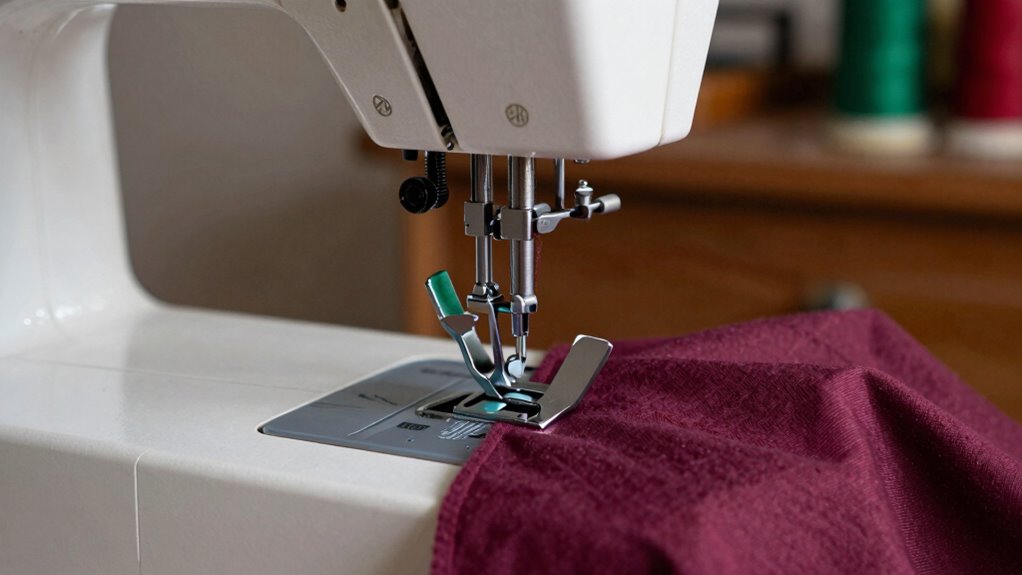

When tackling thick fabrics, both walking feet and dual feed systems excel, but their benefits differ. A walking foot uses extra feed dogs to grip layers evenly, minimizing slipping and puckering, making it great for quilting. On the other hand, dual feed systems synchronize the upper and lower feeds, ensuring all layers move together, enhancing stitch quality. Your choice depends on your budget and sewing needs, and there’s more to explore on how to make the best decision.

Get your wardrobe favorites delivered free — and shop member deals
- Fast, free delivery on millions of items
- Access to Prime Big Deal Days deals on October 6–7
- Prime Video, Amazon Music and more included
Key Takeaways
- Walking feet ensure even fabric feed, minimizing puckering and providing clean seams for thick materials like denim and canvas.
- Dual feed systems synchronize fabric layers, preventing shifting and enhancing stitching efficiency across various thick fabrics.
- Both options offer high stitch consistency, but dual feed may provide slightly better tension control for multiple layers.
- Walking feet are more cost-effective, ranging from $30 to $100, while dual feed systems can cost between $100 and $400.
- Consider project needs and budget when choosing, as walking feet are budget-friendly while dual feed offers advanced features for heavy fabrics.
As an affiliate, we earn on qualifying purchases.
Which Feeding Mechanism Is Best for Thick Fabrics?

When tackling thick fabrics, which feeding mechanism truly shines? For various fabric types like denim, canvas, or upholstery, choosing the right feeding mechanism can make all the difference. You’ll want to take into account sewing techniques that minimize puckering and guarantee smooth feeding. Adjusting patterns for thicker materials might require different needle choices and thread selection suited for heavy-duty projects. It’s essential to check your machine compatibility since not all machines handle these fabrics equally well. A good user experience hinges on these factors, as they directly impact the final result. Whether you’re creating bags or quilts, understanding how your chosen feeding mechanism interacts with your fabric can elevate your sewing projects considerably.
How Does a Walking Foot Work?

How Does a Walking Foot Work?
A walking foot is designed to tackle thick fabrics with ease, making it an ideal choice for projects that require precise feeding. It features an additional set of feed dogs that work in sync with your machine’s standard feed dogs. This mechanism helps pull multiple fabric types evenly, reducing the risk of slipping or puckering. When you’re using different sewing techniques, like quilting or layering heavy materials, the walking foot guarantees that all layers move smoothly together. You’ll find it particularly beneficial for bulky fabrics, such as denim or canvas, where traditional feet might struggle. By maintaining an even feed, it allows you to achieve clean, professional-looking seams without frustration. Additionally, understanding candle-making techniques can provide valuable insights into managing various fabric types effectively. Furthermore, exploring how gear works can enhance your sewing experience by ensuring you select the right tools for your projects. A walking foot is particularly useful when working with thick fabrics that require consistent tension and alignment throughout the sewing process. Choosing the right safety equipment for your workspace can also significantly improve your overall sewing experience.
What Is the Mechanics Behind Dual Feed Systems?

While both walking feet and dual feed systems aim to improve fabric handling, the mechanics behind dual feed systems involve a unique integration with your sewing machine’s feed dogs. This system works by coordinating the upper feed mechanism with the lower feed dogs, ensuring that all fabric layers move simultaneously. This synchronization is essential for maintaining seam alignment, especially when you’re working on quilting projects or using various fabric types. As the feed dogs pull the fabric through, the upper feed mechanism helps guide it, preventing shifting. This results in consistent stitch patterns and a professional finish. Additionally, a well-ventilated kitchen area can help create a more comfortable sewing environment. Understanding kitchen appliances is crucial for enhancing your sewing efficiency and technique. Moreover, a good understanding of tool types can significantly improve your overall project outcome. Whether you’re tackling thick fabrics or delicate materials, dual feed systems enhance your sewing experience and efficiency. Additionally, pet-friendly gear can help keep your workspace clean and organized when working with fabrics. Understanding fabric types can further improve your sewing outcomes.
How Do Stitch Qualities Compare?

Understanding how stitch qualities compare between walking feet and dual feed systems can greatly impact your sewing projects. Both options aim for stitch consistency, but they achieve it differently. Walking feet provide even fabric tension by gripping the top layer while feeding smoothly. In contrast, dual feed systems pull the fabric from both layers, which can minimize puckering. Regular maintenance of tools, like HEPA filters, can also enhance your sewing experience by ensuring a clean workspace. Additionally, ensuring color accuracy in your projects can lead to more vibrant and appealing results. Moreover, incorporating proper beauty tips can help you maintain a polished appearance while sewing, allowing you to focus on your craft. Furthermore, choosing the right sewing machine can significantly affect overall performance in handling thick fabrics, especially when considering investment in quality tools.
Here’s a comparison of stitch qualities:
| Feature | Walking Foot | Dual Feed |
|---|---|---|
| Stitch Consistency | High | Very High |
| Fabric Tension | Balanced | Uniform |
| Ease of Layer Feeding | Moderate | Easy |
| Puckering Risk | Low | Very Low |
| Best for Thick Fabrics | Yes | Yes |
Choosing the right system can elevate your fabric handling skills.
Which Option Is Easier to Use?

Choosing between a walking foot and a dual feed system also involves considering ease of use. Your user experience will vary based on the attachment process; walking feet usually offer easier attachment, while dual feed systems might require more setup. User preferences play a big role here, especially regarding compatibility issues with different sewing machines. When working with thick fabrics, you’ll want a solution that complements your fabric types and sewing techniques. Typically, a walking foot has a shorter learning curve, making it more accessible for beginners. However, dual feed systems can offer more versatility once you’ve mastered them. Additionally, effective cleaning techniques can improve your ability to maintain those fabrics in top condition. Furthermore, understanding acoustic drum shields can enhance your studio setup for fabric projects. Finally, consider maintenance requirements—walking feet generally need less upkeep, simplifying your sewing journey. Additionally, many crafters find that using clay bead bracelets or similar projects can enhance their sewing experience, providing a fun way to explore fabric combinations. Choosing the right anti-fatigue mats can also positively influence your comfort while working on these projects.
Which Option Fits Your Budget Best?

When considering your budget, it’s essential to weigh the initial investment of a walking foot versus a dual feed. While one might seem cheaper upfront, think about long-term costs and durability. Choosing the right option can save you money in the long run, so let’s break down these factors.
Initial Investment Comparison
While both walking feet and dual feed options have their merits, your budget plays an essential role in determining which is right for you. Understanding the initial cost of each can help you maximize your investment benefits. Additionally, investing in quality smart appliances can enhance your overall sewing experience by improving efficiency and precision. As you consider your options, remember that features like ergonomic designs can also influence your decision. The right tools can significantly impact your sewing results, especially when working with thick fabrics.
| Option | Initial Cost |
|---|---|
| Walking Foot | $30 – $100 |
| Dual Feed | $100 – $400 |
| Standard Foot | $10 – $50 |
| Specialty Feet | $20 – $150 |
| Machine Upgrade | $500 – $1,500 |
Walking feet tend to be more affordable, making them a great choice if you’re on a tight budget. Conversely, dual feed options offer advanced features at a higher initial cost but may provide greater long-term benefits for heavy fabric projects.
Long-Term Cost Considerations
After considering the initial costs of walking feet and dual feed options, it’s important to think about their long-term value. Walking feet typically offer better fabric longevity, as they distribute pressure evenly across thick materials, reducing wear and tear. This means you might save money on replacement fabrics over time. On the other hand, dual feed systems can sometimes require more maintenance, which adds to your overall costs. If you find yourself needing frequent repairs or replacements, those maintenance costs can add up quickly. Additionally, proper cleaning methods can further enhance the durability of your fabrics, maximizing their lifespan. Furthermore, understanding ADAS sensor calibration can help ensure that your sewing equipment remains in optimal condition, reducing the likelihood of costly repairs. Incorporating smart home decor tips can also create a more organized sewing space, enhancing your overall efficiency. In the end, weighing the potential longevity of your fabric against the maintenance costs of each option will guide you toward the best budget-friendly choice for your sewing projects.
Frequently Asked Questions
Can I Use Both Feet on Different Machines?
Yes, you can use both feet on different machines, as long as they’re compatible. Each foot has its advantages: the walking foot helps with thick fabrics by feeding layers evenly, while the dual feed offers precision for various materials. Always check your machine’s specifications to guarantee a proper fit. By switching between them, you can optimize your sewing projects and tackle diverse fabric challenges effectively. Enjoy experimenting with both!
Are Walking Feet Compatible With All Sewing Machines?
Not all walking feet are compatible with every sewing machine. You’ll face compatibility concerns based on specific machine models. Before purchasing, check your machine’s manual or consult the manufacturer to guarantee a proper fit. Many walking feet are designed for standard brands, but you might need an adapter for some models. Always double-check compatibility to avoid any issues and secure smooth sewing experiences with thicker fabrics.
What Types of Fabrics Benefit Most From These Feet?
Fabrics like denim, canvas, and leather really benefit from using walking feet or dual feed feet. These fabric types tend to shift during sewing, making it tough to achieve precise seams. By using the right foot, you’ll improve your sewing techniques, ensuring even feeding and minimizing puckering. Whether you’re adding layers or working with thicker materials, these feet help you tackle challenging projects with ease and confidence.
How Do I Maintain My Walking Foot or Dual Feed?
To maintain your walking foot and guarantee effective dual feed care, start by regularly cleaning them. Remove lint and debris after each use, using a soft brush or cloth. Check for any wear, and oil the moving parts as needed, following your machine’s guidelines. Always detach the foot when changing needles or bobbins to prevent damage. With proper walking foot maintenance, you’ll keep your sewing smooth and efficient for years to come.
Can I Sew Curves With These Feeding Mechanisms?
Absolutely, you can sew curves with a walking foot or dual feed! Picture guiding your fabric like a gentle river, smoothly flowing through the machine. As you master curve sewing techniques, remember to ease the fabric and pivot as needed. Fabric manipulation tips, like cutting notches on the inner curve, will help you achieve those beautiful rounded edges. Embrace the journey, and soon you’ll be creating stunning, curved designs with ease!
Conclusion
In the battle of walking foot versus dual feed, it’s clear that both have their strengths. If you want to glide through thick fabrics like a hot knife through butter, a walking foot might be your best bet. However, if ease and versatility are your priorities, the dual feed could be your trusty sidekick. Ultimately, it boils down to your sewing style and budget. Choose wisely, and your projects will soar!
Fall Picks
fall essentials
As an affiliate, we earn on qualifying purchases.