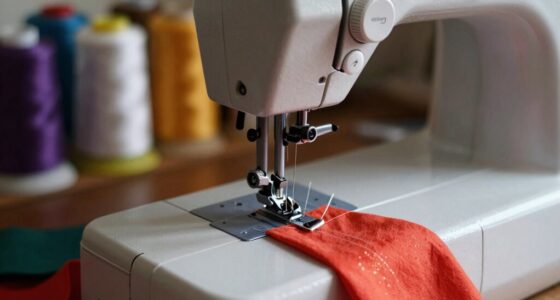
Choosing the right needle for your quilting machine is essential to avoid frustrating ‘railroad tracks’ in your projects. If you use a needle unsuitable for your fabric type or weight, you might struggle with uneven stitching. Lightweight fabrics need finer needles, while heavier materials require sturdier options. Always check for dull or damaged needles, as they can also contribute to stitch problems. Stick around to learn more about needle selection and troubleshooting tips for a flawless finish.
Open a free Amazon Business account
Business pricing, bulk buying and tax-exempt orders.
As an affiliate, we earn on qualifying purchases.
Key Takeaways
- Using the wrong needle type can lead to uneven stitches, creating the ‘railroad track’ effect on quilts.
- Ensure needle size matches fabric weight for optimal stitching; lighter fabrics need finer needles.
- Dull or damaged needles contribute to skipped stitches and inconsistent seams, exacerbating the railroad track issue.
- Proper needle alignment is essential; misalignment can cause fabric distortion and uneven stitching.
- Regular needle maintenance, including replacing dull needles, prevents stitching problems and enhances project quality.
As an affiliate, we earn on qualifying purchases.
Understanding the Role of Quilting Needles
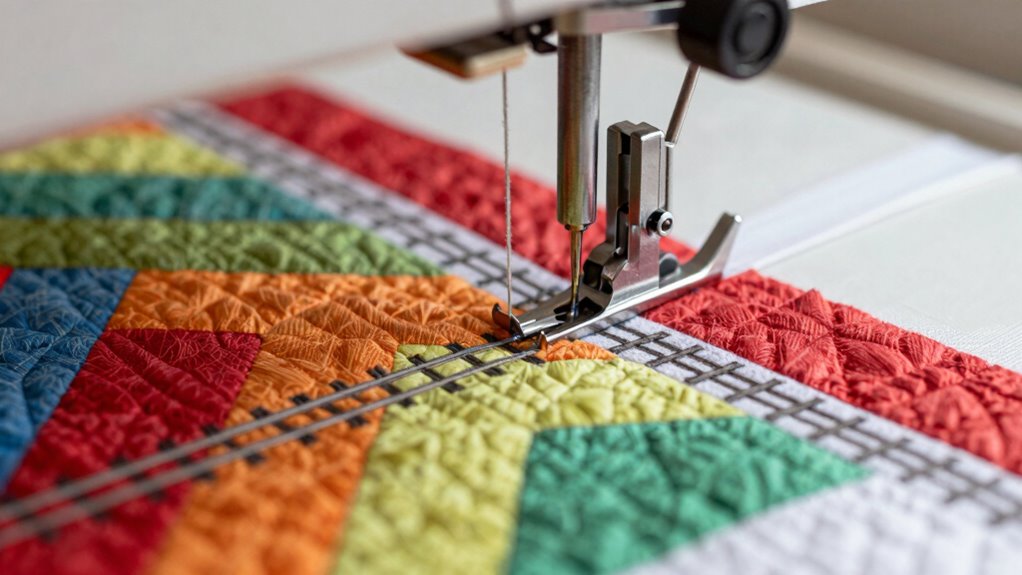
Quilting needles play an essential role in your sewing experience, ensuring smooth stitching and precision in your projects. Proper needle maintenance is vital; regularly changing your needle can prevent skipped stitches and fabric damage. When you use a needle that’s dull or bent, it can cause frustration and ruin your hard work.
Needle alignment also matters. Make sure your needle is correctly positioned in your sewing machine to achieve the best results. A misaligned needle can lead to uneven stitches and that dreaded ‘railroad track’ effect on your quilt. By keeping these factors in check, you can enhance your quilting experience and produce beautiful, professional-looking results that you’ll be proud to showcase.
Identifying the Right Needle for Your Fabric Type
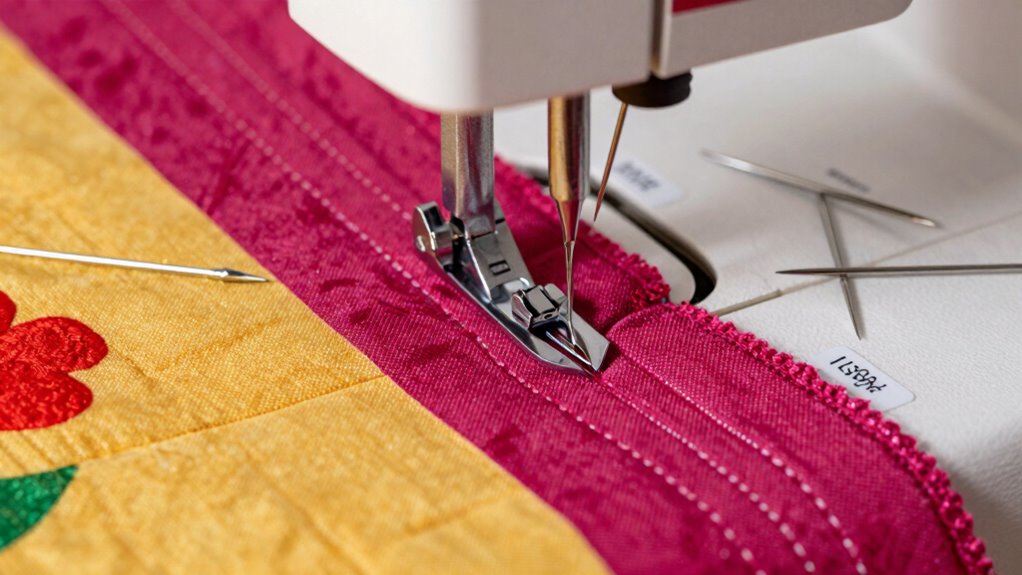
Choosing the right needle for your fabric type is essential for achieving the best results in your quilting projects. You’ll want to take into account fabric weight, needle size, and the specific type of needle that suits your needs. Understanding these factors will help you create beautiful quilts without unnecessary frustration.
Fabric Weight Considerations
When you’re working with different fabric weights, selecting the right needle can make all the difference in your quilting project. Each quilt fabric demands specific needle compatibility to guarantee smooth stitching. For lightweight fabrics, use a finer needle to maintain fabric stretch and prevent damage. Heavier materials, like those with thicker batting, require a sturdier needle to handle thread tension without skipping stitches. Pay attention to your quilting techniques; they can also influence needle choice. If you’re quilting through multiple layers, confirm your needle can penetrate the thickness without breaking. By matching your needle to the fabric weight, you’ll avoid issues like uneven seams and create a professional finish in your quilts.
Needle Size Importance
Selecting the right needle size is essential for achieving the best results in your quilting projects. Different fabrics require specific needle sizes to guarantee smooth stitching and avoid issues like skipped stitches. Knowing your fabric type and matching it with the appropriate needle size can make a world of difference.
| Fabric Type | Recommended Needle Size | Needle Brands |
|---|---|---|
| Cotton Quilting | 75/11 or 80/12 | Schmetz, Organ |
| Denim | 90/14 | Singer, Universal |
| Lightweight Silk | 60/8 | Schmetz, Klasse |
| Heavyweight Canvas | 100/16 | Organ, Schmetz |
Additionally, practicing good needle maintenance can prolong the life of your needles, guaranteeing consistent performance.
Needle Type Selection
Understanding needle types is essential for successful quilting. Different fabrics require specific needles, so you’ll want to match your needle type to your material. For lightweight fabrics, consider using a fine needle, while heavier fabrics benefit from a larger, stronger needle. Pay attention to your needle brand preferences, as some brands may perform better with certain materials.
Additionally, remember to follow needle maintenance tips, like changing your needle regularly and keeping it free from lint. This guarantees cleaner stitches and prevents issues like skipped stitches or “railroad tracks.” By selecting the right needle type, you’ll enhance your quilting experience and achieve beautiful results. Make those choices wisely!
Common Types of Quilting Needles and Their Uses
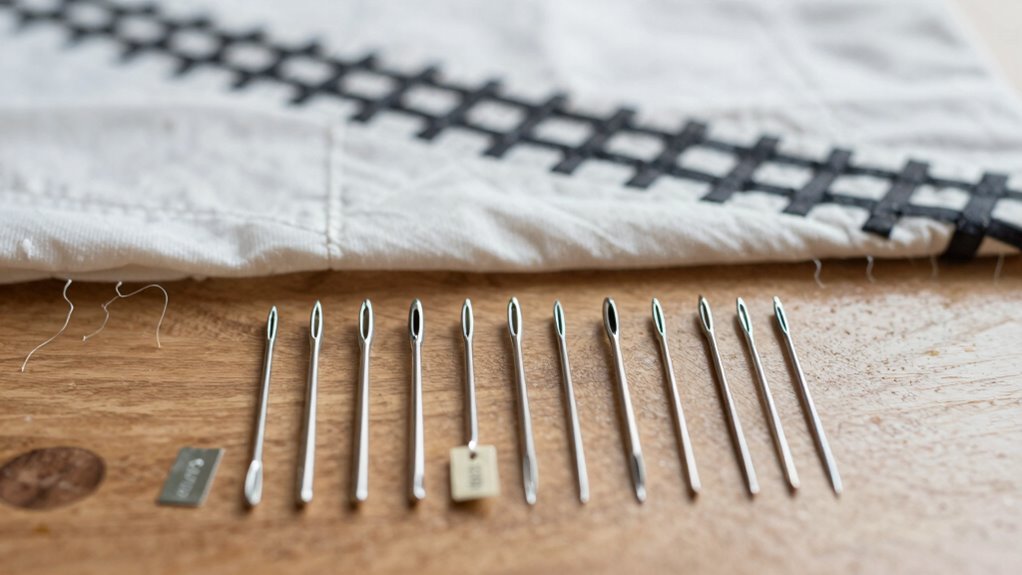
While choosing the right needle for your quilting machine may seem challenging, knowing the common types can simplify the process. Different needle brands offer various options tailored for specific tasks, enhancing your quilting experience. Here’s a quick guide to some popular needle types:
| Needle Type | Use |
|---|---|
| Universal | General quilting |
| Quilting | Thick layers and batting |
| Embroidery | Decorative stitching |
| Denim | Heavy fabrics |
| Twin | Parallel lines or pintucks |
Proper needle maintenance is essential to avoid issues. Regularly inspect your needles for wear and replace them as needed. With the right needle, you’ll improve your quilting results greatly.
Why the Wrong Needle Leads to Railroad Tracks?
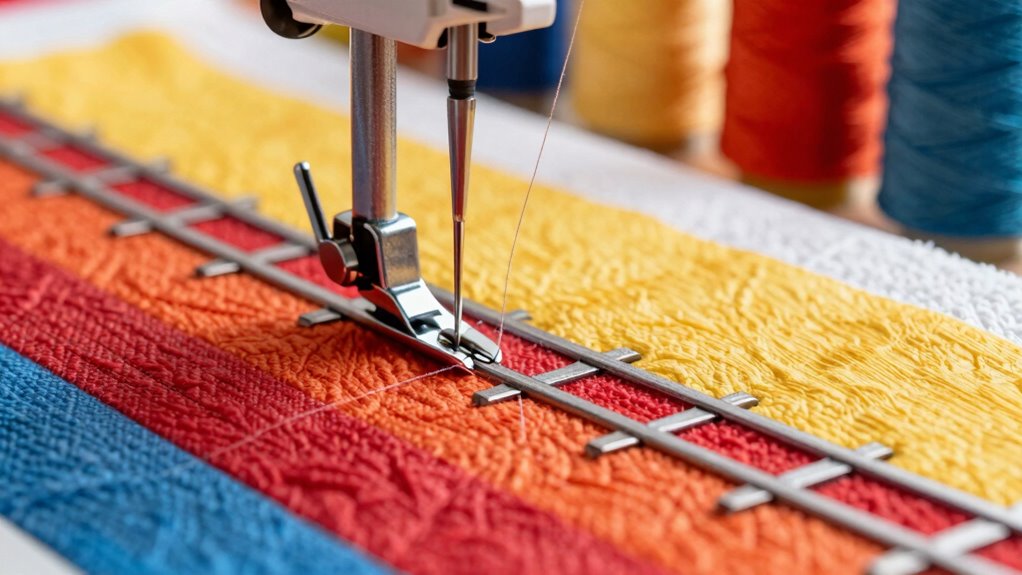
Choosing the right needle type isn’t just about preference; it impacts your quilting quality considerably. Using the wrong needle can lead to frustrating issues like “railroad tracks” on your fabric. This happens because incompatible needles disrupt the sewing tension, causing uneven stitches. If the needle isn’t suited for your fabric or thread, it can create excessive friction, leading to skipped stitches or misalignment. As a result, you may notice those unwanted lines forming parallel to your seams. Ensuring needle compatibility with your specific quilting machine and materials is essential to maintain smooth operation and achieve the best results. By selecting the correct needle, you can avoid these issues and enjoy a flawless quilting experience.
Key Tips for Selecting the Best Needle for Your Quilting Project
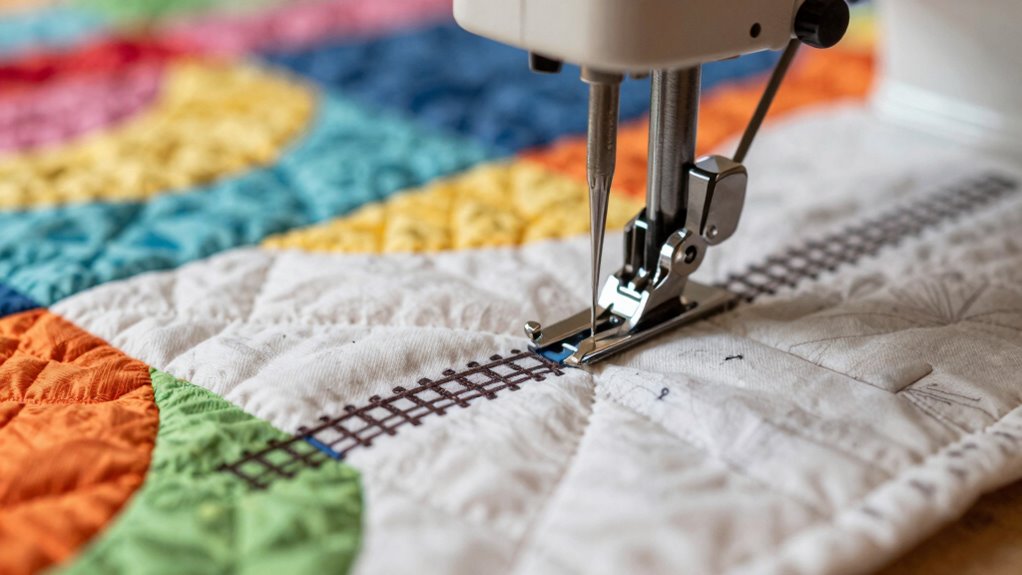
Selecting the right needle for your quilting project can make all the difference in achieving stunning results. To help you choose wisely, consider these key tips:
| Needle Brand | Recommended Use |
|---|---|
| Schmetz | General quilting |
| Organ | Heavy fabrics |
| Janome | Fine detail work |
| Universal | Versatile applications |
| Topstitch | Decorative stitching |
Always match the needle size to your fabric type, and remember to perform regular needle maintenance—change your needle frequently to avoid issues. Each needle brand offers unique advantages, so don’t hesitate to experiment until you find your perfect fit. Studio dividers can also enhance your quilting experience by ensuring a well-organized workspace. Happy quilting!
Troubleshooting Needle Issues and Fixing Railroad Tracks
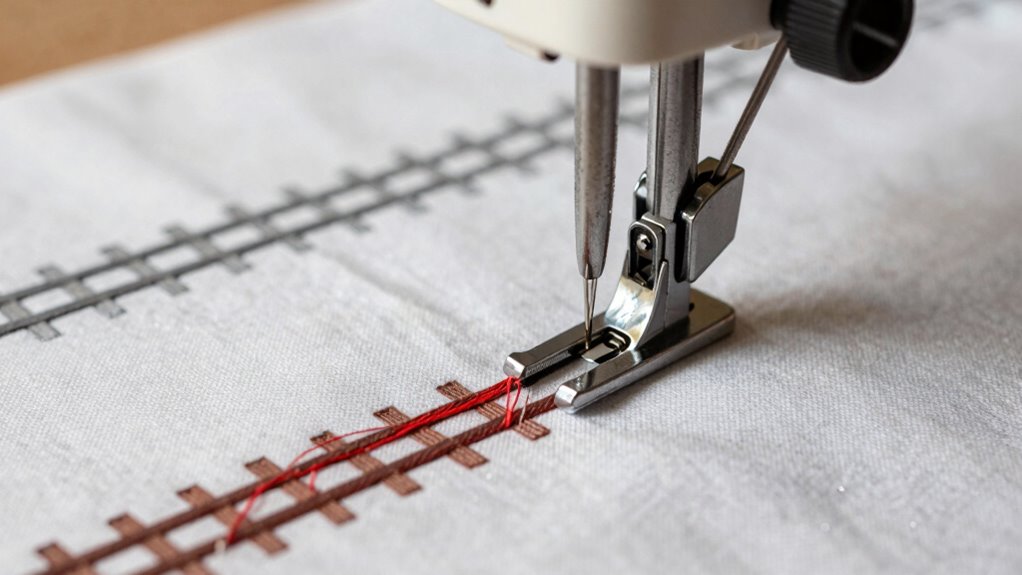
When you encounter needle issues while quilting, it can be frustrating, especially if you notice unsightly railroad tracks forming on your fabric. Start by checking your needle maintenance; a dull or damaged needle can cause these problems. Make certain you’re using the right needle type for your fabric and thread. Next, examine your thread tension. Improper tension can lead to uneven stitches, creating those dreaded tracks. Adjust the upper tension and verify the bobbin tension is correct as well. If the problem persists, rethread your machine and double-check for any fabric snags. By addressing these factors, you’ll get back to smooth stitching and eliminate those irritating railroad tracks from your quilting projects.
Frequently Asked Questions
How Often Should I Replace My Quilting Machine Needle?
You should replace your quilting machine needle every 8 to 10 hours of sewing or whenever you notice signs like skipped stitches or fraying fabric. To maximize needle longevity, keep an eye on your needle’s condition and change it if you see any bending or dullness. Regularly replacing your needle will enhance your project’s quality and prevent frustrating issues. Trust your instincts; if it feels off, it’s time for a replacement!
Can I Use Regular Sewing Needles for Quilting?
You can’t use regular sewing needles for quilting if you want the best results. Quilting requires specific needle types designed for thicker layers and batting. Regular needles might not be compatible, leading to issues like skipped stitches or fabric damage. Investing in quilting needles guarantees smoother stitching and prevents problems. So, always choose the right needle type for your quilting projects to achieve that perfect finish!
What Is the Best Needle Size for Beginners?
For beginners, a size 80/12 universal needle is your best bet. This needle type works well with various fabrics, making it versatile for your projects. If you’re working with heavier materials, consider using a size 90/14 needle instead. As for needle materials, titanium-coated needles last longer and resist wear. Experiment with both types to see what feels right for you, and you’ll quickly find your favorite needle for quilting!
How Can I Tell if a Needle Is Damaged?
To tell if a needle’s damaged, start with some needle inspection tips. Check for bent or broken tips, as these can cause issues. Look for any rough spots or discoloration on the shaft; these are common needle issues that can affect your stitching. If the needle’s not smooth or it’s been used for a long time, it’s best to replace it. Keeping your needles in good shape guarantees better quilting results!
Do Different Threads Require Specific Needle Types?
Yes, different threads require specific needle types for best results. You’ll want to guarantee thread compatibility by matching the thread’s thickness and fiber content with the appropriate needle size and type. For example, thicker threads like upholstery require heavier needles, while fine threads are best suited for sharp, slender needles. Choosing the right combination helps you avoid issues like skipped stitches or fraying, assuring a smoother sewing experience on your projects.
Conclusion
Choosing the right needle for your quilting machine is essential—like picking the perfect thread color to complete a masterpiece. If you’re experiencing those pesky railroad tracks, it’s often a sign you’ve got the wrong needle. By understanding your fabric and needle options, you can avoid these issues and keep your projects looking smooth and professional. Don’t underestimate the power of a good needle; it’s the unsung hero of your quilting journey!
Fall Picks
fall essentials
As an affiliate, we earn on qualifying purchases.