
TL;DR

Get your wardrobe favorites delivered free with Prime
- Fast, free delivery on millions of items
- Prime Video, Amazon Music and more included
- Member-only deals all year
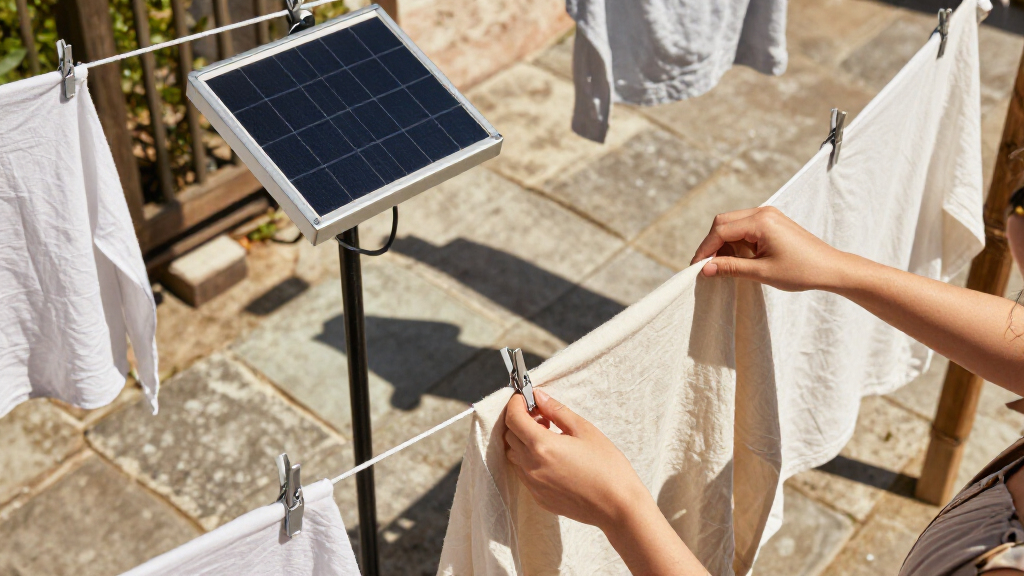
A solar-powered clothes drying line is typically a passive system using sunlight and wind, not electricity. This guide compares retractable, rotary, and portable lines to help you choose the best option for your home’s energy savings and fabric care goals.
You might picture a high-tech machine humming with solar panels when you hear the phrase solar-powered clothes dryers lines. But in reality, the most effective version of this technology has been around for centuries. It’s a simple rope, a sturdy pole, and the sun. This passive approach uses natural energy to dry your laundry, cutting electricity bills and extending the life of your clothes.
However, not all clotheslines are created equal. Choosing between a retractable wall mount, a rotary umbrella, or a portable elastic line depends on your space, your local weather, and your laundry habits. This guide breaks down the real differences, helping you avoid common mistakes like fading clothes or struggling with installation.
We’ll explore how sunlight and wind actually work together to dry fabrics, compare popular line types, and offer practical tips for maximizing efficiency. Whether you live in an apartment with a tiny balcony or a house with a spacious backyard, there’s a solar drying solution that fits your life.
Solar drying is passive: It uses sun and wind, not electricity or solar panels.
Airflow beats sunlight: A breezy shaded spot often dries clothes faster than still, sunny air.
Protect colors: Hang dark or delicate items inside out or in shade to prevent UV fading.
Check local rules: Verify HOA and lease agreements before installing permanent lines.
Match line to space: Use retractable lines for small areas and rotary lines for high capacity.
What Is a Solar-Powered Clothes Line?
A solar-powered clothes line is usually a conventional outdoor clothesline that uses sunlight and moving air to dry laundry. It does not require solar panels, batteries, or motors. The term “solar-powered” here refers to the energy source—the sun—rather than a mechanical device converting solar energy into electricity.
Think of it like a solar oven. You aren’t plugging it in. You’re harnessing natural heat and airflow. This distinction matters because some manufacturers sell electric tumble dryers powered by rooftop solar panels. Those are active appliances. A true solar clothesline is passive, silent, and requires zero electricity to operate.
For most households, this passive method is the most cost-effective way to reduce energy consumption. It relies on physics, not circuitry. Sunlight warms the water in your clothes, causing it to evaporate. Wind carries that moisture away. If you have a breeze and low humidity, your clothes dry quickly, even without direct sunbeams hitting them.
Key Insight: Air movement is often just as important as sunlight. A breezy, dry, shaded spot may dry clothes faster than a sunny but still, humid one.
Popular right now

Shark HydroVac Reveal Cordless Wet-Dry Vacuum and Mop, Lilac, WD321

Bose QuietComfort Wireless Noise-Cancelling Headphones, Twilight Blue

Vitamix Touch & Go Advance 32-Ounce Bar Blender, White
As an affiliate, we earn on qualifying purchases.
Why Switching to Line Drying Saves Money and Clothes
Switching to a solar drying line impacts two areas: your wallet and your wardrobe. Financially, the savings are straightforward but often underestimated. You stop paying for the electricity or gas required to run a tumble dryer. According to energy data, dryers are among the most energy-intensive appliances in a home, often second only to water heaters. Eliminating even half your loads can lead to noticeable reductions in utility bills, but the true value lies in the long-term reduction of appliance wear and replacement costs.
But the fabric benefits are often overlooked because they are subtle and cumulative. Tumble dryers use heat and mechanical tumbling to dry clothes. This process causes friction, which breaks down fibers over time. It leads to pilling, shrinkage, and fading. A clothesline uses gravity and air. Your jeans won’t shrink. Your wool sweaters won’t felt. Your bright red t-shirts stay vibrant longer. This isn’t just about aesthetics; it’s about preserving the structural integrity of the garment. By avoiding the high-heat stress of a dryer, you extend the functional lifespan of your clothing, effectively delaying the cost of replacement.
Consider a real-world scenario: You wash a batch of dark denim. In a dryer, the heat fades the indigo dye and the tumbling weakens the seams. On a line, hung inside out in the shade, the denim retains its color and shape. You’re not just saving energy; you’re preserving the quality of your clothing. This extends the lifespan of your wardrobe, reducing the need for replacements.
- Energy Savings: Reduces reliance on electric or gas dryers, lowering monthly overhead.
- Fabric Care: Minimizes wear, tear, and shrinkage, preserving garment integrity.
- Environmental Impact: Lowers household carbon footprint by avoiding fossil-fuel-based electricity.
- Cost Efficiency: Low upfront cost compared to purchasing or maintaining an electric dryer.
Choosing the Right Line for Your Space
Not every home has a backyard for a traditional rope line. Modern designs offer flexibility for apartments, small yards, and rental properties. The right choice depends on three factors: available space, mounting options, and capacity needs. However, the tradeoff between convenience and capacity is critical to understand before you buy.
For small spaces, retractable clotheslines are a game-changer. These units mount to a wall and pull out like a tape measure. When not in use, the line retracts into a compact cassette. This keeps your patio or balcony clear. They are ideal for renters who cannot drill into fences or for homes with limited outdoor area. The tradeoff here is capacity; while discreet, they often hold fewer heavy items than fixed lines, requiring more frequent loads or careful spacing to avoid sagging.
If you have more space, rotary or umbrella-style lines offer high capacity in a small footprint. These lines rotate around a central pole, with arms extending outward. You can hang dozens of items at once. They are excellent for families with large laundry loads. However, they require a fixed ground mount or a heavy base, which may not suit all surfaces. The implication is that you lose flexibility; once installed, these units are permanent fixtures that can obstruct yard activities or require significant effort to remove if you move.
For portability, elastic or portable lines are best. These stretch between two points and can be taken down easily. They are perfect for camping, travel, or temporary setups. While they hold less weight than fixed lines, their flexibility makes them invaluable for occasional use or drying delicates. The downside is durability; elastic lines degrade faster under UV exposure and heavy loads, meaning they are a short-term solution rather than a long-term investment.
| Line Type | Best For | Pros | Cons |
|---|---|---|---|
| Retractable Wall-Mount | Small yards, balconies, renters | Compact, discreet, easy to install | Lower capacity, requires wall anchor |
| Rotary/Umbrella | Families, medium yards | High capacity, rotates for easy access | Fixed footprint, can be bulky |
| Portable/Elastic | Travel, temporary use, delicates | Lightweight, easy to store, cheap | Sags under weight, less durable |
| Traditional Rope | Large yards, high volume | Extremely durable, high capacity | Permanent, requires posts, unsightly |
How to Maximize Drying Speed and Efficiency
Drying clothes on a line is an art form. You can speed up the process by manipulating three variables: airflow, spacing, and spin speed. Most people underestimate the power of a good spin cycle. If your washing machine has a high-speed spin option, use it. Removing more water mechanically means less water to evaporate naturally. This is the single most effective step because it reduces the total energy required for evaporation, regardless of weather conditions.
Next, focus on spacing. Crowding clothes on a line blocks airflow. Moisture gets trapped between garments, leading to damp spots and musty smells. Leave at least a few inches between each item. For heavy items like towels or jeans, hang them on the outer edges where airflow is strongest. Lighter items like shirts can go in the middle. This strategy leverages the natural tendency of wind to move faster around the periphery of a cluster, ensuring the heaviest items dry first.
Finally, consider the wind. Position your line perpendicular to the prevailing breeze. This maximizes the surface area exposed to moving air. If you live in a humid climate, add a fan to an indoor drying rack. Even a small amount of forced air can cut drying time in half. Remember, the goal is to move moisture away from the fabric, not just heat it. Without airflow, humidity builds up around the garment, creating a microclimate that halts evaporation.
- Optimize Spin Cycle: Use the highest spin speed your machine allows to remove excess water.
- Shake Before Hanging: Shake each item vigorously to smooth out wrinkles and loosen fibers.
- Space Out Garments: Ensure air can circulate freely around each piece of clothing.
- Hang Heavy Items Last: Put heavier wet items on stronger sections or outer lines to prevent sagging.
- Monitor Weather: Bring clothes in before rain or high humidity sets in to avoid re-wetting.
Protecting Your Clothes from Sun Damage
Sunlight is a powerful drying agent, but it can also be a destructive force. Ultraviolet (UV) rays break down chemical bonds in dyes and fibers. Over time, this causes colors to fade and fabrics to weaken. Synthetic materials like polyester and nylon are particularly susceptible to UV degradation, becoming brittle and prone to tearing. This isn’t just cosmetic; it reduces the functional life of the garment, forcing earlier replacement.
To protect your clothes, hang colored items inside out. This shields the visible surface from direct UV exposure. For delicate fabrics like silk or wool, avoid direct sunlight entirely. Dry them in the shade or indoors. Even cotton, which is robust, will fade if left in harsh midday sun for hours. The implication is that you must curate your drying routine based on fabric type, not just load size.
Conversely, sunlight has a brightening effect on whites. UV rays can help bleach out stains and kill odor-causing bacteria. If you have white towels or sheets, hanging them in direct sun can restore their brightness. Just be mindful of the duration. A few hours of sun is beneficial; days of exposure is damaging. This duality means that solar drying requires a nuanced approach: using the sun as a tool for whites while treating it as a hazard for colors.
Pro Tip: If you live in a sunny climate, consider installing a retractable line under a pergola or tree canopy. This gives you the airflow of outdoor drying with the protection of shade.
Navigating Local Rules and HOA Restrictions
Before you install a permanent clothesline, check your local regulations. In the past, many Homeowners’ Associations (HOAs) and municipal codes banned visible clotheslines, citing aesthetic concerns. They argued that drying laundry was unsightly or lowered property values. Understanding this history is crucial because it explains why these restrictions persist, even if they are becoming less common.
However, laws are changing. Several states in the US have passed “Right to Dry” laws, prohibiting HOAs from banning clotheslines in backyards. These laws recognize the environmental and economic benefits of solar drying. But they often come with conditions. For example, lines may need to be screened from view from the street or neighboring properties. This means that while you have the legal right to dry, you may still need to invest in landscaping or fencing to comply, adding hidden costs to your project.
Always verify the specific rules for your property. If you live in a rental, check your lease agreement. Some landlords prohibit permanent installations. In these cases, portable or retractable lines are your best bet. They can be removed easily, leaving no trace. This flexibility helps you comply with rules while still enjoying the benefits of solar drying. The tradeoff is that portable options may offer less stability and capacity, requiring you to adjust your laundry habits to fit the legal constraints.
- Check HOA Covenants: Review your community’s rules on visible laundry.
- Research State Laws: Look for “Right to Dry” legislation in your area.
- Review Lease Terms: Ensure your landlord permits outdoor installations.
- Consider Screening: Use fences, shrubs, or screens to hide lines if required.
Alternatives to the Mustorn Retractable Line
If you were looking for the Mustorn Retractable Clothesline, you might find it unavailable. Fortunately, several comparable options offer similar functionality and durability. When choosing a replacement, focus on specs that match your needs: line length, material quality, and mounting type. The key is to balance the convenience of retraction with the physical limitations of the mechanism.
The Suwimut Dual Retractable Clothesline is a strong contender. It offers two lines, doubling your capacity in the same footprint. The ABS casing and PVC rope are weather-resistant, and the wall-mount design is discreet. It’s ideal for households that need more drying space without a larger visual impact. However, the dual-line mechanism can be more complex to repair if the retraction spring fails, a common issue in cheaper units.
For those who prefer a freestanding option, the Tonchean Adjustable Height Rotary 4-Arm Umbrella provides flexibility. You can adjust the height to suit different garment lengths. The metal construction is sturdy, and the green color blends with garden settings. It’s a great choice for patios where wall mounting isn’t possible. The tradeoff is stability; tall, adjustable units can be prone to tipping in strong winds unless properly weighted or anchored.
If portability is key, the Newraturner 2-Pack Portable Elastic Clothesline is versatile. It stretches up to 12 feet and comes with clothespins. While it lacks the heavy-duty feel of stainless steel lines, it’s perfect for travel, dorm rooms, or occasional use. Its elastic nature prevents sagging, keeping clothes off the ground. But this elasticity also means it will degrade faster under UV exposure, making it a consumable item rather than a permanent fixture.
| Product | Key Feature | Best Use Case |
|---|---|---|
| Suwimut Dual Retractable | Two lines, compact cassette | Small yards, high capacity needs |
| Tonchean Rotary Umbrella | Adjustable height, 4 arms | Patios, no wall mounting |
| Newraturner Portable Elastic | Stretchable, 2-pack | Travel, temporary setups |
| JS HANGER Rotary | Collapsible, steel build | Storage-friendly outdoor use |
Frequently Asked Questions
Do solar clotheslines need batteries or solar panels?
No. A standard solar clothesline is a passive system that uses sunlight and wind to dry laundry. It has no electrical components, batteries, or solar panels. The term ‘solar-powered’ refers to the energy source (the sun), not a mechanical device.How much money can I save by line drying?
Savings vary based on your local energy rates and how many dryer loads you avoid. On average, dryers are among the most energy-intensive appliances in a home. Eliminating even half your loads can lead to significant annual savings, but exact figures depend on your specific utility costs and dryer efficiency.Will sunlight ruin my clothes?
Prolonged direct sunlight can fade dyes and weaken certain fabrics, especially synthetics. To protect your clothes, hang colored items inside out or in the shade. Sunlight can also brighten whites, so use it strategically depending on the garment type.Can I dry clothes indoors on a line?
Yes, but indoor drying adds moisture to the air. Ensure good ventilation to prevent mold or mildew. Using a dehumidifier or a fan can help speed up drying and manage humidity levels in enclosed spaces.Are clotheslines allowed in all neighborhoods?
Not necessarily. Some HOAs and local ordinances restrict visible clotheslines. However, many regions have ‘Right to Dry’ laws that protect your ability to install lines, often with conditions like screening them from view. Always check your local rules and lease agreements first.Conclusion
Solar-powered clothes drying is a simple, effective way to save money and care for your clothes. By understanding the difference between passive lines and electric dryers, you can make an informed choice. Whether you choose a retractable line for your balcony or a rotary rack for your backyard, the benefits are clear: lower energy bills, longer-lasting fabrics, and a smaller carbon footprint.
Start small. Try drying one load a week on a line. Notice the difference in your clothes’ texture and color. Once you see the results, you might find yourself embracing the rhythm of solar drying. It’s a return to basics that feels surprisingly modern.