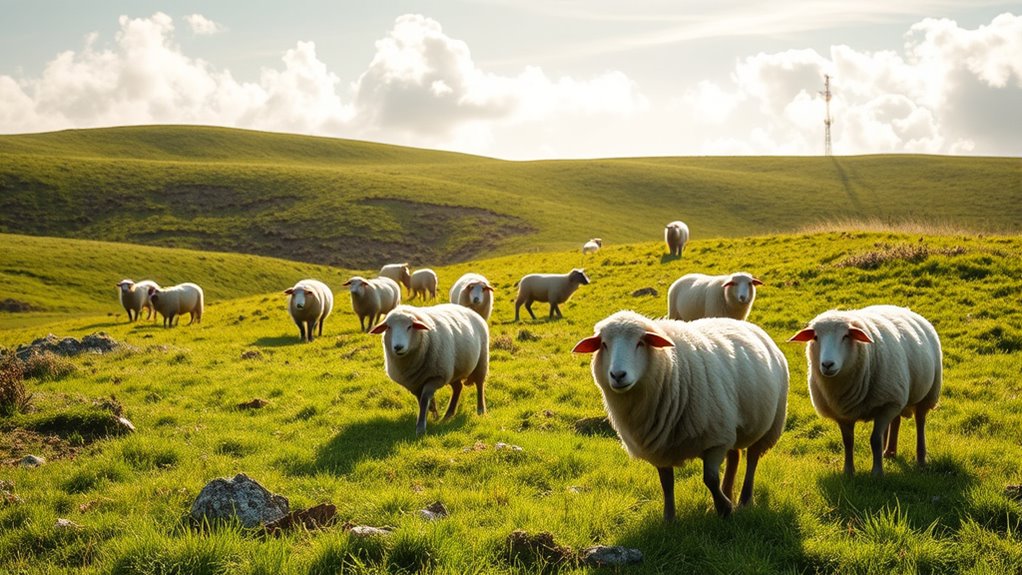

Regenerative wool farming harnesses sheep to naturally rebuild soil health and support resilient ecosystems. By using rotational grazing, you prevent overgrazing and allow land to recover, encouraging diverse plant growth. Healthy soil benefits plants, water retention, and overall land robustness. Treated humanely, sheep thrive, helping control weeds and boost biodiversity. This approach proves you can produce high-quality wool while healing the environment—discover how this sustainable practice can transform your farm.

Get your wardrobe favorites delivered free with Prime
- Fast, free delivery on millions of items
- Prime Video, Amazon Music and more included
- Member-only deals all year
Key Takeaways
- Sheep grazing stimulates soil aeration, organic matter breakdown, and enhances nutrient cycling, promoting soil health and land regeneration.
- Rotational grazing prevents overgrazing, allowing land recovery and increasing biodiversity of plant species.
- Healthy, well-cared-for sheep naturally manage vegetation, reducing the need for chemical interventions.
- Grazing practices support water retention, soil vitality, and resilience against environmental stresses.
- Regenerative wool farming creates a sustainable cycle that benefits land health, animal welfare, and product quality.

Regenerative wool farming is transforming traditional practices by prioritizing soil health, biodiversity, and animal welfare. Instead of relying solely on chemical inputs and intensive land use, this approach emphasizes working with nature to restore and enhance the land. As a sheep farmer embracing regenerative methods, you focus on maintaining healthy soil, which is essential for sustainable wool production. Healthy soil supports robust plant growth, improves water retention, and reduces erosion, creating a resilient ecosystem. When your sheep graze thoughtfully, their movement stimulates soil aeration, helping organic matter break down and enriching the earth beneath their hooves. This cycle of grazing and recovery rebuilds soil vitality, leading to better nutrient availability for plants and a healthier environment overall.
Animal welfare is a core component of regenerative wool farming. You treat your sheep as more than just wool producers; you see them as integral to the land’s health. By providing ample space, access to natural forage, and humane treatment, you guarantee they live comfortable, stress-free lives. This approach reduces the need for antibiotics or synthetic interventions, creating a more natural and sustainable system. When sheep are well cared for, they’re healthier and more productive, and their grazing behavior naturally manages vegetation, preventing overgrowth and promoting plant diversity. This diversity, in turn, supports a wider range of wildlife, further enriching the ecosystem.
In regenerative systems, you also adopt rotational grazing techniques, moving sheep between paddocks to prevent overgrazing and give land time to recover. This cycle not only safeguards soil health but also encourages a variety of plant species to flourish, boosting biodiversity. The increased plant diversity provides better nutrition for your sheep and creates a more resilient landscape that can withstand pests, droughts, and other challenges. Through these practices, you build a symbiotic relationship between your animals and the land, where both benefit and thrive.
Ultimately, regenerative wool farming empowers you to produce high-quality wool while actively healing the environment. By focusing on soil health and animal welfare, you create a sustainable operation that supports your livelihood and the planet. This approach proves that you don’t have to choose between productivity and sustainability — you can do both. As you nurture the land and care for your sheep, you foster a resilient, vibrant ecosystem that sustains your farm for generations to come.
Top picks for "regenerative wool farm"
As an affiliate, we earn on qualifying purchases.
Frequently Asked Questions
How Does Wool Impact Carbon Sequestration in Regenerative Farming?
You might wonder how wool impacts carbon sequestration. Well, grazing impact plays a key role; managed grazing encourages soil carbon buildup by promoting healthy plant growth. Sheep, when properly managed, help improve soil structure and increase soil carbon levels. This process enhances the land’s ability to capture and store atmospheric carbon, making wool a sustainable contribution to climate change mitigation through regenerative farming practices.
What Are the Economic Benefits for Farmers Adopting Regenerative Wool Practices?
You’ll find fantastic financial benefits by adopting regenerative wool practices. These methods promote market diversification, opening doors to eco-conscious consumers enthusiastic for sustainable products. Additionally, you may access attractive financial incentives like grants or premium prices, boosting your bottom line. By embracing these practices, you not only protect the land but also profit from the growing green market, making your farm more resilient, rewarding, and ready for the future.
Can Regenerative Wool Farming Be Scaled Globally?
You wonder if regenerative wool farming can be scaled globally. While the concept has great potential, scalability challenges exist, like varying land types, climate differences, and economic factors. To succeed worldwide, you’ll need adaptable practices and supportive policies. With commitment and innovation, global adoption is possible, helping improve land health and sustainability. The key is overcoming these challenges through collaboration and education across diverse regions.
What Are the Challenges Faced by Farmers Transitioning to Regenerative Wool Methods?
You’ll face challenges like market adaptation, where convincing consumers to pay more for regenerative wool takes effort. Skill development is also vital, as you need new techniques for land management and flock health. Shifting requires patience, education, and investment, but it can lead to healthier land and sustainable profits. Embracing these changes helps you stay competitive and contribute positively to the environment.
How Does Sheep Movement Influence Soil Health in Regenerative Systems?
Did you know that sheep movement enhances soil health by improving soil aeration and nutrient cycling? When you move sheep across the land, they naturally trample the soil, breaking up compacted layers and allowing air to penetrate deeper. This stimulates beneficial microbial activity, boosts nutrient cycling, and promotes healthier plant growth. Your active management of sheep grazing directly contributes to regenerating the land, creating a sustainable loop of land healing and productivity.
Conclusion
As you embrace regenerative wool farming, you realize that by healing the land, you’re also nurturing your sheep and community. It’s a beautiful coincidence—how sustainable practices naturally lead to healthier ecosystems and better livelihoods. When you invest in the land’s regeneration, you’re not just producing wool; you’re creating a cycle of renewal that benefits everyone involved. In this way, your efforts become part of a larger, harmonious story of growth and resilience.
Halloween Picks
halloween
As an affiliate, we earn on qualifying purchases.