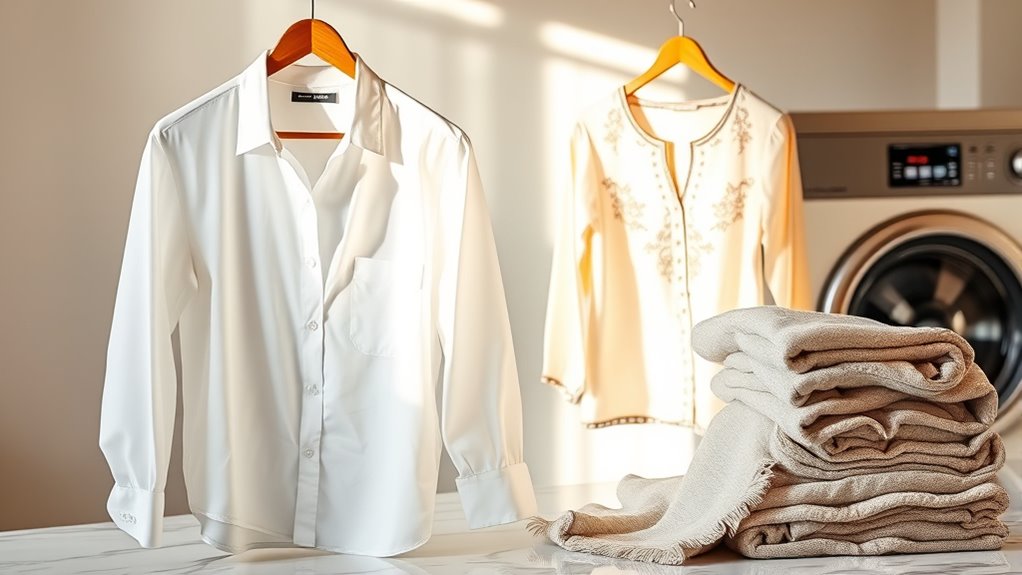

Choose dry cleaning when you have delicate or high-end garments, such as suits, dresses, or silk items, that can be damaged by water or agitation. It’s ideal for removing stubborn oil-based stains and preserving the shape, color, and texture of your clothes. Regular laundry is better for casual items like T-shirts and jeans. To learn how to make the best choice for your wardrobe, consider the details of each cleaning method.
Key Takeaways
- Use dry cleaning for delicate fabrics like silk, wool, or garments with embellishments to prevent damage.
- Opt for dry cleaning when dealing with oil-based or greasy stains that are hard to remove with water.
- Choose dry cleaning for high-end suits, dresses, or items that require shape and color preservation.
- Use regular laundry for sturdy, washable fabrics like cotton T-shirts, jeans, and casual wear.
- Consider dry cleaning to extend garment lifespan and reduce fabric wear caused by water and agitation.
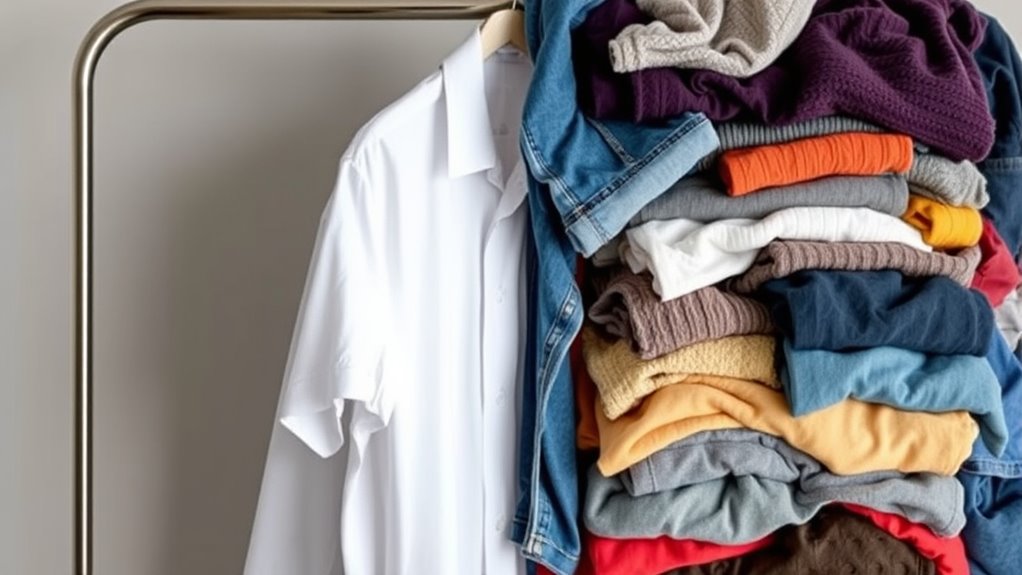
Ever wonder what sets dry cleaning apart from traditional laundry? It’s not just about the process; it’s about the benefits that come with it, especially when it comes to caring for your delicate or valuable clothes. Dry cleaning uses special solvents instead of water, which means your garments are treated with more care. One key advantage is the use of eco friendly detergents that are gentler on the environment. These detergents eliminate harmful chemicals often found in conventional laundry, reducing pollution and making the process safer for both you and the planet. When you opt for dry cleaning, you’re also choosing a method that prioritizes garment preservation. Fabrics like silk, wool, and certain synthetics can shrink, warp, or become misshapen with regular washing. Dry cleaning’s gentle solvents and careful handling help maintain the shape, texture, and color of your clothes, extending their lifespan.
If your wardrobe includes high-end suits, dresses, or delicate fabrics, dry cleaning is usually the better option. Regular laundry, even with gentle detergents, can sometimes be too harsh for these materials. The agitation and water exposure may cause colors to fade or fabrics to weaken over time. Dry cleaning provides a controlled environment that minimizes stress on your clothes, keeping them looking newer longer. Plus, many stains—like oil-based or greasy spots—are more effectively removed during dry cleaning because the solvents dissolve these substances more efficiently than water-based washes. This means your favorite silk blouse or tailored blazer gets a more thorough clean, without the risk of damage.
Another aspect to consider is the overall garment preservation. Dry cleaning’s process helps prevent shrinkage, stretching, and fabric distortion. It’s especially important for clothing with intricate details, embellishments, or sensitive fabrics. By choosing dry cleaning for these items, you’re investing in their longevity. It also reduces the need for frequent replacements, saving you money in the long run. While traditional laundry might be suitable for everyday cotton T-shirts and jeans, it’s not always the best choice for your finer or more delicate pieces. Dry cleaning offers a specialized approach that respects the integrity of your clothes, ensuring they look their best for years to come.
Top picks for "clean laundry instead"
Open Amazon search results for this keyword.
As an affiliate, we earn on qualifying purchases.
Frequently Asked Questions
How Do I Identify Fabrics Suitable for Dry Cleaning?
You can identify fabrics suitable for dry cleaning by checking their care labels and cleaning symbols. Look for symbols like a circle or words indicating “dry clean only.” Fabrics such as wool, silk, and certain blends often require dry cleaning to prevent damage. Always follow fabric care instructions closely; if unsure, opt for professional cleaning to keep your clothes in top condition.
Are There Eco-Friendly Dry Cleaning Options Available?
Yes, eco-friendly dry cleaning options are available. You can choose services that use eco-friendly solvents like CO2 or silicone-based solvents, which reduce harmful chemical use. Look for cleaners committed to sustainable practices, such as energy-efficient machines and biodegradable products. These options help protect the environment while still providing effective cleaning. Always ask your local dry cleaner if they prioritize eco-friendly solvents and sustainable methods to make an informed choice.
Can Dry Cleaning Damage Delicate Clothing?
A stitch in time saves nine, so you should know dry cleaning can sometimes impair delicate clothing. You might face fabric shrinkage or chemical residues that weaken fibers over time. To protect your garments, always check labels and choose eco-friendly dry cleaning options. Proper care ensures your delicate pieces stay in great shape, avoiding unnecessary damage from harsh chemicals or aggressive cleaning methods.
How Long Does Dry Cleaning Typically Take?
Dry cleaning typically takes about 1 to 3 days, depending on the garment and the cleaning service. During this process, fabric residue is carefully eliminated using specialized cleaning solvents that are gentle on delicate fabrics. You might experience a slightly longer wait if your clothing requires special handling or if the shop has a backlog. To guarantee your clothes stay in top shape, ask your cleaner about turnaround times.
Is Dry Cleaning Cost-Effective for Frequent Laundry?
Think of dry cleaning as a luxury, like a rare gemstone—useful for delicate items, but not always cost-effective for frequent laundry. When considering cost comparison, if you wash often, laundry saves more money. Frequency considerations matter; dry cleaning’s higher price can add up quickly. For regular clothes, laundry is your best bet, but for special fabrics or garments, dry cleaning’s worth it despite the cost.
Conclusion
So, next time you’re faced with a tricky stain or a delicate fabric, will you opt for laundry or dry cleaning? The choice might just save your favorite piece from damage—or keep it looking brand new. But here’s the catch: not all fabrics are created equal, and knowing when to choose dry cleaning could be the secret to extending your wardrobe’s life. Are you ready to make the right decision? The answer might surprise you.