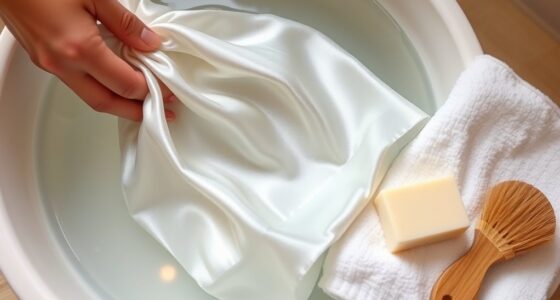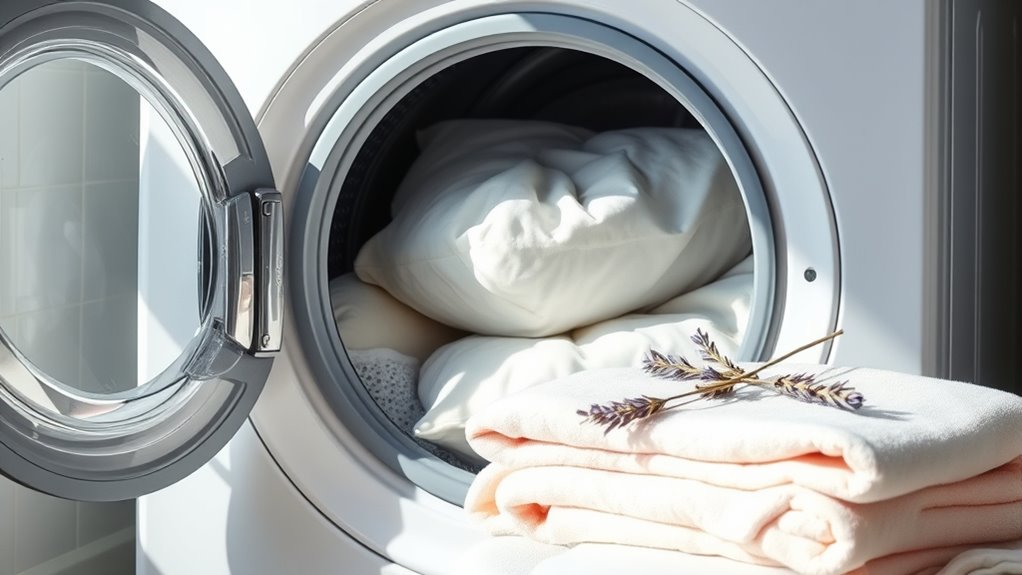

To wash pillows and duvets properly, start by checking labels for cleaning instructions. Use a gentle cycle with warm water, adding a small amount of fabric softener if desired. Make certain they are fully dry before reuse—tumble dry on low or air dry in a well-ventilated area, turning them regularly. Sunlight helps disinfect and freshen. Keep these tips in mind to maintain clean, fresh bedding, and discover more expert advice if you continue along.
Key Takeaways
- Check care labels for specific washing instructions and recommended water temperature.
- Use a gentle cycle and mild detergent, avoiding excessive fabric softener to prevent residue buildup.
- Wash pillows and duvets separately to ensure thorough cleaning and prevent clumping.
- Dry on low heat or air dry, adding dryer balls or tennis balls to help maintain shape and fluffiness.
- Ensure items are completely dry before use to prevent mold, odors, and bacteria growth.
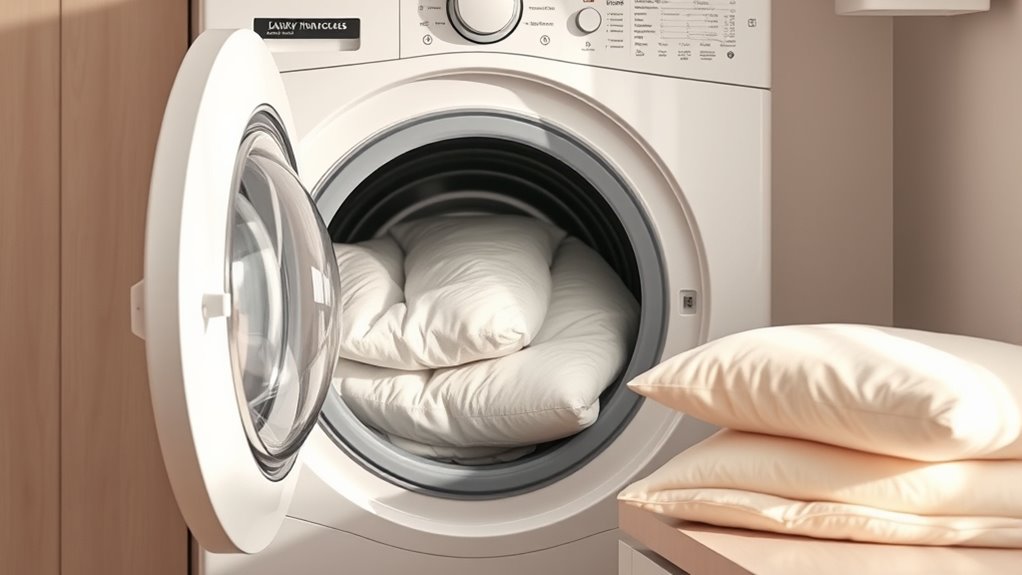
Keeping your pillows and duvets clean is essential for a healthy and comfortable sleep environment. Regular washing removes dust mites, allergens, and dirt that can accumulate over time, helping you breathe easier and sleep better. When it comes to washing these bulky items, choosing the right fabric softener and drying techniques can make all the difference. Fabric softener can add a fresh scent and help keep the fabric feeling soft, but it’s important not to overuse it. Too much can leave a residue that may trap dirt or reduce the pillow’s or duvet’s breathability. Use it sparingly, following the manufacturer’s instructions, and opt for a gentle formula suitable for bedding. This way, your pillows stay plush and comfortable without any chemical buildup.
Drying techniques are just as vital as washing. After a thorough wash, proper drying prevents mold, mildew, and unpleasant odors. If you have a tumble dryer, set it to a low heat or delicate cycle. High heat can damage the fabric or cause shrinkage, especially with natural fibers like cotton or feather fillings. Adding clean tennis balls or dryer balls can help keep fillings evenly distributed and prevent clumping as the duvet or pillows dry. Alternatively, if you prefer air drying, spread your pillows and duvets flat on a clean surface or hang them in a well-ventilated area. Make sure to turn and fluff them regularly to promote even drying and restore their loft. Sunlight is a natural disinfectant, so drying in the sun can help eliminate bacteria and freshen your bedding, but keep in mind that prolonged exposure might weaken some fabrics.
When drying, avoid wringing or twisting your bedding, as this can damage the filling and distort the shape. Instead, gently press out excess water or roll them in a towel to absorb moisture before drying. For down-filled duvets and pillows, ensure they are completely dry before reuse to prevent mold growth. Using a fan or dehumidifier can speed up the process if you’re air drying indoors. Always check for dampness before making your bed; dampness can lead to musty smells and compromise hygiene. Additionally, proper drying techniques help maintain the integrity of your bedding and prevent damage. When you’re finished, give your pillows and duvets a good fluff to restore their shape and comfort. Proper drying techniques, combined with the right amount of fabric softener, will keep your bedding fresh, soft, and inviting night after night.
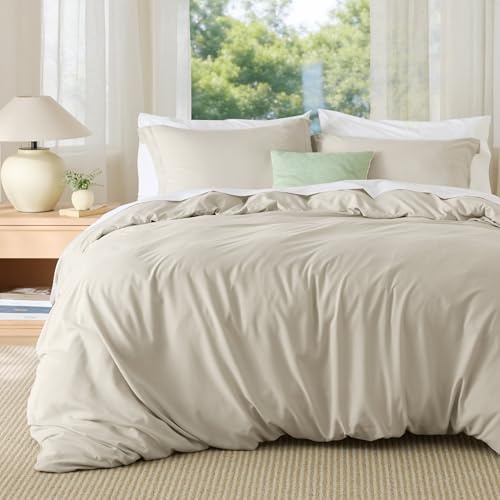
Bedsure Duvet Cover King Size – Soft Double Brushed Bedding Set for Kids & Adults, Zipper Closure, 3 Pieces, Includes 1 Duvet Cover (104"x90") & 2 Pillow Shams, NO Comforter, Linen
Ultra Soft: This duvet cover set is made from polyester microfiber that offers exceptional softness. The smooth and…
As an affiliate, we earn on qualifying purchases.
As an affiliate, we earn on qualifying purchases.
Frequently Asked Questions
Can I Wash Memory Foam Pillows in a Washing Machine?
You shouldn’t wash memory foam pillows in a washing machine. The agitation and water can damage the foam, causing it to break down or lose its shape. Instead, spot clean with a mild detergent and wipe with a damp cloth. For thorough cleaning, hand wash gently or consider replacing your memory foam pillow periodically. Always check the manufacturer’s instructions to avoid voiding any warranties.
How Often Should I Replace My Pillows and Duvets?
Think of your pillows and duvets like good friends who need regular check-ups. You should replace pillows every 1 to 2 years, depending on their pillow lifespan, and follow a duvet replacement schedule of about 5 to 10 years. Over time, they collect dust and lose support. Keep an eye on sagging, stains, or persistent odors—these are signs it’s time for new bedding.
Are There Eco-Friendly Detergent Options for Cleaning Bedding?
Yes, you can choose eco-friendly detergents and natural cleaning solutions to clean your bedding. Look for products labeled biodegradable or plant-based, which are gentle on the environment and safe for your skin. These options often contain fewer chemicals, reducing your ecological footprint. Using eco-friendly detergents not only helps protect the planet but also guarantees a healthier sleep environment for you and your family.
Can I Dry My Pillows and Duvets Outside in the Sun?
Yes, you can dry your pillows and duvets outside in the sun. Sun drying allows for outdoor airing, which helps eliminate moisture and freshen your bedding naturally. Just make sure to place them in a shaded area initially to prevent fabric fading, then move them to direct sunlight for thorough drying. Regular outdoor airing also reduces odors and bacteria, keeping your bedding fresh and clean.
What Should I Do if My Duvet Shrinks After Washing?
If your duvet shrinks like a magic trick gone wrong, don’t panic! Start with shrunk duvet remedies like soaking it in lukewarm water mixed with gentle conditioner, then gently stretch it back to size. To prevent shrinking during washing, always follow the care label, avoid hot water, and opt for gentle cycles. Regularly check your duvet’s size post-wash, and stretch it carefully while damp—your secret weapon against shrinking disasters!

Handy Laundry Wool Dryer Balls – Natural Fabric Softener, Reusable, Reduces Clothing Wrinkles and Saves Drying Time, Better Alternative to Plastic Balls and Liquid Softener (Pack of 6)
SUPERIOR QUALITY WOOL: 100% New Zealand premium wool with no synthetic fillers, rolled into tight, extra-large balls and…
As an affiliate, we earn on qualifying purchases.
As an affiliate, we earn on qualifying purchases.
Conclusion
Now that you know the proper way to wash pillows and duvets, you can confidently clean with care and consistency. Remember to check labels, choose the right cycle, and dry diligently to deliver freshness and fluffiness. Keeping your bedding bright, breathable, and beautiful is simple when you follow these steps. So, stay savvy, stay sanitary, and enjoy sleeping soundly in a spotless, sensational space every night!

MRS. MEYER'S CLEAN DAY Liquid Fabric Softener, Infused with Essential Oils, Paraben Free, Rain Water Scent, 32 oz (32 Loads)
Liquid fabric softener adds freshness while reducing static from clothes
As an affiliate, we earn on qualifying purchases.
As an affiliate, we earn on qualifying purchases.
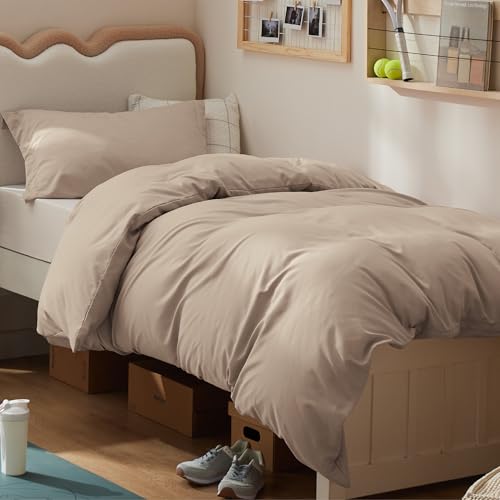
Bedsure Duvet Cover Twin/Twin XL Size – Soft Double Brushed Bedding Set for Kids & Adults, Zipper Closure, 2 Pieces, Includes 1 Duvet Cover (68"x90") & 1 Pillow Sham, NO Comforter, Hazel
Ultra Soft: This double-brushed duvet cover set is ideal for college essentials. Crafted from ultra-soft polyester microfiber, it…
As an affiliate, we earn on qualifying purchases.
As an affiliate, we earn on qualifying purchases.