To care for leather, regularly clean with a soft, damp cloth and use specialized leather conditioners to keep it supple and prevent cracking. Faux leather is easier to maintain—it just needs a damp cloth for cleaning and should be protected from scratches and peeling. Both materials benefit from gentle handling and proper storage. To learn detailed tips for cleaning and maintaining each type, keep exploring the best methods for your specific items.
Key Takeaways
- Clean leather with a damp cloth and use specialized leather cleaners; faux leather can be wiped with a damp cloth or mild soap.
- Condition genuine leather regularly with leather conditioners to maintain flexibility and prevent cracking; faux leather does not require conditioning.
- Avoid harsh chemicals or abrasive cleaners on both materials to prevent damage or peeling.
- Protect leather and faux leather from excessive sunlight and moisture to extend their lifespan.
- Address scratches or stains promptly to prevent long-term damage, using appropriate products for each material.
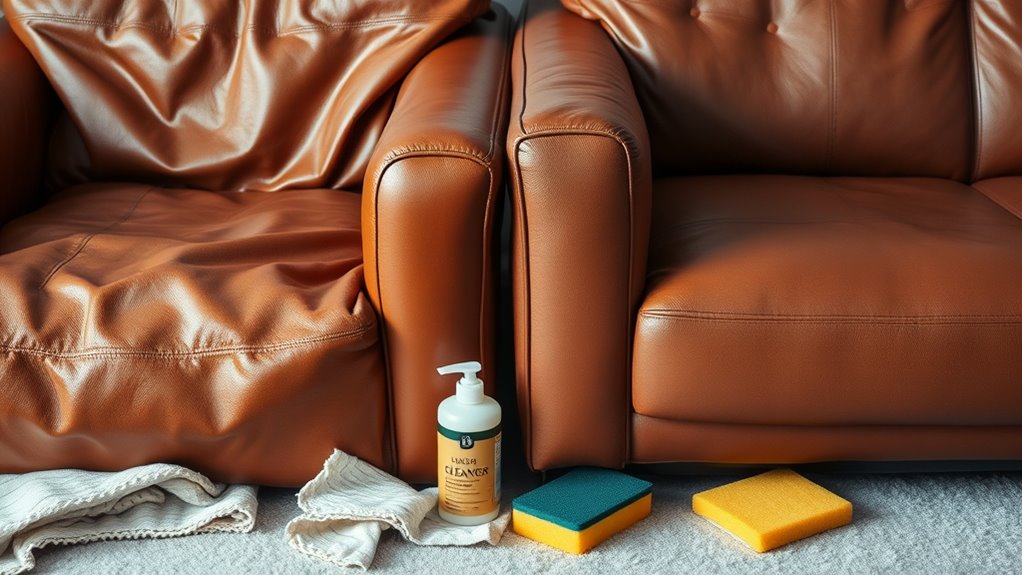
When choosing between leather and faux leather, understanding their differences can help you make a more informed decision. One of the key aspects to evaluate is the sustainability comparison. Genuine leather is a natural material made from animal hides, which can be a more environmentally friendly option if sourced responsibly. It’s biodegradable and, with proper farming practices, can have a lower impact on the environment over its lifecycle. Faux leather, on the other hand, is typically made from synthetic materials like polyurethane or PVC. While it doesn’t involve animal cruelty, its production relies heavily on plastics derived from fossil fuels, which raises concerns about pollution and non-biodegradability. If sustainability is a priority for you, it’s important to weigh these factors carefully.
Cost analysis is another critical factor in your decision-making process. Generally, leather tends to be more expensive upfront due to the materials and craftsmanship involved. High-quality leather pieces can last for years with proper care, which might justify the higher initial investment. Faux leather, however, is usually more budget-friendly and offers a wider range of styles and colors at a lower price point. That said, faux leather often wears out faster, especially if exposed to moisture or intense sunlight, leading to potential replacement costs down the line. If you’re trying to balance cost with longevity, consider how much maintenance and eventual replacement might be necessary for each material.
Beyond cost and sustainability, you should also think about maintenance. Leather requires regular conditioning to keep it supple and prevent cracking, along with gentle cleaning using specific leather cleaners. Faux leather is easier to clean—generally just a wipe with a damp cloth does the trick—but it can be more susceptible to scratches and peeling over time. If you prefer a low-maintenance option and are okay with replacing items more frequently, faux leather might suit you better. Conversely, if you value durability and a natural feel, investing in leather and learning proper care routines will serve you well.
Ultimately, your choice hinges on your priorities—whether it’s environmental impact, budget, or ease of maintenance. Both materials have their pros and cons, so understanding these differences ensures you pick the right one for your lifestyle and values. By doing a thorough cost analysis and considering the sustainability comparison, you can make a decision that aligns with your needs and minimizes regrets down the line.

Awaydol 10 PCS Leather Care Kit – Horsehair Brushes,Saddle Soap,Waterproofing Wax,Mink Oil Conditioner,Polishing Cloth,Microfiber cloth,Boot Shoe Shine Cleaning Kit Gift for Men Cowboy Husband Dad
✨Revive & Protect Your Leather: The Awaydol Leather Cleaning Kit is designed to thoroughly cleanse, moisturize,shield, and rejuvenate…
As an affiliate, we earn on qualifying purchases.
As an affiliate, we earn on qualifying purchases.
Frequently Asked Questions
How Does Leather’s Breathability Compare to Faux Leather?
Leather’s breathability is superior to faux leather, allowing air to circulate and keep you comfortable. You’ll notice leather absorbs moisture better, preventing sweat buildup, while faux leather offers less breathability and tends to trap moisture. This breathability comparison makes leather a better choice for long-term comfort, especially in warm conditions. Faux leather may feel less breathable, so you might experience more moisture absorption and discomfort over time.
Is Faux Leather More Environmentally Friendly Than Genuine Leather?
Faux leather is generally more environmentally friendly than genuine leather, especially since over 90% of leather comes from environmentally intensive tanning processes. Faux options often use sustainable sourcing materials and are more biodegradable, breaking down faster in landfills. While genuine leather can last decades, its biodegradability is lower due to chemical treatments. So, if you’re aiming for eco-friendliness, faux leather offers a better environmental footprint overall.
Can Faux Leather Be Repaired Easily if Damaged?
Yes, faux leather repairs are generally easy if you know what to do. If you notice faux leather damage, you can often fix minor tears or scratches with a repair kit designed specifically for synthetic materials. These kits include adhesive and colorants that blend well. For more extensive faux leather damage, you might need professional help. Regular upkeep can also prevent further faux leather damage, keeping your items looking great longer.
How Long Does Genuine Leather Typically Last With Proper Care?
With proper care, genuine leather can last decades, demonstrating remarkable durability and resilience. You’ll find that leather longevity depends on factors like cleaning, conditioning, and avoiding damage. While faux leather may mimic the look, its durability isn’t quite as enduring. By consistently caring for your leather with gentle cleaning and conditioning, you help ensure it ages beautifully, maintaining its charm far longer than you might expect.
Are There Health Concerns Associated With Synthetic Leather Materials?
You might have concerns about synthetic leather materials, as they often contain synthetic chemicals. These chemicals can sometimes cause allergic reactions in sensitive individuals. While generally safe for most people, it’s a good idea to check labels for potential irritants and ventilate well when first using new faux leather items. If you notice skin irritation, consider switching to genuine leather or seeking hypoallergenic alternatives.
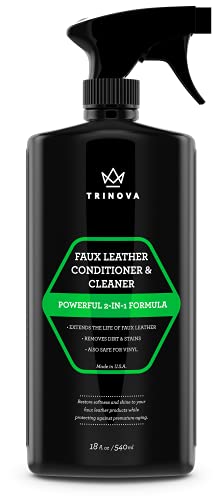
TriNova Faux Leather Cleaner & Conditioner – Keep Seats, Jackets, Handbags, Couches, Shoes, Boots & More Looking New- 18fl oz
ADVANCED FAUX LEATHER RESTORATION – TriNova’s Faux Leather Cleaner & Conditioner offers the best way to restore and…
As an affiliate, we earn on qualifying purchases.
As an affiliate, we earn on qualifying purchases.
Conclusion
Now that you know the secrets to caring for both leather and faux leather, you’re equipped to keep your pieces looking stunning. Remember, each material tells a story—your story—through its shine and feel. Treat them with love, and they’ll reward you with years of beauty and comfort. Don’t let neglect be the villain in your story; instead, be the hero who preserves the elegance and charm of your favorite pieces. Your furniture and accessories deserve nothing less.
TriNova Faux Leather Cleaner & Conditioner – Keep Seats, Jackets, Handbags, Couches, Shoes, Boots & More Looking New- 18fl oz
ADVANCED FAUX LEATHER RESTORATION – TriNova’s Faux Leather Cleaner & Conditioner offers the best way to restore and…
As an affiliate, we earn on qualifying purchases.
As an affiliate, we earn on qualifying purchases.

Lexol Advanced Naturals Leather Care Kit with All Leather Cleaner, Conditioner, 2 Cotton Cloths and Natural Bristle Brush, Great for Car Interiors, Furniture, Bags, Boots, Baseball Gloves, 5 Piece Kit
Complete Leather Care Kit for All Your Leather: This all in one leather cleaner and conditioner kit includes…
As an affiliate, we earn on qualifying purchases.
As an affiliate, we earn on qualifying purchases.