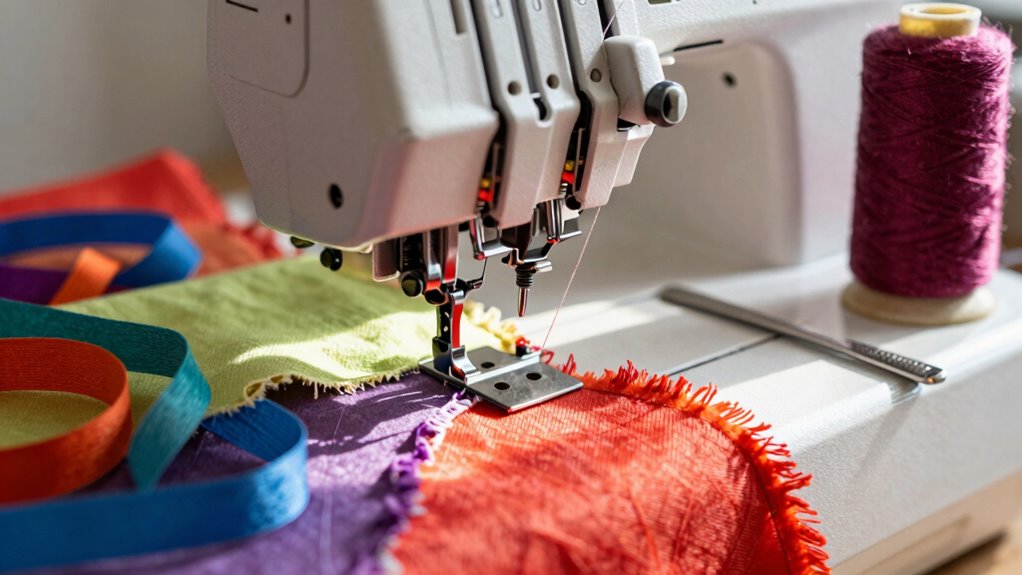

If your serger’s eating fabric, it’s usually due to improper tension, feed issues, or blade height. Start by checking your thread tension settings; balanced tension is key for smooth feeding. Make sure your feed dogs are clean and functioning well, and adjust the presser foot height for ideal fabric flow. Don’t forget to keep your cutting blades sharp. These simple fixes can make a big difference, and there’s more to explore to enhance your serging experience.

Get your wardrobe favorites delivered free with Prime
- Fast, free delivery on millions of items
- Prime Video, Amazon Music and more included
- Member-only deals all year
Key Takeaways
- Feed Dog Issues: Ensure feed dogs are functioning properly to prevent fabric from being pulled into the serger.
- Needle Compatibility: Use the correct needle type to avoid stitch quality problems and ensure smooth fabric feeding.
- Tension Adjustments: Properly calibrate thread tension to prevent fabric bunching or slipping during the sewing process.
- Regular Maintenance: Clean and maintain key components like feed dogs and tension discs to avoid fabric eating issues.
- Simple Fixes: Adjust presser foot height and replace dull needles to enhance fabric handling and prevent feeding problems.
serger thread tension adjustment tools
As an affiliate, we earn on qualifying purchases.
As an affiliate, we earn on qualifying purchases.
Why Is My Fabric Getting Eaten by My Serger?

Have you ever wondered why your fabric seems to disappear into your serger? It often comes down to a few key factors in your serger setup. First, verify that your feed dogs are functioning properly and that fabric feeding is smooth. If they’re not engaging correctly, your fabric can easily get lost. Next, check your needle compatibility; using the wrong needle can affect stitch quality and cause fabric issues. Don’t forget tension adjustments—incorrect tension can lead to fabric being pulled into the machine. Proper fabric preparation is also essential; make sure your fabric is cut straight. Additionally, using anti-fatigue mats while standing can enhance your comfort and focus, making it easier to troubleshoot your serger. By addressing these areas, you’ll improve your serger troubleshooting skills and keep your fabric from vanishing!
Quick Fixes to Stop Your Serger From Eating Fabric

To keep your fabric from getting eaten by your serger, start with some quick fixes that can make a big difference. First, check the presser foot height; adjusting it can improve fabric feeding. Next, verify you’re using the right needles for your fabric type, as the wrong needle can lead to snags. Try different fabric feeding solutions, like using a walking foot for thicker materials. Additionally, keep your blades sharp; dull blades can pull fabric instead of cutting cleanly. Regularly replacing HEPA filters can also enhance the overall performance of your sewing environment. Incorporating pet-friendly gear in your workspace can further reduce distractions from pets, allowing for smoother sewing experiences. Moreover, understanding the importance of tool maintenance can significantly extend the life of your serger and improve its performance. Finally, if your serger’s tension settings feel off, consider resetting them. Understanding the importance of color accuracy in your projects can help you achieve beautifully finished edges every time. These serger troubleshooting techniques can help you avoid frustrating mishaps, allowing for smoother sewing experiences and beautifully finished edges every time. Remember that maintaining filtration and suction basics can also play a role in improving your serger’s performance.
How Thread Tension Affects Fabric Feeding
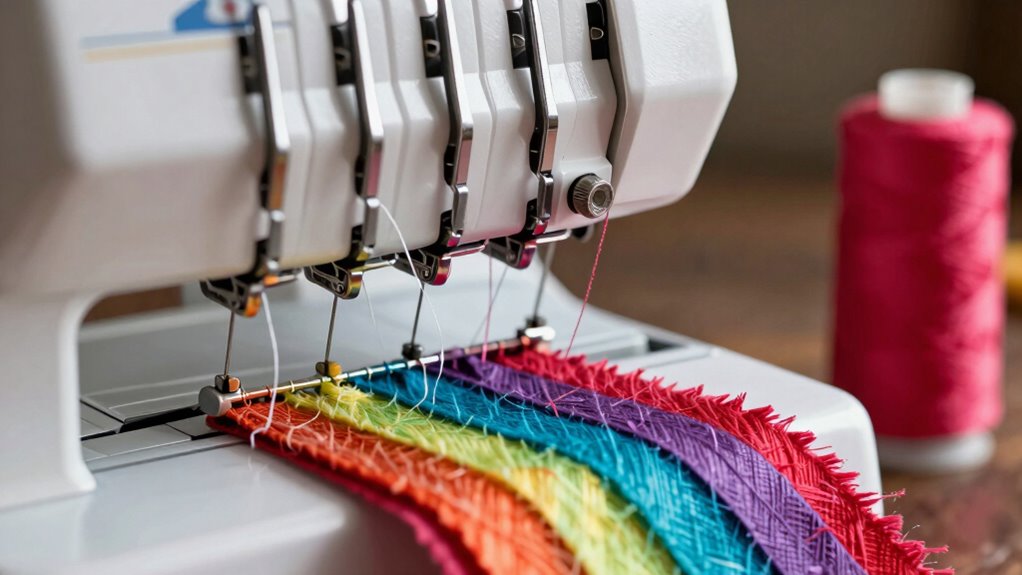
Thread tension plays an essential role in how your fabric feeds through the serger. If your tension settings aren’t right, you might find different fabrics behaving unexpectedly. Understanding these adjustments can make all the difference in your sewing experience.
Proper Tension Settings
As you adjust the tension settings on your serger, you’ll quickly notice how essential it is for proper fabric feeding. Poor tension can lead to fabric being eaten instead of fed smoothly through the machine. Start with tension calibration: make certain each thread’s tension is set correctly for your project. If you’re experiencing issues, engage in some tension troubleshooting. Check for loose threads or incorrect settings that might be causing the problem. A balanced tension allows the fabric to move seamlessly, preventing it from bunching or slipping. Remember, taking the time to fine-tune your tension not only enhances your sewing experience but also guarantees professional-looking results. Don’t underestimate the power of proper tension settings in your serger’s performance!
Fabric Type Considerations
Choosing the right fabric can greatly impact how your serger performs, especially when it comes to thread tension. Fabric weight and stretch characteristics play vital roles in how well your feed dogs grip and move the material. Lightweight fabrics might need a finer needle size to avoid puckering, while heavier fabric blends require a heavier needle to maintain proper tension. Different stitch types also affect fabric feeding; for example, a rolled hem might behave differently than a flatlock stitch. Pay attention to seam finishes, as they can influence how the fabric interacts with the cutting edge of your serger. By considering these factors, you’ll guarantee smoother operation and better results with every project.
Adjusting Blade Height for Better Feeding

Adjusting Blade Height for Better Feeding
Adjusting the blade height on your serger can greatly enhance fabric feeding, ensuring a smoother sewing experience. Proper blade alignment is essential for efficient operation. If your blade is too high or low, it can disrupt the feed dogs, causing fabric to bunch or not feed at all. Here’s a quick reference to help you adjust effectively:
| Adjustment Type | Effect on Feeding | Recommended Action |
|---|---|---|
| Too High | Fabric gets chewed | Lower the blade slightly |
| Too Low | Fabric slips | Raise the blade gently |
| Just Right | Smooth feeding | Maintain current height |
| Misaligned Blade | Uneven edges | Realign the blade |
| Feed Dogs Blocked | Fabric won’t move | Clear any obstructions |
By ensuring proper blade height, you can significantly enhance your sewing experience and see improvements in your serger’s performance! Additionally, maintaining good ergonomic practices while sewing can further promote comfort and reduce fatigue.
How to Select Fabrics Compatible With Your Serger

Selecting the right fabric for your serger can make a world of difference in your sewing projects. Consider fabric characteristics like weight and stretch; lightweight fabrics may cause feeding issues, while heavier ones might require specific needle choices. Confirm your fabric has serger compatibility with the stitch types you plan to use. A presser foot designed for knits can help achieve smooth seam finishes on stretchy materials. Always match your fabric weight with the appropriate thread and settings to prevent snagging. Additionally, using a glaze spray booth for fabric preparation can enhance the overall finish of your projects. Understanding kitchen appliances can also help with selecting the right tools for fabric preparation. Incorporating small-space design principles into your sewing area can create an organized and efficient workspace. Understanding essential DIY tools can also be beneficial when working with fabrics and sergers. Experiment with different combinations to find what works best for your serger, as each machine has its quirks. By selecting compatible fabrics, you’ll enjoy a smoother sewing experience and better results. Training concepts in fabric selection can further enhance your projects. Happy serging!
Serger Maintenance Tips to Avoid Fabric Problems

While regular maintenance might seem like a chore, it’s essential for keeping your serger in top shape and preventing fabric mishaps. Start with routine serger cleaning to remove lint and debris, ensuring smooth operation. Check your blades; a dull blade can lead to uneven cuts and fabric snags, so plan for blade replacement as needed. Mastering threading techniques is also vital—incorrect threading can cause tension issues and fabric feeding problems. Establish a maintenance schedule that includes regular checks on all components, from the tension discs to the feed dogs. By staying on top of these tasks, you can avoid frustrating fabric problems and enjoy seamless sewing experiences with your serger.
Frequently Asked Questions
Can I Use Any Type of Thread With My Serger?
You can’t use just any type of thread with your serger. While many thread types work, it’s best to stick with threads designed for sergers, like polyester or cotton. These threads handle thread tension better and reduce the risk of issues. If you use specialty threads, make sure they’re compatible. Always check your manual for recommendations, as the right thread can make a big difference in your project’s outcome.
How Often Should I Clean My Serger?
When it comes to cleaning your serger, it’s best to clean it regularly—like clockwork! Aim for a cleaning frequency of every few uses or at least once a month. Dust and lint can build up, affecting performance. Use a small brush to remove debris and check the knife and tension settings while you’re at it. Following these maintenance tips will keep your serger running smoothly and extend its lifespan.
What Settings Are Best for Sewing Knits?
For sewing knits, use a stretch stitch or a zigzag stitch to guarantee flexibility. Adjust your serger settings to a lower tension and use a ballpoint needle, which helps prevent snagging. Depending on the knit types, like jersey or spandex, you might want to experiment with different stitch options. A three-thread overlock is great for lightweight knits, while a four-thread overlock offers more stability for heavier fabrics.
Is It Normal for My Serger to Make Noise?
Yes, it’s normal for a serger to make some noise, but excessive sounds can indicate problems. To guarantee smooth operation, follow serger maintenance tips like regularly cleaning the machine and checking for thread jams. Common serger issues include misaligned knives or tension problems, which can amplify noise. If the noise persists, consider consulting your manual or a professional. Keeping your machine well-maintained will help minimize unwanted sounds and improve performance.
Can I Serge Without Using a Blade?
Absolutely, you can serge without using a blade! In fact, it’s like riding a roller coaster with no seatbelt—thrilling but risky! Just make sure your machine’s properly set for a blade-free operation. Regular serger maintenance tips, like cleaning and oiling, help keep everything running smoothly. If you ever need to replace the blade, consider your options carefully to avoid a fabric-eating disaster! So, go ahead and serge confidently!
Conclusion
So, there you have it! Your serger might not be a hungry monster, but it sure has a knack for fabric snacking. By adjusting tension, blade height, and choosing the right fabrics, you can keep your creations intact and your serger satisfied. Remember, a little maintenance goes a long way—unless you want to start a new trend called “abstract fabric art.” So, feed your serger wisely, and let it know you’re in charge!
Fall Picks
fall essentials
As an affiliate, we earn on qualifying purchases.