Regularly maintaining your sewing machine is essential for its longevity and performance. Spend just 10 minutes each day to check for loose screws, inspect the needle, and clean out lint. Weekly, unplug and remove dust from key areas, then refresh with a new needle. Monthly oiling keeps everything running smoothly. By staying proactive, you’ll avoid costly repairs and enjoy seamless sewing. Stick around to discover more tips to create an efficient maintenance schedule.

Get your wardrobe favorites delivered free — and shop member deals
- Fast, free delivery on millions of items
- Access to Prime Big Deal Days deals on October 6–7
- Prime Video, Amazon Music and more included
Key Takeaways
- Regular maintenance, including cleaning and oiling, enhances sewing efficiency and prolongs machine life.
- Daily quick checks ensure optimal performance by addressing issues like thread tension and debris.
- Weekly cleaning involves removing lint and dust, ensuring smooth operation and preventing mechanical problems.
- Monthly oiling with the right type of sewing machine oil maintains peak performance and prevents costly repairs.
- Proper storage and protective covers help shield the machine from dust and environmental damage.
As an affiliate, we earn on qualifying purchases.
Why Regular Maintenance Matters for Your Sewing Machine
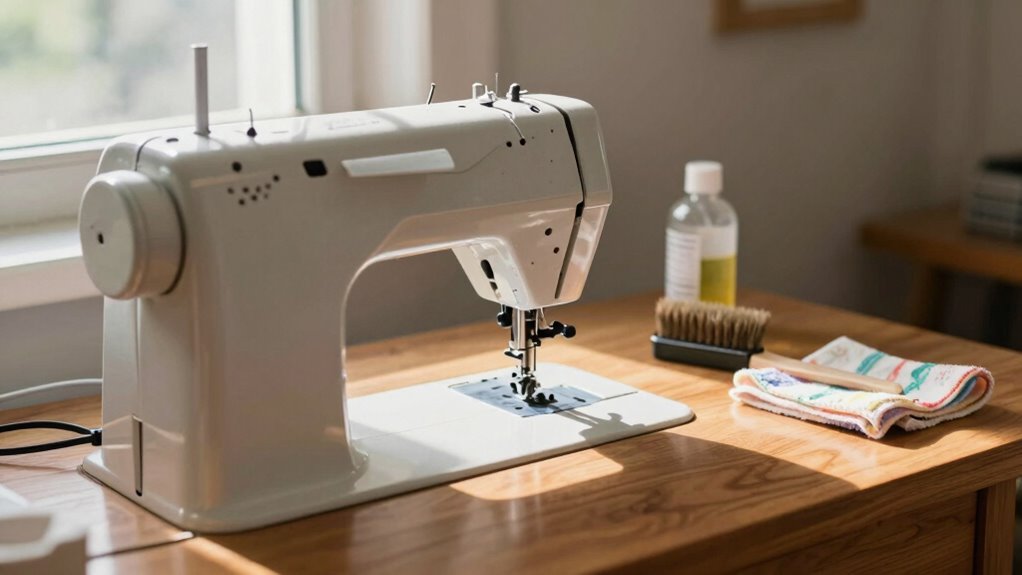
When you neglect regular maintenance, your sewing machine can quickly lose its efficiency and performance. Over time, dust and lint build up, leading to mechanical issues that can hinder your sewing projects. By committing to regular maintenance, you guarantee machine longevity, allowing your equipment to serve you well for years. This proactive approach not only keeps your machine running smoothly but also saves you money on costly repairs or replacements down the line. You’ll find that a little effort, like cleaning the bobbin area or oiling moving parts, pays off greatly. Ultimately, investing a bit of time in maintenance means enjoying seamless sewing experiences and maximizing your machine’s potential without breaking the bank.
Essential Tools for Your 10-Minute Maintenance Routine
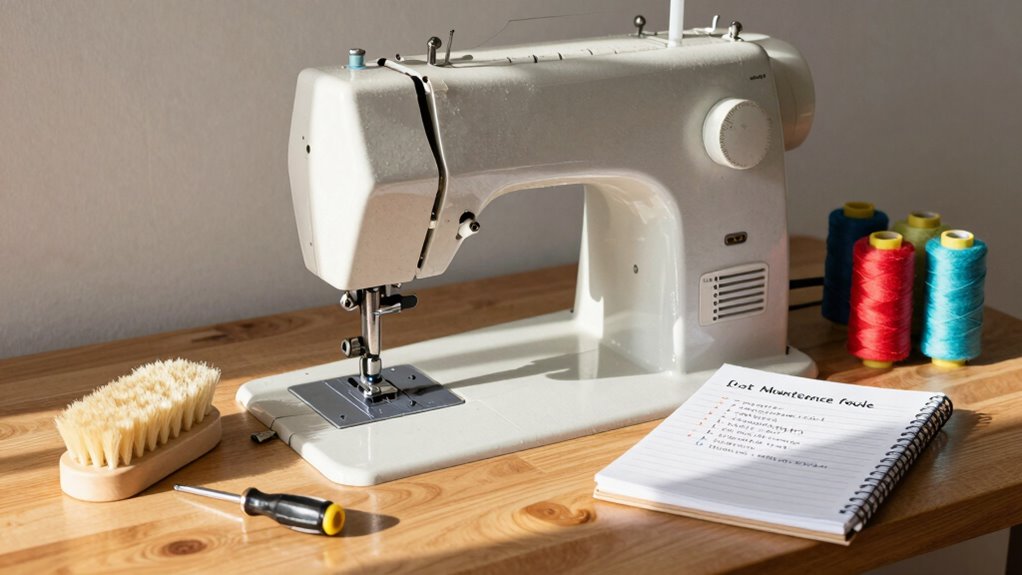
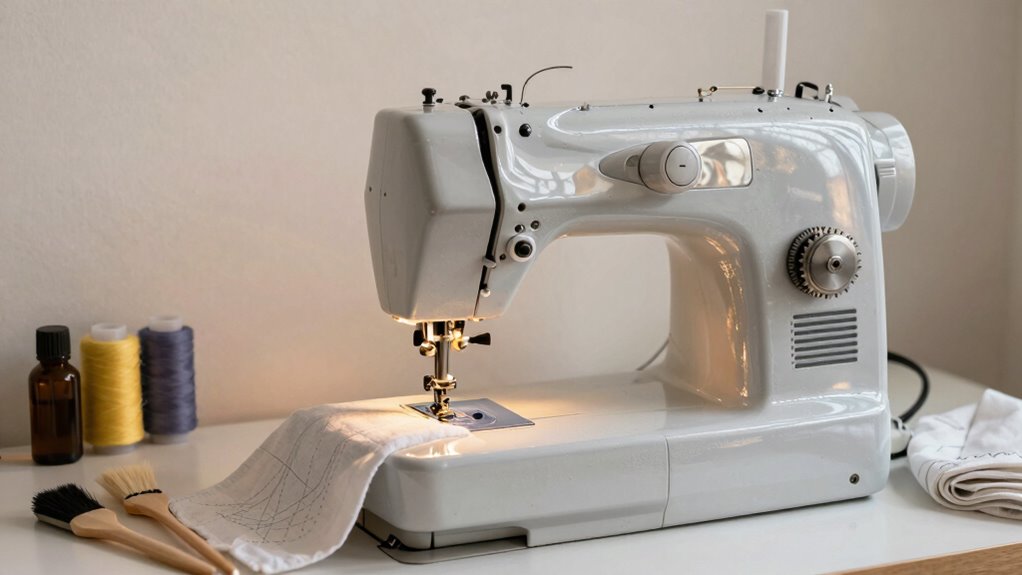
To keep your sewing machine in top shape, you’ll need a few essential tools for a quick 10-minute maintenance routine. Start with a tools checklist that includes a small screwdriver, lint brush, and seam ripper. These items help you access hard-to-reach areas and clean effectively. Don’t forget a bottle of sewing machine oil; it’s vital for lubricating moving parts. You’ll also want some cotton swabs and a soft cloth for detailed cleaning. Finally, have a spare needle or two on hand, as they can wear out quickly. By gathering these maintenance supplies, you’ll guarantee your machine runs smoothly, saving you time and preventing costly repairs down the line. Regular maintenance can extend the life of your machine by ensuring optimal filtration and suction performance. Happy sewing!
How to Perform Daily Quick Checks on Your Machine
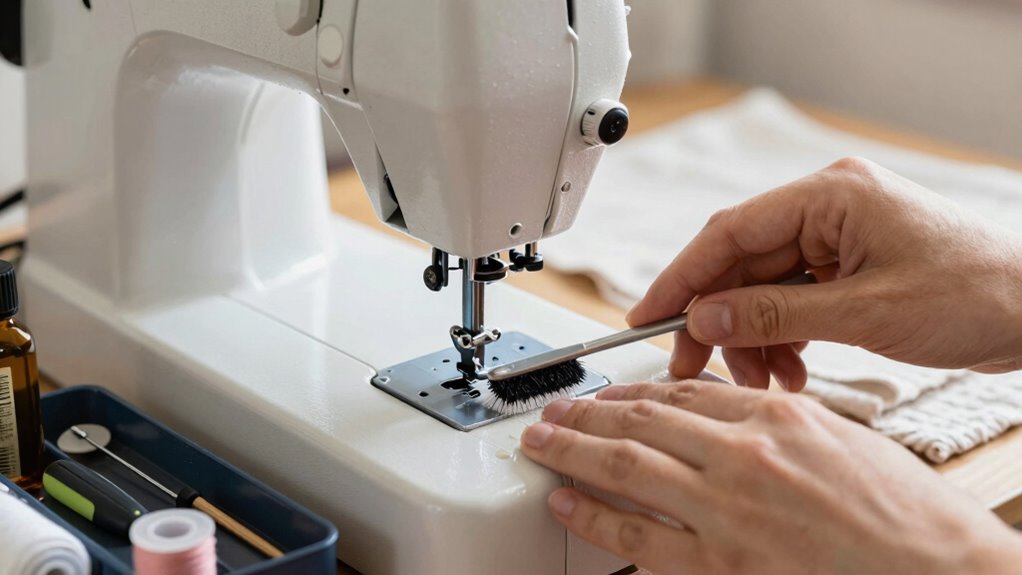
With your maintenance tools ready, it’s time to focus on daily checks that keep your sewing machine running smoothly. Start with quick visual inspections; look for any loose screws or worn-out belts. Confirm the needle’s in good condition—replace it if it’s dull or bent. Check the thread tension and make certain it’s set correctly for your project. Inspect the bobbin area for any snagged threads or debris that might affect performance. Additionally, ensuring proper airflow around the unit can help keep your workspace dust-free, and regular monitoring of indoor air quality can enhance your overall sewing environment. A well-maintained machine supports a calmer, clutter-light home, enhancing your overall sewing experience. Finally, give the machine a gentle wipe to keep it free from dust. These daily inspections are vital for maintaining machine longevity and preventing bigger issues down the line. Just a few minutes each day can save you from costly repairs later on. Additionally, using HEPA filters in your workspace can help reduce dust buildup, enhancing your machine’s performance.
Weekly Cleaning: How to Remove Dust and Lint
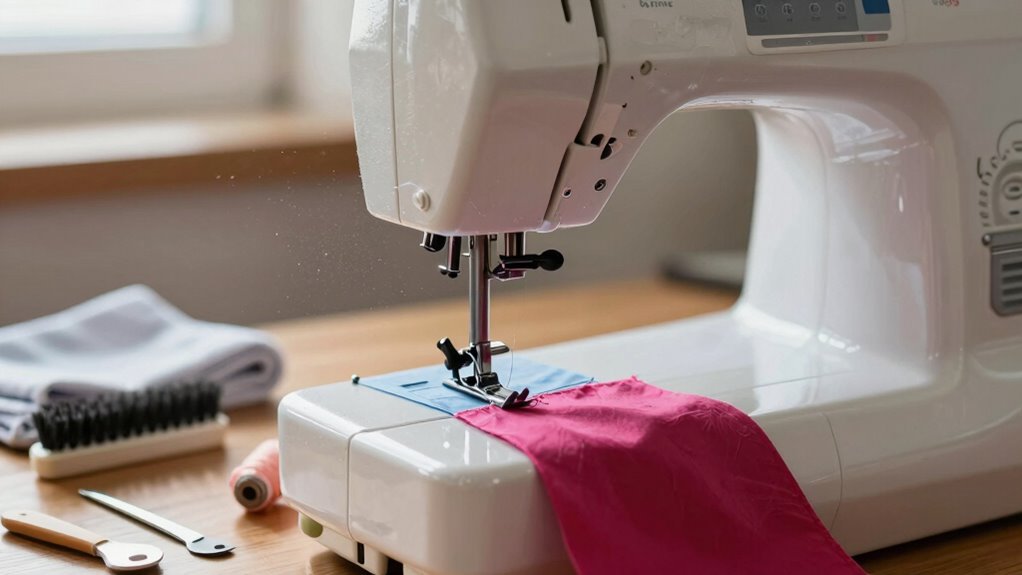
To keep your sewing machine running smoothly, weekly cleaning is a must. You’ll need a few essential tools, and I’ll guide you through a simple step-by-step process to remove dust and lint effectively. Plus, I’ll share some tips to guarantee your machine stays in top shape.
Essential Tools Needed
Every sewing enthusiast should have a few essential tools on hand for weekly cleaning to keep their machine running smoothly. First, get a soft brush—this is vital for removing dust and lint from hard-to-reach areas. A lint roller is also handy for quick cleanups. Don’t forget a vacuum attachment designed for sewing machines; it helps pull out debris without damaging delicate parts. A screwdriver set is important for tasks outlined in your maintenance checklist, allowing you to safely access internal components. Finally, keep a bottle of compressed air ready; it blasts away stubborn particles. Having these sewing tools at your disposal will guarantee your machine stays in top shape and functions flawlessly.
Step-by-Step Cleaning Process
Cleaning your sewing machine regularly is essential for best performance. Start by gathering your cleaning supplies: a soft brush, lint-free cloth, and a screwdriver. Unplug the machine for safety. Remove the needle and presser foot, then take off the throat plate. Use the brush to gently sweep away dust and lint from the feed dogs and surrounding areas. Wipe down the throat plate and other parts with the cloth. Regular maintenance is key to enhancing kitchen appliances longevity and efficiency, so it’s important to stay consistent. Additionally, maintaining a clean workspace can improve indoor air quality, as dust and lint can contribute to poor air conditions. To preserve your sewing machine’s performance, consider acoustic drum shields that help create a quieter environment while you work. Avoid common maintenance myths—it’s not enough to just run a lint roller over the machine. After cleaning, reassemble everything, insert a new needle, and plug the machine back in. Regular cleaning helps to prevent issues and guarantees smooth operation, so make this a weekly habit. Incorporating pet-friendly gear in your workspace can further enhance your crafting environment. Also, remember that water damage can affect the internal components of your machine, so be cautious when working in humid conditions.
Tips for Effective Maintenance
One simple tip for effective maintenance is to incorporate a quick dust and lint removal routine into your weekly schedule. This preventive measure not only keeps your sewing machine clean but also enhances its longevity. Start by checking your maintenance checklist for essential cleaning tips. Use a small brush to gently remove lint from the bobbin case and feed dogs, ensuring you reach those hard-to-see areas. Regular cleaning can help prevent issues similar to how essential oils for toothache relief can alleviate pain and discomfort. Additionally, keeping your sewing area free from grease and dirt can further improve the performance of your machine. Developing these routine habits will help you avoid more significant issues down the line. Remember, following sewing best practices and using proper care techniques can save you time and money. Essential tools for DIY projects often emphasize the importance of regular maintenance, which can make your sewing experience more enjoyable and efficient. In addition, maintaining a budget for repairs and supplies can help you stay prepared for any unforeseen costs. So, keep that machine in top shape!
Monthly Oil Application for Sewing Machine Maintenance
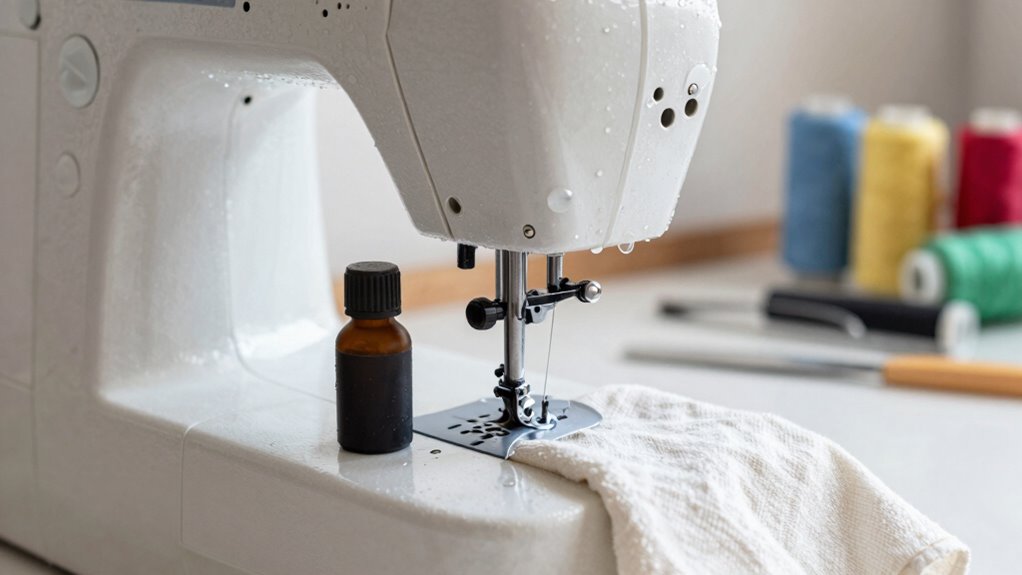
Applying oil to your sewing machine each month is essential for its longevity and performance. Choosing the right oil and using proper techniques can make a big difference in keeping your machine running smoothly. Let’s explore why regular oiling matters and how to do it effectively.
Importance Of Regular Oiling
While it might seem like a small task, regular oiling is essential for keeping your sewing machine running smoothly. Consistent oiling minimizes friction between moving parts, preventing wear and tear that can lead to costly repairs. It’s important to understand the oil frequency for your specific machine; monthly applications are generally recommended. This routine helps maintain peak performance, ensuring that your stitches remain even and trouble-free. Different oil types exist, so be sure to follow your machine’s guidelines. By sticking to this simple maintenance step, you not only prolong the life of your sewing machine but also enhance your sewing experience. Don’t overlook the power of a few drops; your machine will thank you!
Choosing The Right Oil
Choosing the right oil for your sewing machine is essential for effective maintenance. Not all oil types are suitable; you’ll want to use a lightweight, non-toxic oil specifically designed for sewing machines. Avoid using regular household oils, as they can gum up the mechanisms and lead to costly repairs. When it’s time for your monthly oil application, make sure to check your machine’s manual for recommendations on oil type and quantity. A few drops in the right places will keep your machine running smoothly, enhancing performance and extending its life. Remember, using the correct oil is key to preventing issues down the line, so don’t overlook this crucial step in your maintenance routine.
Oiling Techniques For Efficiency
Understanding how to apply oil effectively can make a significant difference in your sewing machine’s performance. Regular oiling is vital, so aim for a monthly oil application. Here are some essential oiling methods to keep in mind:
- Use a dropper for precise oil placement on moving parts.
- Wipe excess oil with a clean cloth to prevent buildup.
- Focus on key areas like the needle bar, shuttle, and bobbin case.
- Check the manual for specific oiling frequency and recommendations.
How to Troubleshoot Common Sewing Machine Issues
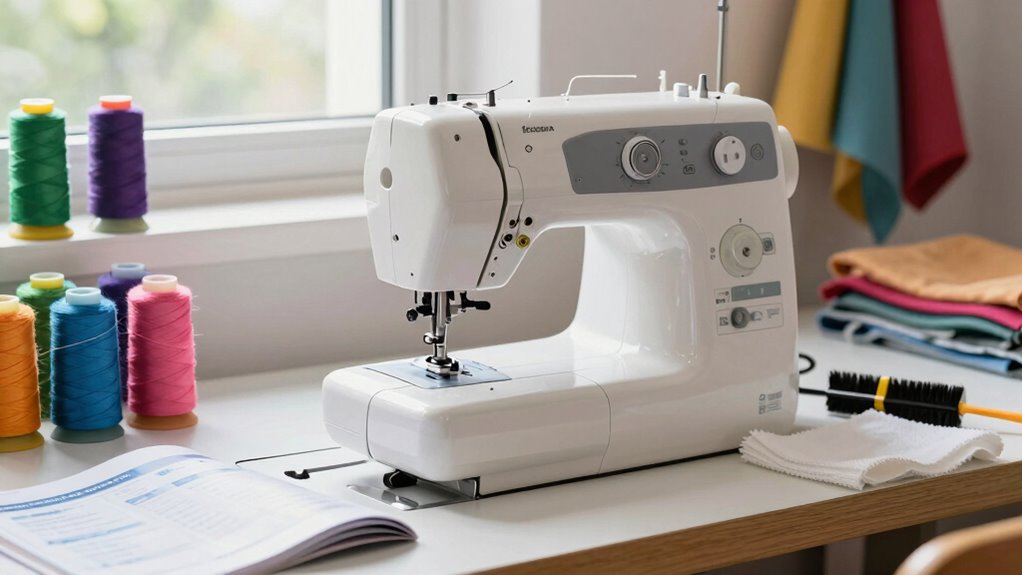
Sewing machines can encounter a variety of common issues, and knowing how to troubleshoot them can save you time and frustration. For thread breakage, check your tension adjustment techniques and verify you’re using the right thread for your fabric. If stitches are skipping, it might be a needle alignment issue or a dull needle—replace it. For motor issues, unplug your machine and inspect the connections. When facing bobbin problems, troubleshoot by rethreading the bobbin case. If your feed dogs aren’t moving, clean them and check for fabric jamming solutions. Finally, if your stitches aren’t forming correctly, review your tension settings. With these tips, you can tackle common sewing machine issues quickly and efficiently.
How to Maintain Tension for Perfect Stitches
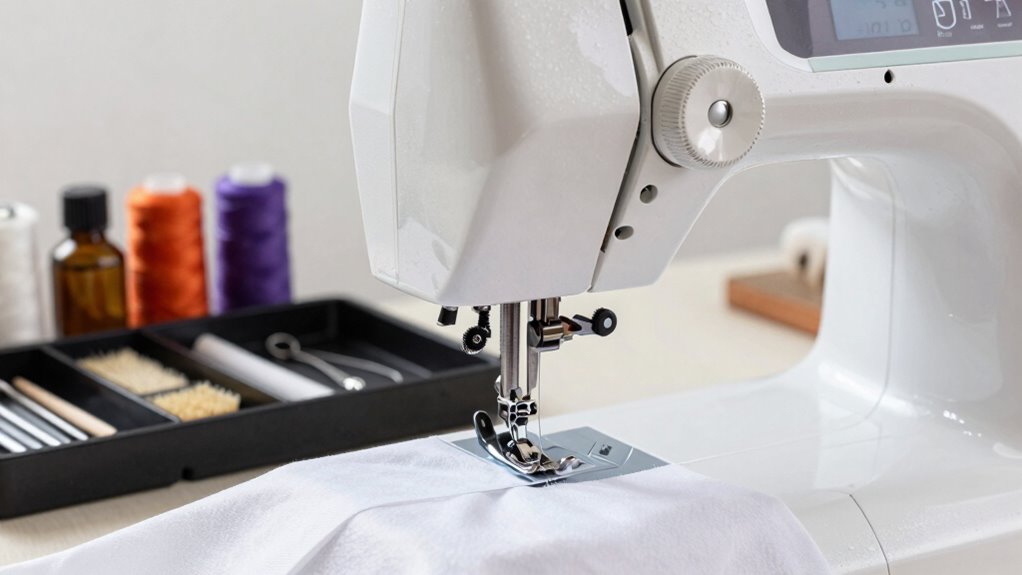
Maintaining the right tension is essential for achieving perfect stitches. You’ll want to understand the basics of thread tension and how to adjust it based on the fabric you’re using. Let’s explore common tension issues and how to troubleshoot them effectively.
Understanding Thread Tension Basics
Perfect stitches rely heavily on the right thread tension, making it essential to grasp its basics. Understanding how to maintain proper tension is vital for achieving high-quality results. Here are key points to keep in mind:
- Thread Types: Different threads behave differently; know their characteristics.
- Thread Weight: Heavier threads require more tension; adjust accordingly.
- Tension Gauges: Use these tools to measure and fine-tune your settings.
- Troubleshooting Tension: If your stitches aren’t perfect, check for fabric compatibility and tension adjustments.
Adjusting Tension for Fabrics
While you might be enthusiastic to start stitching, adjusting tension for different fabrics is essential for achieving flawless results. Proper tension adjustments guarantee that your stitches are even and secure, enhancing fabric compatibility. Here’s a quick reference table to help you:
| Fabric Type | Tension Setting | Notes |
|---|---|---|
| Cotton | Medium | Ideal for most projects. |
| Silk | Low | Prevents puckering. |
| Denim | High | Requires extra pressure. |
| Knit | Medium | Stretchy fabrics need balance. |
| Upholstery | High | Guarantees durability. |
Maintaining your sewing machine is crucial for smart lifestyle upgrades that enhance your crafting experience. Regular adjustments to fabric tension can lead to improved stitch quality and a more satisfying sewing process. Additionally, understanding ergonomic principles can help you create a more comfortable sewing environment, reducing strain during long sessions. To effectively manage your sewing tasks, consider incorporating small-space design strategies that optimize your workspace.
Troubleshooting Common Tension Issues
When your stitches aren’t coming out right, it’s vital to pinpoint the tension issues quickly. Proper tension adjustment is critical for achieving perfect stitches, so follow these steps to troubleshoot:
- Check your thread quality; low-quality thread can cause uneven tension.
- Verify that your bobbin is correctly wound and inserted.
- Test different tension settings on a scrap piece of fabric to find the sweet spot.
- Clean your machine regularly to remove lint and debris that can affect tension.
- Recognizing early signs of tension problems can help prevent more significant issues down the line.
When to Call in the Pros for Sewing Machine Repairs?
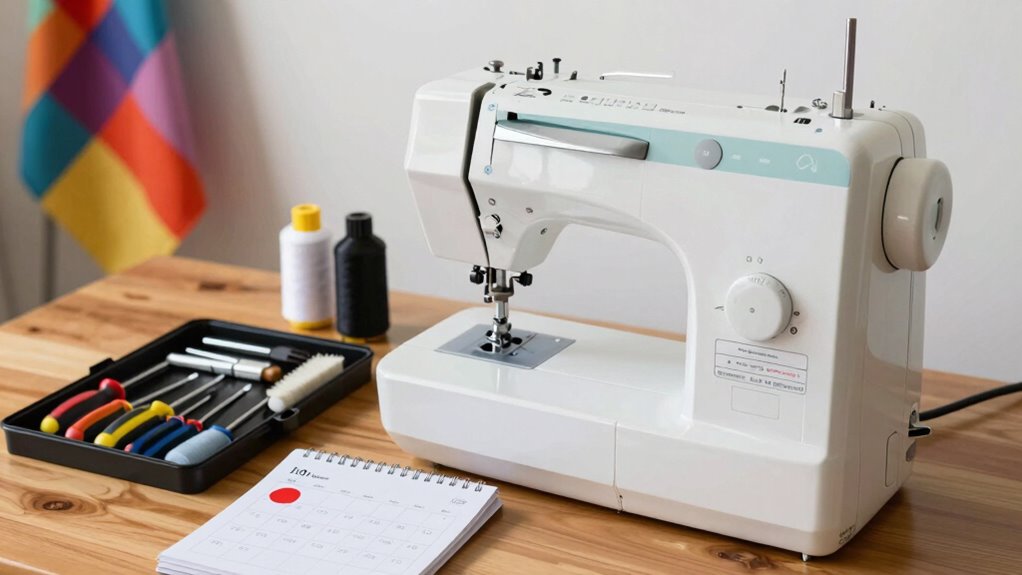
How do you know when it’s time to call in the pros for sewing machine repairs? Look out for clear repair signs. If your machine’s making odd noises, skipping stitches, or the tension is still off after troubleshooting, it’s a red flag. Also, if you notice oil leaks or the machine struggles to run smoothly, don’t hesitate to seek professional services. These issues often require specialized knowledge and tools that you might not have. Waiting too long can worsen the problem, leading to more costly repairs. Trust your instincts—if something feels off, it’s better to consult an expert. They can diagnose the issue accurately and get you back to sewing in no time!
Tips for Properly Storing Your Sewing Machine
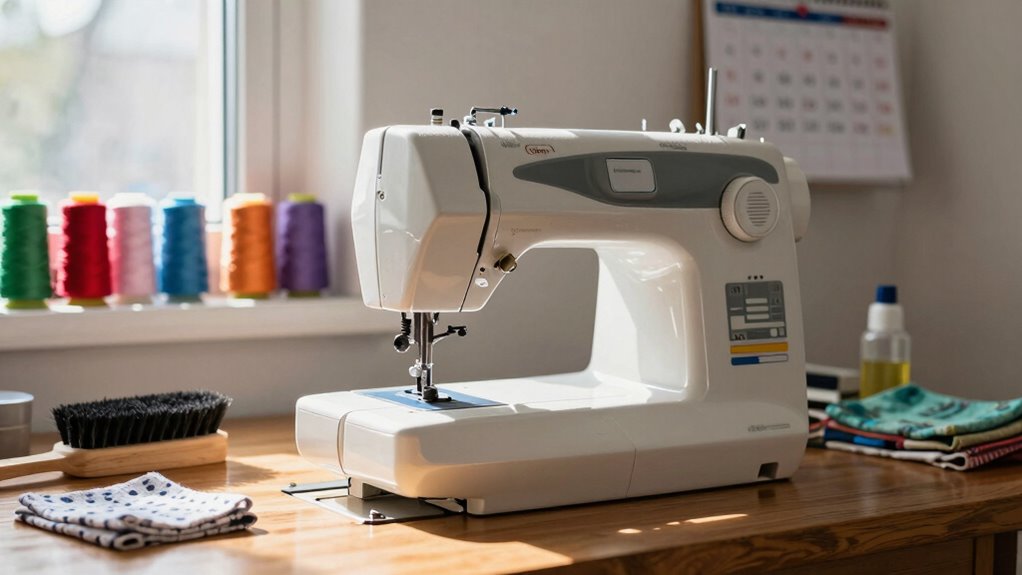
To keep your sewing machine in top condition, proper storage is essential. Consider the following tips to create the ideal machine environment:
- Use protective covers to shield your machine from dust and scratches.
- Control humidity by storing it in a climate-controlled room to prevent rust and damage.
- Avoid direct sunlight to protect the machine’s finish and internal components.
- Keep the storage area clean to enhance dust prevention and maintain ideal storage conditions. Additionally, regular maintenance, similar to financial considerations for elderly care, can prolong the lifespan of your machine.
Create Your Custom Maintenance Schedule
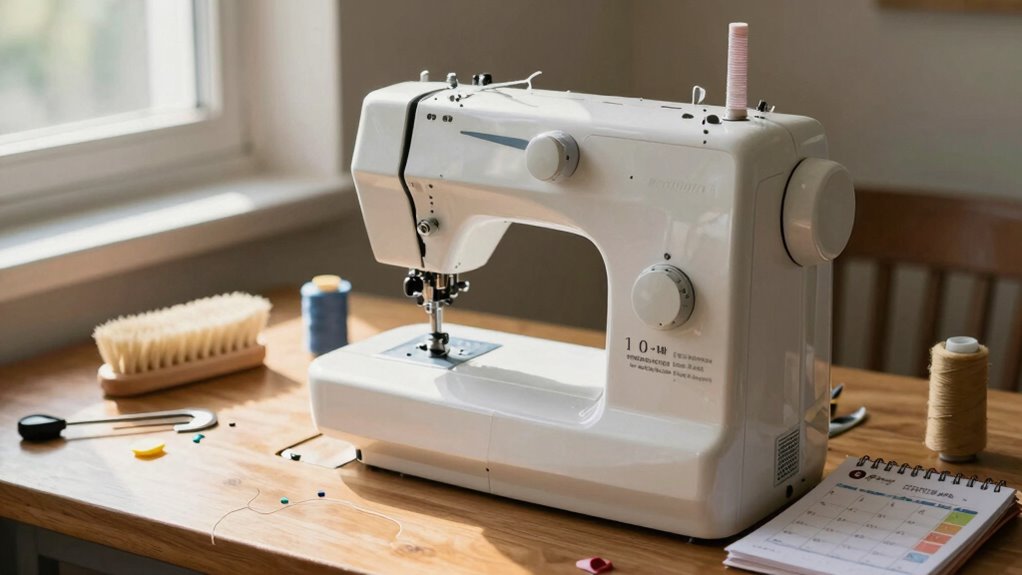
Creating a custom maintenance schedule for your sewing machine guarantees it operates smoothly and lasts longer. Start by evaluating how often you use your machine—daily, weekly, or monthly. Based on that, create a maintenance checklist that includes essential tasks like cleaning the machine, oiling parts, and checking the tension.
For instance, if you sew daily, set aside ten minutes each week for deep cleaning and adjustments. If you sew occasionally, a monthly review might suffice. Don’t forget to include seasonal tasks, like changing the needle or checking the belt. Adjust your custom schedule as needed, ensuring it fits your sewing habits. Staying consistent with this routine keeps your sewing machine in top shape and prevents unexpected repairs.
Frequently Asked Questions
Can I Use Any Oil for My Sewing Machine Maintenance?
No, you can’t use just any oil for your sewing machine. Stick to sewing machine oil, as it’s specifically designed for the delicate parts of your machine. Avoid household oils like motor oil or vegetable oil, which can cause damage. For lubrication tips, apply a few drops to the moving parts and wipe away excess oil to prevent buildup. Regular maintenance with the right oil guarantees smooth operation and longevity for your machine.
How Often Should I Change My Sewing Machine Needle?
You should change your sewing machine needle every 6 to 8 hours of sewing, or whenever you notice a drop in performance. Needle longevity depends on the type of fabric and thread you’re using, as well as the needle type. If you’re working with thicker fabrics or sewing through layers, consider replacing it more frequently. Regularly changing your needle keeps your stitches sharp and prevents damage to your projects.
What Type of Thread Is Best for My Sewing Machine?
For best results, you’ll want to use thread types like cotton or polyester, depending on your project. Did you know that using the wrong thread can lead to a 50% increase in sewing errors? Focus on thread weight too; lighter weights work well for delicate fabrics, while heavier weights are perfect for sturdy materials. Choosing the right combination guarantees smoother stitching and reduces frustration, making your sewing experience much more enjoyable!
Can I Use Compressed Air to Clean My Sewing Machine?
Yes, you can use compressed air to clean your sewing machine, but be cautious. It’s an effective way to remove dust accumulation from hard-to-reach areas. Just make sure you hold the can upright and use short bursts to avoid moisture buildup. Complement this method with other cleaning techniques, like wiping surfaces and checking the bobbin area. Regular cleaning will keep your machine running smoothly and help prevent future issues.
Is It Safe to Sew With a Damaged Power Cord?
Sewing with a damaged power cord is like driving a car with a flat tire—it’s risky and can lead to bigger problems. It’s essential you address any issues with power cord safety; using a frayed or exposed cord can expose you to serious electrical hazards. Always inspect your equipment before starting. If you spot damage, replace the cord immediately to keep your sewing sessions safe and enjoyable. Don’t take chances with your safety!
Conclusion
Regular maintenance can extend your sewing machine’s life by up to 50%! By dedicating just 10 minutes each week, you not only prevent costly repairs but also guarantee smoother stitching and better results in your projects. Remember, a well-maintained machine makes sewing more enjoyable and efficient. So, stick to your maintenance routine, and you’ll notice the difference. Happy sewing!
Fall Picks
fall essentials
As an affiliate, we earn on qualifying purchases.