
Biomimicry in textile design involves drawing inspiration from nature’s intricate patterns and resilient structures. By observing animal skins, plant surfaces, and mineral formations, you can create fabrics with enhanced strength, flexibility, and beauty. Using sustainable fibers and eco-friendly dyes amplifies this harmony with nature. This approach not only improves textile functionality but also aligns with eco-conscious principles. Continue exploring to discover how nature’s wisdom can transform your designs into sustainable wonders.
Key Takeaways
- Biomimicry in textiles involves mimicking natural structures like animal skins and plant surfaces to enhance fabric performance and aesthetics.
- Natural patterns inspire textile designs that improve strength, flexibility, and visual effects using layered and structural techniques.
- Studying natural formations such as butterfly wings or mineral patterns guides the creation of innovative, eco-friendly fabrics.
- Incorporating sustainable fibers and natural dyes aligns biomimicry with eco-conscious principles for responsible textile development.
- Emulating nature’s efficiency and beauty leads to textiles that are both functional and environmentally sustainable.
Nature has long served as a boundless source of inspiration for textile designers. When you look closely at the world around you, you discover an incredible array of patterns, textures, and color combinations that can influence your work. One of the most impactful ways to incorporate nature into textiles is by using sustainable fibers. These fibers, such as organic cotton, hemp, and bamboo, are harvested with minimal environmental impact, helping you create fabrics that are eco-friendly and durable. By choosing sustainable fibers, you not only reduce your ecological footprint but also produce textiles that speak to a growing consumer demand for responsible fashion. Paired with eco-friendly dyes, these fibers become even more sustainable, allowing you to develop textiles that are both beautiful and environmentally conscious. Eco-friendly dyes, made from natural pigments like indigo, madder root, or turmeric, offer vibrant colors without the harmful chemicals found in conventional dyes. When you use these dyes, you’re embracing a process that minimizes water pollution and energy consumption, aligning your designs with principles of sustainability.
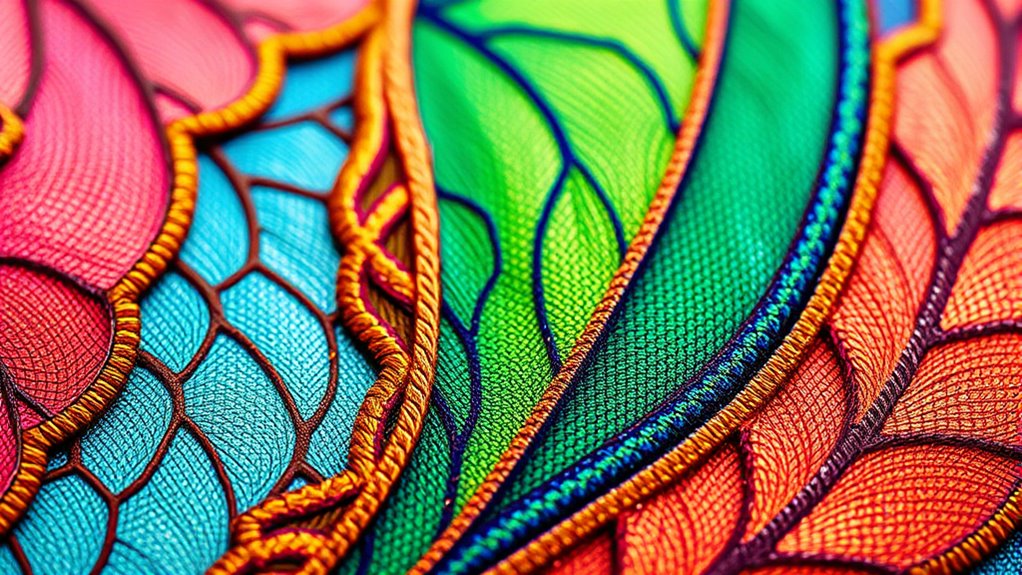
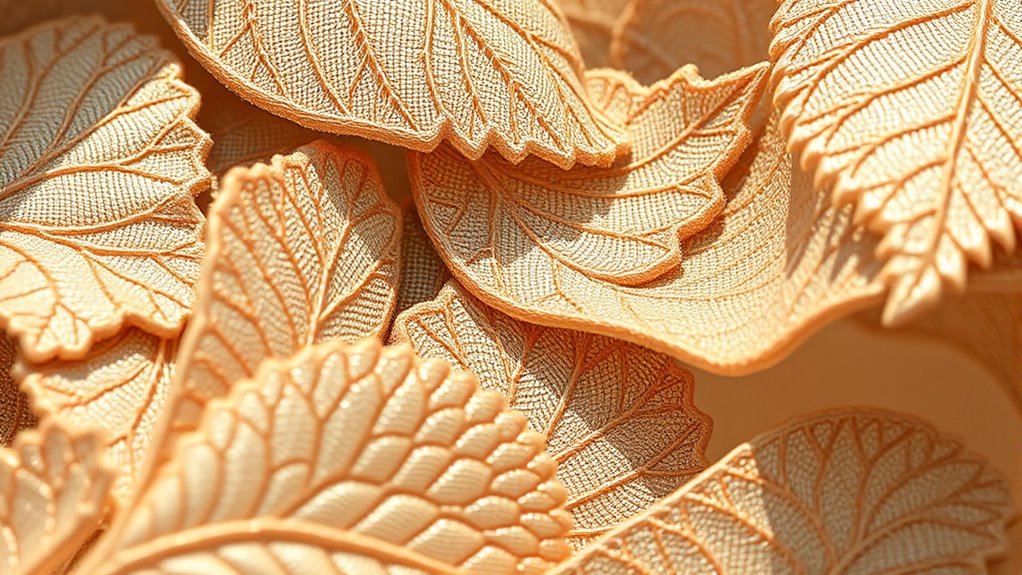
Drawing inspiration from nature’s intricate designs, you can mimic the textures and patterns seen in animal skins, plant surfaces, or mineral formations. For example, the shimmering scales of a fish or the delicate veining in leaves can be translated into textile patterns that evoke a sense of organic beauty. This approach, known as biomimicry, encourages you to look for solutions in nature’s own solutions, rather than relying solely on synthetic or chemical processes. By studying how natural structures are formed, you can develop fabrics with enhanced strength, flexibility, or unique visual effects—often achievable through the clever use of sustainable fibers and eco-friendly dyes. For instance, you might mimic the layered structure of a butterfly’s wing using layered textile techniques that utilize biodegradable, sustainable materials. Additionally, understanding the contrast ratio in natural patterns can help you create textiles with striking visual depth and clarity.
Ultimately, embracing biomimicry in textile design means you’re committed to creating products that are both inspired by and respectful of the environment. You harness the beauty and ingenuity of nature, translating it into textiles that are visually stunning and environmentally responsible. By focusing on sustainable fibers and eco-friendly dyes, you ensure your designs are not just aesthetically pleasing but also contribute to a more sustainable future. It’s about blending innovation with nature’s wisdom, producing textiles that resonate with conscious consumers who value eco-awareness just as much as style. When you integrate these principles into your work, you elevate your designs beyond aesthetics, making a meaningful impact on both the environment and your audience.
Frequently Asked Questions
How Can Biomimicry Reduce Environmental Impact in Textile Manufacturing?
You can reduce environmental impact in textile manufacturing by applying biomimicry to develop sustainable dyeing methods and eco-friendly fibers. By mimicking natural processes, you eliminate harmful chemicals and excessive water use, making production cleaner and more efficient. This approach promotes the use of biodegradable fibers and innovative dyeing techniques inspired by nature, helping you create textiles that are both beautiful and environmentally responsible.
What Are the Challenges of Implementing Nature-Inspired Designs Commercially?
Implementing nature-inspired designs commercially can be tricky because of high costs and complex intellectual property issues. You might find that developing innovative, biomimetic textiles requires significant investment in research and testing, which raises cost analysis concerns. Additionally, protecting unique designs through patents can be challenging, especially when nature’s blueprints are shared globally. These factors can slow down adoption and make it harder to bring biomimicry-based products to market efficiently.
How Does Biomimicry Influence the Durability of Textile Products?
Biomimicry enhances textile durability by incorporating self-healing fibers and adaptive textiles, which actively respond to damage or environmental changes. You’ll notice these innovations allow fabrics to repair themselves after wear or tears, extending their lifespan. Adaptive textiles can adjust to temperature or moisture, reducing degradation. This approach results in more resilient products, providing longer-lasting performance and reducing the need for frequent replacements, making your textiles smarter and more sustainable.
Are There Specific Ecosystems That Inspire Innovative Textile Patterns?
You might be surprised, but coral reefs and forest canopies are powerful sources of inspiration for innovative textile patterns. Imagine vibrant coral structures influencing water-resistant fabrics or the layered complexity of a canopy guiding breathable, multi-layered textiles. These ecosystems’ intricate designs challenge you to think creatively, blending natural beauty with functionality. By studying nature’s diverse systems, you open up endless possibilities for crafting textiles that are both stunning and sustainable.
How Can Biomimicry Enhance Textile Functionality Beyond Aesthetics?
Biomimicry can substantially enhance textile functionality by incorporating adaptive textures that respond to environmental changes, making fabrics more versatile and comfortable. You can also use self-healing fibers that repair themselves after damage, increasing durability and lifespan. By mimicking nature’s innovations, you create textiles that adapt seamlessly to your needs, offering not just aesthetic appeal but also improved performance, resilience, and sustainability in everyday use.
Conclusion
Just like a spider weaving its intricate web, you can harness nature’s wisdom to craft textiles that are both beautiful and sustainable. By observing how plants, animals, and ecosystems thrive, you unveil a treasure trove of innovative ideas. Embrace biomimicry as your guiding compass, turning nature’s timeless designs into your own creative blueprint. When you do, you’ll create textiles that not only inspire but also respect the delicate balance of the natural world.