
You can seamlessly weave electronics into textiles using electroconductive yarns designed for wearable tech. These yarns combine flexible, durable fibers with conductive materials like metal wires or carbon nanotubes, enabling fabrics to transmit electricity while remaining comfortable. Manufacturing techniques such as coating or core-sheath structures impact their longevity and performance. Understanding these methods helps you create reliable, washable smart textiles, and if you continue exploring, you’ll discover how ongoing innovations can elevate your wearable electronics projects.
Key Takeaways
- Electroconductive yarns enable seamless integration of electronics into textiles for wearable technology applications.
- Manufacturing techniques like core-sheath extrusion and nanotechnology improve durability and conductivity stability.
- Fiber properties such as flexibility, environmental resistance, and washability are crucial for reliable wearable electronics.
- Innovations in conductive materials and manufacturing methods expand the potential for smart, comfortable, and sustainable textiles.
- Successful integration depends on balancing electrical performance, mechanical durability, and user comfort in textile design.

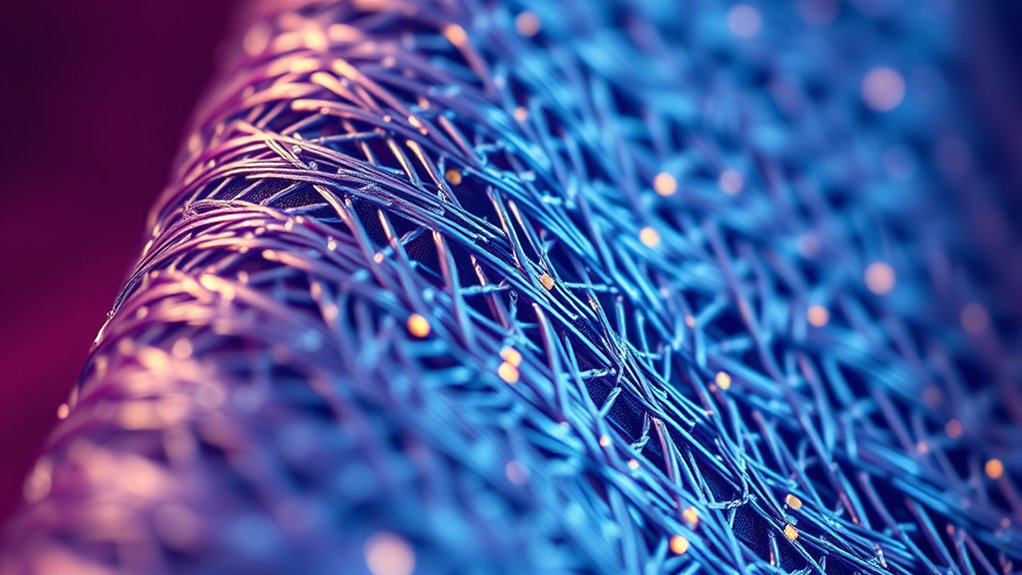
Electroconductive yarns are specialized fibers that enable fabrics to conduct electricity, opening new possibilities in wearable technology, smart textiles, and electronic integration. These yarns are crafted with unique fiber properties that allow them to maintain conductivity while remaining flexible, durable, and comfortable for everyday wear. When selecting electroconductive yarns, it’s essential to understand their fiber properties—such as electrical conductivity, flexibility, tensile strength, and resistance to environmental factors like moisture and temperature changes. These properties determine how well the yarns perform in different applications, whether for health monitoring, interactive clothing, or adaptive textiles. The fibers often incorporate conductive materials like metal wires, carbon nanotubes, or conductive polymers, which are embedded or coated onto the base fibers. This integration ensures that the yarns can transmit electrical signals without sacrificing the fabric’s overall comfort or functionality. Additionally, the choice of fiber composition can influence the yarn’s longevity and sustainability, impacting environmental considerations in textile production.
Manufacturing techniques play a pivotal role in producing high-quality electroconductive yarns. The most common methods include coating, where a conductive layer is applied onto regular fibers, and core-sheath structures, where conductive materials form the core, wrapped by insulating fibers. Coating techniques, such as dip-coating or spray-coating, are straightforward and cost-effective but may suffer from durability issues over time. Core-sheath methods, like extrusion or electrospinning, create more robust and long-lasting conductive pathways. These techniques require precise control to guarantee that the conductive core maintains continuity and that the outer sheath provides mechanical protection. Advances in manufacturing also involve the use of nanotechnology to produce finer, more flexible conductive fibers that can be woven or knit into various textiles seamlessly.
The choice of manufacturing technique influences the fiber properties profoundly, dictating the flexibility, conductivity stability, and washability of the final yarn. For instance, yarns produced via electrospinning can achieve ultra-fine diameters, resulting in textiles that are more comfortable and less bulky. Meanwhile, techniques like filament winding or multi-filament extrusion can produce stronger, more reliable conductive yarns suitable for heavy-duty applications. As you explore electroconductive yarns, understanding these manufacturing techniques helps you identify the right solutions for your projects, guaranteeing the resulting textiles are both functional and durable. With ongoing innovations, the combination of fiber properties and advanced manufacturing methods continues to push the boundaries of what wearable electronics can achieve, making seamless integration into everyday garments a real possibility.
electroconductive yarn for wearable tech
As an affiliate, we earn on qualifying purchases.
As an affiliate, we earn on qualifying purchases.
Frequently Asked Questions
How Durable Are Electroconductive Yarns in Everyday Use?
You might wonder about the durability of electroconductive yarns in daily life. Through wearability testing, manufacturers ensure these yarns withstand regular use, washing, and stretching. While material longevity varies depending on the specific fibers and coatings used, high-quality electroconductive yarns generally offer good durability. With proper care, they can maintain their functionality over time, making them a reliable choice for seamless wearable electronics in everyday applications.
Can Electroconductive Yarns Be Washed Without Losing Conductivity?
Imagine your wearable tech as a delicate dance partner—that’s how careful you should be with water resistance. Luckily, electroconductive yarns are designed for easy maintenance, allowing you to wash them without losing their conductivity. Many are treated to withstand water and dirt, making everyday washing a breeze. So, you can keep your gadgets clean and functional, just like a well-loved book, without worrying about damaging the magic inside.
Are There Eco-Friendly Options for Electroconductive Yarns?
You’re wondering if eco-friendly options exist for electroconductive yarns. Yes, you can find yarns made from biodegradable fibers and recycled materials, which help reduce environmental impact. These sustainable yarns maintain conductivity while being eco-conscious. By choosing yarns made from recycled plastics or biodegradable fibers, you support eco-friendly practices without sacrificing performance in wearable electronics. This way, you enjoy innovative tech that’s kinder to the planet.
What Is the Cost Comparison With Traditional Textile Materials?
You might wonder about the cost comparison with traditional textile materials. The main cost factors include raw materials, manufacturing processes, and durability. Generally, electroconductive yarns tend to be more expensive upfront due to specialized production, but they offer added value through functionalities like sensing and conductivity. While the affordability comparison varies, investing in electroconductive yarns can be justified by their innovative features and long-term benefits, making them a worthwhile choice for advanced textiles.
How Do Electroconductive Yarns Impact Textile Recyclability?
Sure, electroconductive yarns make you feel like a tech wizard, but they also bring recycling challenges. You might think, “No big deal,” but these high-tech fibers complicate traditional recycling methods, threatening sustainability benefits. Now, instead of simple reprocessing, you face the headache of separating smart materials. So, while they boost functionality, they also test your patience, making the dream of a fully recyclable, high-tech textile a bit more distant.

Smart Coatings on Fibers and Textiles
As an affiliate, we earn on qualifying purchases.
As an affiliate, we earn on qualifying purchases.
Conclusion
You can see how electroconductive yarns are truly changing the game, weaving electronics seamlessly into everyday wear. As technology and fashion merge, you’ll find yourself ahead of the curve, enjoying smarter, more functional clothing. Don’t wait for the world to catch up—embrace these innovations now. After all, when it comes to wearable tech, it’s better to be the early bird than the one left in the dust. The future’s bright, and you’re right in the thick of it.
washable conductive yarns for clothing
As an affiliate, we earn on qualifying purchases.
As an affiliate, we earn on qualifying purchases.

Treedix 316L Conductive Sewing Thread Stainless Thin Conductive for Gloves Metal Thread Reflective Thread-2 Ply 15m/49.2ft 14Ω/m
This is made of 316L stainless steel, which has good conductivity, high strength, stable electrical resistivity.
As an affiliate, we earn on qualifying purchases.
As an affiliate, we earn on qualifying purchases.