
Understanding fabric grain is essential for successful sewing projects. If you cut along the wrong grain, your fabric can twist and your garment won’t fit right. There are three main types of grain: warp, weft, and bias. Each type affects drape and stretch differently, impacting the overall look of your piece. To avoid mistakes, familiarize yourself with identifying grain direction and cutting techniques. Keep going to discover more about how to guarantee a flawless finish in your sewing.
Key Takeaways
- Fabric grain affects the drape and fit; cutting on the correct grain prevents distortion and twisting.
- Identify grain types: warp (strength), weft (drape), and bias (stretch) for accurate cutting.
- Examine fabric weave and test flexibility to determine grain direction effectively.
- Align patterns with the correct grain for improved fit, stability, and visual appeal.
- Proper grain usage influences stitching techniques, enhancing durability and overall garment aesthetics.

SAVINA Safety Ruler with Handle & Stainless Steel Edge – 13in Handmade Hardwood Ruler for Quilting, Sewing, Fabric, Paper & Leather Crafts – Comfortable Grip for Precision Tailoring & DIY Projects
- Safety and Precision Design: Hardwood ruler with stainless steel edge and ergonomic handle
- Ergonomic Handle for Comfort: Built-in handle for secure lifting and aligning
- Premium Hardwood Construction: Smooth, durable hardwood with refined grain
As an affiliate, we earn on qualifying purchases.
As an affiliate, we earn on qualifying purchases.
Understanding Fabric Grain: What Is It and Why Does It Matter?
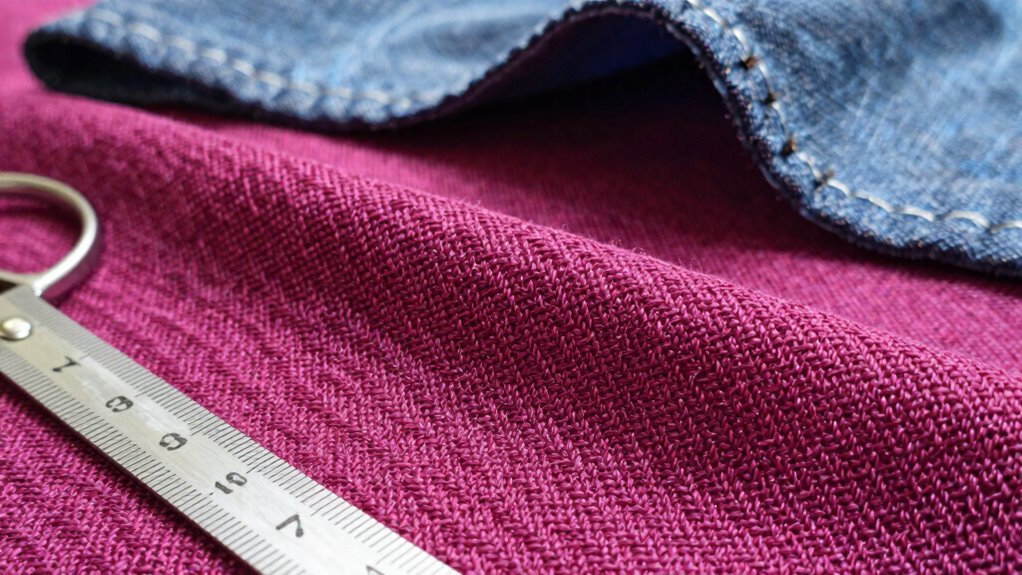
When you explore sewing or fabric selection, understanding fabric grain is essential because it can greatly impact the drape and fit of your project. Fabric grain refers to the direction of the threads in the fabric, influencing its properties and behavior. When you cut your fabric, using proper cutting techniques aligned with the grain guarantees that your garments hang correctly and maintain their shape. For instance, cutting on the grain allows the fabric to move naturally, while cutting against it can lead to distortion and twisting. By grasping how fabric grain affects your project, you’ll make informed choices that enhance the quality of your work, assuring a polished and professional finish every time.
Types of Fabric Grain: Warp, Weft, and Bias
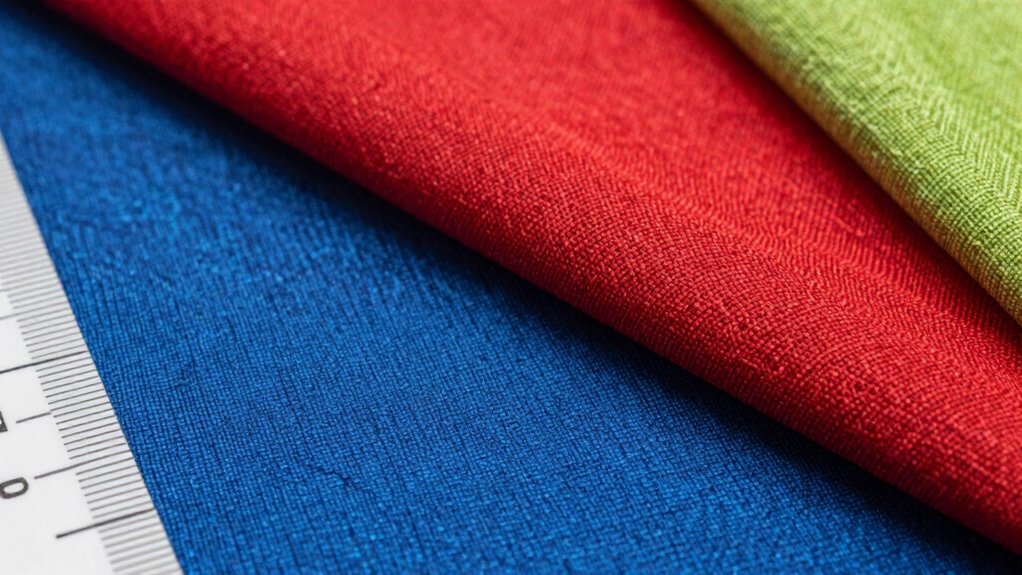
Understanding the different types of fabric grain—warp, weft, and bias—can elevate your sewing skills and improve your projects. The warp grain runs parallel to the selvage and provides strength, making it ideal for structures like seams and hems. The weft grain, on the other hand, runs perpendicular to the warp and typically offers more drape, affecting the fabric characteristics and how it hangs. Finally, the bias grain, which runs diagonally, allows for excellent stretch and movement, perfect for curves and fitted designs. Knowing the proper grain alignment is essential; cutting against the grain can lead to twisting and distortion in your final piece. Master these grains, and you’ll enhance both your technique and outcomes.
How to Identify the Grain Direction in Your Fabric?
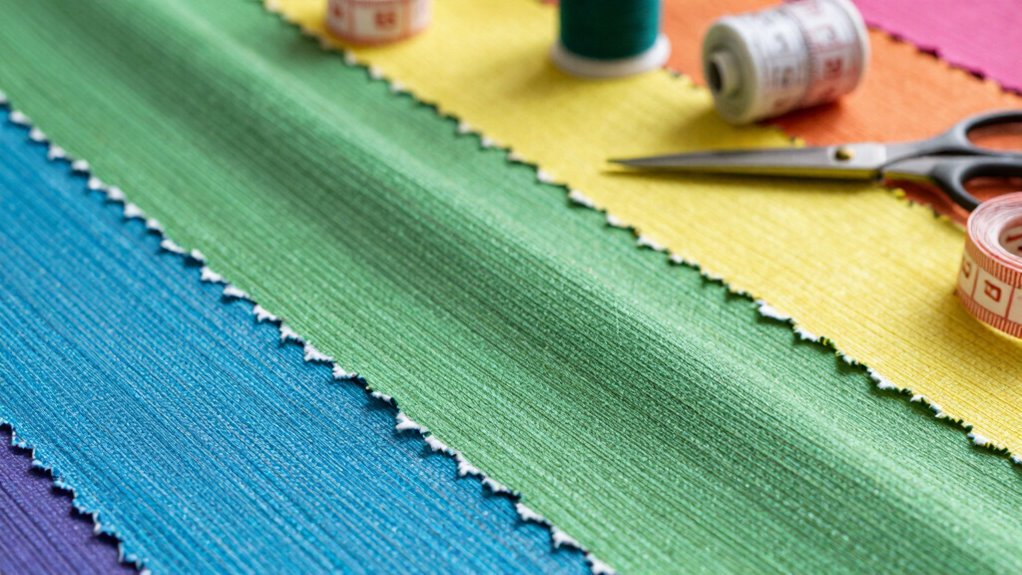
To identify the grain direction in your fabric, start by examining the weave type. Look for visual patterns that indicate the warp and weft, and test the fabric’s flexibility in different directions. Understanding these elements will help you work with your fabric more effectively.
Understanding Fabric Weave Types
Fabric weave types play an essential role in determining the grain direction, which affects how your project will hang, stretch, and drape. Understanding different weave patterns, like plain, twill, and satin, helps you identify the fabric’s grain. Each pattern creates unique texture variations that impact the fabric’s behavior. For instance, a twill weave offers diagonal lines, giving it more stretch and resilience, while a plain weave is stable and straightforward. To find the grain direction, feel the fabric; it usually stretches more along the weft. By recognizing these weave types, you can make informed choices that guarantee your project maintains its intended shape and appearance, avoiding any unwelcome twists or distortions.
Visual Grain Patterns
Identifying the grain direction in your fabric can make all the difference in your sewing projects. Start by examining the visual textures. Look for lines or patterns that run parallel to the selvage; these indicate the lengthwise grain. Crosswise grain often displays a different visual texture, typically with more stretch.
Next, check for pattern alignment. If your fabric features prints or stripes, they should align consistently along the grain for a polished finish. A misaligned pattern can lead to distorted seams and uneven draping.
Testing Fabric Flexibility
After examining visual patterns, the next step is testing the fabric’s flexibility. Understanding how your fabric behaves helps identify the grain direction and guarantees your project won’t twist. Here’s what to reflect on during flexibility testing:
- Fabric stretch: Pull the fabric in different directions to see how much it stretches.
- Fabric drape: Observe how the fabric falls when hung; this indicates its resilience.
- Testing elasticity: Gently release the fabric after stretching to check its recovery.
- Stretch properties: Note the stretch direction and fabric tension, as these affect how the final project will look and feel.
Tips for Cutting Fabric Correctly Every Time
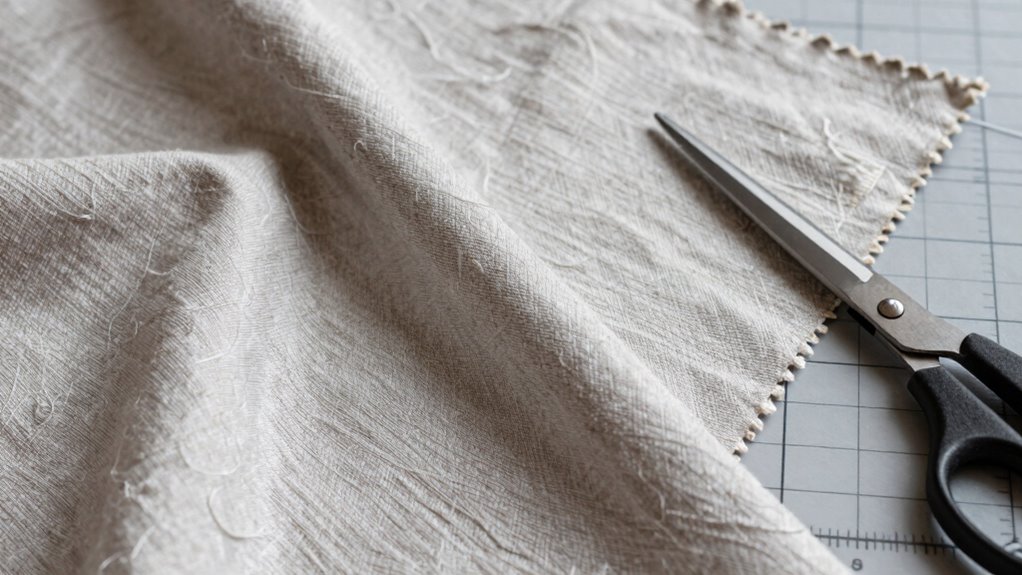
Cutting fabric accurately starts with understanding the different grain types, which can affect your project’s final look. You’ll also want to have the right tools on hand and use precise measuring techniques for the best results. Let’s explore how these elements come together to guarantee your fabric cuts are spot on every time.
Understanding Fabric Grain Types
Fabric grain is essential for achieving the best results in your sewing projects. Understanding the different fabric grain types helps you utilize the grain structure effectively, ensuring your pieces hang and drape beautifully.
- Straight Grain: Runs parallel to the selvage; offers stability.
- Cross Grain: Runs perpendicular to the selvage; provides some stretch.
- Bias Grain: Diagonal to the selvage; allows for maximum stretch and drape.
- Warp and Weft: Refers to the yarns used; affects the overall fabric behavior.
When you cut your fabric according to these grain types, you’ll notice improved fit and reduced twisting. Keep these distinctions in mind for a polished finish on every project!
Tools for Accurate Cutting
Getting accurate cuts is key to making the most of your fabric grain knowledge. To achieve this, invest in quality cutting tools. Rotary cutters can glide smoothly through fabric, while fabric shears offer precision for intricate cuts. Always use cutting mats to protect your surfaces and guarantee a clean cut. Measuring tapes are essential for precise dimensions, and marking tools help you outline your cuts accurately. Alignment guides can keep your fabric in place, preventing any slips during cutting. Don’t forget to use fabric weights to hold down your material, especially with slippery fabrics. With the right tools, you’ll enjoy seamless cutting and a more successful project every time! Additionally, consider vinyl cutter settings for an even more refined approach to cutting intricate designs.
Measuring Techniques for Precision
When you measure accurately, you set the foundation for precise cuts and a successful project. To guarantee measurement accuracy and avoid cutting errors, keep these tips in mind:
- Use reliable measuring tools: A clear ruler and measuring tape are essential for accurate readings.
- Focus on fabric alignment: Lay your fabric flat to eliminate any tension or distortion.
- Mind your cutting angles: Maintain consistent angles to achieve uniform pieces.
- Be mindful of seam allowances: Always account for seam allowances in your measurements.
Avoid These Mistakes When Cutting Fabric
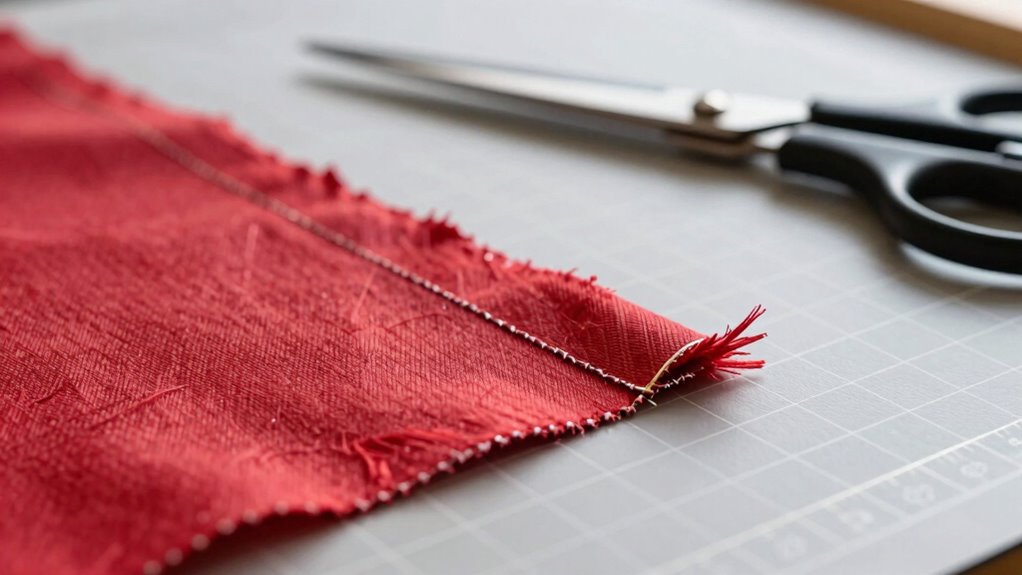
Even the most experienced sewers can stumble when cutting fabric, so it’s crucial to be mindful of common pitfalls. First, verify your fabric preparation is spot-on—wash, dry, and press it before you begin. This prevents shrinkage and distortion later. Next, pay attention to your cutting techniques. Always use sharp scissors or a rotary cutter for clean edges, and double-check your measurements before making any cuts. Cutting on the wrong grain can lead to twisted seams, which is a mistake you want to avoid. Finally, don’t forget to lay out your pattern pieces thoughtfully, maximizing fabric use while respecting the grain lines. Proper fabric grain alignment is essential for achieving the best results. By steering clear of these mistakes, you’ll set yourself up for sewing success!
How Fabric Grain Impacts Fit and Hang
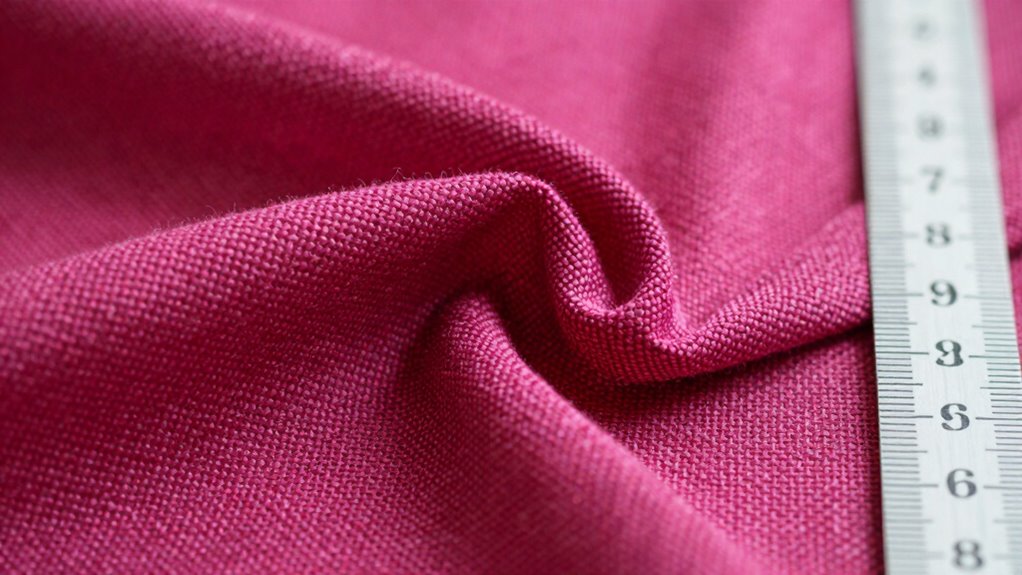
Understanding how fabric grain affects fit and hang can greatly elevate your sewing projects. When you align your patterns correctly, you’re ensuring that the fabric’s natural stability contributes to the overall structure of your garment. Here are key considerations:
Aligning your patterns with fabric grain enhances fit and stability, elevating the overall structure of your garment.
- Fit alterations become seamless when you respect the grain.
- Drape analysis is essential; the grain influences how the fabric flows and moves.
- Sewing techniques vary with grain direction, impacting stitching and finishing.
- Style choices can enhance or detract from the garment’s appeal based on grain alignment.
Frequently Asked Questions
Can I Use Any Fabric for Bias Cutting?
You can use various fabric types for bias cutting, but some work better than others. Woven fabrics like cotton and silk drape beautifully, making them great choices. Knits can also be cut on the bias, but keep in mind they have different stretch properties. Avoid very stiff or bulky fabrics, as they may not flow well. Always test a small piece first to verify it behaves the way you want!
How Does Fabric Grain Affect Stretch and Recovery?
Fabric grain considerably affects stretch and recovery. When you cut along the grain direction, you maximize the fabric’s natural stretch limitations, allowing it to conform well to shapes. Cutting against the grain can lead to undesirable fabric behavior, like twisting or distortion. Recovery properties also vary; fabrics cut on the bias often stretch more but may not recover as well as those cut on the straight grain. Choose wisely for best results!
What Tools Help in Cutting Along the Grain?
To cut along the grain like a pro, you’ll need a few essential tools. Start with a rotary cutter for precise cutting techniques, paired with a cutting mat to protect your surface. Use a ruler for grain alignment, ensuring everything stays straight. Scissors can work too, but make sure they’re sharp! A fabric marker can help you mark the grain lines, guiding your cuts for a flawless finish. You’ve got this!
Can Fabric Grain Change After Washing?
Yes, fabric grain can change after washing. Pre-wash effects often alter the fiber behavior, causing your fabric to relax or stretch. When you wash, fibers may shrink or expand unevenly, which can impact the grain alignment. It’s crucial to pre-wash your fabric before cutting to minimize these effects. If you don’t, you might end up with twisted seams or distorted patterns after the first wash, affecting your finished project’s look and fit.
How Do I Correct a Twisted Garment?
To correct a twisted garment, visualize those seams spiraling like a corkscrew. First, carefully unpick the twisted seams, laying the fabric flat. Once it’s smooth, make necessary garment adjustments by repositioning the pieces to align properly. Pin them in place, ensuring everything lines up neatly. Then, sew them back together, using a steady hand. Finally, give it a good press to set the fabric, and watch your creation transform back into shape!
Conclusion
Understanding fabric grain is essential, and cutting on the wrong grain can lead to twisted seams and uneven hems. By recognizing the warp, weft, and bias, you’ll guarantee your projects look polished and professional. So, trust your instincts, double-check your fabric direction, and avoid common pitfalls. Pay attention to grain, embrace precision, and enjoy the satisfaction of beautifully finished pieces. With these tips, you’ll elevate your sewing skills and create garments that fit and hang perfectly!