Smart textiles are innovative fabrics embedded with electronic components and conductive fibers, allowing your clothing to do more than just cover your body. They can monitor your health, adapt to environmental changes, or connect with devices seamlessly. Using sensors and flexible circuitry, these fabrics stay durable, comfortable, and stylish. If you want to see how technology is transforming everyday wear, exploring smart textiles reveals fascinating ways your clothes can enhance your life.
Key Takeaways
- Smart textiles incorporate embedded technology like sensors and conductive fibers for enhanced functionality.
- Wearable sensors in smart fabrics monitor vital signs and transmit health data in real time.
- Conductive fibers enable electrical circuits within textiles, supporting sensors, actuators, and communication features.
- These high-tech fabrics offer durability, flexibility, and integration for applications in healthcare, sports, and fashion.
- Ongoing innovations aim to improve smart textiles’ durability, comfort, and versatility for everyday use.
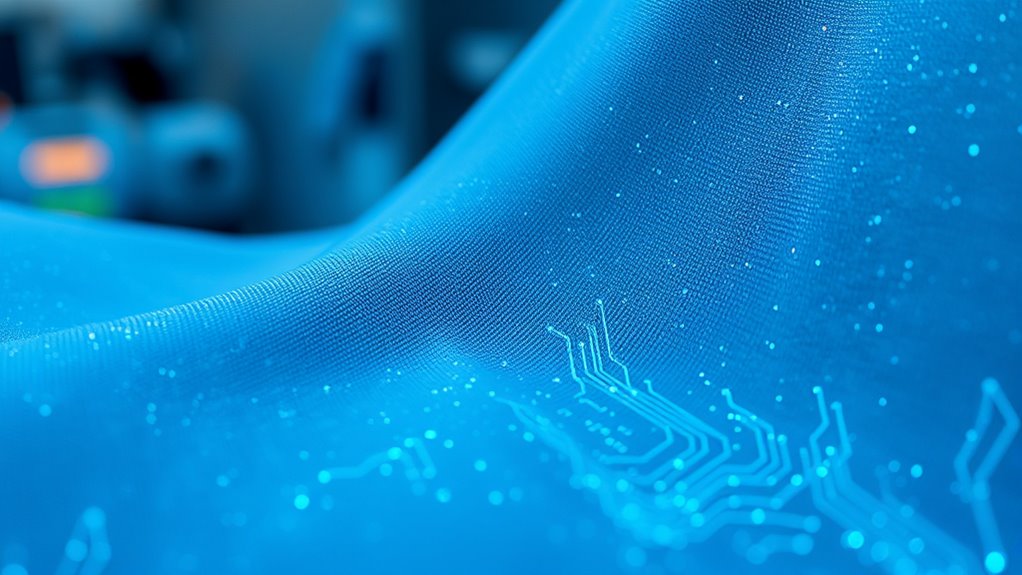
Smart textiles are revolutionizing the way we interact with clothing and fabrics by integrating technology directly into their fibers. Imagine wearing garments that can monitor your health, adjust to environmental changes, or even communicate with your devices—all seamlessly woven into the fabric you wear daily. This is made possible through the use of innovative materials like wearable sensors and conductive fibers. These components transform ordinary textiles into interactive platforms, opening up endless possibilities for comfort, functionality, and connectivity.
Wearable sensors are at the heart of this transformation. Embedded into fabrics, these tiny devices can track vital signs such as heart rate, body temperature, or even hydration levels. When integrated into clothing, they provide real-time data that can be transmitted to smartphones or medical devices, helping you manage health conditions or optimize athletic performance without the need for bulky equipment. The key to this technology’s success lies in conductive fibers, which act as the electrical backbone of smart textiles. These fibers are made from conductive materials like silver, carbon, or conductive polymers, allowing electrical signals to pass through the fabric effortlessly. Unlike traditional textiles, which are insulative, conductive fibers create a network that supports sensors, actuators, and even small electronic components embedded within the fabric.
Using conductive fibers, manufacturers can weave circuits directly into textiles, making the technology less intrusive and more durable. This means your smart clothing can withstand regular washing and wear without losing functionality. The flexibility of conductive fibers also allows for intricate designs, ensuring that the garments remain comfortable and stylish while performing complex electronic tasks. As a result, you can have clothing that not only looks good but also offers advanced features like temperature regulation, gesture recognition, or even energy harvesting from movement.
The integration of wearable sensors and conductive fibers isn’t limited to healthcare or sports. Fashion designers are exploring new ways to incorporate technology into everyday wear, creating garments that adapt to your environment or respond to your movements. For example, shirts that change color based on your mood or jackets that automatically adjust insulation levels are becoming a reality. These innovations are driven by the ability to embed sensors and conductive fibers seamlessly into textiles, making smart textiles versatile and accessible.
In essence, by combining wearable sensors with conductive fibers, smart textiles are bridging the gap between fashion and technology. They’re transforming simple fabrics into intelligent, interactive tools that enhance your daily life—whether by improving health monitoring, increasing comfort, or providing new forms of self-expression. As this field advances, expect your clothing to become more than just fabric; it will become a personalized, high-tech experience woven into your wardrobe. Additionally, ongoing research into conductive fibers continues to improve the durability and functionality of smart textiles, making them more practical for everyday use.
Frequently Asked Questions
How Durable Are Smart Textiles Under Everyday Wear?
Smart textiles are generally quite durable for everyday wear, thanks to their high fabric longevity and wear resistance. You can expect them to withstand regular washing, stretching, and movement without losing their functionality or appearance. However, the durability varies depending on the specific fabric and how it’s treated. Proper care can extend their lifespan, ensuring your smart textiles stay functional and looking good over time.
Can Smart Fabrics Be Recycled or Reused?
Yes, smart fabrics can be recycled or reused, but it’s more complex than traditional textiles. Recycling processes for smart textiles involve carefully separating electronic components from fabrics, which can be challenging. Reuse potential depends on the durability of the fabric and the ease of removing embedded tech. With advancements, these fabrics are becoming increasingly recyclable, promoting sustainability and extending their lifespan, so you can enjoy their benefits while minimizing environmental impact.
What Are the Main Challenges in Mass Production?
Like Icarus soaring too close to the sun, you face scaling complexities in mass production of smart textiles. Ensuring consistent quality assurance across large volumes is a key challenge, as integrating advanced electronics and fabrics demands precision at every step. Balancing innovation with manufacturability, you must overcome technical hurdles and maintain high standards, making widespread adoption a delicate dance between cutting-edge technology and reliable, scalable processes.
Are Smart Textiles Safe for Sensitive Skin?
Smart textiles can be safe for sensitive skin if they’re made with hypoallergenic materials. These fabrics are designed to minimize skin irritation, so you’re less likely to experience discomfort. However, it’s important to verify the specific materials used and test the textile on a small skin area first. If you have allergies, look for products explicitly labeled hypoallergenic to ensure your skin stays protected and irritation-free.
How Do Smart Textiles Impact Environmental Sustainability?
Smart textiles can positively impact environmental sustainability if designed thoughtfully, reducing waste and energy use. However, you should be aware of their environmental impact, especially concerning recycling challenges. Many smart fabrics contain complex materials that make recycling difficult, potentially leading to increased waste. To minimize this, opt for textiles made from eco-friendly, recyclable components, and support innovations aimed at overcoming these challenges for a greener future.
Conclusion
So, step into the stylish sphere of smart textiles, where technology and textiles intertwine seamlessly. By blending brilliance with boldness, these fabrics forge a future filled with flexibility, functionality, and finesse. Embrace the evolution of everyday essentials, empowering your experience with innovative intelligence. As you explore this exciting frontier, remember: smart textiles transform tradition into tomorrow, turning timeless textiles into tantalizing tech treasures—truly a testament to tech-savvy textiles shaping the sensational future.