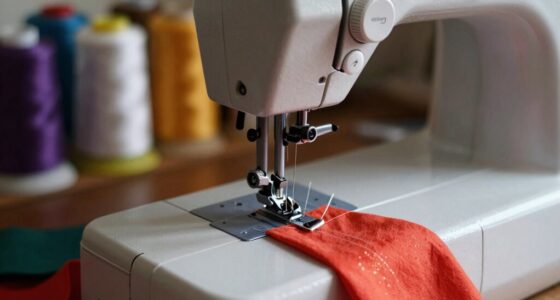
Sublimation printing transforms solid dye into gas, bonding it to polyester for vibrant, long-lasting designs. To achieve the best results, you need high polyester content—at least 65%—as it absorbs dye effectively and withstands high temperatures. Choosing the right fabrics is essential; lightweight options suit t-shirts, while heavier ones are better for upholstery. Avoid common mistakes like poor material selection and incorrect heat settings. Keep exploring to uncover more tips for achieving stunning sublimation prints.
Key Takeaways
- Sublimation printing requires high polyester content (at least 65%) for vibrant and durable image transfer.
- Polyester absorbs dye effectively, ensuring rich colors and detailed prints that last.
- Use lightweight fabrics for apparel and heavyweight for upholstery to match your project’s needs.
- Accurate heat settings (400°F for 60 seconds) are crucial for successful dye transfer and print quality.
- Explore various sublimation-compatible surfaces, including polymer-coated items, ceramics, and metal for diverse creative applications.

A-SUB Sublimation Paper 8.5×11 Inch 110 Sheets ONLY Compatible with Sublimation Printer and Sublimation Ink 125g
- Fast Drying: No fracturing, quick drying
- High Transfer Rate: Transfer rate ≥98%
- Wide Compatibility: Suitable for polyester, ceramics, metal, and coated items
As an affiliate, we earn on qualifying purchases.
As an affiliate, we earn on qualifying purchases.
What Is Sublimation Printing and How Does It Work?
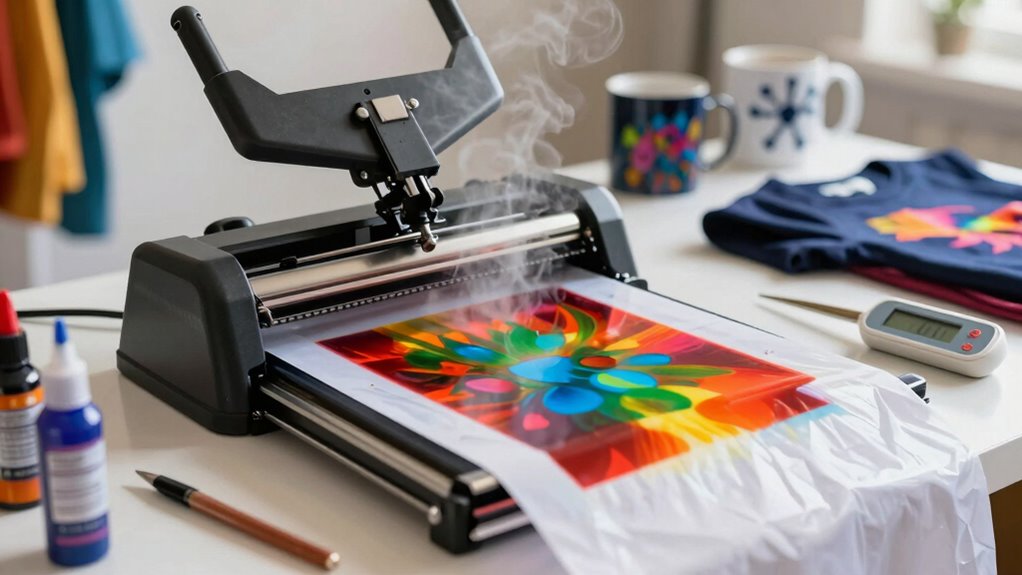
What Is Sublimation Printing and How Does It Work?
Sublimation printing is a fascinating process that transforms solid dye into gas without passing through a liquid state. During the sublimation process, you print your design onto a special transfer paper using sublimation inks. When you apply heat and pressure, the solid dye turns into gas and bonds with the fibers of your material, typically polyester. This dye transfer creates vibrant, long-lasting images that won’t peel or fade over time. It’s essential to understand that sublimation works best on polyester or polymer-coated surfaces because the dye needs to chemically bond with the material. By mastering this technique, you can achieve stunning results for various projects, from apparel to home décor. Understanding the chemical bonding process is crucial for achieving optimal results in sublimation printing, especially since the choice of color accuracy directly influences the vibrancy of the final print.
Why Polyester Is Essential for Sublimation Success
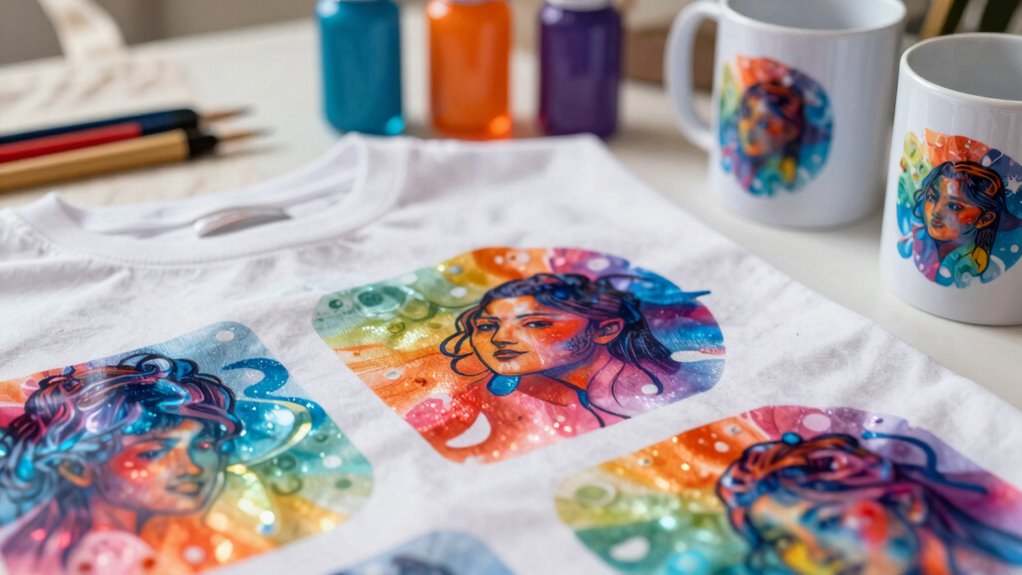
When it comes to achieving vibrant, lasting prints, using polyester is essential. The sublimation process relies on heat to transfer dye onto materials, and polyester’s unique properties make it the perfect choice. Unlike cotton or other natural fibers, polyester can withstand high temperatures without damage, ensuring your prints remain sharp and colorful. One of the key polyester benefits is its ability to absorb dye effectively, allowing for rich, detailed images that won’t fade over time. Additionally, polyester fabrics are durable and resistant to wear, making them ideal for items like apparel and home décor. By choosing polyester, you set yourself up for sublimation success, ensuring your projects look professional and eye-catching. Furthermore, understanding glycolic acid’s effectiveness can help you maintain your sublimation equipment for optimal performance.
How to Choose the Right Polyester Fabrics for Your Projects
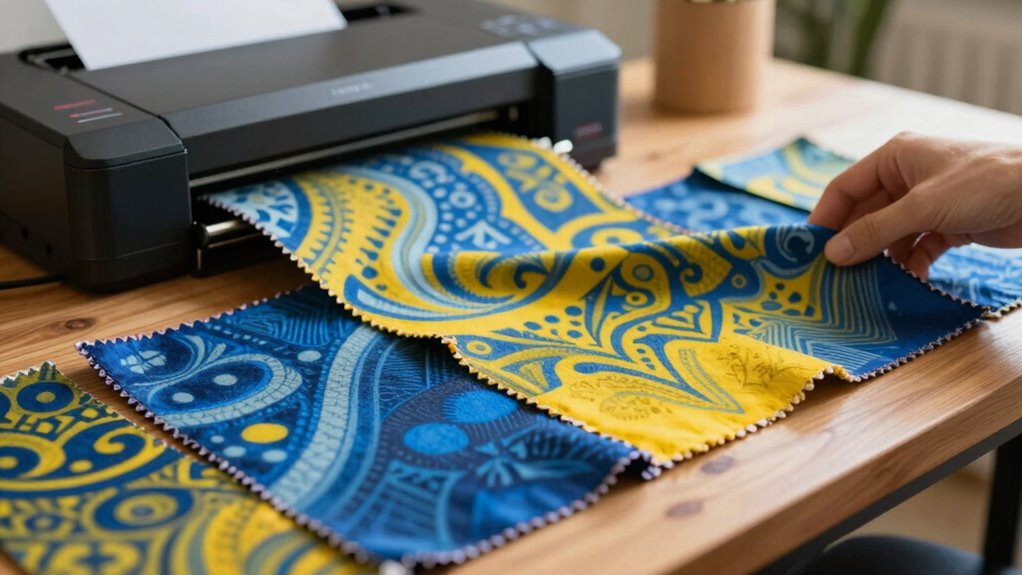
Choosing the right polyester fabric is essential for your sublimation projects. You’ll want to take into account fabric composition, weight, and thickness to guarantee the best results. Plus, pay attention to printability and texture, as these factors can greatly impact your final design.
Fabric Composition Matters
While you might be keen to plunge into sublimation, understanding fabric composition is essential for achieving the best results. When choosing polyester fabrics, look for those with a high polyester content—at least 65%—to guarantee peak dye resistance. Pure polyester offers the best results, but fabric blends can also work if they contain enough polyester. Keep in mind that blends with cotton or other materials may not absorb dye as effectively, resulting in faded colors. Always check the label to confirm the fabric’s composition. Additionally, consider the intended use of your project; for vibrant prints and durability, prioritize high-quality polyester fabrics that can withstand the sublimation process. This choice will greatly impact your final outcome. Furthermore, certain pet-friendly materials can also enhance your projects by providing durability and ease of care.
Weight and Thickness Considerations
Selecting the right weight and thickness of polyester fabric is essential for your sublimation projects. The fabric weight and thickness impact the overall quality and durability of your prints. Here are three key points to evaluate:
- Lightweight Fabrics: Ideal for items like t-shirts or banners, they allow for vibrant prints but may lack durability.
- Medium Weight Fabrics: Great for versatile applications like tote bags or apparel, balancing print quality and sturdiness.
- Heavyweight Fabrics: Perfect for items like upholstery or banners that require longevity, but can affect the feel and drape.
Printability and Texture Factors
When choosing polyester, test samples to see how they hold color and how the texture feels. Fabrics with a slight sheen typically yield better results, as they reflect light beautifully. By selecting the right polyester, you’re setting yourself up for success in your sublimation projects. Moreover, fabrics like acoustic drum shields can help enhance the quality of your sublimation prints by minimizing environmental noise during the process.
Common Sublimation Printing Mistakes to Avoid
When you’re starting with sublimation, it’s easy to make a few common mistakes. Choosing the wrong materials and not using the right heat settings can lead to disappointing results. Let’s explore these pitfalls so you can achieve the best outcome for your projects.
Incorrect Material Selection
Choosing the right materials is essential in sublimation printing, as using the wrong ones can lead to disappointing results. Many beginners fall into the trap of incorrect material selection due to common misconceptions. To help you avoid these pitfalls, keep these points in mind:
- Polyester Content: Always aim for materials with at least 60% polyester for vibrant prints.
- Coated Surfaces: Confirm you’re using products specifically designed for sublimation, such as coated mugs or fabrics.
- Color Compatibility: Be cautious with darker colors; they may not yield the desired brightness or clarity. Additionally, using materials with high moisture content can adversely affect print quality and durability.
Inadequate Heat Settings
Even if you’ve selected the right materials, inadequate heat settings can ruin your sublimation project. If your temperature isn’t accurate, you risk poor ink transfer, leading to faded or blurry designs. Make sure you’re using the correct heat settings for your specific substrate. Each material requires a different temperature and time, so double-check your guidelines.
Using a heat press with inconsistent temperature can also cause issues. Invest in a reliable thermometer to monitor your heat settings closely. Remember, even a slight variation can affect the final outcome. By ensuring proper temperature accuracy, you can achieve vibrant, high-quality prints that truly pop. Avoid this common mistake, and your sublimation projects will shine!
Preparing Your Designs for Sublimation
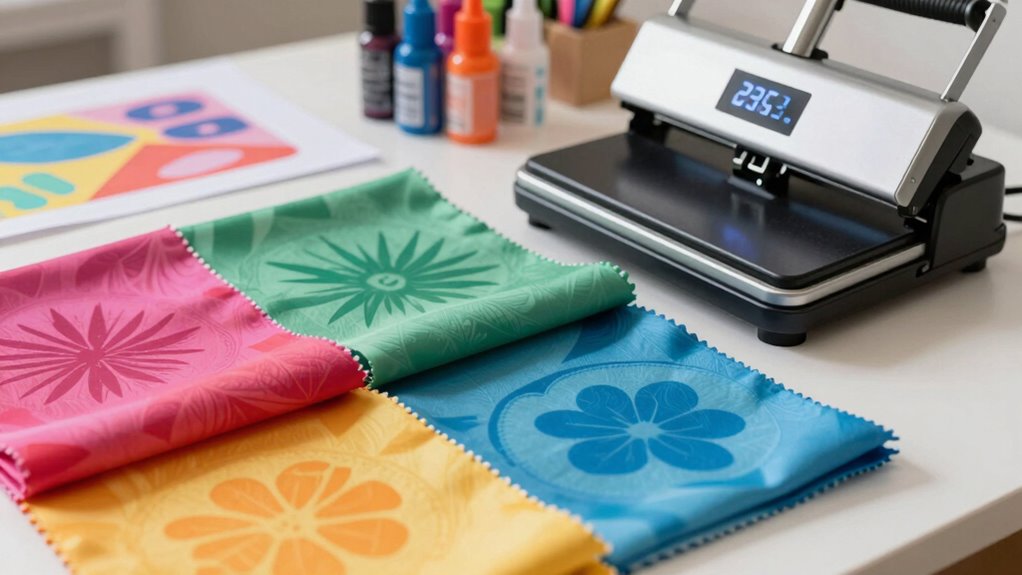
Preparing your designs for sublimation starts with understanding the right file formats and resolutions. Using the proper tools guarantees your prints turn out as you envision. Here are three essential steps to follow:
Preparing your designs for sublimation requires knowledge of file formats and resolutions to ensure stunning print results.
- Choose the Right File Format: Opt for formats like PNG or TIFF, which support high-quality images.
- Set Your Resolution: Aim for at least 300 DPI to assure sharp, vibrant prints.
- Use Correct Color Profiles: Make sure your design software is set to RGB color profiles, as they translate better for sublimation.
How to Create Vibrant and Durable Sublimation Prints
Sure! Here’s your revised content with the requested changes:
—
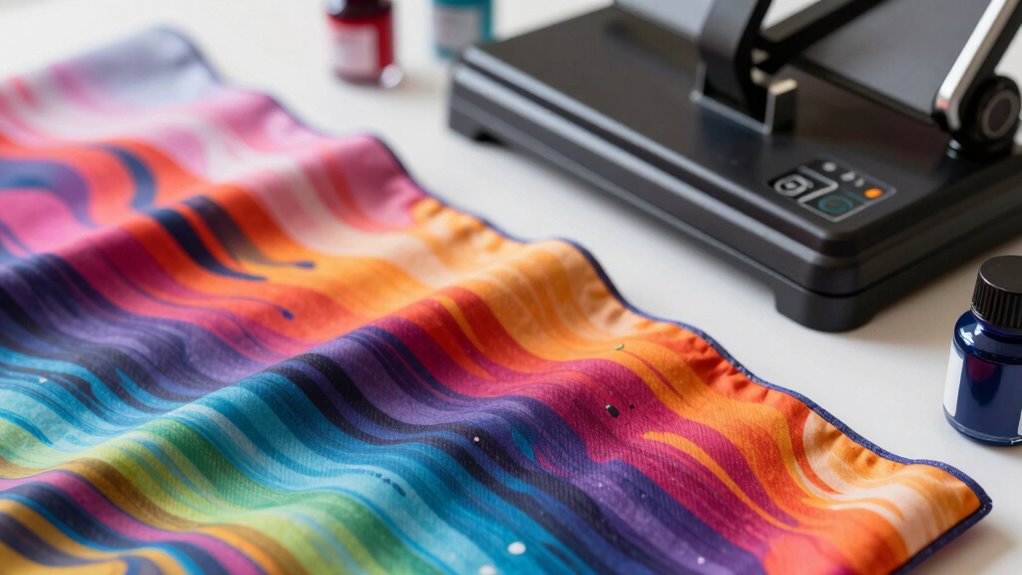
Once you’ve got your designs ready, the next step is to confirm your sublimation prints truly pop. Focus on color management and print resolution to achieve vibrant results. Here’s a quick reference to help you:
| Aspect | Recommendation | Importance |
|---|---|---|
| Color Profile | Use RGB | Confirms colors are vivid |
| Print Resolution | 300 DPI or higher | Maintains detail in prints |
| Ink Quality | Use high-quality inks | Affects overall vibrancy |
| Material Type | 100% polyester | Best for sublimation |
| Heat Press Settings | 400°F for 60 seconds | Proper transfer temperature |
Additionally, understanding color management is crucial for ensuring that your prints maintain their intended vibrancy across different devices. Implementing proper ergonomics in your workspace can also enhance your comfort while creating these vibrant designs. It’s also essential to stay updated on emerging trends in digital publishing to ensure your sublimation techniques remain relevant and effective. The right choice of floating gear can also inspire creative designs that resonate with outdoor enthusiasts.
Other Sublimation-Compatible Materials
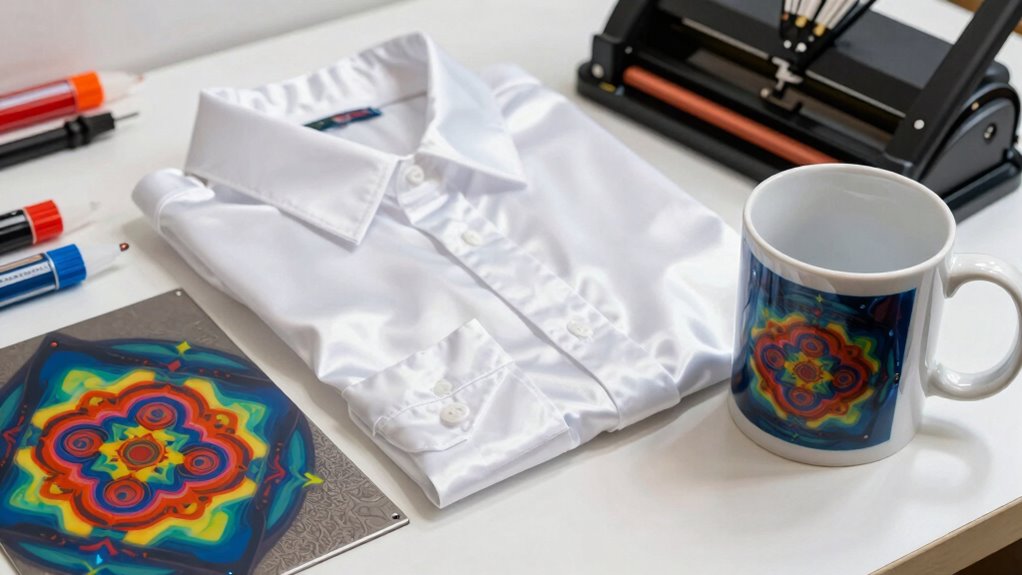
When exploring sublimation, you’ll find that it’s not just limited to polyester fabrics. There are several alternative materials you can use to achieve stunning results. Here are three sublimation-friendly surfaces to take into account:
- Polymer Coated Items: Mugs, keychains, and phone cases often come with a special coating that allows for vibrant sublimation prints.
- Ceramics: Certain ceramic tiles can handle sublimation, giving you unique options for home décor.
- Metal: Aluminum sheets or coated metal signs work well, providing durability and long-lasting color.
Frequently Asked Questions
Can I Use Sublimation on Cotton Fabrics?
You can’t use sublimation on cotton fabrics effectively. Sublimation techniques work best on polyester or polymer-coated fabrics because they allow the dye to bond properly. If you’re set on using cotton, consider blending it with polyester or using a special coating to prepare the fabric. Proper fabric preparation is key to achieving vibrant, lasting designs. Stick to polyester for the best results with sublimation processes.
What Printers Are Best for Sublimation Printing?
When it comes to sublimation printing, you want a printer that fits like a glove. Epson EcoTank and Sawgrass printers are top choices. They use dye-sublimation ink types that produce vibrant colors. Make sure you adjust your printer settings to match your material for the best results. With the right equipment and settings, you’ll turn your designs into stunning creations that pop off the fabric!
How Long Do Sublimation Prints Last?
Sublimation prints can last for many years, often exceeding 10 years with proper care. Their durability comes from the ink bonding with the material, making colors vibrant and resistant to fading. You’ll find that print longevity is greatly affected by factors like exposure to sunlight and washing methods. To maximize sublimation durability, wash items in cold water and avoid harsh detergents. With the right maintenance, your prints will stay looking fresh and bright!
Is Sublimation Eco-Friendly?
Yes, sublimation can be eco-friendly! When you choose high-quality inks and materials, you’re reducing waste and minimizing environmental impact. Sublimation sustainability shines through since the process uses less water and generates fewer pollutants compared to traditional printing methods. Plus, the prints are durable, meaning fewer replacements over time. By opting for eco-conscious materials, you’re making a positive choice for both your projects and the planet.
Can I Sublimate on Dark-Colored Fabrics?
No, you can’t sublimate on dark-colored fabrics effectively. Sublimation techniques work best on light-colored, polyester fabrics because the dye needs a white base to show vibrant colors. Dark fabrics absorb the dye, making the prints less visible or dull. If you want to use sublimation, focus on fabric compatibility—opt for light-colored, polyester materials to achieve the best results. Otherwise, consider alternative printing methods for dark fabrics.
Conclusion
In conclusion, mastering sublimation starts with the right polyester pick. Perfectly printed projects pop with vibrant colors, so don’t skimp on quality. Sidestep common mistakes, and you’ll see stunning results. Always prepare your designs with precision to guarantee longevity and liveliness. With the right techniques and materials, you’ll transform your visions into vibrant, wearable wonders. So immerse yourself in the delightful world of sublimation, and let your creativity shine!