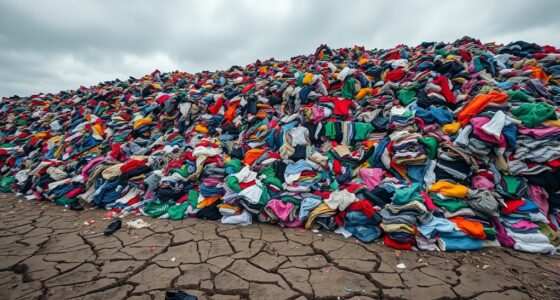
To spot false sustainability claims, look for brands that lack transparent sourcing details and avoid vague labels like “eco-friendly” without explanation. Be cautious of greenwashed products that use flashy marketing to hide superficial efforts. Check for credible certifications such as GOTS or Fair Trade, and question whether brands share specific stories about their supply chains. If you want to truly understand sustainable fashion, discovering the signs of greenwashing will help you make smarter choices.
Key Takeaways
- Verify brand claims by researching sourcing practices, certifications, and transparency in supply chains.
- Be cautious of vague labels like “eco-friendly” without detailed explanations or third-party verification.
- Look for specific information about raw materials, such as recycled fabrics or organic fibers.
- Check for transparency stories about farmers, artisans, or factories involved in production.
- Be skeptical of marketing that emphasizes eco-terms without concrete evidence of responsible sourcing.

Many fashion brands claim to be eco-friendly, but often their efforts are more about image than real sustainability. You might see flashy labels or marketing campaigns touting their commitment to the environment, but it’s essential to look beyond the surface. True sustainability starts with transparent, genuine practices like sustainable sourcing, which ensures that raw materials are obtained responsibly, without depleting natural resources or exploiting workers. When brands talk about eco-friendly materials, they should be clear about what they’re using—whether it’s organic cotton, recycled fabrics, or biodegradable fibers. However, many companies cherry-pick certain materials or use vague terms, giving the illusion of eco-consciousness without making meaningful changes.
True sustainability requires transparent sourcing and honest practices, not just eco-friendly labels or marketing.
As a consumer, you need to be vigilant. Just because a product claims to be made from eco-friendly materials doesn’t mean it’s truly sustainable. For instance, a brand might highlight that they use recycled polyester, but if their supply chain isn’t transparent or they source materials from regions with questionable environmental practices, their claims are misleading. Similarly, sustainable sourcing involves more than just choosing the right materials; it requires ensuring fair labor practices, reducing environmental impact during cultivation or extraction, and maintaining traceability. When brands fail to provide clear information about their sourcing and materials, it’s a sign they might be engaging in greenwashing.
You should also pay attention to certifications and third-party verifications. Labels like GOTS (Global Organic Textile Standard) or Fair Trade can give you some assurance that the brand’s claims are backed by credible standards. Still, even these certifications aren’t foolproof, and some brands may display fake or misleading labels. The key is to do your research—visit the brand’s website, ask questions, and look for detailed explanations of their supply chain and material choices. Genuine eco-friendly brands are transparent about their sourcing practices, often sharing stories about farmers, artisans, or factories involved in production. They prioritize long-term sustainability over short-term marketing wins.
In the end, spotting false sustainability claims requires critical thinking. Don’t accept glossy marketing at face value; dig deeper into how a brand sources its materials and what standards they meet. Real sustainability isn’t just about using eco-friendly materials in isolation but about adopting responsible sourcing practices that benefit the planet and the people involved. By staying informed and skeptical of empty claims, you can make more responsible choices and support brands that truly prioritize environmental and social integrity.
Frequently Asked Questions
How Can Consumers Verify a Brand’s Sustainability Claims Effectively?
To verify a brand’s sustainability claims, you should check for certification labels like GOTS or Fair Trade, which confirm genuine eco-friendly practices. Additionally, review transparency reports on their website, as these provide detailed insights into their supply chain and environmental efforts. Don’t hesitate to contact the brand directly for clarification. Combining these steps helps you spot authentic sustainability efforts and avoid greenwashing.
What Legal Actions Exist Against Companies Practicing Greenwashing?
You often hear about brands facing legal repercussions, but what does that mean for you? Lawsuits and regulatory actions aim to hold companies accountable for greenwashing, protecting consumers from false claims. Consumer protection agencies can fine or penalize brands practicing misleading sustainability tactics. These legal actions serve as a warning and help promote honesty, ensuring you can trust the eco-friendly labels without second-guessing their authenticity.
Are There Industry Standards for Genuine Sustainability in Fashion?
You should look for industry standards for genuine sustainability, which include certification standards and transparency measures. These standards, like GOTS or Fair Trade, ensure brands meet strict environmental and social criteria. Transparency measures require companies to openly share their practices and supply chain details. By checking for these credentials, you can better identify authentic sustainable fashion and avoid greenwashing.
How Significant Is Greenwashing’s Impact on Environmental Efforts?
Greenwashing can profoundly hinder environmental efforts, leading to reputation damage and consumer mistrust. For example, when a popular brand claims to use sustainable materials but is exposed for false claims, it erodes trust and stalls progress. This misrepresentation discourages genuine eco-friendly practices, making it harder for consumers to identify truly sustainable brands. Ultimately, greenwashing undermines efforts to promote real sustainability and damages the industry’s credibility.
Can Secondhand or Vintage Shopping Be a Sustainable Alternative?
Yes, secondhand or vintage shopping is a sustainable alternative. Thrift shopping and vintage resale help reduce waste by giving pre-loved items a second life, lowering demand for new production. You actively contribute to environmental conservation by choosing these options, which often require fewer resources and produce less pollution. Plus, you get unique, stylish pieces while supporting a circular economy that benefits the planet.
Conclusion
As you navigate the fashion world, remember that not every leaf that appears green is truly rooted in sustainability. Greenwashing is like a mirage—shimmering on the surface but empty inside. By sharpening your awareness, you become a sturdy tree, standing tall against false claims. Let your choices be the roots that support genuine change, turning your wardrobe into a forest of authenticity. Together, you can cultivate a future where true sustainability blossoms.