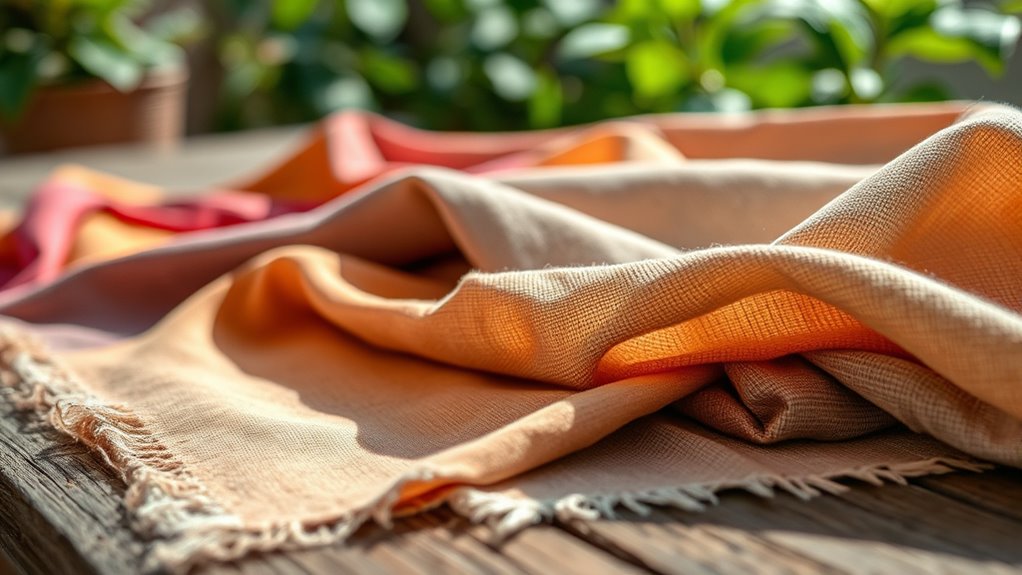

Yes, petroleum-free textiles are becoming increasingly possible as sustainable fabrics made from natural, biodegradable sources like bamboo, hemp, and cornstarch gain popularity. These alternatives serve as eco-friendly options that break down safely without leaving harmful residues, reducing reliance on fossil fuels. Technological advances are making it easier to produce these plant-based materials with qualities similar to traditional synthetic fabrics. If you want to explore how these innovations are shaping a greener future, there’s more to discover ahead.
Key Takeaways
- Yes, biodegradable fabrics made from plant-based sources like bamboo, hemp, and cornstarch are petroleum-free options.
- Technological advancements enable the creation of natural fiber blends that mimic synthetic textiles without using fossil fuels.
- Sustainable fibers derived from renewable plants reduce reliance on petroleum-based resources in textile production.
- Innovations in bio-based polymers facilitate manufacturing of plastic-free, biodegradable fabrics with similar qualities to synthetic fibers.
- Increasing adoption of eco-friendly, petroleum-free textiles supports a shift toward environmentally sustainable fashion.
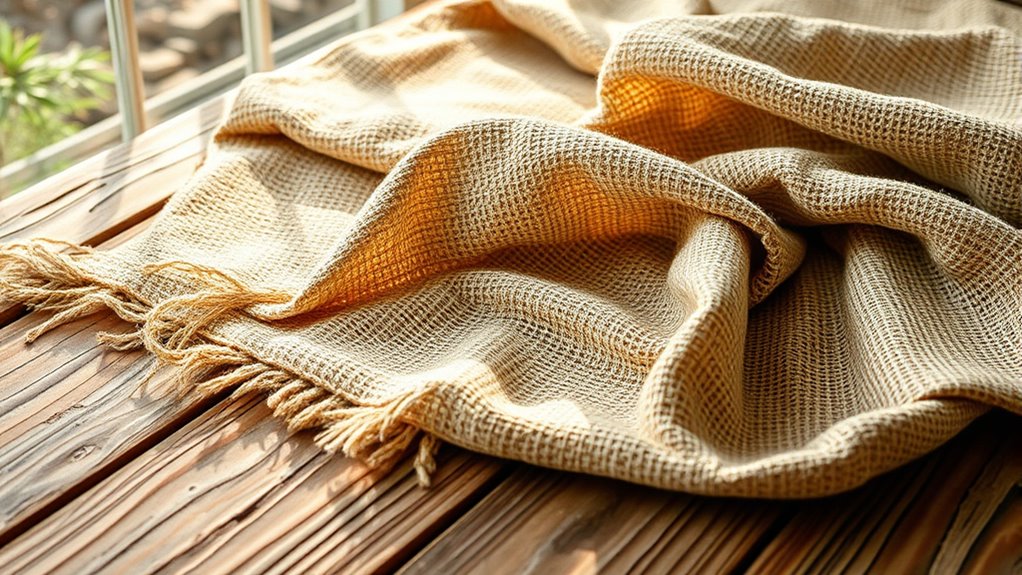
Have you ever wondered what your clothing is really made of and how it impacts the environment? The truth is, many fabrics we wear daily are derived from petroleum-based resources, contributing profoundly to pollution and waste. But there’s growing interest in exploring biodegradable alternatives and sustainable fiber sources that could replace traditional plastics in textiles. These options aim to reduce our reliance on fossil fuels, minimize waste, and create garments that break down naturally after disposal.
Biodegradable alternatives are fabrics designed to decompose safely in the environment without leaving harmful residues. Instead of synthetic fibers like polyester or nylon, which can take hundreds of years to break down, these alternatives are crafted from natural, eco-friendly materials. For example, some companies are developing fabrics from plant-based sources such as cornstarch, hemp, or bamboo. These materials not only biodegrade faster but often require less water and chemical input during cultivation, making them a more sustainable choice.
Sustainable fiber sources play a pivotal role in this shift toward eco-conscious textiles. Instead of extracting raw materials from finite resources, these fibers are harvested from renewable plants that grow quickly and require minimal agrochemical inputs. Bamboo, for instance, is a fast-growing grass that can be processed into soft, durable fabric without the heavy chemical treatments associated with traditional textiles. Similarly, hemp is a resilient crop that absorbs carbon dioxide efficiently, making it an excellent sustainable fiber source. When you opt for clothing made from these fibers, you’re supporting a cycle that reduces environmental strain and conserves natural resources.
Advancements in technology are also making it more feasible to produce petroleum-free textiles. Researchers are developing bio-based polymers and natural fiber blends that mimic the qualities of conventional plastics while remaining biodegradable. This means you could soon wear garments that look and feel like standard synthetic fabrics but don’t contribute to plastic pollution once discarded. Brands committed to sustainability are actively incorporating these innovations, offering consumers clothing options that align with eco-friendly values.
Choosing clothing made from biodegradable alternatives and sustainable fiber sources isn’t just about reducing environmental harm; it’s about transforming the way textiles are produced and disposed of. By supporting these materials, you’re helping to foster a fashion industry that values sustainability and minimizes plastic waste. As awareness grows, so does the availability of innovative fabrics that can replace petroleum-based textiles entirely. This movement toward plastic-free fabrics is a vital step in creating a more sustainable future—one where your wardrobe doesn’t come at the planet’s expense.
Frequently Asked Questions
Are Petroleum-Free Textiles as Durable as Conventional Plastics?
Petroleum-free textiles can be just as durable as conventional plastics, but it depends on the synthetic fiber. Some substitutes, like plant-based or bio-based fibers, offer comparable synthetic fiber durability when engineered properly. While petroleum-based fabric substitutes tend to excel in strength and longevity, innovative natural materials are improving rapidly. You can find sustainable textiles that match traditional plastics in durability, making them viable options for many applications.
What Are the Environmental Impacts of Alternative Natural Fibers?
Imagine you switch to hemp fabric for your clothing. Its biodegradability benefits mean it breaks down naturally, reducing landfill waste. Plus, sourcing sustainability is high since hemp grows quickly with less water and chemicals. This shift lowers environmental impacts by decreasing reliance on fossil fuels and reducing pollution. Overall, alternative natural fibers like hemp promote eco-friendly practices, helping you lessen your carbon footprint and support sustainable textile sourcing.
Can Plastic-Free Fabrics Be Manufactured at Scale Cost-Effectively?
Yes, plastic-free fabrics can be manufactured at scale cost-effectively. You’ll find that a thorough cost comparison shows natural fibers often compete well with synthetic options, especially as eco-conscious consumers grow. By streamlining the supply chain and sourcing sustainable materials efficiently, manufacturers can reduce costs, making petroleum-free textiles more accessible. With innovation and demand increasing, scaling up production becomes more feasible, helping you choose environmentally friendly fabrics without breaking the bank.
How Do Plastic-Free Textiles Perform in Various Weather Conditions?
You’ll find that plastic-free textiles perform well in various weather conditions, offering good UV resistance, so they don’t degrade quickly under sun exposure. However, their moisture absorption varies; some fabrics wick away water, keeping you dry, while others absorb moisture, which can be uncomfortable in rain or humidity. The key is choosing the right material for your climate, balancing durability and comfort in different weather scenarios.
Are There Any Health Concerns With Emerging Plant-Based Fabrics?
You might wonder if plant-based fabrics pose health risks. Generally, they’re considered safe, but you should watch out for chemical safety issues from dyes or processing chemicals used during manufacturing. Some plant fibers can have allergenic potential, especially for sensitive skin. To reduce risks, choose fabrics labeled as organic or chemical-free, and always check for certifications that guarantee the textile’s safety for your skin.
Conclusion
While creating completely petroleum-free textiles remains a challenge, progress is encouraging. Did you know that over 60% of global fabric production still relies on synthetic fibers derived from petroleum? This highlights how far we still need to go. But with innovative natural fibers gaining popularity, you can help push for sustainable choices. Every small step counts in reducing plastic waste and protecting our environment—so choose fabrics that align with a plastic-free future.