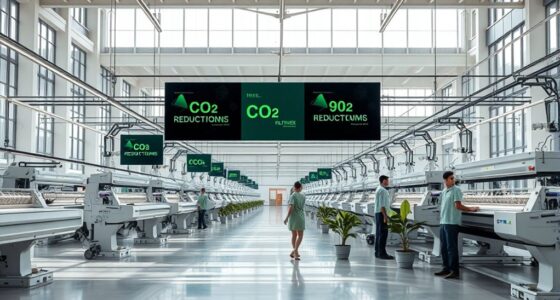
Seaweed-based yarns are more than just a gimmick—they’re a real game-changer for sustainable fashion. They grow abundantly without land, water, or harmful chemicals, making them eco-friendly and biodegradable. Their production reduces pollution, supports marine biodiversity, and helps mitigate climate change by absorbing CO₂. If you keep exploring, you’ll discover how this innovative fiber could transform the industry and promote greener options for conscious consumers.
Key Takeaways
- Seaweed yarns are a sustainable alternative, grown without land, freshwater, or chemicals, reducing environmental impact.
- Eco-friendly production involves minimal processing, avoiding toxic dyes and chemicals common in synthetic fibers.
- Cultivating seaweed acts as a carbon sink, helping mitigate climate change and supporting marine biodiversity.
- Scaling production and ensuring consistent quality are current challenges for widespread industry adoption.
- Seaweed yarns have the potential to revolutionize textiles as a truly green, sustainable fiber, not just a gimmick.

Seaweed-based yarns are emerging as an innovative and sustainable alternative to traditional fibers. As someone interested in eco-conscious fashion or textile innovation, you might wonder whether this trend is genuinely transformative or just a passing gimmick. The answer lies in understanding how seaweed yarns fit into a broader movement toward sustainable farming and eco-friendly production. Unlike conventional crops that often require intensive water, pesticides, and fertilizers, seaweed grows abundantly in the ocean without needing land, fresh water, or chemical inputs. This makes it an attractive option for sustainable farming practices, reducing the environmental footprint of textile manufacturing. By cultivating seaweed responsibly, companies can produce yarns that are not only biodegradable but also free from the harmful chemicals sometimes used in conventional fiber processing. This aligns perfectly with the growing consumer demand for environmentally friendly products, making seaweed yarns a compelling choice for brands committed to eco-friendly production.
When you look at the production process, you’ll see that seaweed-based yarns offer a clear advantage in regards to sustainability. The eco-friendly production methods involved avoid the heavy chemical treatments required for traditional synthetic or plant-based fibers. Instead, the process often involves minimal processing, with seaweed being harvested, dried, and spun into yarns without the need for toxic dyes or chemical fixes. This reduces pollution and conserves water, energy, and other resources. As a result, these yarns appeal to environmentally conscious consumers who want transparency and sustainability in their clothing choices. Furthermore, because seaweed grows rapidly and can be harvested multiple times a year, it provides a renewable resource that doesn’t contribute to deforestation or land degradation. Additionally, the cultivation of seaweed can be integrated into existing marine ecosystems, promoting marine biodiversity and ecosystem health.
You might also consider the ecological benefits that extend beyond just farming and production. Seaweed acts as a carbon sink, absorbing CO2 from the atmosphere and helping mitigate climate change. Its cultivation can even improve marine biodiversity by providing habitats for various marine species. When you choose products made from seaweed-based yarns, you’re supporting a circular economy—one that prioritizes renewable resources, reduces waste, and minimizes ecological impact. This makes seaweed yarns more than just a novel textile; they’re part of a broader shift toward sustainable living and responsible manufacturing. While challenges remain, such as scaling up production and ensuring consistent quality, the potential for seaweed yarns to revolutionize the textile industry is promising. They represent a tangible step toward more sustainable, eco-friendly fashion that aligns with your values and the planet’s health.
Top picks for "seawe yarn gimmick"
Open Amazon search results for this keyword.
As an affiliate, we earn on qualifying purchases.
Frequently Asked Questions
What Are the Environmental Impacts of Harvesting Seaweed for Yarn Production?
You should consider that harvesting seaweed for yarn production can impact marine ecosystems if overharvesting occurs. Overharvesting concerns surface when too much seaweed is collected, risking habitat loss and disrupting local biodiversity. While seaweed farming is generally sustainable, improper harvesting practices can harm marine life and deplete resources. Consequently, careful management is essential to minimize environmental impacts and preserve marine ecosystems while benefiting from seaweed-based yarns.
How Does the Cost of Seaweed-Based Yarn Compare to Traditional Textiles?
As they say, “the proof is in the pudding,” and exploring seaweed-based yarn costs reveals intriguing insights. You might find that, initially, these eco-friendly fibers are pricier than traditional textiles, impacting market viability. Consumer perception plays a role too—some see seaweed yarn as innovative, boosting demand. Over time, as production scales up and technology advances, costs could drop, making seaweed yarn more competitive and sustainable.
Are Seaweed-Based Yarns Suitable for All Types of Clothing?
You might wonder if seaweed-based yarns suit all clothing types. While they offer impressive eco-friendly benefits, their fashion versatility can vary. Some textiles have a smooth, breathable texture ideal for casual wear, but others may lack the durability needed for heavy-duty garments. So, you’ll find seaweed yarns work well for certain styles, but they might not yet replace traditional fabrics for every clothing type.
What Is the Durability of Garments Made From Seaweed Yarn?
Your garments made from seaweed yarn are surprisingly durable, standing strong through countless wears. Thanks to eco-friendly farming practices that protect marine biodiversity, these fibers resist wear and tear better than you’d expect. While they may not last as long as synthetic options, their natural resilience offers a sustainable alternative. With proper care, seaweed-based clothing can maintain its integrity, proving that eco-conscious choices don’t mean sacrificing durability.
Can Seaweed Yarn Be Recycled or Biodegraded Effectively?
You might wonder if seaweed yarn can be recycled or biodegraded effectively. Its biodegradation potential is promising because it’s a natural, organic material that breaks down faster than synthetic fibers. However, recycling challenges exist, such as processing methods and maintaining fiber quality. While seaweed yarn offers eco-friendly benefits, addressing these recycling hurdles is essential to maximize its environmental impact and guarantee it truly serves as a green alternative.
Conclusion
So, next time you splash out on eco-friendly fashion, remember—seaweed yarns promise to save the planet, one strand at a time. Or do they? It’s amusing how something so seemingly green might just turn out to be another marketing gimmick. As you ponder your sustainable wardrobe, keep in mind: not all that glitters is genuinely green, and sometimes, the real innovation is hiding beneath layers of hype. Enjoy your “eco-friendly” find—if it’s real, that is.