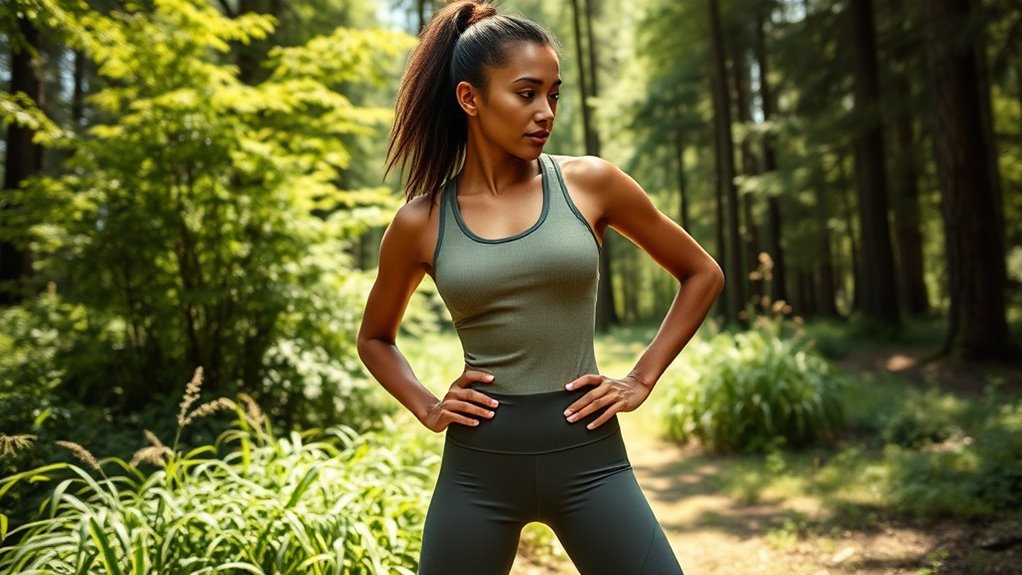

Eco-friendly activewear made from sustainable fabrics like recycled plastics, fishing nets, and natural fibers helps you reduce environmental harm and conserve resources. These materials offer durability, moisture-wicking, and breathability to keep up with your workouts while minimizing waste from landfills and oceans. Choosing biodegradable fabrics made from hemp, organic cotton, or plant-based plastics adds to your eco-conscious efforts by breaking down naturally. If you want to learn how these materials make your gear greener, keep exploring.
Key Takeaways
- Recycled fabrics made from plastic bottles, fishing nets, and textiles reduce waste and environmental pollution.
- Biodegradable fabrics like hemp and organic cotton decompose naturally, minimizing long-term pollution.
- Sustainable activewear lowers resource consumption and energy use compared to traditional synthetic gear.
- Brands committed to eco-friendly manufacturing promote transparency and ethical practices in production.
- Choosing eco-conscious activewear supports personal fitness goals while contributing to planetary health.

As more people seek sustainable choices, eco-friendly activewear has gained popularity among fitness enthusiasts and environmentally conscious consumers alike. You want workout gear that supports your active lifestyle while minimizing environmental impact, and that’s where fabrics made from recycled materials and biodegradable fabrics come into play. These innovations allow you to stay fit and feel good about your choices, knowing you’re contributing to a healthier planet.
Recycled materials form the backbone of many eco-friendly activewear options. Instead of relying on virgin resources, manufacturers repurpose waste like plastic bottles, fishing nets, and old textiles into high-performance fabrics. This process reduces landfill waste and decreases the demand for new raw materials, which often consume significant energy and water. When you choose activewear made from recycled materials, you’re helping divert waste from oceans and landfills, turning what would be trash into something useful and durable. These fabrics often have qualities comparable to traditional activewear, such as moisture-wicking, breathability, and stretch, ensuring you don’t compromise on performance.
Biodegradable fabrics take it a step further by breaking down naturally after disposal, leaving no harmful residues behind. Unlike synthetic fibers that can persist in the environment for decades, biodegradable fabrics decompose within a few years when exposed to natural elements. This means that your workout gear, after reaching the end of its life, won’t contribute to long-term pollution. Instead, it returns to the earth, enriching the soil or simply vanishing without leaving toxins. Many biodegradable fabrics are made from natural fibers like hemp, organic cotton, or innovative plant-based plastics, which are cultivated sustainably and require fewer resources to produce.
Choosing activewear crafted from these sustainable fabrics isn’t just about reducing your carbon footprint; it’s also about supporting a shift toward more ethical manufacturing practices. When you buy from brands committed to eco-friendly methods, you promote transparency and encourage industry-wide change. Additionally, understanding size restrictions and local building requirements can help ensure that your sustainable apparel choices align with your lifestyle and legal standards. You get high-quality, functional gear that’s better for the environment, and that aligns with your values of sustainability and responsible consumption.
In the end, eco-friendly activewear made from recycled materials and biodegradable fabrics empowers you to combine your fitness goals with your environmental principles. It’s a simple yet impactful way to make a statement about what matters to you—health, performance, and planetary well-being. By choosing gear made from sustainable fabrics, you’re not only investing in your workouts but also contributing to a cleaner, greener future for everyone.
Top picks for "friendly activewear sustainable"
Open Amazon search results for this keyword.
As an affiliate, we earn on qualifying purchases.
Frequently Asked Questions
How Do Sustainable Fabrics Compare in Durability to Traditional Activewear?
Sustainable fabrics often match or even surpass traditional activewear in durability. You’ll notice better fiber longevity and wear resistance, meaning your workout gear stays intact longer. These eco-friendly materials are designed to withstand frequent washing and intense activity without losing shape or strength. So, when you choose sustainable fabrics, you get workout gear that’s both kind to the planet and reliable for your active lifestyle.
Are Eco-Friendly Activewear Brands More Affordable Than Conventional Options?
Eco-friendly activewear brands are often more affordable than conventional options, especially when you consider the overall price comparison. While some popular brands might be slightly pricier due to their eco-friendly fabrics, many are competitively priced to attract budget-conscious consumers. As brand popularity grows, more affordable sustainable options emerge, making it easier for you to choose eco-conscious workout gear without overspending.
Can Sustainable Fabrics Withstand Intense Workouts Without Losing Shape?
Yes, sustainable fabrics can withstand intense workouts without losing shape. Modern eco-friendly materials like recycled polyester and organic nylon offer excellent fabric elasticity, ensuring your activewear moves with you. Plus, they maintain colorfastness even after multiple washes, keeping your gear looking fresh. You can confidently push yourself in eco-friendly activewear, knowing it’s durable, flexible, and designed to handle rigorous exercise routines.
What Certifications Should I Look for in Eco-Friendly Activewear?
You should look for certifications like GOTS (Global Organic Textile Standard) and OEKO-TEX, which guarantee eco-friendly practices. Did you know that over 80% of consumers prefer brands with transparent recycling standards? These certifications verify that the activewear meets strict environmental and fair labor standards, giving you confidence in your eco-friendly choices. Always check for labels that guarantee fair labor practices and sustainable sourcing to make a truly responsible purchase.
How Do Sustainable Fabrics Impact Odor Control and Moisture Management?
Sustainable fabrics often improve odor control and moisture management through enhanced fabric breathability and odor neutralizing properties. You’ll notice that eco-friendly activewear allows air to circulate, keeping you dry and comfortable during workouts. Many sustainable materials naturally resist odors, reducing the need for chemical treatments. By choosing fabrics with high breathability and odor-neutralizing features, you stay fresher longer, making your workout gear more effective and eco-conscious at the same time.
Conclusion
Choosing eco-friendly activewear not only benefits the planet but also boosts your workout confidence. Did you know that sustainable fabrics can reduce water use by up to 90% compared to conventional materials? By switching to eco-conscious gear, you’re making a powerful impact—helping conserve resources and supporting ethical brands. So, next time you gear up, remember that your choice can make a difference. Make smart, sustainable decisions and stay active while protecting the environment.