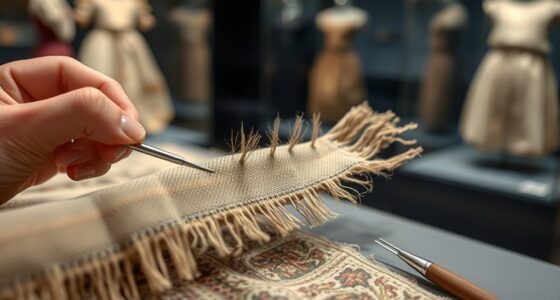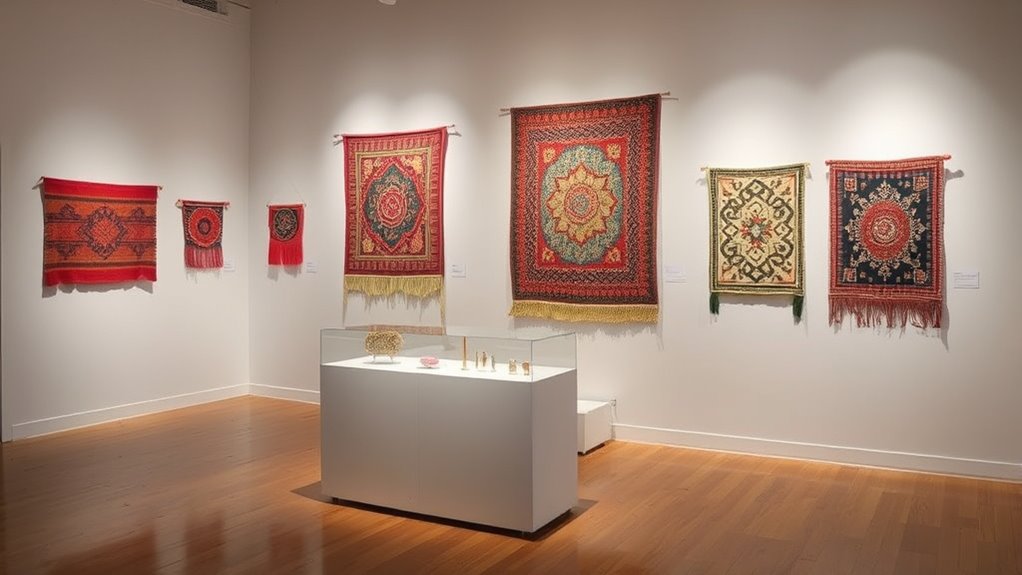

To create gallery-ready textile art displays, focus on strategic lighting that highlights texture and color without causing glare. Use adjustable, warm-toned lighting and choose framing options that complement your piece’s style, whether minimalist or ornate. Mount textiles securely on sturdy frames or in shadow boxes to showcase craftsmanship and protect delicate fabrics. Thoughtful placement and cohesive presentation will draw viewers in and elevate your work’s impact; explore further to discover ways to perfect your display.
Key Takeaways
- Use adjustable, focused lighting to highlight textures and colors, avoiding glare or harsh shadows.
- Select framing that complements the artwork’s aesthetic, from minimalist to ornate styles, to enhance its visual impact.
- Mount textiles professionally on sturdy frames or within shadow boxes to showcase craftsmanship and protect delicate materials.
- Ensure consistent, controlled artificial lighting to accurately represent colors and details throughout the display.
- Curate a cohesive presentation by thoughtfully combining lighting, framing, and mounting to communicate the artwork’s story effectively.
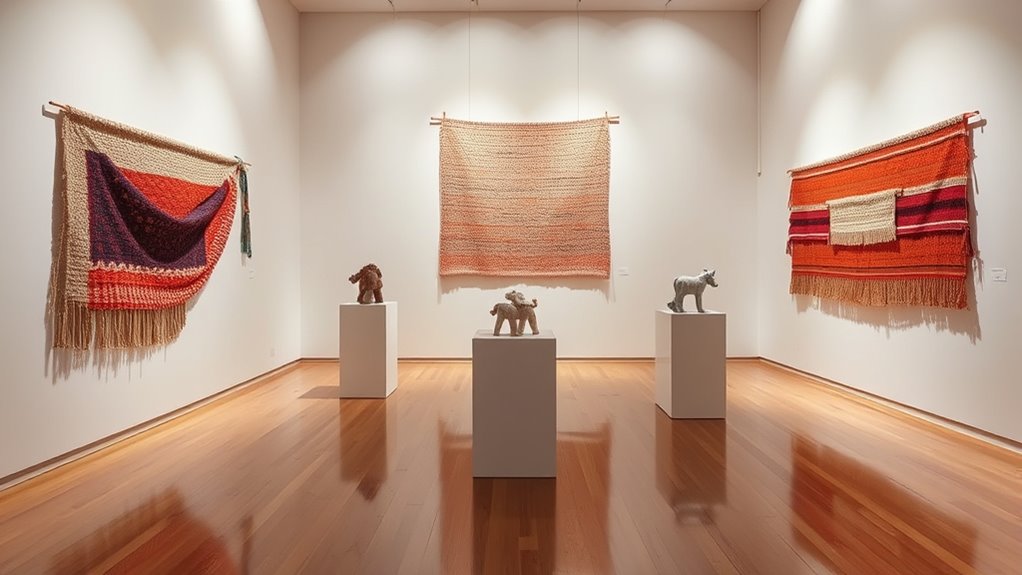
Have you ever wondered how textile art transforms simple fibers into mesmerizing visual displays? When it’s time to showcase your work in a gallery setting, presentation becomes just as important as the piece itself. To make your textile art stand out and communicate your vision effectively, you need to pay close attention to how it’s lit and framed. These elements can elevate your display from a simple hang to a professional, gallery-ready presentation.
Lighting techniques play a vital role in highlighting the texture, color, and intricate details of your textile art. Natural light can bring warmth and authenticity, but it’s often inconsistent and hard to control. Instead, opt for adjustable, focused lighting such as track lights or spotlights. These allow you to direct light precisely where you want it, emphasizing specific areas or textures that might otherwise go unnoticed. Using warm-toned bulbs can enhance the richness of your fibers, while cooler lights can bring out subtle details. It’s essential to avoid harsh, direct lighting that causes glare or shadows, which can distract viewers or obscure details. Dimmable lights give you flexibility, enabling you to adjust the ambiance to complement the mood of each piece. Experimenting with different angles and intensities ensures your textile art is viewed in the best possible light, revealing its depth and craftsmanship. Understanding lighting techniques can greatly improve the visual impact of your display.
Adjust lighting with focus, warmth, and flexibility to showcase textile textures and details beautifully.
Framing options are equally important in creating a polished, gallery-ready presentation. Choosing the right frame depends on the style and message of your artwork, but the goal is to complement without overpowering. Slim, minimalist frames work well for contemporary pieces, drawing focus to the textile itself. For more traditional or complex works, deeper, ornate frames can add a sense of importance and tradition. Consider also the mounting method—stretching textiles over a sturdy frame creates a clean, professional look, especially if the piece is meant to be hung flat. Alternatively, you can use specialized display cases or shadow boxes for three-dimensional or delicate textiles, protecting them while allowing viewers to appreciate the craftsmanship from all angles. The frame style and mounting should enhance your piece’s aesthetic, not distract from it. Keep in mind that the color of the frame should harmonize with your textile’s palette, either blending seamlessly or creating a striking contrast.
Ultimately, the goal is to create a cohesive presentation that showcases your textile art’s unique qualities. Thoughtful lighting and framing choices not only highlight your craftsmanship but also communicate the story or emotion behind each piece. When these elements are carefully curated, your artwork will command attention and earn the recognition it deserves in any gallery setting.

Hard-Wired Picture Lights 23.62 Inch Dimmable LED Wall Art Lighting Modern Brass Gallery Light Poster Lights Adjustable Swing Arm Picture Frame Light For Display Art Work,14W,2700K, Warm White
Dimmable Picture Lights: The gallery art light for paintings is dimmable with 10%-100% dimming range. The lights for…
As an affiliate, we earn on qualifying purchases.
As an affiliate, we earn on qualifying purchases.
Frequently Asked Questions
How Do I Choose the Best Lighting for Textile Art?
You should choose lighting that enhances fiber textures and complements the artwork’s colors. Use adjustable, soft LED lights with a warm or neutral color temperature to highlight the textile’s intricate details without causing glare or fading. Position lights at angles that cast gentle shadows, emphasizing textures and depth. Avoid harsh or overly bright lighting, as it can distort colors and diminish the tactile qualities of your textile art.
What Are Common Framing Options for Textile Artworks?
You might be surprised by the framing options for textile artworks. Common choices include fabric mounting on foam core or stretcher frames, which preserve texture and shape. Frameless displays, like shadow boxes, create a sleek look. Alternatively, traditional frames with glass or acrylic protect the art while showcasing it. Selecting the right framing materials depends on your piece’s fabric and desired aesthetic—each option adds a unique touch to your presentation.
How Can I Prevent Damage During Transportation?
To prevent damage during transportation, you should take careful transportation precautions by using high-quality packing materials like acid-free tissue, bubble wrap, and sturdy boxes. Guarantee your textile artwork is fully supported and padded, avoiding sharp edges or heavy stacking. Secure it properly in a climate-controlled environment, and clearly label the package as fragile. These steps help protect your textile art from tears, creases, and other damage en route.
Are There Specific Cleaning Methods for Textile Art?
Sure, because your textile art definitely loves a spa day. When it comes to cleaning techniques, use gentle vacuuming with a low-suction nozzle or light surface dusting. Avoid water or chemicals unless you’re a textile expert, as improper cleaning can ruin preservation methods. Always test a small area first and seek professional advice for stubborn stains. Your masterpiece will thank you with long-lasting beauty and minimal damage.
How Do I Create an Engaging Narrative With My Display?
You create an engaging narrative by using storytelling techniques that draw viewers in. Incorporate thematic curation to connect your textile pieces around a central idea, making the display cohesive and compelling. Use labels, titles, and signage strategically to highlight key stories or concepts. Arrange your textiles thoughtfully, guiding viewers through the narrative visually. This approach invites viewers to connect emotionally and intellectually with your work, making your display memorable.

Americanflat 11×14 Shadow Box Frame with Shatter-Resistant Glass – Silhouette Collection – Large Shadow Box Display Case for Tabletop and Wall Display – Black with Soft Felt Back
Elevate your memories with a display that’s anything but ordinary. Featuring a classic black finish and soft felt…
As an affiliate, we earn on qualifying purchases.
As an affiliate, we earn on qualifying purchases.
Conclusion
Now that you know how to showcase your textile art, remember that presentation matters just as much as the piece itself. Think of your display as a window into your creativity—inviting yet professional. While intricate stitching and vibrant colors draw attention, a clean, thoughtfully curated space keeps the focus on your work. Ultimately, balancing artistry with simplicity creates a gallery-worthy exhibit that speaks volumes without saying a word.
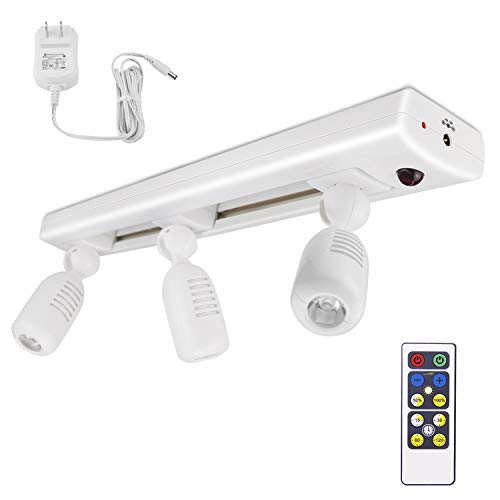
BIGLIGHT LED Track Light, Dimmable Accent Lighting with Rotatable Heads, Plug in Spotlight with Remote for Lighting up Kitchen Sink Cabinet Gallery Picture Bathroom Basement Artwork
Remote Controlled & Super Bright – With the provided handy remote, you can control the track light with…
As an affiliate, we earn on qualifying purchases.
As an affiliate, we earn on qualifying purchases.

M&T Displays Double Sided Stretch Frame 22X28 inch Wall Mounting and Hanging Silver Aluminum Reusable Advertising Announcement Messages Brochure Paper Sign Holder Portrait Landscape Indoor
STRETCH HOLDER: Stretch Frame help you reach your customers and workers to display upcoming events, and announcements you…
As an affiliate, we earn on qualifying purchases.
As an affiliate, we earn on qualifying purchases.