
Famous tapestries like the Bayeux Tapestry and the Unicorn Fantasies tell compelling stories of history, religion, and legend. They use intricate embroidery, vibrant colors, and symbolic imagery to depict events, moral lessons, and cultural values. They often served as visual records and conveyed messages to both literate and illiterate viewers. If you keep exploring, you’ll discover the fascinating stories these masterpieces have preserved for centuries.
Key Takeaways
- The Bayeux Tapestry narrates the Norman conquest of England in 1066 through detailed embroidery.
- The Hunt of the Unicorn tapestries depict medieval courtly life and symbolize themes of love and nature.
- The Unicorn Tapestries illustrate the mythical creature’s symbolism and its connection to hunting and courtly pursuits.
- The Apocalypse Tapestry from France visualizes the biblical Last Judgment, emphasizing morality and divine justice.
- The Westminster Abbey Tapestries portray historical and religious scenes, reinforcing cultural and spiritual narratives.
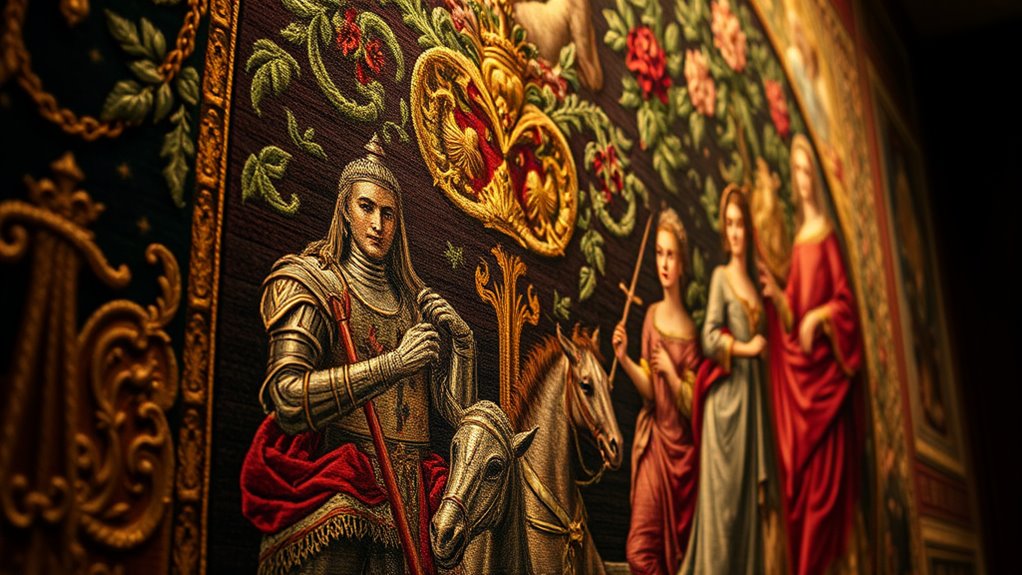
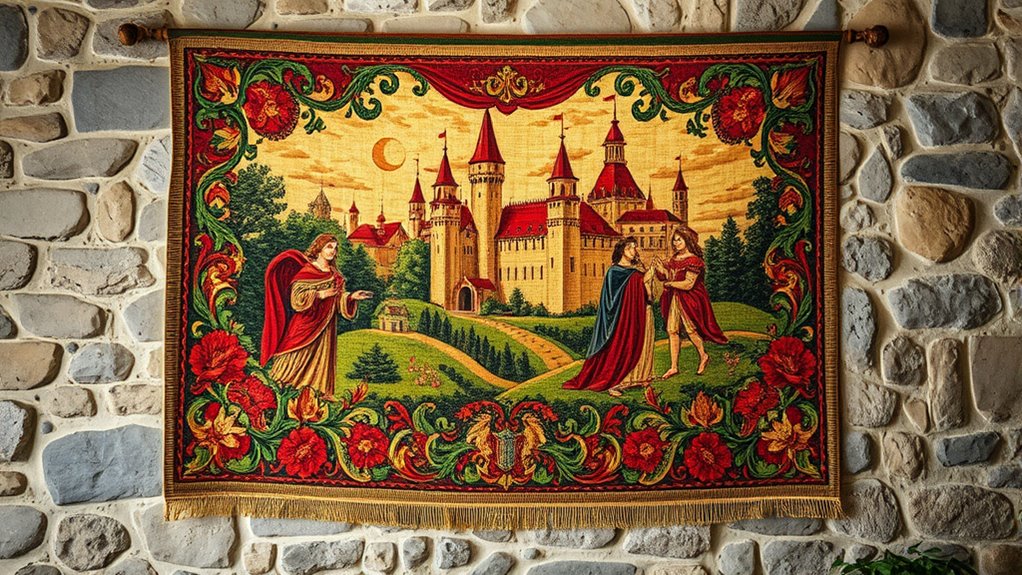
Throughout history, tapestries have served as both artistic masterpieces and functional decorations, transforming walls into storytelling canvases. When you study these woven artworks, you quickly realize they embody the pinnacle of medieval craftsmanship. Every thread and knot reflects the patience and skill of artisans who dedicated themselves to creating intricate designs that could withstand the test of time. These craftsmen used their expertise to weave scenes that conveyed stories, religious beliefs, or noble status, often functioning as visual records of their era. The detailed craftsmanship involved in producing such tapestries required a keen eye for design and a mastery of textile techniques, ensuring that each piece was both durable and breathtaking. As you examine them, you notice how the artistry extends beyond mere decoration; it’s a language of textile symbolism, where every color, pattern, and motif carries meaning.
Tapestries showcase medieval craftsmanship through intricate designs and symbolic storytelling.
Medieval tapestries often depicted biblical stories, chivalric legends, or historical events, serving as visual sermons or lessons for viewers. The vibrant colors and complex imagery weren’t just for beauty—they conveyed moral messages or reinforced social hierarchies. For instance, a tapestry might show a saint’s miracle or a knight’s valor, with symbols embedded within the scenes that only the educated could interpret fully. These symbols could include specific animals, objects, or gestures, each carrying its own significance. This use of textile symbolism allowed tapestries to function as more than just wall hangings; they became visual narratives that communicated ideas across generations, even to those who might not have been literate.
You’ll also find that medieval craftsmanship involved meticulous planning and execution. Artisans carefully selected threads, often using natural dyes to achieve vivid hues that would endure for centuries. The process was labor-intensive, involving weaving patterns that required both artistic talent and technical precision. The resulting tapestries served dual purposes: they decorated large halls or chambers and provided insulation, making them practical as well as decorative. Over time, these works of art became treasured family heirlooms, passed down through generations, each adding new layers of meaning and history. Moreover, understanding the textile techniques used in their creation deepens appreciation for these masterpieces, highlighting the combination of artistry and craftsmanship involved. When you appreciate a famous tapestry, you’re not just admiring its visual appeal—you’re engaging with a rich tradition of craftsmanship and symbolic storytelling. These textiles encapsulate the values, beliefs, and histories of the cultures that produced them, making them timeless artifacts that continue to speak to us across centuries.
Top picks for "famou tapestry story"
Open Amazon search results for this keyword.
As an affiliate, we earn on qualifying purchases.
Frequently Asked Questions
How Are Tapestries Preserved Over Centuries?
You can preserve tapestries over centuries by applying careful restoration techniques that stabilize the fibers and repair damage. Proper display preservation involves controlling light, humidity, and temperature to prevent deterioration. Regular inspections help detect issues early, ensuring they remain intact. When needed, conservation experts perform restoration techniques to restore the tapestry’s original beauty, allowing future generations to appreciate these historic artworks while maintaining their structural integrity.
What Materials Are Used in Ancient Tapestry Weaving?
You might think ancient tapestry weaving used simple materials, but it’s a marvel of craftsmanship! They used luxurious textile fibers like wool, silk, and linen, carefully chosen for durability. Bright dyes, made with complex dye techniques, brought vibrant colors that still dazzle today. These materials, combined with expert weaving, create tapestries that have survived centuries, telling stories of artistry, culture, and history that continue to captivate you.
Who Were the Master Weavers Behind Famous Tapestries?
You’ll find that master weavers behind famous tapestries used intricate techniques, showcasing their exceptional craftsmanship stories. They honed their skills through generations, blending traditional weaver techniques with innovative methods. These artisans carefully select materials, master dyeing processes, and weaving patterns to create masterpieces that tell stories through their craftsmanship. Their dedication and artistry made these tapestries timeless, allowing you to appreciate the rich history and skill embedded in each woven piece.
How Do Tapestries Influence Modern Art and Design?
You see tapestries inspiring modern art and design by blending textile innovation with cultural storytelling. For example, a contemporary artist might create a large fabric installation that uses innovative materials to depict a historical event, much like ancient tapestries did. This approach influences interior decor, fashion, and multimedia art, encouraging creators to explore storytelling through textiles. Your engagement with these elements helps keep this rich tradition alive and evolving in today’s creative world.
What Symbols Are Commonly Found in Historic Tapestry Motifs?
You’ll find symbolic motifs like floral patterns, animals, and mythical creatures in historic tapestry designs. These symbols often represent virtues, power, or spiritual beliefs. Mythological representations, such as gods, heroes, and legendary beasts, frequently appear to convey stories or moral lessons. By incorporating these symbols, tapestries communicate complex ideas visually, allowing viewers to interpret meanings rooted in cultural values and storytelling traditions of the time.
Conclusion
You might think tapestries are just old decorations, but they’re stories woven into fabric, capturing history, legend, and artistry. Don’t dismiss their significance—these intricate works reveal truths about the past and inspire reflection today. By appreciating their craftsmanship, you connect with the voices of those who created them, understanding that art isn’t just for display but a powerful way to preserve stories for generations to come. Embrace their legacy; it’s richer than you imagined.