To teach textile art to children in a fun way, start with simple dyeing projects using natural ingredients like turmeric or beetroot to create vibrant fabrics. Add embellishments with stitches, beads, or fabric paints to boost creativity. Introduce easy sewing techniques, encouraging patience and self-expression. Creating a supportive environment where kids can experiment and learn from mistakes makes the process enjoyable. Keep exploring more ideas to inspire even greater inspiration and confidence in young textile artists.
Key Takeaways
- Use natural dyes like turmeric, beetroot, or spinach to create eco-friendly fabric dyeing projects that promote sustainability.
- Incorporate simple sewing and embellishment techniques, such as stitches and appliqué, to enhance dyed textiles and develop fine motor skills.
- Foster a supportive environment that encourages experimentation, patience, and learning from mistakes through engaging storytelling and themed activities.
- Design hands-on activities that teach color mixing, pattern making, and dye absorption science to stimulate curiosity and creativity.
- Provide a variety of materials and tools, emphasizing fun and exploration over perfection to inspire confidence in young textile artists.
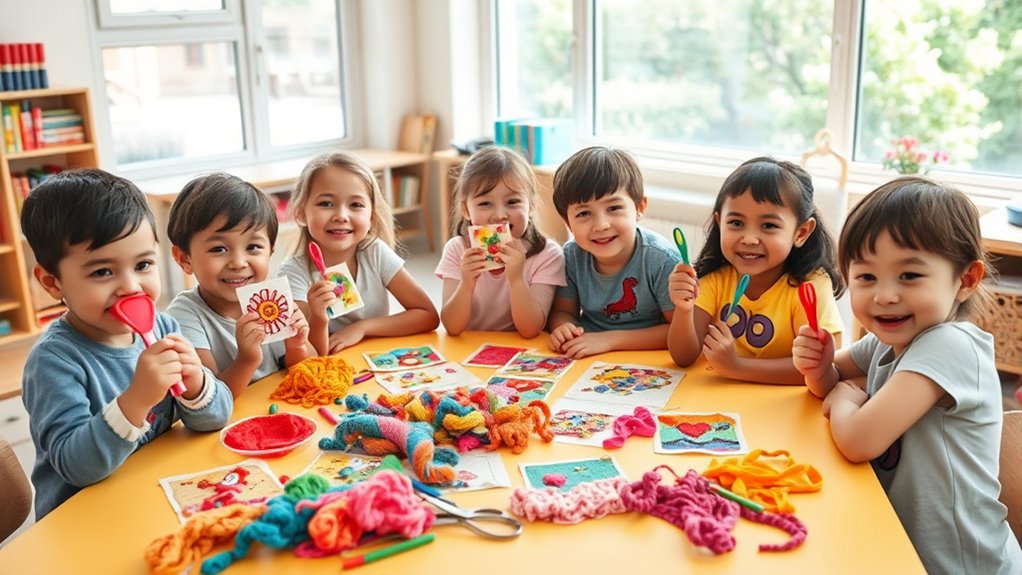
Teaching textile art to children opens up a world of creativity and hands-on learning. It’s an exciting way to introduce young minds to the magic of creating with fabric, colors, and textures. One of the most engaging projects is fiber dyeing, where children can experiment with different dyes to transform plain fabrics into vibrant, personalized pieces. You can set up simple dyeing stations using eco-friendly dyes or natural ingredients like turmeric, beetroot, or spinach. As kids dip, fold, and twist their fabrics, they learn about color mixing, pattern making, and the science behind dye absorption. Fiber dyeing isn’t just fun; it’s an educational experience that encourages patience, observation, and experimentation. Plus, it results in beautiful, one-of-a-kind textiles they’ll be proud of.
Once the fabrics are dyed and dry, the next step is adding fabric embellishments. This part of the project allows children to take their creations further by decorating with stitches, appliqué, beads, or fabric paints. Encouraging kids to think about how different embellishments can enhance their textile art fosters their creativity and attention to detail. For example, they might sew on colorful buttons or add embroidered flowers to their dyed fabric. These embellishments aren’t just decorative—they also help develop fine motor skills and hand-eye coordination. You can introduce simple techniques like running stitches or French knots, gradually building up to more complex designs as their confidence grows. The key is to keep the process playful and stress-free, emphasizing self-expression over perfection.
Throughout these projects, it’s essential to provide a supportive environment where children feel free to explore and make mistakes. Offer a variety of textiles, dyes, and embellishments so they can experiment and discover what they enjoy most. Remember, the goal is to inspire a love for textile arts and teach basic skills in a way that’s engaging and accessible. You might also incorporate storytelling or themes into the projects, like designing fabric for a favorite story or holiday, which gives additional meaning to their work. As they see their ideas come to life through fiber dyeing and embellishments, they gain confidence and pride in their craftsmanship. Ultimately, teaching textile art to children isn’t just about making pretty things; it’s about fostering their imagination, patience, and technical skills in a fun, hands-on way that leaves a lasting impression.

Natural Earth Paint Egg Dye Kit – Eco-Friendly, Non-Toxic Easter Egg Coloring for Kids & Adults – 4 Food-Safe Dyes, No Boiling Needed, Mixable Colors, Vegan & Sustainable
Eco-Friendly & Non-Toxic – Made from plant-based dyes including spinach, purple carrot, turmeric, beet, and red cabbage. Safe…
As an affiliate, we earn on qualifying purchases.
As an affiliate, we earn on qualifying purchases.
Frequently Asked Questions
What Safety Precautions Should I Take During Textile Projects?
You should always wear safety gear like goggles and gloves to protect your eyes and hands during textile projects. Keep scissors, needles, and other sharp tools away from children when not in use, and follow supervision guidelines closely. Make sure kids understand safe handling practices and work in a well-lit, clutter-free area. Staying attentive and setting clear safety rules helps prevent accidents and keeps everyone safe while creating textile art.
How Can I Adapt Projects for Children With Disabilities?
Think of your project as a garden where every flower blooms differently. To nurture all children, use adaptive techniques like textured fabrics or tactile materials, and include inclusive tools such as ergonomic scissors or easy-grip needles. You can modify projects by simplifying steps or offering alternative ways to participate. By embracing these strategies, you guarantee every child can enjoy creating and feels valued in your textile art garden.
What Are Eco-Friendly Textile Art Materials Suitable for Kids?
You should choose eco-friendly textile art materials like recycled fabrics and natural dyes for kids. Recycled fabrics reduce waste and teach sustainability, while natural dyes made from plants and fruits are safe and non-toxic. These materials are easy to work with, inspiring children to create beautiful projects while caring for the environment. By using eco-friendly options, you make textile art fun, safe, and environmentally responsible for young learners.
How Can I Encourage Creativity Without Strict Instructions?
Remember, “Let the chips fall where they may.” To encourage creativity without strict instructions, focus on open-ended exploration and encouraging experimentation. Provide a variety of materials and tools, then step back and let kids lead their projects. Ask open questions, celebrate unique ideas, and avoid limiting their choices. This approach fosters confidence, imagination, and a love for textile art, making the process as enjoyable as the finished piece.
What Are Simple Ways to Introduce Weaving Techniques to Children?
You can introduce weaving to children through simple weaving projects using a colorful loom. Start by showing them how to create basic weaves, like over and under patterns, on the loom. Let their creativity shine by choosing bright yarns or ribbons for their projects. Keep instructions clear and encourage experimentation, so they develop confidence and enjoy the process of exploring textile art with fun, easy techniques.

EZCRA Beginner Needlepoint Cross Stitch Kit for Kids Ages 5-8 – Easy Embroidery Starter Set with Jumbo Plastic Needles, Pre-Printed Patterns, Instructions – DIY Arts & Crafts Gift for Girls & Boys
💛Perfect for Kids💛Unleash your child's creativity with our Mess Free Animal Cross Sitch Kit. Our cross stitch kit…
As an affiliate, we earn on qualifying purchases.
As an affiliate, we earn on qualifying purchases.
Conclusion
Teaching textile art to children is a rewarding experience that sparks creativity and builds skills. Some might worry it’s too messy or difficult, but with simple projects and patience, you’ll see their confidence grow. Remember, the focus is on fun and self-expression, not perfection. Embrace their unique ideas, and you’ll create a joyful learning environment. So go ahead—dive in and enjoy the colorful, tactile world of textile art with your kids!
260 Pieces Colorful Glitter Foam Stickers Self Adhesive Stars Mini Heart Shapes Glitter Stickers, Kid's Arts Craft Supplies Greeting Cards Home Decoration Stars&Heart Shapes
The Bubble stickers of the stars and hearts are very nice. I put them on my beloved table,…
As an affiliate, we earn on qualifying purchases.
As an affiliate, we earn on qualifying purchases.

FTBox Crafts Gift for Girls, DIY 3D Felt Flowers Wooden Vase Picture Frame Painting Kit, Arts and Crafts Project for Kids Age 6 7 8 9 10 11 12 Years Old (Felt Flowers)
ALL-IN-ONE KIDS ART SET FOR GIRLS: This craft kit for girls ages 6-8-12 includes everything needed to create…
As an affiliate, we earn on qualifying purchases.
As an affiliate, we earn on qualifying purchases.