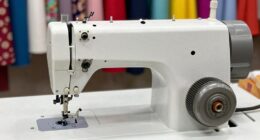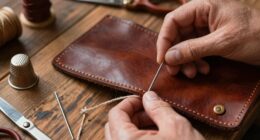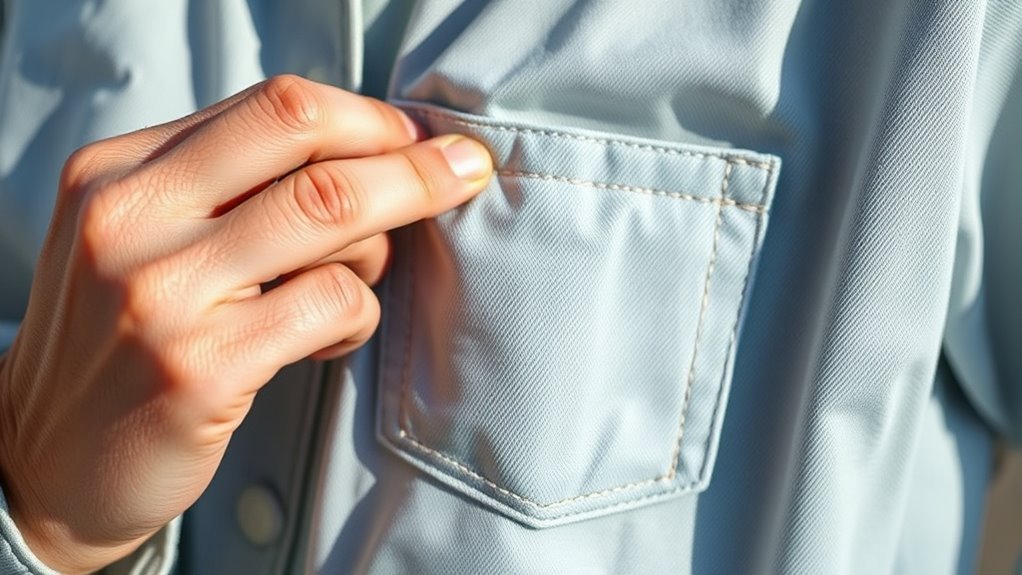

To add pockets to your clothes easily, start by choosing a fabric that matches or complements your garment, then mark the pocket placement with chalk or pins before cutting. Cut pocket pieces with seam allowances, reinforce the openings with interfacing, and sew them along the edges. Finish by pressing seams and topstitching for durability. With simple steps and careful attention, you can customize your clothes stylishly—continue for detailed tips and techniques to master the process.
Key Takeaways
- Choose a fabric that matches or complements your garment for seamless integration.
- Mark pocket placement accurately using tailor’s chalk or pins before cutting.
- Cut pocket pieces with seam allowances and reinforce openings with interfacing or fabric strips.
- Sew pocket edges with straight stitches, press seams, and add topstitching for durability and neatness.
- Personalize your garment by selecting fabric and placement to enhance both style and functionality.
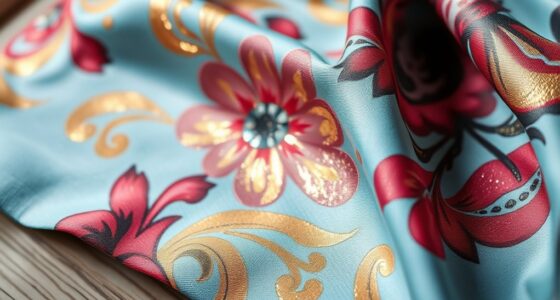
Adding pockets to your clothes is a simple way to boost their functionality and tailor them to your needs. Whether you’re customizing a pair of jeans, a jacket, or a dress, pockets can make your garments more practical and personalized. The first step is choosing the right fabric. You want a fabric that matches or complements your existing material, so it doesn’t look out of place. For example, if you’re working with denim, stick with a sturdy denim or twill for your pocket fabric. If you’re adding pockets to a lightweight blouse, opt for a softer fabric like cotton or linen. This ensures your pockets are durable without compromising the overall look of your garment.
Choose matching or complementary fabrics for durable, seamless pockets that enhance your garment’s look and functionality.
Once you’ve selected your fabric, consider the pocket placement carefully. Think about how you’ll use the pockets and where they’ll be most accessible. For pants, pockets are usually placed along the side seams or at the hips, while for shirts or dresses, they might go on the front or at the chest level. Keep in mind the natural shape of your garment and try to position the pockets where they won’t interfere with seams or design lines. Mark the placement with tailor’s chalk or pins before you cut. Precise placement not only improves the look but also guarantees comfort and functionality.
When it’s time to cut your pocket pieces, remember to add seam allowances—typically about 1/4 to 1/2 inch—so you have enough fabric to sew the edges securely. Cut out your pocket pieces according to your pattern or measurements, keeping symmetry in mind. To reinforce the pocket opening, consider adding a small strip of interfacing or reinforcing fabric along the top edge. This helps prevent stretching or tearing over time and maintains a clean finish. Understanding fabric durability can help you select the best materials for long-lasting pockets.
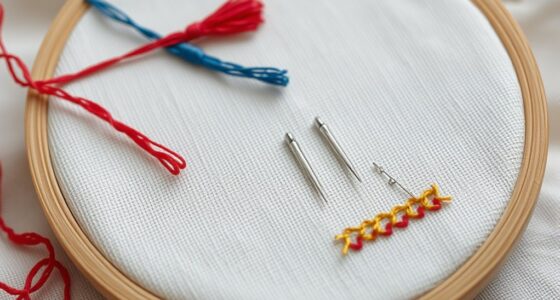
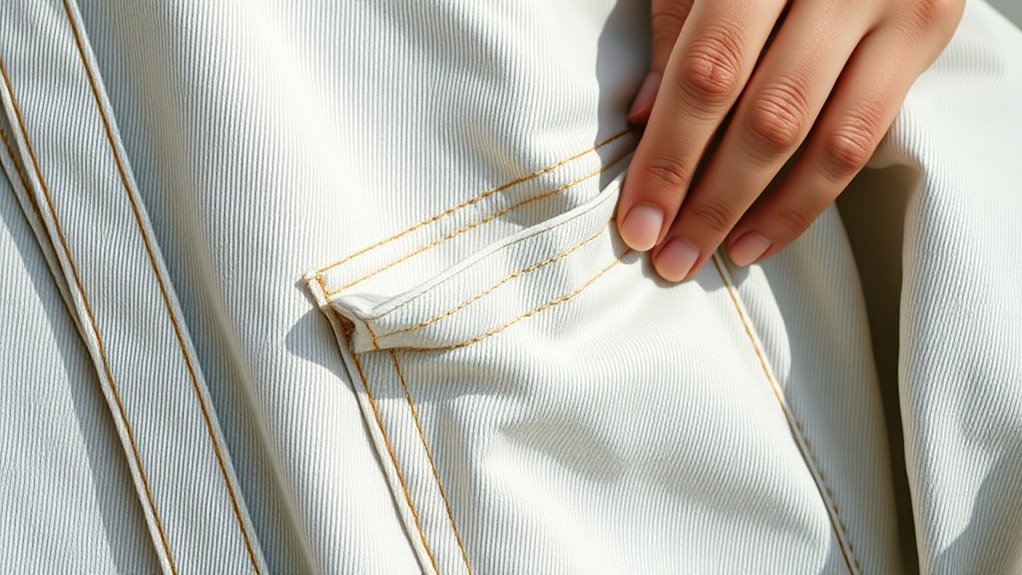
Sewing the pockets involves attaching the pocket pieces to your garment along the edges, then folding and sewing the top hem for a neat finish. Use a straight stitch for most of the pocket and a zigzag stitch if you want extra reinforcement around the edges. Make sure to press your seams flat as you go, which gives your pockets a professional look and makes sewing the rest of the garment easier. Finishing touches like topstitching around the pocket edges not only secure the seams but also add a decorative element.
Adding pockets isn’t just functional; it’s a chance to get creative with fabric choices and placement, making your clothes uniquely suited to your lifestyle. With a few simple steps, you can transform basic garments into customized pieces that serve you better and look great.
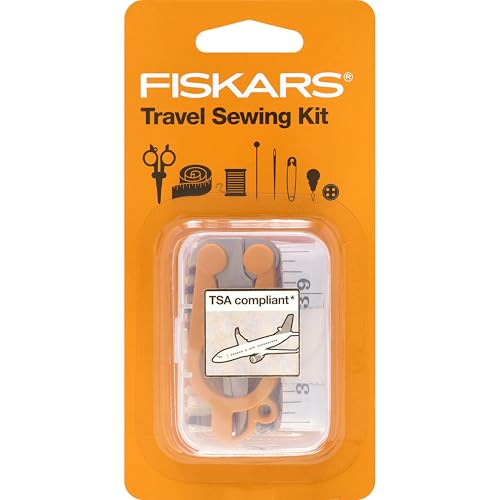
Fiskars Sewing Kit, Gifts for Mom, 27-Piece Travel Sewing Set with Case, Orange
TRAVEL SEWING SET: TSA-compliant sewing set featuring folding travel scissors with durable, stainless steel blades, 10 colored threads…
As an affiliate, we earn on qualifying purchases.
As an affiliate, we earn on qualifying purchases.
Frequently Asked Questions
Can I Add Pockets to Stretchy or Elastic Fabrics?
Yes, you can add pockets to stretchy or elastic fabrics. Use sewing techniques that accommodate fabric compatibility by choosing stretch stitches or a zigzag stitch to allow flexibility. Reinforce pocket openings with interfacing or stay tape to prevent stretching or tearing. Carefully cut and sew your pocket pieces, ensuring they stretch with the fabric. This approach keeps your pockets secure while maintaining the garment’s comfort and elasticity.
What Type of Pocket Is Best for Lightweight Fabrics?
Think of lightweight fabrics as delicate whispers, so choose pocket styles that won’t shout for attention. Welt pockets or small patch pockets work best—they’re subtle and sleek, blending seamlessly into your fabric’s gentle nature. Use lightweight fabrics like chiffon or linen for a breezy feel, and opt for carefully sewn, flat pockets that won’t weigh down or distort your fabric’s airy charm. Keep it simple and elegant.
How Do I Reinforce Pockets for Heavy Use?
To reinforce pockets for heavy use, you should add pocket reinforcement and use heavy-duty stitches. Start by sewing a double or triple row of stitches along the pocket edges and stress points, like corners and the opening. Consider adding extra fabric or interfacing behind the pocket area for added durability. These steps guarantee your pockets withstand frequent use and heavy loads, keeping them secure and long-lasting.
Can I Add Pockets to Already Finished Garments?
You can definitely add pockets to finished garments; think of it as giving your clothes a new heartbeat. Carefully choose your pocket placement and mark where you’d like them. Use precise sewing techniques, like topstitching or invisible stitches, to secure the edges seamlessly. With patience and a steady hand, you’ll transform your worn-in piece into a personalized treasure chest, ready to hold whatever you desire.
What Tools Are Essential for Pocket Sewing?
You’ll need a sewing machine, pins, scissors, and a measuring tape for pocket sewing. Keep your sewing machine well-maintained to guarantee smooth stitching, and choose fabric that matches or complements your garment. Fabric selection tips include selecting sturdy, breathable fabrics and pre-washing them. Use pins to hold your pocket pieces in place, and scissors to cut accurately. These tools and tips help you create neat, durable pockets efficiently.

PLANTIONAL Medium Weight White Iron-On Non-Woven Fusible Interfacing: 11.6" x 30yd Medium Weight Non-Woven Interfacing Iron On Polyester Single-Sided Interfacing for DIY Crafts Supplies
【Durable Non-Woven Material】- Made from high-quality polyester, this non-woven interfacing provides excellent stability and support for a variety…
As an affiliate, we earn on qualifying purchases.
As an affiliate, we earn on qualifying purchases.
Conclusion
Now that you’ve learned how to add pockets, your clothes will never be the same—literally! With a little effort and creativity, you transform simple garments into personalized pieces bursting with functionality. Think of this skill as your secret weapon, turning ordinary into extraordinary. So go ahead, sew with confidence, and let your wardrobe tell a story as unique as you are—because in the end, the only limit is your imagination.
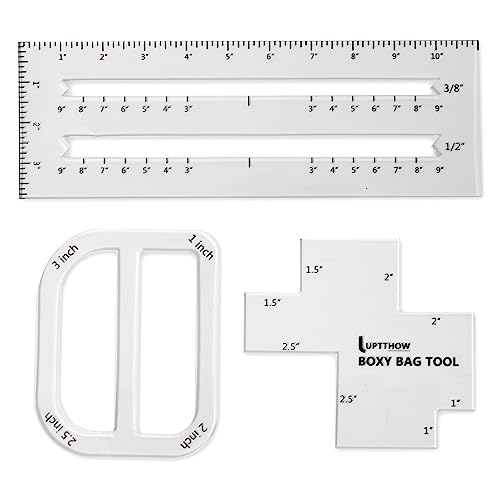
UPTTHOW 3Pcs Boxy Bag Making Templates Notion for Beginners, Clear Acrylic Sewing Tools Set with Boxed Bag, Curve Bag, Zip Pocket
Material: 1/4” acrylic, two colours
As an affiliate, we earn on qualifying purchases.
As an affiliate, we earn on qualifying purchases.

Pacific Arc Pocket Master Template Guide, Featuring Perfect Circles, Hexagons, Triangles, and Squares
COMPREHENSIVE TEMPLATE – This template contains many standard shapes including circles, hexagons, triangles, squares, and other symbols. featuring…
As an affiliate, we earn on qualifying purchases.
As an affiliate, we earn on qualifying purchases.