Crochet uses a single hook to create textured, often bulkier stitches, making it great for intricate motifs and quick projects. Knitting involves two needles for producing smooth, flexible fabrics, ideal for garments and seamless pieces. Your choice depends on the look and feel you want—crochet’s bold textures or knitting’s sleek finish. Understanding these differences can help you pick the right technique for your project. Keep going to uncover more about how these crafts compare.
Key Takeaways
- Crochet uses a single, larger hook for textured, bulkier stitches, while knitting employs two pointed needles for smoother, more flexible fabric.
- Crochet creates dense, often more textured items, whereas knitting produces lightweight, drapey fabrics suited for clothing.
- Crochet is generally easier for beginners due to its straightforward motion, while knitting requires coordination with two needles.
- Different yarn types are better suited for each craft: thick yarns for crochet and fine yarns for knitting.
- Tool material and design influence stitch tension, ease, and project style in both crochet and knitting.
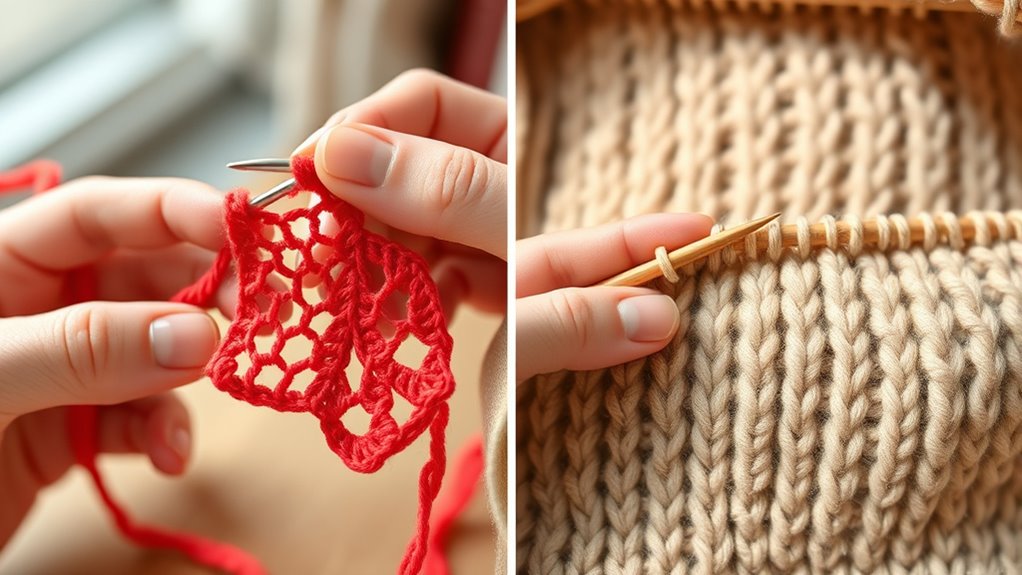
When choosing between crochet and knitting, understanding their differences can help you decide which craft suits your style and project needs. A key aspect to contemplate is the variety of yarn types each technique works best with. Crochet generally handles thicker, textured yarns more easily, making it ideal for projects like plush toys, blankets, or statement accessories. Knitting, on the other hand, excels with finer yarns, producing a smooth, flexible fabric suitable for clothing and lightweight items. Different yarn types can influence the final look and feel of your project, so knowing which yarns are compatible with each craft prevents frustration and helps you achieve the desired result.
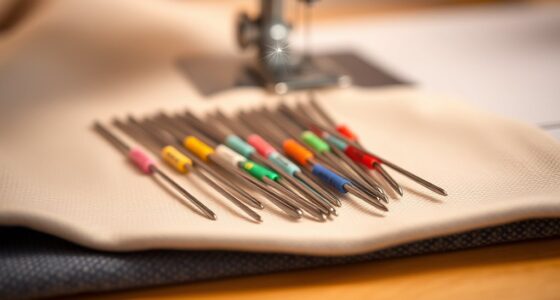
Another important factor is the tool differences between crochet and knitting. Crochet uses a single hook, which can be made from metal, plastic, or wood, and this tool is often larger and sturdier. The hook’s shape allows you to manipulate the yarn in a way that creates tight, textured stitches with less effort. Knitting, however, involves two long needles, usually pointed at the ends, and they come in various materials like bamboo, aluminum, or wood. These needles are often slimmer and more delicate, providing a different tactile experience. The tool differences impact not only the technique but also the speed and ease of working on your project. Crochet’s single hook can be easier for beginners to pick up because of its straightforward motion, whereas knitting’s two-needle system offers a different rhythm and may require more coordination.
Crochet uses a sturdy single hook, while knitting involves two delicate needles, affecting technique and project style.
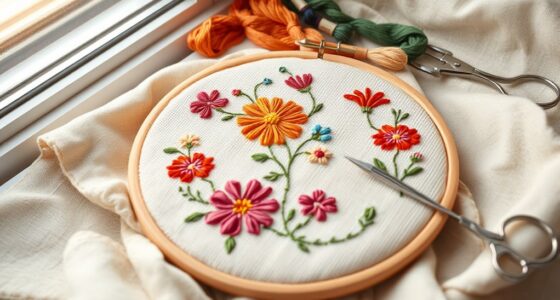
You’ll find that the tools also influence how you manipulate your yarn, affecting stitch size and tension. Crochet hooks tend to produce bulkier stitches, giving your project a more textured appearance, while knitting needles allow for finer, more uniform stitches. The choice of tools can also impact the types of projects you undertake; crochet’s tools are more versatile for creating amigurumi or intricate motifs, while knitting tools are preferred for garments and seamless fabrics. Additionally, the tools’ weight and grip can affect your comfort during long sessions, so trying out different materials and sizes can help you find what works best for you.
Ultimately, understanding the yarn types and tool differences helps you make an informed decision. It allows you to align your project goals with the craft’s unique characteristics, whether you prefer the chunky, textured look of crochet or the sleek, drapey fabric of knitting. Recognizing these distinctions ensures you can choose the right technique and tools to bring your creative ideas to life efficiently and enjoyably.
Top picks for "crochet knitt differenc"
Open Amazon search results for this keyword.
As an affiliate, we earn on qualifying purchases.
Frequently Asked Questions
Which Craft Is Faster: Crochet or Knitting?
Crochet is generally faster than knitting because of its technique differences. With crochet, you work with a single hook, creating entire stitches more quickly, and you often complete projects faster. Knitting involves two needles and more intricate movements, which can slow you down. Your speed depends on your skill level, but overall, the speed comparison favors crochet for quicker project completion.
Can I Combine Crochet and Knitting in One Project?
Absolutely, you can combine crochet and knitting in one project, and it’s like creating a masterpiece with two artistic worlds! By mixing techniques, you open endless design possibilities and add texture that’s simply unbeatable. Whether you’re integrating stitches or switching between the two, this project integration makes your craft uniquely yours. So go ahead—blend crochet and knitting to craft something stunning and totally personalized!
What Are the Best Beginner-Friendly Tools for Each Craft?
You should start with beginner-friendly tools like starter kits that include all the essentials for crochet and knitting. Look for ergonomic tools, such as comfortable hooks and needles, to reduce hand fatigue. These kits often come with clear instructions, making it easier for you to learn. Investing in ergonomic tools helps you practice longer and improves your technique, ensuring a smoother and more enjoyable experience as you master each craft.
How Do I Choose Between Crochet and Knitting for a Project?
Deciding between crochet and knitting depends on your project’s complexity and fiber texture. If you prefer precise, sturdy stitches for intricate designs, choose crochet. For airy, flexible fabrics, knitting might be your best bet. Consider fiber texture too; thicker yarns suit knitting, while thinner, textured fibers work well with crochet. Think about your skill level and desired finished look, then pick the craft that sparks your passion and suits your project needs.
Are There Specific Yarn Types Better Suited for Crochet or Knitting?
You’ll want to choose yarn based on fiber texture and project durability. For crochet, thicker or more textured yarns like bulky wool work well, giving your projects a sturdy feel. Knitting often benefits from smoother, finer yarns like cotton or silk, which create a flexible, durable fabric. Consider the end use—if you need something long-lasting, opt for fibers that enhance durability, whether in crochet or knitting.
Conclusion
So, now you’re armed with the great debate: crochet or knitting? Whichever you pick, just remember, one’s a bit faster, the other a bit more delicate—kind of like choosing between a cheetah and a ballerina. Either way, you’ll end up with a cozy masterpiece, and isn’t that what really matters? So go ahead, pick your side, and pretend you’re the next knitting or crochet superstar—just don’t forget to enjoy the process!