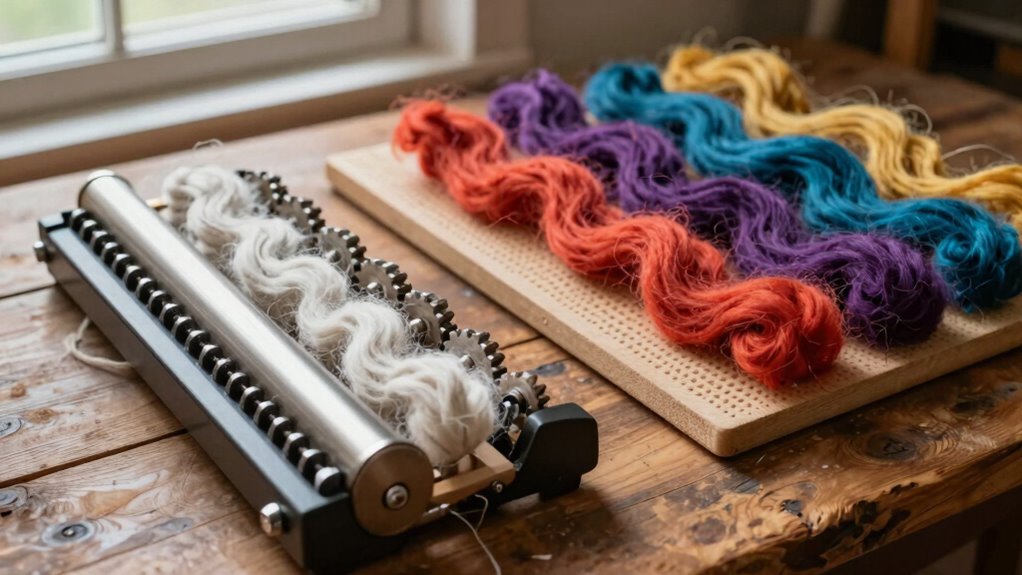

When choosing between a drum carder and a blending board, think about your project size and needs. If you’re tackling larger batches quickly, the drum carder’s efficiency is perfect. For smaller, intricate blends or custom colorways, the blending board gives you control. Both tools enhance your fiber prep experience, so decide based on your creative goals. Curious about how each tool works and their unique benefits? There’s more to explore as you refine your fiber preparation skills.

Get your wardrobe favorites delivered free with Prime
- Fast, free delivery on millions of items
- Prime Video, Amazon Music and more included
- Member-only deals all year
Key Takeaways
- Project Scale: Use a drum carder for larger quantities and quicker processing, while a blending board is ideal for small, detailed projects.
- Creative Flexibility: A blending board allows for unique color combinations and textures, enhancing creative experimentation compared to the efficiency of a drum carder.
- User Experience: Both tools are beginner-friendly and beneficial for experienced fiber artists, improving the fiber preparation process.
- Technique Differences: Drum carders align and separate fibers efficiently, while blending boards focus on layering and rolling for custom blends.
- Maintenance: Regular cleaning and organization of fibers are crucial for optimal performance and consistent results with both tools.
As an affiliate, we earn on qualifying purchases.
Drum Carder vs. Blending Board: Which One Should You Choose?
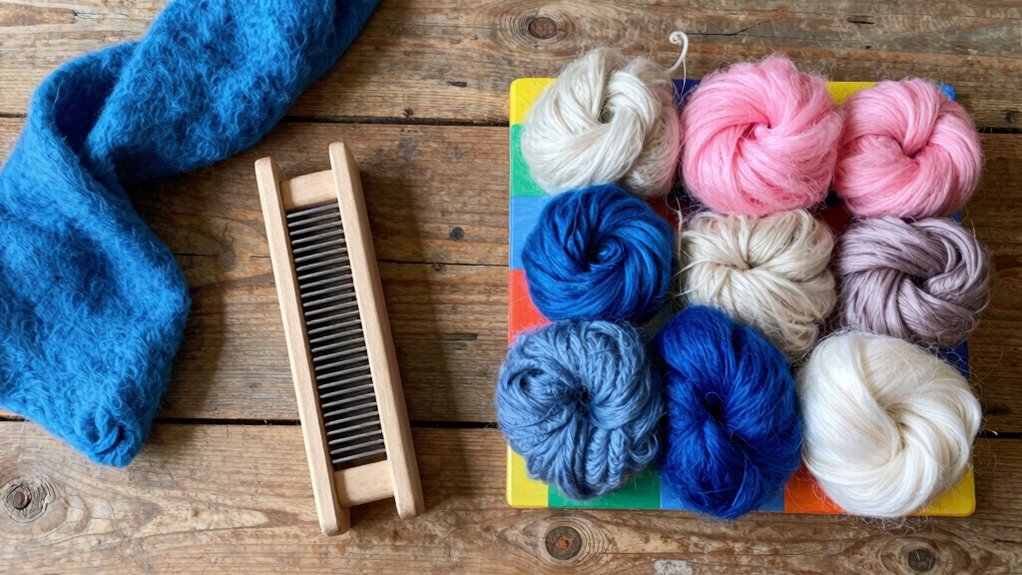
When deciding between a drum carder and a blending board, you might wonder which tool best suits your fiber preparation needs. A drum carder excels at processing larger quantities of fiber quickly, making it ideal for blending multiple types or colors. If you’re looking to create batts for spinning or felting, this tool can save you time and effort.
On the other hand, a blending board offers more control over your blending techniques, allowing you to experiment with smaller amounts of fiber. It’s perfect for creating unique color combinations or for those who enjoy a hands-on approach. Ultimately, your choice depends on your project scale and how intricate you want your fiber preparation to be.
What Is a Drum Carder and How Does It Work?
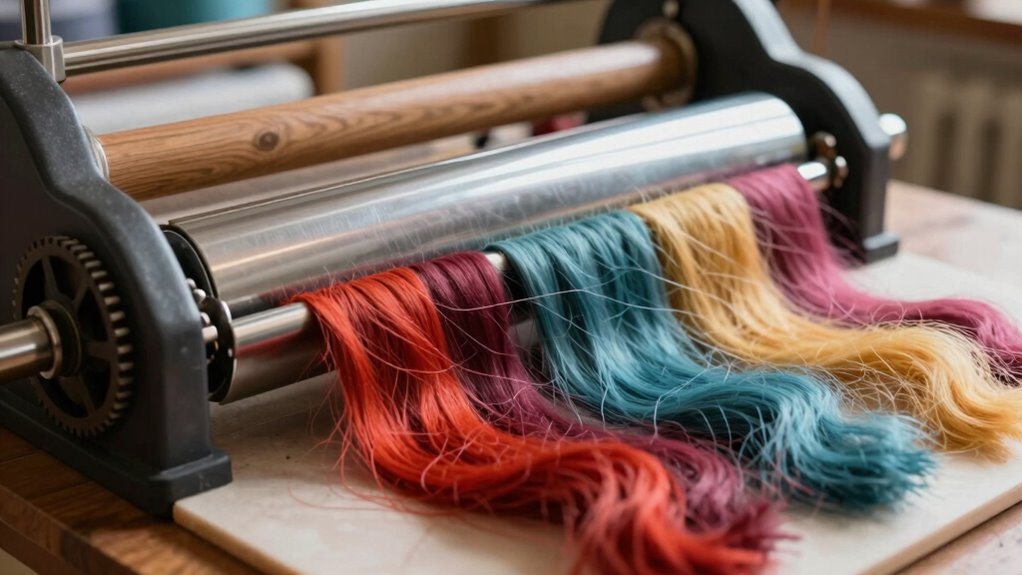
A drum carder is a powerful tool for preparing fiber, and it consists of several key components that work together. You’ll find that the carding process involves feeding fiber into the machine, where rotating drums help separate and blend the fibers. Understanding how these parts interact can enhance your fiber preparation experience.
Drum Carder Components Explained
Although you might be new to fiber prep, understanding the components of a drum carder can greatly enhance your crafting experience. A drum carder typically includes two drums: the main drum and the smaller, licker-in drum. The main drum holds and processes your fiber types, while the licker-in drum helps to pull fibers into the carding area. You’ll also find a handle for easy operation and a blending plate for adding textures and colors using different carding techniques. Knowing how each part works enables you to achieve consistent, well-prepared batts. By mastering these components, you can unleash your creativity and produce beautiful yarns tailored to your specific projects.
Carding Process Overview
Understanding the carding process is essential for any fiber enthusiast, as it transforms raw fibers into beautiful, usable batts. A drum carder works by using two large rollers covered with fine teeth to separate and align fibers, making them easier to spin. You’ll start by selecting your fiber types, whether wool, alpaca, or blends. Then, you’ll feed the fibers into the carder, ensuring even distribution. As the rollers turn, the carding techniques you apply will determine the texture and consistency of your batt. Once the fibers are thoroughly carded, you can remove the batt and prepare it for spinning or felting. This process not only enhances fiber quality but also allows for creative experimentation with different fiber combinations.
Blending Board Features and Benefits
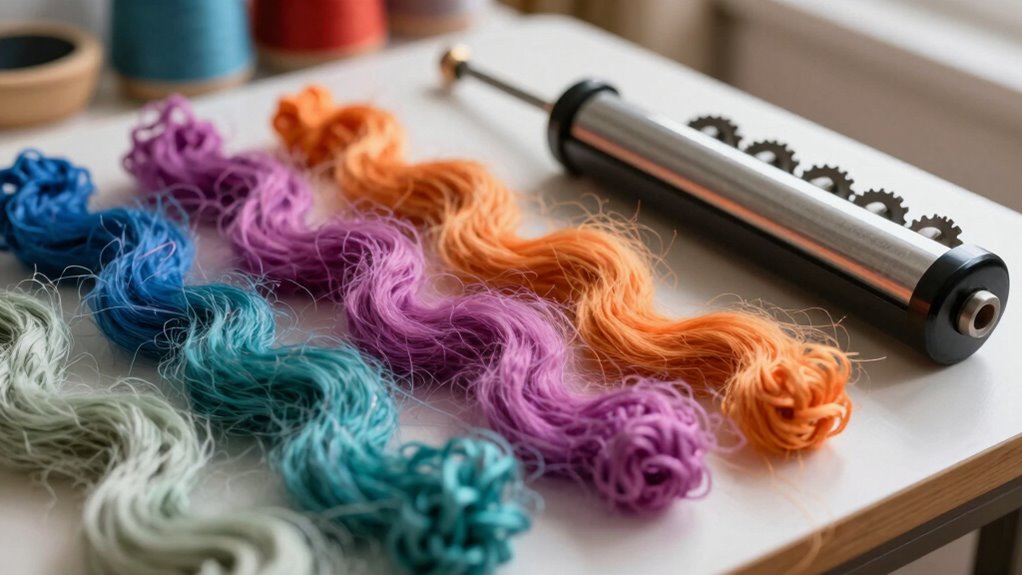
When you use a blending board, you open up versatile fiber blending options that let your creativity shine. Its compact and portable design means you can take it anywhere, making it perfect for on-the-go crafting. With a blending board, you’re ready to experiment with textures and colors anytime and anywhere.
Versatile Fiber Blending Options
If you’re looking for a flexible way to blend fibers, a blending board offers an array of features that cater to your creative needs. This tool is perfect for experimenting with different fiber colorways, allowing you to mix and match hues effortlessly. You can create stunning blends by layering various fibers, making texture blending a breeze. Whether you’re aiming for a subtle gradient or bold contrasts, the blending board gives you control over your final product. It’s ideal for crafting unique rolags or batts, letting you customize your fiber preparation for spinning or felting. With its versatility, you’ll find endless possibilities to enhance your projects and express your artistic vision.
Compact and Portable Design
Sure! Here’s your revised content with the requested adjustments:
—
While you might be working in a small studio or on the go, a blending board’s compact and portable design makes it an ideal choice for fiber preparation. Its lightweight nature allows you to easily store and transport it, making it perfect for classes or fiber festivals. You’ll appreciate the portable advantages when you can quickly set up and pack away after your session. Additionally, a blending board can help you experiment with adaptive lighting techniques by allowing you to blend fibers that mimic natural light effects. Furthermore, it supports calmer, clutter-light homes by encouraging you to keep your workspace organized and efficient. In addition, its design reflects the adaptability that is essential for modern fiber artists. Moreover, its compact storage solutions make it a practical tool for those embracing small-space living. The versatility of a blending board aligns with the principles of organization and decluttering, ensuring that your creative space remains tidy and functional.
| Feature | Benefit |
|---|---|
| Compact Design | Easy to store anywhere |
| Lightweight | Great for travel |
| Versatile Use | Works with various fibers |
With a blending board, you’ll enjoy the convenience of compact storage without sacrificing functionality, making it a favorite among fiber artists.
—
Let me know if you need any more adjustments!
Comparative Features: Drum Carders vs. Blending Boards
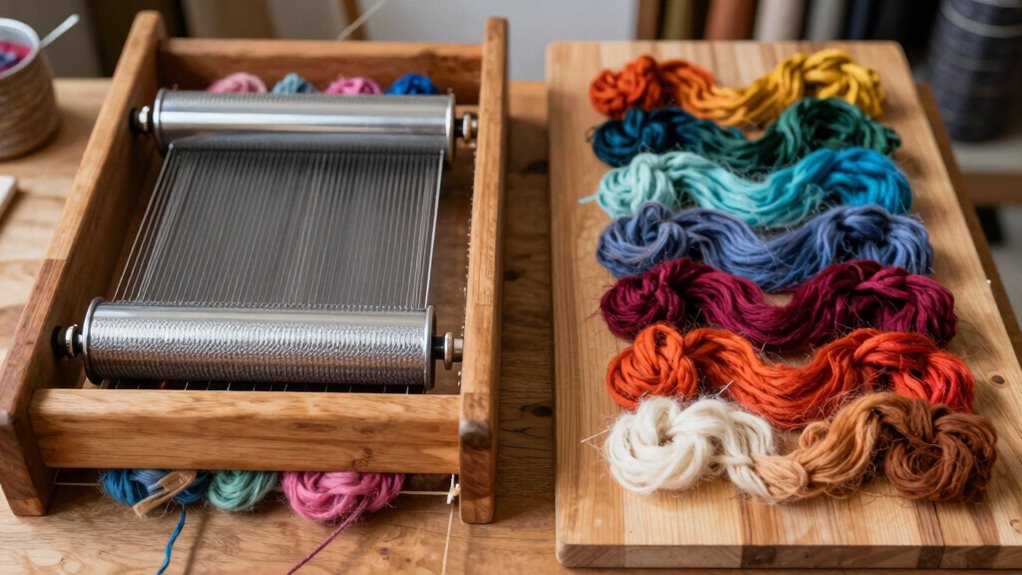
Although both drum carders and blending boards serve the purpose of preparing fibers for spinning, they offer distinct features that cater to different crafting needs. Drum carders excel with larger quantities and a variety of fiber types, efficiently processing them using carding techniques that blend fibers thoroughly. This is ideal for creating smooth, consistent batts for spinning. On the other hand, blending boards are perfect for smaller batches and more intricate blends. They allow you to experiment with color and texture, giving you control over how fibers combine. With a blending board, you can create unique rolags that highlight specific fiber qualities. Ultimately, your choice depends on your project’s scale and the effects you want to achieve.
When to Grab Your Drum Carder?
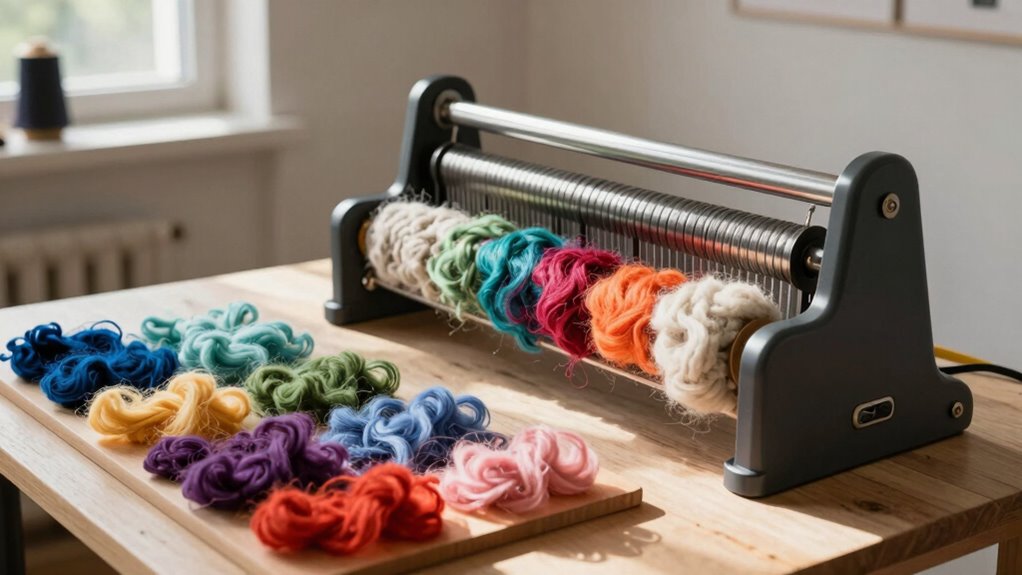
A drum carder is your best friend when you’re ready to tackle larger projects or diverse fiber blends. If you’re working with multiple fiber types, like wool, alpaca, or silk, a drum carder can help you create a uniform batt. It’s perfect for various preparation techniques, making it ideal for spinning or felting.
| Fiber Type | Best Use | Preparation Technique |
|---|---|---|
| Wool | Spinning | Batt creation |
| Alpaca | Blending for softness | Carding |
| Silk | Adding shine | Fine blending |
| Mixed Fibers | Unique textures | Layering and carding |
When you need efficiency and consistency, grab your drum carder and get started on those exciting fiber adventures!
Ideal Situations for Choosing a Blending Board
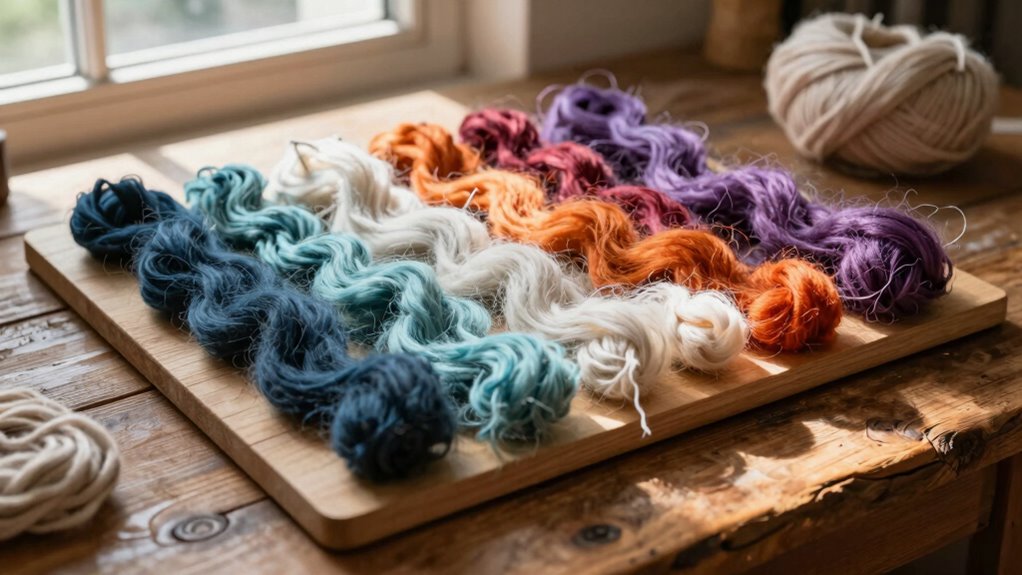
When you want to experiment with smaller batches or focus on intricate fiber combinations, a blending board is the perfect choice. The blending board advantages make it ideal for creating unique blends. Here are three situations where it shines:
- Creating Custom Colorways: You can mix different fibers and colors to design your own unique palette.
- Working with Specialty Fibers: It’s great for blending delicate fibers like silk or alpaca that require gentle handling.
- Learning Fiber Blending Techniques: If you’re new to fiber preparation, a blending board allows for hands-on practice without the intimidation of larger machinery.
Practical Tips for Using Your Drum Carder and Blending Board
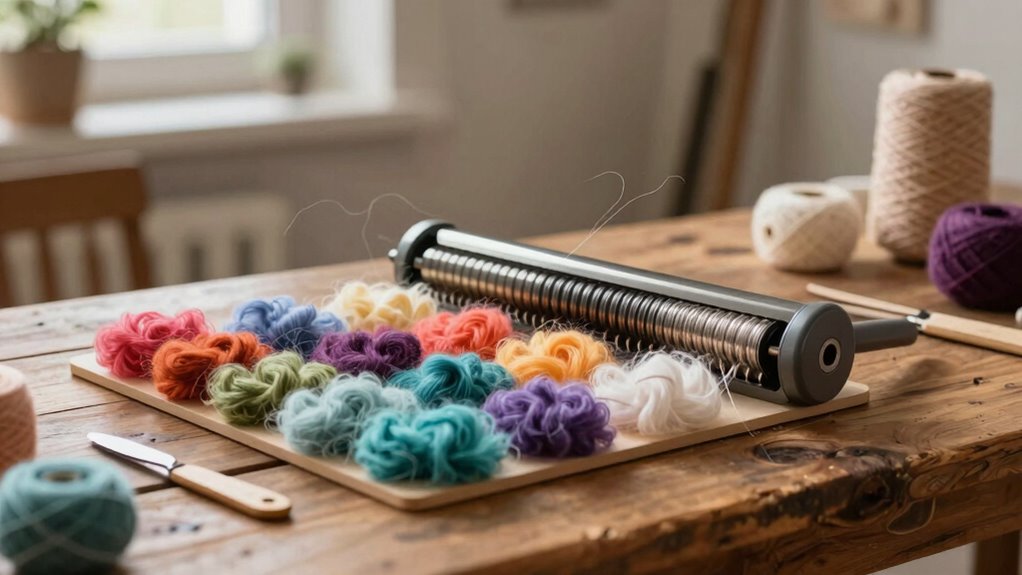
Maximize your fiber preparation experience by mastering both the drum carder and blending board. Start by organizing your fibers; separate colors and textures for better blending. When using the drum carder, pay attention to your carding techniques—feed fibers evenly to avoid jams. It’s also helpful to keep your carder clean to maintain peak performance. With the blending board, layer small amounts of fiber, and use a dowel or hand to roll them into batts, ensuring an even mix. Don’t rush; take your time to achieve the desired consistency. Experiment with different fiber combinations to discover unique blends. With practice, you’ll refine your skills and enjoy the creative process of fiber preparation even more.
Frequently Asked Questions
Can I Use a Drum Carder for Wet Felting?
You can’t directly use a drum carder for wet felting techniques, but it can help prepare your fibers. Drum carder applications are great for blending and opening up wool, making it easier to felt later. Just remember, wet felting relies on moisture and agitation. So, while a drum carder preps your fibers beautifully, you’ll still need to use traditional wet felting methods to create your final piece.
How Much Fiber Can a Blending Board Hold?
A blending board typically holds around 2 to 4 ounces of fiber, depending on the density and type of materials you’re using. This capacity allows you to experiment with various blending techniques, combining colors and textures to create unique blends. As you work, you’ll find that the board’s design makes it easy to layer fibers, giving you control over your creations while maximizing the potential of each batch you prepare.
Are Drum Carders Noisy During Operation?
Yes, drum carders can be noisy during operation. Imagine you’re in a quiet room, enthusiastically preparing your fiber for a project, and suddenly, your drum carder roars to life, drowning out the peaceful ambiance. The noise levels can vary, but they’re generally louder than a blending board. If you’re sensitive to sound, consider this when choosing your fiber preparation tool, as the hum might disrupt your creative flow more than you’d like.
What Types of Fibers Work Best With Blending Boards?
Blending boards work best with short, staple fibers like merino, alpaca, and silk. Their versatility allows you to create unique blends using various fiber types. You’ll enjoy the blending board benefits, as it encourages creativity and experimentation in your fiber blending techniques. By layering and mixing colors, you’ll achieve beautiful, textured batts perfect for spinning or felting. Don’t hesitate to explore different fibers to enhance your crafting experience!
How Do I Clean My Drum Carder or Blending Board?
To clean your drum carder or blending board, first remove any fiber residue with a brush or a lint roller. For deeper cleaning, use a soft cloth and a mild soap solution, avoiding excess moisture. Regular fiber maintenance not only keeps your tools in top shape but also enhances their longevity. Make it a habit to clean after each use, ensuring your equipment stays efficient and ready for your next project.
Conclusion
In the end, choosing between a drum carder and a blending board comes down to your fiber goals. If you crave speed and volume, a drum carder’s your tool. If you seek creativity and control, a blending board’s your best bet. Both tools have their strengths, so consider your projects, your space, and your style. Whether you’re carding a batch or blending a palette, each tool can elevate your fiber prep game. Happy crafting!
Columbus Day / Indigenous Peoples' Day Picks
long weekend sales
As an affiliate, we earn on qualifying purchases.