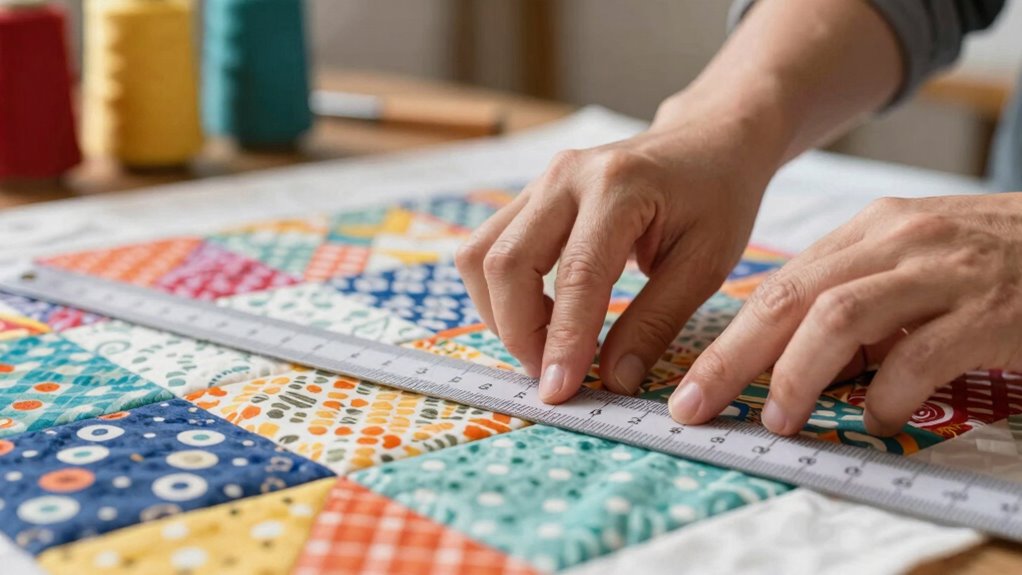
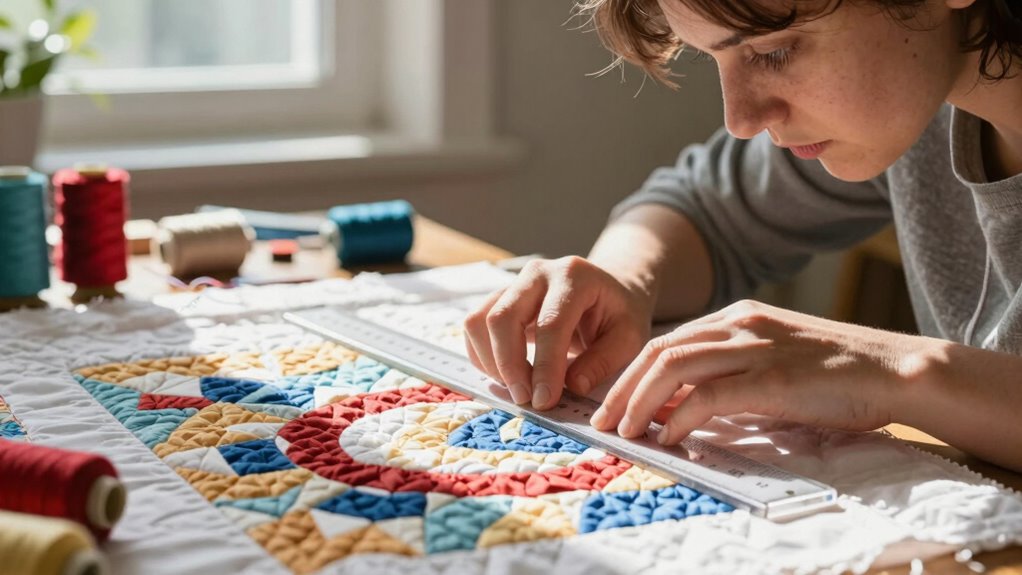
To achieve wobble-free ruler work, focus on your hand position. Keep your hands relaxed and placed on either side of the ruler. Use a light grip to maintain control while avoiding tension. Position your elbows or forearms on the table for added stability. This technique minimizes stray stitches and guarantees smooth movement. If you master these principles, you’ll enhance your quilting precision greatly. There’s much more to explore about perfecting your technique.
Key Takeaways
- Maintain a relaxed grip on the ruler to prevent stray stitches and enhance control during quilting.
- Position hands on either side of the ruler for maximum stability and consistent guidance.
- Adjust body posture to support steady movements, ensuring smooth ruler work.
- Make minor grip adjustments as needed to keep the ruler stable and aligned.
- Use your palm for added stability while quilting, reducing tension in your fingers.

TrueCut TrueGrips Non-Slip Ruler Grips for Quilting Rulers | No-Slip Quilt Ruler Grip Dots | Quilting Supplies for Accurate Cuts
Easy Slip Prevention – Designed to improve stability and prevent slipping while cutting, these grips keep rulers and…
As an affiliate, we earn on qualifying purchases.
As an affiliate, we earn on qualifying purchases.
How to Achieve Precision in Ruler Work
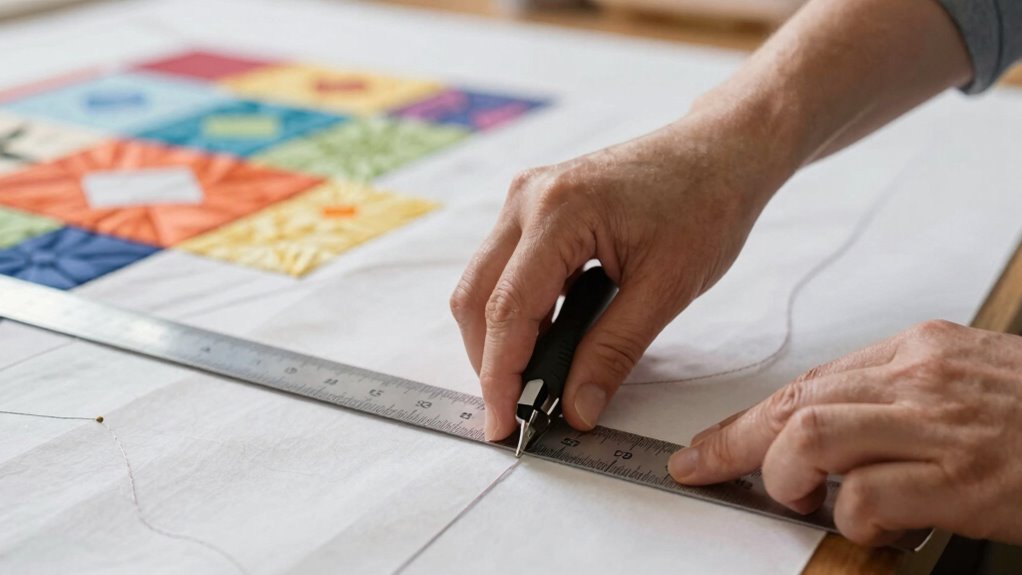
When you aim for precision in ruler work, it’s essential to start with the right tools and techniques. Familiarize yourself with different ruler types, as each serves a specific purpose in your quilting projects. For example, a straight ruler is perfect for crisp lines, while a curved ruler adds beautiful arcs.
Next, practice various quilting techniques to understand how the rulers interact with your sewing machine. Always anchor your ruler securely against the fabric, using appropriate pressure to guide your stitches without veering off course. Experiment with different speeds to find what works best for you. With dedication and the right tools in hand, you’ll achieve clean, precise lines in your ruler work, elevating your quilting projects to new heights.

TightGrips Non-Slip Pads for Quilt Templates | Precision Grips for Quilting Supplies | Enhance Accuracy and Stability | Non-Slip Quilting Tools | Complete Set of 48-24 Large & 24 Small Grips
ENHANCE QUILTING PRECISION: TightGrips Quilt Template Non-Slip Pads provide enhanced accuracy and stability, ensuring your quilting projects come…
As an affiliate, we earn on qualifying purchases.
As an affiliate, we earn on qualifying purchases.
Why Hand Position Is Key for Steady Lines
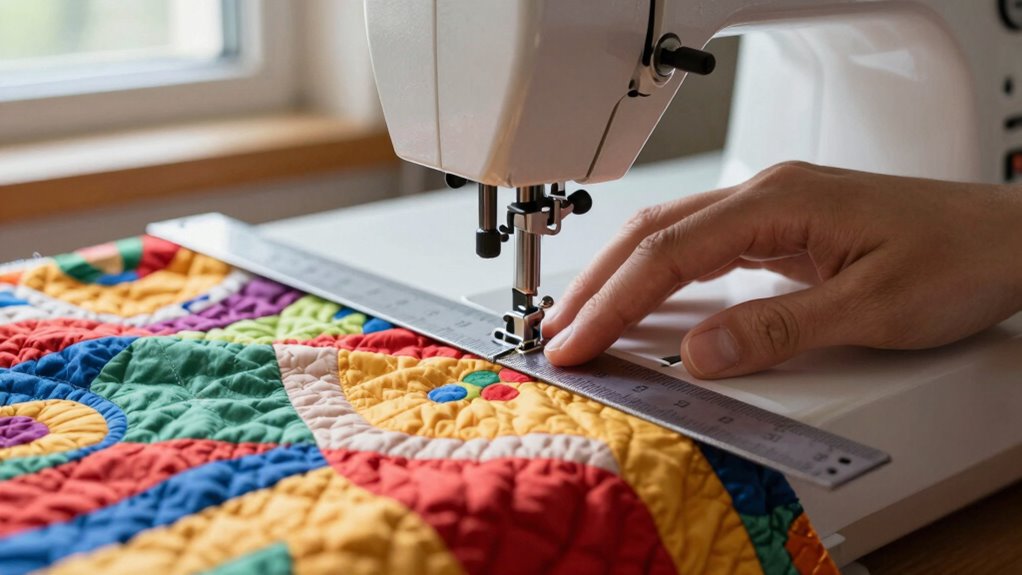
Your hand position plays an essential role in achieving those steady lines you aim for in ruler work. By mastering proper grip techniques and aligning your body correctly, you can minimize wobbles and maintain control. Let’s explore how these elements come together for flawless results.
Proper Grip Techniques
A solid grip can make all the difference in achieving steady, precise lines while ruler work. Proper grip techniques help you maintain control and reduce hand fatigue, allowing for longer, more enjoyable sessions. Here are some key aspects to reflect on:
- Consistent grip pressure: Too tight can cause tension; too loose may lead to wobbles. Maintaining a proper grip can be likened to how air purifier maintenance ensures optimal performance. This balance is essential for overall ergonomic health during creative tasks, as it can prevent muscle strain that often arises from poor technique.
- Relax your fingers: Keep them flexible to maintain comfort and avoid fatigue; understanding hand positioning can further enhance your control.
- Use your palm: Leverage your whole hand for better stability, not just your fingers.
Incorporating proper grip techniques can enhance your overall accuracy and enjoyment in various activities.
Body Alignment Matters
Maintaining a proper grip is just the first step; body alignment plays a significant role in achieving steady lines during ruler work. Your body posture can make all the difference. Sit or stand up straight, aligning your spine to reduce strain. Engage your core to stabilize your body, allowing for smoother movements. When your core is active, you’ll notice greater control over your hands. Keep your elbows relaxed and positioned close to your body to prevent unnecessary wobbles. Adjust your chair or workspace height to guarantee comfort, as this helps maintain focus and precision. Remember, a well-aligned body not only supports your hands but also boosts your confidence, leading to cleaner, more accurate lines in your ruler work. Additionally, smart choices for posture can enhance your overall efficiency during creative tasks. Incorporating acoustic drum shields can further improve your workspace by minimizing distractions from external noise. Furthermore, proper body mechanics can significantly reduce the risk of strain and fatigue during prolonged sessions.

DC,CLISENCE 3pcs Clip-On Sewing Guide, Colorful Quilting Templates Ruler with Clips for Stitching, Non-Slip Edge Stitch Hand Sewing Guide Tool for Fixed Fabric Embroidery Mending – 2mm 3mm 4mm
Package Includes: You will receive 3pcs clip-on sewing guide in 3 different color and spacing, 2mm in sky…
As an affiliate, we earn on qualifying purchases.
As an affiliate, we earn on qualifying purchases.
The Perfect Hand Position for Flawless Quilting
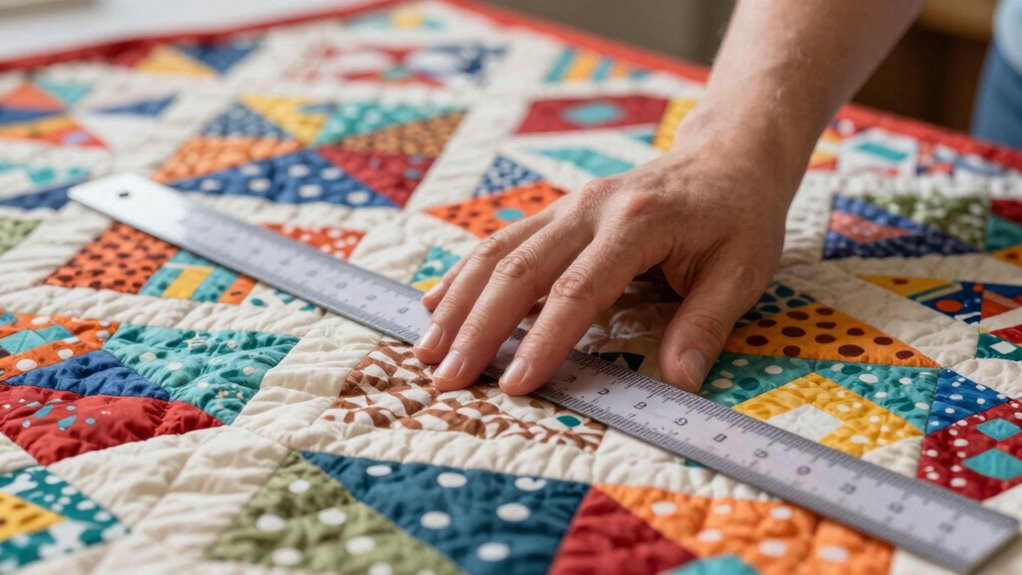
While mastering ruler work, the right hand position can make all the difference in achieving seamless quilting. Here are some key elements to focus on:
- Hand Placement: Keep your hands relaxed and positioned on either side of the ruler for maximum control.
- Grip Adjustments: Make minor adjustments to your grip as needed to maintain ruler stability, ensuring consistent tension control.
- Posture Awareness: Maintain an upright posture to enhance muscle memory and support a steady quilting rhythm.

TrueCut My Comfort Rotary Cutter – 45mm Ergonomic Wheel Cutter for Fabric, Quilting, Sewing, Crafting – Left or Right-Handed – Track-and-Guide Ruler – Quilting and Sewing Supplies
The My Comfort Rotary Cutters feature a thoughtfully curved handle designed for effortless cutting with minimal pressure. Say…
As an affiliate, we earn on qualifying purchases.
As an affiliate, we earn on qualifying purchases.
Common Mistakes in Hand Placement and How to Avoid Them
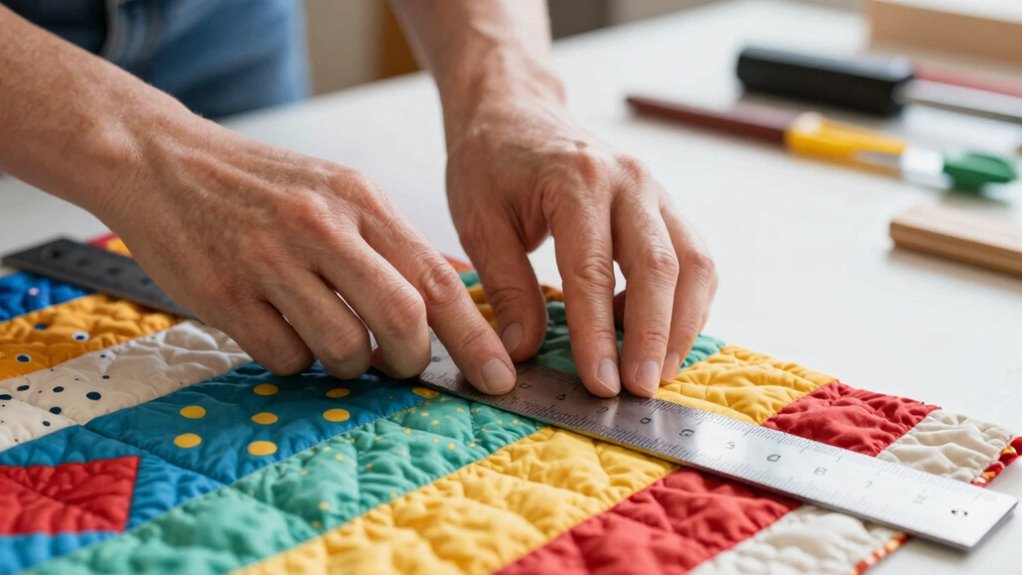
Even seasoned quilters can fall into common traps with hand placement, which can lead to wobbly lines and uneven stitches. One major hand placement pitfall is gripping the ruler too tightly; this tension can cause your stitches to stray. Instead, try a relaxed grip to maintain control without stiffness. Another mistake is placing your hands too close to the ruler’s edge, which can result in misalignment. To avoid this, keep your hands a safe distance from the cutting edge while still providing support. Finally, don’t forget to adjust your body positioning. Sitting too far away can hinder your ability to guide the ruler smoothly. Being mindful of these factors will help you achieve cleaner, more precise quilting results.
Best Practices for Hand Position Drills
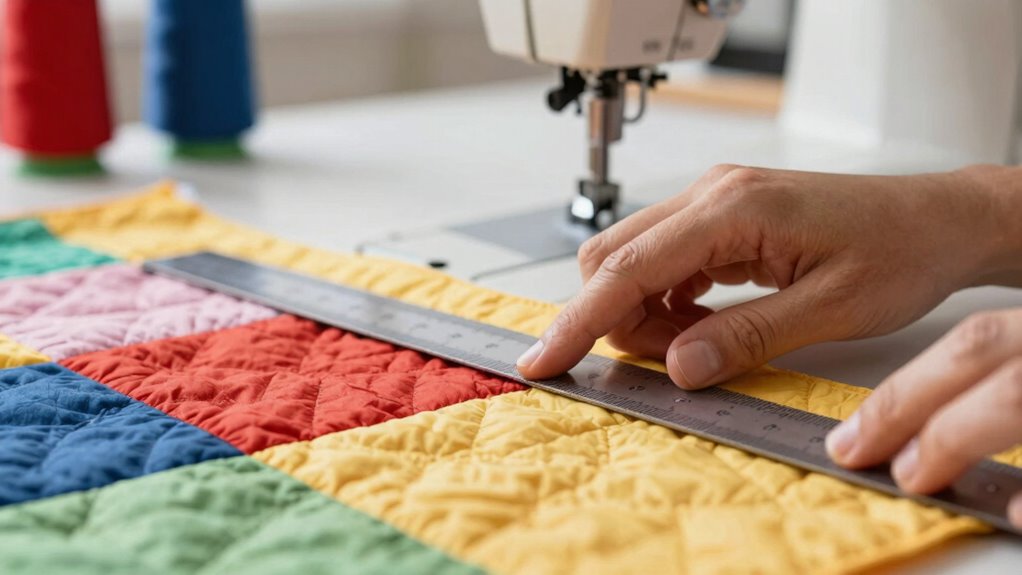
To master ruler work, your hand position is essential. Start by focusing on grip stability techniques, ensuring your hold is firm yet flexible. Next, pay attention to elbow alignment and incorporate wrist flexibility exercises to enhance your control and precision.
Grip Stability Techniques
Grip Stability Techniques (Best Practices for Hand Position Drills)
Mastering grip stability techniques is essential for achieving clean, precise ruler work. By focusing on your grip pressure and making necessary grip adjustments, you can enhance your control and accuracy. Here are some effective practices to contemplate:
- Maintain consistent grip pressure: Too tight can cause shaking; too loose can lead to slips. Understanding filtration basics can also help in maintaining a steady hand by reducing distractions around you. Additionally, ensuring proper tick prevention measures can help you remain focused during your tasks without unnecessary interruptions. A well-set workspace that considers energy efficiency can also contribute to your overall comfort and concentration. Regularly assessing your workspace ergonomics can also play a vital role in optimizing your grip.
- Practice with different tools: Experiment with various rulers and grips to find what works best for you.
- Use your body for support: Rest your elbow or forearm on the table to reduce strain and improve stability.
Incorporating these techniques into your routine can greatly elevate your ruler work, paving the way for flawless designs and projects. Additionally, understanding the importance of energy management can help you optimize your workspace for maximum focus. Remember, practice makes perfect!
Elbow Alignment Tips
While you focus on achieving precise ruler work, proper elbow alignment can greatly enhance your hand position during drills. Start by ensuring your elbows are positioned comfortably at your sides. This helps maintain stability and reduces unnecessary arm tension. Avoid raising your elbows too high, as this can lead to awkward angles that hinder your control. Keep your forearms parallel to the work surface, allowing for a smoother movement. When you’re aligned correctly, your hands will follow suit, resulting in cleaner lines and more accurate cuts. Don’t forget to check your posture; a relaxed stance promotes better elbow positioning. Practice these tips regularly, and you’ll notice a significant improvement in your ruler work consistency.
Wrist Flexibility Exercises
As you work on improving your ruler skills, incorporating wrist flexibility exercises can make a noticeable difference in your hand position during drills. Better wrist flexibility leads to enhanced joint mobility, allowing you to maintain control without wobbling. Here are some effective wrist stretches to include in your routine:
- Wrist Flexor Stretch: Extend one arm, palm up, and gently pull back on your fingers with the opposite hand. Ensuring a clutter-free environment can also help reduce indoor air pollutants, which may contribute to better focus during your practice sessions. Additionally, keeping your workspace well-ventilated can enhance indoor air quality, making your sessions more productive. Moreover, metabolic health can be positively impacted by engaging in regular physical activity, while regular appliance maintenance can ensure a smooth practice environment.
- Wrist Extensor Stretch: Extend one arm, palm down, and pull back on the fingers with the opposite hand.
- Wrist Rotations: Rotate your wrists in circles for 30 seconds in each direction.
Additionally, maintaining good indoor air quality is essential for overall health, as microplastics in dust can affect your respiratory function and overall well-being.
Tools to Enhance Stability in Ruler Work
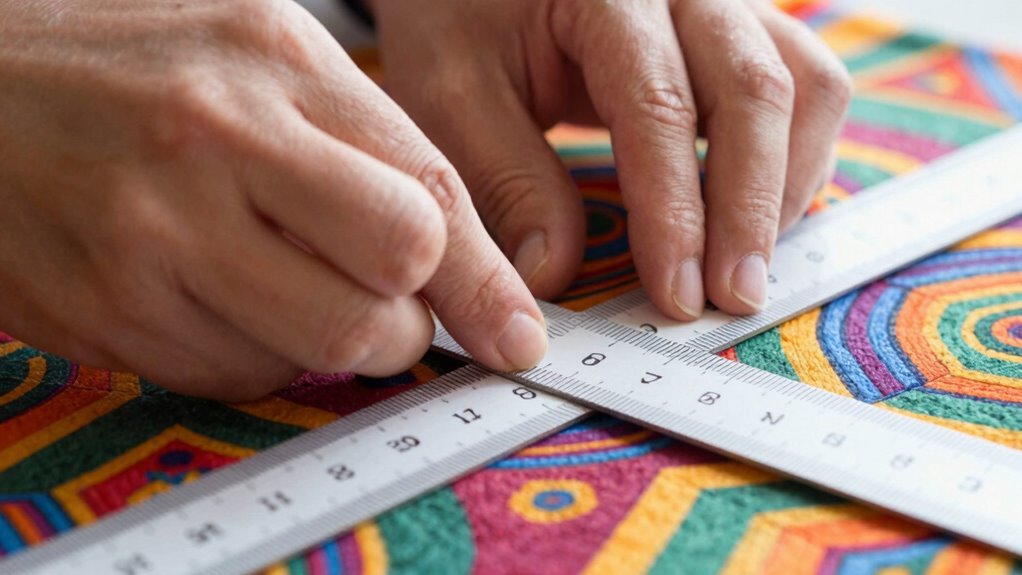
To achieve crisp, precise lines in ruler work, having the right tools can make all the difference. Start with high-quality ruler types designed for your specific projects. Pair them with reliable quilting tools like ruler feet that fit your sewing machine perfectly. Grip aids can help stabilize your hands, preventing wobbles as you guide the ruler. Using quilting mats and cutting mats will provide a firm surface, enhancing your control. Additionally, ensuring your workspace is water damage-free will prevent any distractions or mishaps while working on your projects. To truly enhance your skills, consider expert recommendations that can guide you in selecting the best tools for your needs. Incorporating pressure application techniques can also improve your stability and control over the ruler. Furthermore, understanding the importance of budget management can help you allocate funds for quality tools without straining your finances. Don’t forget stabilizing aids to keep your fabric in place, especially when using quilting frames. Finally, measuring tools guarantee accurate placements, allowing you to focus on artistry rather than adjustments. With these tools, you’ll elevate your ruler work and achieve stunning results. Additionally, investing in universal basic income initiatives can provide artists and quilters with the financial stability needed to pursue their craft without economic stress.
Adapting Techniques for Different Ruler Types
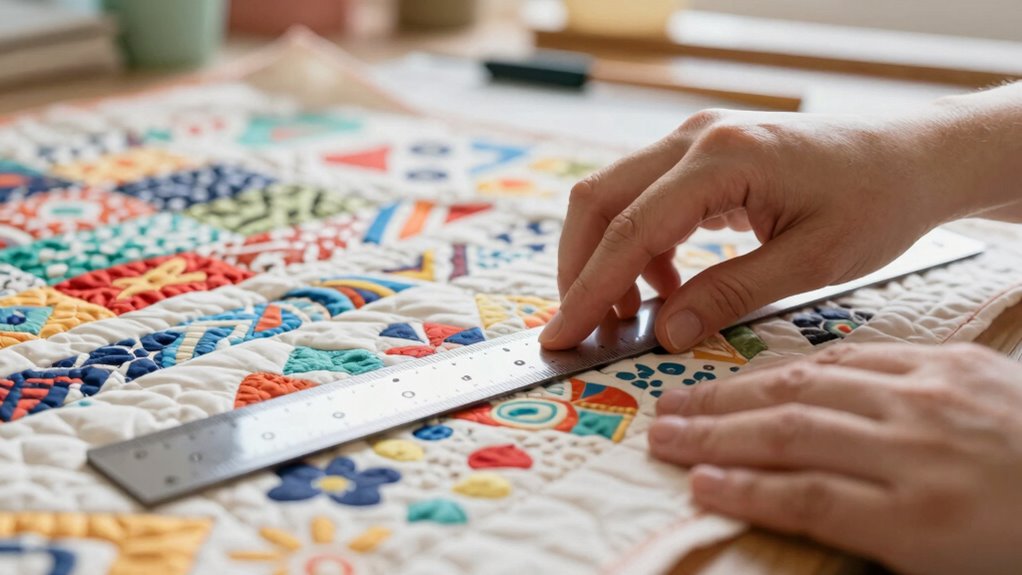
Understanding how to adapt your techniques for different ruler types can greatly enhance your quilting experience. Each ruler type requires specific adjustments to achieve the best results. Here are some key points to keep in mind:
Adapting your techniques for various ruler types can significantly improve your quilting results.
- Thickness Matters: Thicker rulers provide more stability, while thinner ones demand a lighter touch. Additionally, using a cleaning solution on your rulers can help maintain their clarity and effectiveness.
- Edge Design: Rulers with varied edge designs can alter how you guide your fabric; know which edge works best for your technique.
- Grip Variation: Some rulers have better grip features; adjust your pressure based on the ruler’s grip to avoid slipping.
- Tool Maintenance: Regular tool maintenance ensures that your rulers remain accurate and effective over time, contributing to better quilting outcomes.
How to Tackle Quilting Jitters Like a Pro?

While quilting can be a joyful creative outlet, jitters often creep in when you’re about to start a new project. To tackle quilting anxiety, begin with mental preparation. Visualize your finished quilt and remind yourself why you love this craft. Overcoming fear isn’t just about the project; it’s about building confidence in your skills. Try focus techniques like deep breathing or mindfulness to center your thoughts. Setting small, achievable goals can also provide stress relief and keep you motivated. Remember, every quilter experiences jitters. Embrace them as part of the creative journey. With practice and the right mindset, you’ll find that tackling those nerves becomes easier, allowing you to enjoy the process even more.
Success Stories: Insights From Professional Quilters
As you immerse yourself in the world of quilting, hearing success stories from professional quilters can inspire you to push through your own challenges. These quilters have faced obstacles but turned them into opportunities for growth. Here are a few insights that can fuel your quilt inspiration:
- Embrace Mistakes: Many pros believe that errors often lead to unexpected creativity.
- Master Professional Techniques: Learning the right techniques can greatly enhance your skills and confidence.
- Community Support: Connecting with fellow quilters provides encouragement and valuable feedback.
Frequently Asked Questions
What Are the Best Rulers for Beginners to Use?
For beginners, start with quilting rulers or clear acrylic rulers; they’re easy to see through and use. When choosing fabric, opt for cotton as it holds its shape well. As for cutting techniques, a rotary cutter paired with your ruler guarantees clean lines. Remember to keep the ruler steady and your hands positioned correctly for accuracy. Experiment with different ruler types to find what feels best for your projects, and don’t rush the learning process!
How Can I Improve My Ruler Work Speed?
To boost your ruler work speed, immerse yourself in speed drills! You’ll want to practice ruler techniques daily, pushing yourself to go faster without sacrificing accuracy. Start with simple shapes, gradually increasing complexity while timing yourself. It’s like racing against a clock—exhilarating! Keep your hands steady and your movements fluid. You’ll feel that adrenaline rush as you sharpen your skills. Consistency and practice will transform you into a ruler work pro in no time!
Is There a Specific Fabric Type That Works Best With Rulers?
Yes, certain fabric types work better with rulers. For smooth, precise cuts, use cotton or cotton blends, as they grip well and reduce slipping. Avoid stretchy or slippery fabrics like knits or silks, which can lead to inaccuracies. As for ruler materials, acrylic rulers offer clarity and are lightweight, making them easy to maneuver. Pair the right fabric with a sturdy ruler, and you’ll see a noticeable improvement in your ruler work!
What Should I Do if I Feel Hand Fatigue While Quilting?
If you’re feeling hand fatigue while quilting, it’s ironic how the joy of creating can lead to discomfort, right? Start by taking breaks to stretch your hands—simple hand stretches can work wonders. Incorporate grip techniques that distribute pressure evenly across your fingers and palm. Adjust your quilting posture, too; sometimes, a slight shift can relieve tension. Remember, you want to enjoy the process, not just the finished product!
How Can I Maintain My Ruler’s Accuracy Over Time?
To maintain your ruler’s accuracy over time, use proper ruler maintenance techniques. Clean your ruler regularly with a soft cloth to remove any residue that could affect its performance. For ruler storage solutions, keep it flat in a dedicated drawer or hang it on a wall to prevent warping. Avoid placing heavy items on top, as this can distort its shape. These steps will help preserve your ruler’s precision for all your quilting projects.
Conclusion
So, next time you pick up your ruler for quilting, remember that hand position can make all the difference. Studies show that 80% of quilters struggle with wobbles due to poor hand placement, but with practice, you can join the ranks of the pros. By mastering these techniques and focusing on stability, you’ll elevate your quilting game and create flawless designs. Happy quilting, and may your lines always be straight!