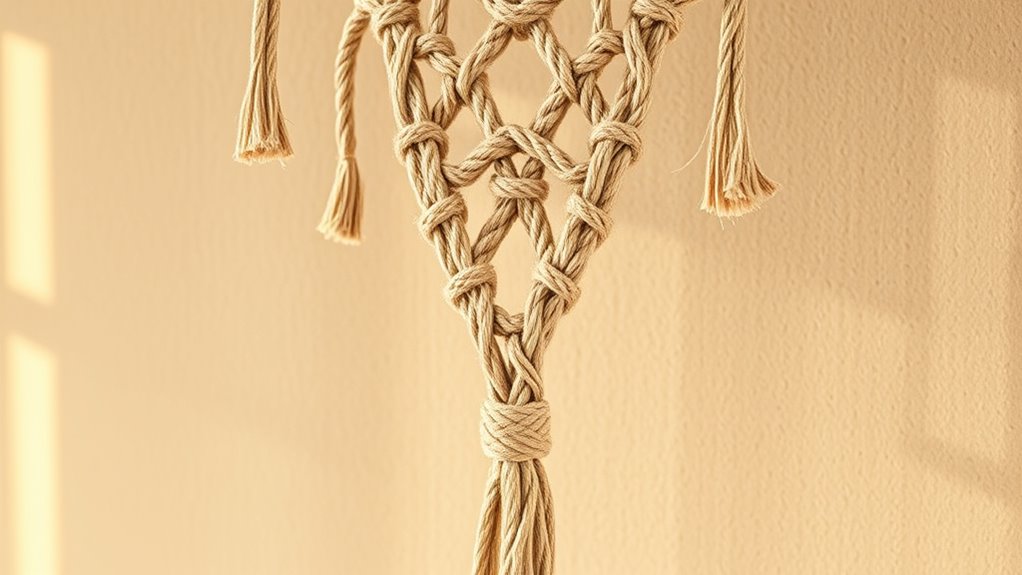
To create a stunning macramé wall hanging, start with natural fibers like cotton or jute for easier handling and a soft or rustic look. Learn basic knots such as square knots and half hitches to build your design, and gradually combine different patterns for texture. Keep cords taut and maintain even spacing for a professional finish. If you continue exploring, you’ll discover tips to refine your skills and craft beautiful, personalized wall art.
Key Takeaways
- Choose natural fibers like cotton for softness and ease of knotting, or jute for a rustic look.
- Learn basic knots such as square knots and half hitches to build your wall hanging.
- Practice maintaining even tension and spacing for a neat, professional finish.
- Experiment with combining different knots and fibers to add texture and visual interest.
- Finish your piece by trimming excess cords and securing knots to ensure durability.

Creating a macramé wall hanging is a fun and rewarding way to add a handcrafted touch to your home decor. When you’re just starting out, understanding the different fiber types and knot techniques can make all the difference in creating a beauty that truly reflects your style. The fiber types you choose will influence the texture, durability, and overall look of your piece. Natural fibers like cotton, jute, and hemp are popular because they’re sturdy, soft, and easy to work with. Cotton is especially beginner-friendly, offering a smooth finish and a wide range of colors. Jute gives a rustic, earthy feel, while hemp provides a stronger, more textured appearance. Synthetic fibers like nylon or polyester are also options if you want something more resilient and less prone to fraying, but they can sometimes lack the natural softness of organic fibers.
Once you’ve selected your fibers, mastering knot techniques is your next step. The key to a professional-looking wall hanging lies in your ability to execute even, tight knots. Start with simple knots such as the square knot and half hitch, which are versatile and form the foundation of most macramé designs. The square knot is particularly useful because it’s easy to learn and creates a symmetrical, neat appearance. To make it, you cross the left cord over the middle, then under the right cord, and repeat in reverse. The half hitch is another fundamental knot, where you loop a cord around an adjacent cord and pull tight. These basic knots serve as building blocks for more complex patterns.
As you experiment with knot techniques, don’t hesitate to combine different styles to add texture and visual interest. For example, incorporating double half hitch knots can create intricate patterns and shapes. Practice makes perfect, so spend some time practicing each knot until you can perform them consistently. Once you get comfortable with the basic knots, you can explore more advanced techniques like spiral or lark’s head knots, which help you achieve a variety of effects. Additionally, understanding how performance tuning principles can influence the durability and appearance of your finished piece can be beneficial if you plan to display it in high-traffic areas. Remember, the key to a successful DIY macramé wall hanging is patience and attention to detail. Keep your cords taut but not overly tight, and maintain even spacing between knots. With these foundational skills—fiber selection and knot techniques—you’ll be well on your way to creating a stunning, handcrafted piece that adds warmth and personality to your space.
Frequently Asked Questions
What Types of Cords Are Best for Beginners?
For beginners, cotton cords are your best choice because they’re soft, easy to handle, and hold knots well. Jute and hemp cords are also good options, offering a rustic look and durability. These cord types simplify learning beginner techniques like square knots and half hitch knots. Avoid thin or slippery cords initially, as they can be tricky to work with. Stick to these for a smoother, more enjoyable macramé experience.
How Do I Correct Mistakes in My Design?
Mistakes might muddle your masterpiece, but don’t panic. To correct errors, start by adjusting knot tension to straighten out uneven sections. Carefully loosen or tighten knots to restore symmetry and smoothness. If a section’s too tight or loose, gently undo or redo those knots, then re-tie with precision. Practice patience, and you’ll perfect your piece, transforming imperfect patches into a polished, professional-looking wall hanging.
Can I Make a Large Wall Hanging With Limited Space?
Yes, you can create a large wall hanging even with limited space by focusing on space-saving designs. Opt for modular wall hangings that you can assemble in sections, making them easier to fit and customize. You might also consider hanging multiple smaller pieces or layered designs to add visual interest without overwhelming your space. These approaches help you enjoy a striking macramé display without sacrificing your room’s functionality.
How Do I Secure My Final Knot Properly?
To secure your final knot properly, focus on good finishing techniques that enhance knot security. After tying your last knot, pull the strands tight and double knot if needed. Apply a dab of glue if you want extra hold, and trim any excess with scissors. Making sure your knots are snug and secure prevents unraveling, ensuring your wall hanging stays intact and looks professional.
Are There Eco-Friendly Materials for Macramé Projects?
Yes, you can use eco-friendly materials for your macramé projects. Look for sustainable fibers like organic cotton, hemp, jute, or bamboo, which are renewable and biodegradable. You can also choose natural dyes derived from plants or minerals to color your materials, reducing chemical impact. These options help you create beautiful, environmentally conscious wall hangings that are safe for the planet and add a natural touch to your decor.
Conclusion
Now, as you hang your beautiful macramé wall hanging, you might just realize that the intricate knots mirror the twists and turns of your own journey. DIY projects often surprise us with their quiet lessons—like patience and creativity—showing that sometimes, the most unexpected coincidences bring the greatest satisfaction. So, keep crafting, and remember, your unique touch turns simple cords into a masterpiece, just like life’s little surprises that make everything more meaningful.