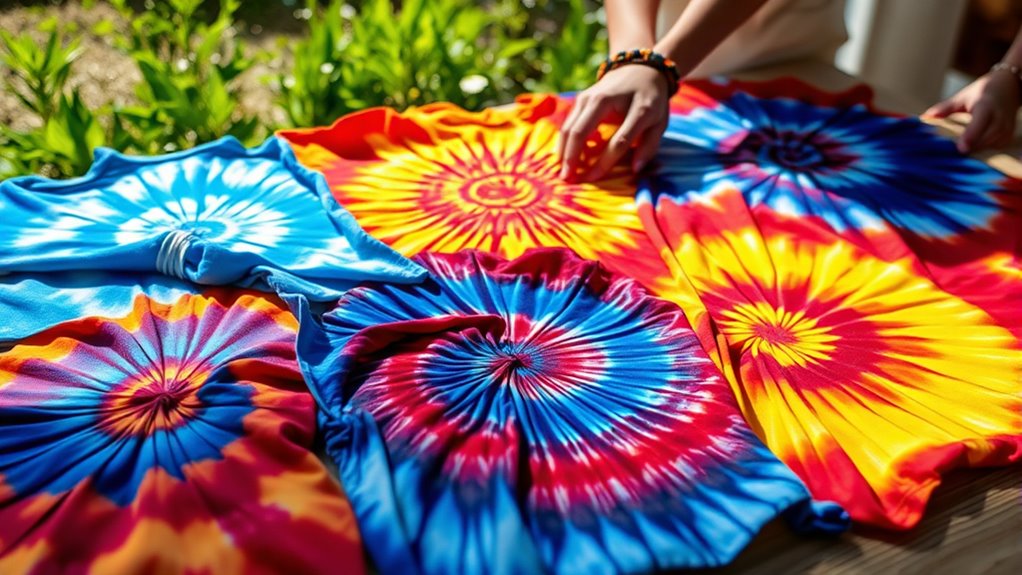

To tie-dye your clothes, start by preparing clean, damp fabric and folding or tying it into your desired pattern, securing with rubber bands. Then, apply vibrant dye shades directly onto the fabric, overlapping colors to create unique blends and gradients. Cover it with plastic to set the dye overnight, and rinse in cold water afterward. With the right techniques, you’ll craft stunning, one-of-a-kind designs—keep going to discover even more tips and tricks.

Get your wardrobe favorites delivered free with Prime
- Fast, free delivery on millions of items
- Prime Video, Amazon Music and more included
- Member-only deals all year
Key Takeaways
- Select clean, natural fabric and prepare your workspace with plastic to prevent stains.
- Fold, twist, or tie fabric, securing with rubber bands to create unique patterns.
- Apply dye directly onto fabric using squeeze bottles or brushes, overlapping colors for blending.
- Cover the fabric and let it sit for several hours or overnight to set the dye.
- Rinse in cold water, then wash separately to reveal vibrant, personalized tie-dye designs.
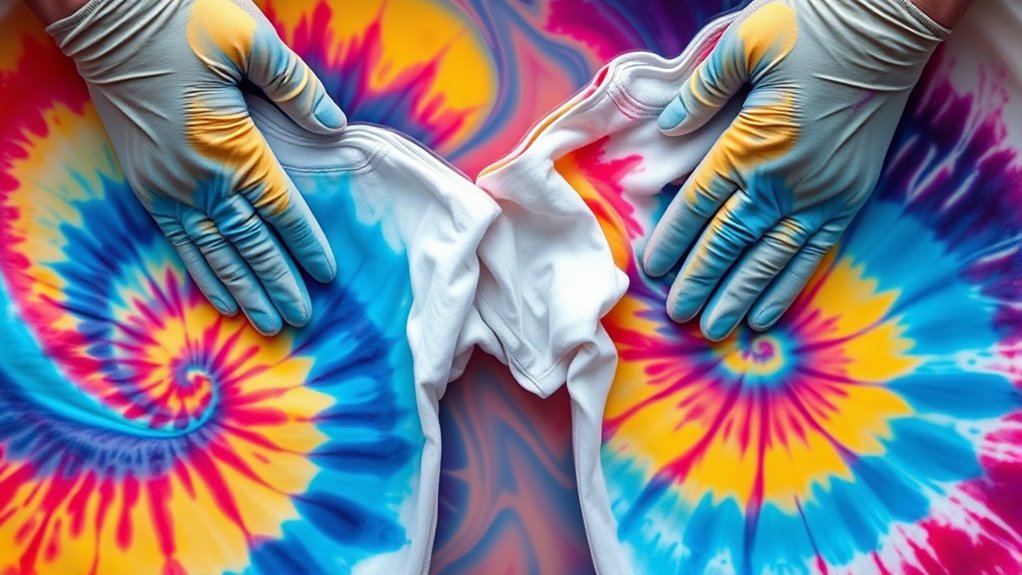
Tie-dye is a fun and creative way to personalize clothing and fabrics with vibrant patterns. When you immerse yourself in fabric dyeing, you’re exploring a process that allows you to transform plain or old garments into eye-catching pieces. The key to successful tie-dyeing lies in mastering color blending, which determines how your colors will interact and create those stunning, swirling designs. To start, you’ll need a clean, white or light-colored piece of fabric, preferably cotton or other natural fibers that absorb dye well. Before you begin, it’s a good idea to prepare your workspace with plastic or newspaper to prevent stains, and wear old clothes or an apron to keep your clothes protected.
Once you have your fabric ready, you’ll want to dampen it slightly. This helps the dye to adhere evenly and makes the fabric more receptive to color blending. Next, you can fold, twist, or bunch your fabric into different shapes—such as spirals, folds, or scrunches—each creating unique patterns once dyed. Secure your fabric with rubber bands to hold the design in place; these will act as barriers that prevent dye from spreading into certain areas, enhancing the visual appeal of your finished piece.
When it’s time to add color, resist the temptation to pour dye randomly. Instead, select your shades carefully. You can use liquid dye, squeeze bottles, or even fabric paint for more control. Apply the dye directly onto the fabric, making sure to let the colors interact at the edges for exciting color blending effects. Overlapping different shades on the fabric will produce new hues and gradients, so think about how the colors will mix before applying. For example, blending blue and yellow will yield green, while red and blue can create purple. Be deliberate in your application to achieve the desired vibrancy and harmony.
After applying the dye, cover your fabric with plastic wrap or place it in a sealed plastic bag. This creates a mini greenhouse environment, allowing the dye to set and the colors to deepen. Let it sit for several hours or overnight, depending on the intensity of color you want. Once the dye has set, carefully rinse the fabric in cold water to remove excess dye and reveal your vibrant design. Over time, the colors may settle into a beautiful, complex pattern that showcases your skill in fabric dyeing and color blending. Additionally, understanding how natural fibers absorb dye can help you achieve more consistent results especially when working with cotton or linen.
Finally, wash your tie-dye fabric separately for the first few washes to prevent bleeding onto other garments. Your personalized, colorful creation is now ready to wear and enjoy, a true proof of your creativity and patience in mastering the art of tie-dye.
As an affiliate, we earn on qualifying purchases.
Frequently Asked Questions
How Long Does Tie-Dye Fabric Last Before Fading?
Your tie-dye fabric typically lasts between 6 months to a year before fading begins, depending on how often you wash and wear it. To maximize fabric longevity and slow down the fading timeline, wash your tie-dye items in cold water and avoid harsh detergents. Proper care helps preserve vibrant colors longer, ensuring your unique designs stay bright and bold for as long as possible.
Can I Tie-Dye Synthetic Fabrics or Only Natural Fibers?
Oh, the grand debate of synthetic fabric dyeing versus natural fibers. You can indeed tie-dye synthetic fabrics, but don’t expect the colors to stay forever—fabrics like polyester or nylon often resist dye, unlike natural fibers such as cotton or silk. Natural fibers absorb dyes better, resulting in vibrant, long-lasting colors. So, if you crave longevity, stick to the classics; if not, synthetic fabrics can still offer some colorful fun.
What Safety Precautions Should I Take During the Process?
You should always wear protective gear, like gloves and goggles, to prevent skin and eye irritation. Make certain you work in a well-ventilated area to avoid inhaling fumes from dyes and chemicals. Keep your workspace tidy, and follow the manufacturer’s safety instructions. Handling dyes carefully reduces risks, so stay cautious and take these safety measures seriously to enjoy your tie-dye project safely.
How Do I Fix Mistakes or Uneven Dyeing?
Fixing mistakes in tie-dye can feel like battling a wild beast, but you’ve got this! For uneven dyeing, try color correction with a diluted dye solution, applying it carefully to patch areas. If you see dye patches, use a small brush or sponge to blend or re-dye spots. Patience is key—layering and blending will make your shirt look professionally done, turning mishaps into unique design features.
Is Special Equipment Necessary for Professional-Quality Results?
You don’t need special equipment for professional-quality results, but investing in professional tools can help. Use high-quality dyes and proper dye setting techniques to guarantee vibrant, long-lasting colors. A professional dyeing kit with proper gloves, squeeze bottles, and plastic coverings makes the process easier and more consistent. This equipment helps you achieve even dye distribution and enhances the overall look, giving your tie-dye a polished, professional finish.
Conclusion
Now that you’ve mastered the art of tie-dye, your clothes are ready to tell a colorful story. With each swirl and splash, you’ve painted a vibrant tapestry that reflects your unique spirit. Remember, every twist and knot adds a whisper of personality, turning simple fabrics into wearable works of art. So go ahead, wear your masterpiece proudly—it’s a beautiful reminder that sometimes, life’s most stunning creations come from a little chaos and a lot of imagination.
Halloween Picks
halloween
As an affiliate, we earn on qualifying purchases.