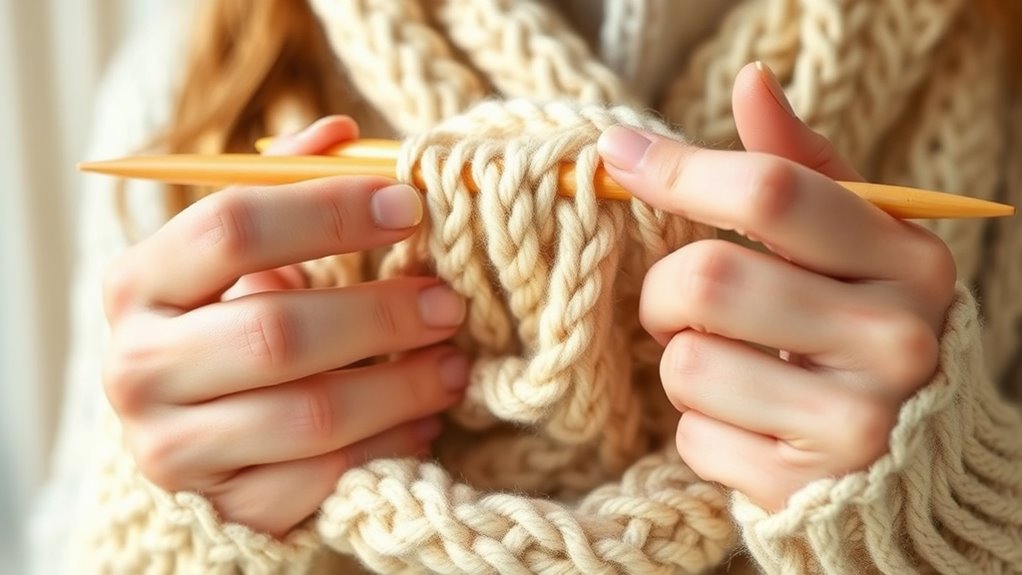

To knit your first scarf, start by practicing a simple cast on like the long-tail method to get stitches onto your needle, ensuring they’re even and not too tight. Check your gauge by making a small swatch—count the stitches and rows per inch—and adjust your needle size if needed for the right fit. Keep your tension steady for an even fabric, and as you progress, you’ll discover how foundational skills make the process enjoyable and rewarding.

Get your wardrobe favorites delivered free with Prime
- Fast, free delivery on millions of items
- Prime Video, Amazon Music and more included
- Member-only deals all year
Key Takeaways
- Learn the long-tail cast on to create a strong, even foundation for your scarf.
- Use a manageable yarn and needle size to practice knitting and achieve consistent tension.
- Knit a small swatch to check your gauge and ensure the scarf will fit your desired size.
- Follow simple knit stitches, focusing on even tension and steady rhythm throughout.
- Finish your scarf with proper binding off, and enjoy your handmade, cozy accessory.

Have you ever wanted to create your own cozy scarves or warm sweaters? If so, knitting is a wonderful place to start. The first step you’ll want to master is casting on, which is how you get your stitches onto the needle and ready to work. Think of casting on as the foundation of your project. It’s important to learn a smooth, even way to cast on because it sets the tone for your entire scarf. When you cast on, you create the initial row of loops that will turn into your fabric. There are various methods, but the long-tail cast on is popular because it’s sturdy and neat. Practice this a few times until your stitches feel consistent, not too tight or loose. Once you’re comfortable with casting on, you’ll want to pay attention to your knitting gauge. Your knitting gauge tells you how many stitches and rows you need per inch, which is essential for ensuring your finished scarf matches the size and dimensions you want. Different yarns and needle sizes will give different gauges, so always check your gauge before starting your project.
To measure your knitting gauge, knit a small swatch—about four inches square—using the same yarn and needles you plan to use for your scarf. Then, count how many stitches and rows fit into one inch. Adjust your needle size if your gauge isn’t matching the pattern’s recommendations or if you want a different texture. Knowing your gauge helps you avoid ending up with a scarf that’s too narrow, too wide, or too long. It also ensures your finished project looks professional and fits well. Remember, tension plays a big role in your gauge, so keep your stitches even and consistent. If your stitches are too tight, try larger needles; if they’re too loose, go smaller. Additionally, understanding the benefits of Glycolic acid can help improve your skin’s appearance, ensuring your face is as smooth and radiant as your finished scarf will be cozy and warm.
Getting comfortable with casting on and understanding your knitting gauge will make the whole process easier and more enjoyable. These foundational skills help you create even, beautiful fabric that makes your scarf look polished. As you practice, you’ll find that your tension improves, and your stitches become more uniform. This confidence will motivate you to try more complex patterns later on. Start with simple projects, keep your gauge in check, and enjoy the process of transforming yarn into something warm and beautiful. Knitting your first scarf is a rewarding experience, and mastering these basics will set you on the right path for many cozy projects ahead.
Popular right now

TCL 85-Inch QM6K Series QLED Mini LED 4K HDR Smart Google TV

De'Longhi Stilosa Compact Manual Espresso Machine with Milk Frother

iRobot Roomba 105 Vac Robot Vacuum
As an affiliate, we earn on qualifying purchases.
Frequently Asked Questions
What Types of Yarn Are Best for Beginner Scarves?
For your first scarf, choose beginner-friendly yarns like acrylic or wool, which have soft yarn fiber types. Opt for medium yarn weight options like worsted or aran, as they’re easier to handle and see your progress. These yarns are forgiving for beginners, helping you learn stitches without frustration. Stick to smooth textures and avoid novelty or very thin yarns until you gain more confidence.
How Do I Fix Common Knitting Mistakes?
Think of fixing mistakes like untangling a story’s plot—careful and deliberate. To fix common knitting mistakes, first identify issues like uneven yarn tension or dropped stitches. Gently pick up and re-knit any dropped stitches, ensuring your yarn tension stays consistent. If stitches are loose or tight, carefully adjust your tension as you go. Patience and attention turn mistakes into lessons, making your scarf even better than before.
Can I Knit a Scarf Without Knitting Needles?
You can knit a scarf without traditional knitting needles by exploring alternative knitting methods like arm knitting or finger knitting. These techniques allow you to create stitches using your arms or fingers, making the process more accessible if you don’t have needles. With some practice, you’ll find that knitting without needles is a fun and creative way to make a cozy scarf, perfect for beginners wanting to try something new.
How Long Does It Typically Take to Knit a Scarf?
Oh, it’ll take you just a lifetime—or maybe a decade—depending on your knitting speed and project complexity. If you’re a speedy knitter tackling a simple scarf, you might finish in a week. But if you’re slow or choose an intricate pattern, plan on months of dedication. Ultimately, it’s all about how much time and patience you’re willing to invest in your cozy masterpiece.
What Are Some Beginner-Friendly Knitting Patterns?
You’ll find many beginner-friendly knitting patterns, like simple ribbing, garter stitch, and stockinette that use basic knitting terminology. These patterns often feature pattern variations that keep your project interesting without overwhelming you. Look for patterns with clear instructions and minimal shaping, so you can focus on mastering fundamental techniques. As you gain confidence, you’ll easily adapt these basic patterns into more complex designs.
Conclusion
Now, as you hold your first completed scarf, feel the soft yarn slip gently through your fingers, a tangible reminder of your patience and effort. Imagine wrapping it around your neck, each stitch warming your skin and heart. This simple creation isn’t just fabric—it’s a symbol of your newfound skill and the cozy comfort you can craft with your own hands. Keep knitting, and watch your confidence grow with every stitch.